

About Ethel Carrick
1872–1951
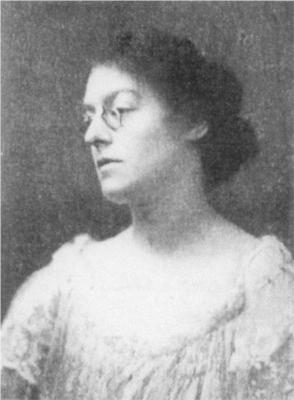
English-Australian Impressionist who served on the Paris Salon d'Automne jury for thirteen years and is now regarded as more adventurous than her more famous husband.
Museums2
Countries1
Most worksNational Gallery of Victoria, Melbourne · 4 works
Loading map…
Where to see Ethel Carrick
Ranked by works you can see in person.
-
4 works
National Gallery of Victoria
Melbourne, Australia
-
2 works
Art Gallery of South Australia
Adelaide, Australia


Frequently Asked Questions
Where can I see Ethel Carrick's work?
To view Ethel Carrick's work, you could start with museums that feature art from the Art Deco period. These include institutions in both the United States and the United Kingdom. In the United States, consider the Charles Hosmer Morse Museum of American Art (Winter Park, Florida), the Los Angeles County Museum of Art (Los Angeles), the Metropolitan Museum of Art (New York), the Minneapolis Institute of Arts (Minneapolis), the Museum of Modern Art (New York), the Royal Ontario Museum (Toronto), the Virginia Museum of Fine Arts (Richmond), and the Wolfsonian at Florida International University (Miami Beach). In the United Kingdom, you might visit the Bakelite Museum (Williton), Brighton Museum & Art Gallery (Brighton), the Geffrye Museum (London), Manchester Art Gallery (Manchester), the National Museums of Scotland Royal Museum (Edinburgh), or the Victoria & Albert Museum (London).What should I know about Ethel Carrick's prints?
When considering Ethel Carrick's prints, it is useful to understand some basic principles. An original print is conceived as a print, and executed solely as a print, often in a numbered edition, and signed by the artist. Each print in the edition is an original, made from a plate, stone, screen, or block created for that purpose. The artist decides the number of prints in the edition. The numbering of prints has only recently become standard. Early prints were not numbered or signed; in some cases, the artist might have signed the plate or stone itself, with no pencilled signature on each print. Offset reproductions are reproduced by photochemical means. Plates used in offset reproductions do not wear out, so there are no physical limits on the number of prints that can be made. Quantities may still be limited by the publisher to add value to the edition. The edition claim is written as a pair of numbers on the left bottom margin of the print itself: it consists of a print number and an edition number written as a group with a short separating line between them. The print number is written above or to the left, and the edition size is written below or to the right.Why are Ethel Carrick's works important today?
Ethel Carrick (1872[1]-1951[1]) was an English-born Post-Impressionist painter who spent much of her career in Australia and France. She is now recognised for her depictions of everyday life, particularly scenes of markets, beaches, and gardens. Carrick's importance lies in her ability to capture the atmosphere and colour of these settings, using a style influenced by Impressionism and Fauvism. Her works offer a glimpse into the social life of her time, showing women at work and leisure. Carrick's art also challenges earlier assumptions about women artists. Despite facing obstacles because of her gender, she travelled widely and exhibited her work internationally. Her artistic achievements and independent spirit make her a significant figure in the history of Australian and British art. She took chances at a time when no one took women artists or women’s issues seriously, and especially for the mistakes they weren’t afraid of making.What techniques or materials did Ethel Carrick use?
Ethel Carrick often employed oil paints, applying them in a manner that captured the effects of light and movement. Her paintings display a clear interest in plein air techniques, evident in her use of fluid oil mediums to achieve smooth surfaces and detailed brushwork. Carrick's approach did not typically involve coarse bristle brushes or thick impasto effects; instead, she favoured soft hair brushes to temper her pigments. Carrick sometimes mixed standard artist's oil paint with a medium of wax and turpentine. She would apply the mixture to the canvas with a brush, working it over to ensure the medium and paint were thoroughly mixed. She would then use a large painting spatula or a small painting knife to bring the surface to a satisfactory state. Carrick's technique involved a tactile engagement with the surface, manipulating the materials to achieve her desired visual effect.Who did Ethel Carrick influence?
Ethel Carrick's influence is difficult to measure directly, but some sources offer possible connections. Althea McNish, a textile designer, may have been among those who felt Carrick's impact. McNish broke new ground in British textile design through her use of colour and texture. One source suggests that McNish influenced fellow students at the Royal College of Art, as well as those who were emerging in the field at the time. Once manufacturers began utilising McNish's textures and bright colours, other designers followed suit. Botanical artist Celia Rosser may offer another indirect connection. Rosser studied the compositions of Ellis Rowan, a popular flower painter. Rosser moved away from Rowan's crowded compositions, but Rowan's work, in its time, may have opened possibilities for later artists such as Carrick and Rosser.Who influenced Ethel Carrick?
Ethel Carrick (1872[1]-1951[1]) was an Australian Impressionist painter. The question of artistic influence is complex, but some artists who influenced others include Claude Monet (1840-1926[1]), Édouard Manet (1832-1883[1]), John Singer Sargent (1856-1925), Mary Cassatt (1844-1926), Auguste Rodin (1840-1917), Edgar Degas (1834-1917), Suzanne Valadon, Paul Cézanne, Lucy Bacon (1857-1932), Camille Claudel (1864-1943), Paula Modersohn-Becker (1876-1907), Paul Gauguin, Henri Matisse (1869-1954), Käthe Kollwitz (1867-1945), Vincent van Gogh (1853-1890), Tamara de Lempicka (1898-1980), Fernand Léger (1881-1955), Pablo Picasso (1881-1973), Varvara Stepanova (1894-1958), Aleksandra Ekster, Francis Bacon (1909-1992), George Grosz (1893-1959), Hannah Höch (1889-1978), Marcel Duchamp (1887-1968), Piet Mondrian (1872-1944), Wassily Kandinsky (1866-1944), Kazimir Malevich, Bridget Riley (born 1931), Jackson Pollock (1912-1956), Alexander Calder (1898-1976), Ben Nicholson (1894-1982), Constantin Brâncuşi (1876-1957), Barbara Hepworth (1903-1975), Sophie Taeuber-Arp (1889-1943), Amrita Sher-Gil, Amedeo Modigliani (1884-1920), Henri De Toulouse-Lautrec (1864-1901), Maurice Utrillo, Diego Rivera (1886-1957), Frida Kahlo (1907-1954), Joan Miró (1893-1983), Georgia O’Keeffe (1887-1986), Judy Chicago, Takashi Murakami (born 1962), Max Ernst (1891-1976), Yayoi Kusama (born 1929), Eva Hesse (1936-1970), Andy Warhol (1928-1987), Marina Abramović (born 1946), Cornelia Parker (born 1956), Gustav Klimt (1862-1918), Sonia Delaunay-Terk (1885-1979), Paul Klee (1879-1940), Anni Albers (1899-1994), Tracey Emin (born 1963), Loïs Mailou Jones, Julie Mehretu (born 1970), Hilma Af Klint (1862-1944), Agnes Martin (1912-2004), and Margaret Macdonald (1864-1933).What is Ethel Carrick's most famous work?
It is difficult to name one single work as Ethel Carrick's "most famous". Carrick was a prolific painter, and her oeuvre includes a variety of subjects and styles, making it hard to isolate one piece that overshadows all others. Carrick is best known for her depictions of markets, beaches, and street scenes, often featuring women and children. She painted these subjects in locations around the world, including France, Australia, and India. Her style is characterised by its bright colours and energetic brushwork, influenced by Impressionism and Post-Impressionism. Without specific sales figures, exhibition records, or critical analyses to point to one particular artwork, it is more accurate to say that Carrick is celebrated for her collective contribution to Australian Impressionism and her skill in capturing everyday life across different cultures.What style or movement did Ethel Carrick belong to?
Without more specific information, it is difficult to assign Ethel Carrick to a single movement. However, some general information about art movements may be useful. Art history is often organised into movements, periods, or styles. These broad classifications group artists with similar approaches, aesthetics, and intentions. Movements can be defined by a specific philosophy (such as the pre-Raphaelites), a shared technique (such as Impressionism), or a historical period (such as the Renaissance). Some well-known movements include Baroque, Neoclassicism, Romanticism, Realism, and Modernism. It is worth noting that many artists do not fit neatly into one category, and their work may incorporate elements from multiple movements. Further research into Carrick's specific works and influences would be needed to determine the most appropriate classification.
Sources
Where to See guide aggregates verified holdings of Ethel Carrick's works across the following collections.
- [1] wikipedia Wikipedia: Ethel Carrick Used for: biography.
- [2] book Penny Olsen, Collecting Ladies: Ferdinand Von Mueller and Women Botanical Artists Used for: biography.
- [3] book Landauer, Susan, The not-so-still life : a century of California painting and sculpture Used for: biography.
Editorial overseen by Solis Prints. Sources verified 2026-09-24. Click a source for details, or hover over [N] in the page above to preview.
Editorial standardsMethodologyCorrectionsAI disclosureAbout the editorial team