



About Endre Rozsda
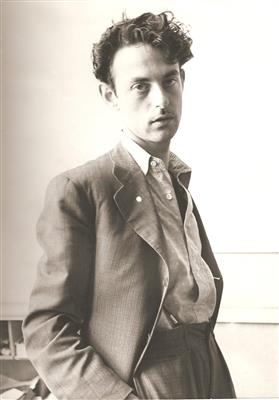
Museums3
Countries3
Most worksHungarian National Gallery, Budapest · 5 works
Loading map…
Where to see Endre Rozsda
Ranked by works you can see in person.
-
5 works
Hungarian National Gallery
Budapest, Hungary
Also here (6)
Bertalan SzekelyVilmos Aba-NovakEndre BalintAladar Korosfoi-KrieschEgry JózsefAugust von Pettenkofen -
1 works
Israel Museum
Jerusalem, Israel


-
1 works
Musée National d'Art Moderne
Paris, France

Frequently Asked Questions
Where can I see Endre Rozsda's work?
It is difficult to provide a comprehensive list of locations where Endre Rozsda's work can be viewed, as the availability of artworks in public and private collections can change. However, several museums feature collections of related art. In the United Kingdom, museums with relevant holdings include the Brighton Museum & Art Gallery (Royal Pavilion Gardens, Brighton), Manchester Art Gallery (Mosley Street, Manchester), the National Museums of Scotland (Royal Museum, Chambers Street, Edinburgh), and the Victoria & Albert Museum (Cromwell Road, London). Other museums outside the UK that may hold similar works are the Los Angeles County Museum of Art (Wilshire Boulevard, Los Angeles), the Metropolitan Museum of Art (Fifth Avenue, New York), and the Museum of Modern Art (West 53rd Street, New York). Additionally, the Brucke Museum and Nationalgalerie (both in Berlin), Kunsthalle (Bremen), Ludwig Museum and Wallraf-Richartz Museum (both in Cologne), and Folkwang Museum (Essen) may be useful research locations.What should I know about Endre Rozsda's prints?
When considering Endre Rozsda's prints, it is helpful to understand some basic principles. An original print is conceived as a print, and created solely as a print, often in a limited, numbered, and signed edition. Each print in the edition is an original, produced from a plate, stone, screen, or block created for that purpose. The artist, or someone working under their direction, creates the master image. The finished print is approved by the artist. The number of prints is decided by the artist. The numbering accounts for the total; for example, 12/25 means it is print number 12 of an edition of 25. Early prints were not always numbered or signed. A reproduction is a copy of artwork originally created in another medium, such as painting, and made using photomechanical means. Numbering and signing a reproduction does not make it an original print. Printmaking is an unregulated activity, but claims are subject to the Trade Descriptions Act. This requires truthful descriptions. Claims add value to a print; therefore, customers expect the print to conform to the claims written on it. The edition claim is written as a pair of numbers on the left bottom margin of the print: the print number and the edition number. The title is in the centre, and the signature on the right.Why are Endre Rozsda's works important today?
Endre Rozsda (1913[1]-1999[1]) was a Hungarian-French[1] painter, draughtsman, and engraver. He is important today for his unique contribution to surrealism and his complex personal history. Rozsda's work offers a singular vision, blending surrealist techniques with his own symbolic language. His paintings often feature dreamlike imagery, with recurring motifs and a distinctive colour palette. This personal symbolism provides a rich field for interpretation and study. Rozsda's life story adds another layer of significance. Born in Hungary, he later emigrated to France, experiencing both the artistic ferment of pre-war Europe and the challenges of exile. His biography provides insight into the cultural and political upheavals of the 20th century, as reflected in his art. Interest in Rozsda's work has grown since his death, with retrospectives and exhibitions introducing him to new audiences. His art provides a valuable perspective on the development of surrealism and the experience of a Hungarian artist working in a European context.What techniques or materials did Endre Rozsda use?
Endre Rozsda was a Hungarian artist who was born in 1913[1] and died in 1991[1]. Information about his specific techniques and materials is scarce, but some context can be provided by looking at the materials used by his contemporaries. László Moholy-Nagy experimented with modern materials such as plastics in the 1930s and 1940s. He used rhodoid and Plexiglas, and he painted with oil pigments on transparent sheets. To prevent the colours from peeling off, he scratched fine lines into the plastic to hold the pigment. He also painted on both sides of the sheets to create spatial effects. Moholy-Nagy also noted that the new materials required specific brush techniques, which led to unexpected textures. Another artist, Brice Marden, used oil paint mixed with wax and turpentine on cotton duck canvas. He applied the mixture with a brush and then worked it over with a spatula and knife. The aim was to achieve a constant and total surface.Who did Endre Rozsda influence?
Endre Rozsda's impact is difficult to measure directly through students or artistic movements. However, the neo-avant-garde scene in Hungary during the socialist era provides some context. During this period, artists often worked in a "second public sphere", a network of alternative spaces where they could express themselves more freely than in state-sanctioned venues. These spaces included private apartments and studios, as well as university clubs. Within this milieu, figures such as György Galántai organised events and exhibitions that challenged the prevailing artistic norms. Galántai's actions, along with those of Gábor Altorjay, Tamás Szentjóby and others, created a space for experimentation and dissent. These artists often faced restrictions and surveillance, but they found ways to subvert the system and create a more open cultural environment. Rozsda's influence would have been more indirect, as part of this broader movement towards artistic autonomy and the challenging of state control.Who influenced Endre Rozsda?
Endre Rozsda was influenced by several artists. These included Mondrian, for works emerging from the spirit of the Bauhaus, and Klee, for works exploring perspective from diverse viewpoints. Rozsda stated that he disregarded Klee's symbolism, but saw a cathedral in the depth of his work. He also discovered Albers, studying his work and eventually seeing his paintings at the Galerie Denise René. Rozsda also named Malevich as an influence. Rozsda initially wanted to add dynamism to Mondrian's works, but realised Mondrian had already solved that problem in *Broadway Boogie-Woogie*. Moholy-Nagy's work was also very important to him, though Rozsda regarded it as incomplete due to Moholy-Nagy's early death. He also discovered Calder, Marcel Duchamp, and Gabo. Rozsda aimed to take up the elements that these artists had released but not brought to completion, attempting to find answers to the questions they had formulated but not resolved.What is Endre Rozsda's most famous work?
It is difficult to name one single work as Endre Rozsda's most famous. He produced a large body of work from the 1950s until his death in 1987[1]. His paintings often feature dreamlike interiors, still lifes, and portraits, characterised by a distinct style blending surrealism with elements of Hungarian folk art. Rozsda developed a unique visual language, marked by the use of recurring motifs, symbolic imagery, and a muted colour palette. Some recurring titles in the record of his work include variations on heads (Kopf), figures (Sitzender), and still lifes (Stilleben). These titles appear repeatedly, with slight variations in the dates, suggesting the evolution of particular themes throughout his career. Without further context, it is impossible to isolate a single "most famous" work from this list.What style or movement did Endre Rozsda belong to?
Endre Rozsda's art has associations with Surrealism[1], an art movement that officially began in 1924[1]. Surrealism combined the irrationality of Dada with the concept of pure, unreasoned thought through subconscious dreams and free association; this concept was heavily inspired by Sigmund Freud's theories. Surrealist artists valued children's drawings, the art of those with mental illness, and untrained amateur painters, whose art sprang from pure creative impulses, unrestrained by convention or aesthetic laws. Surrealism generally took the form of fantastic, absurd, or poetically loaded images. Before Surrealism was created at the beginning of the 20th century, Antoni Gaudí (1852-1926[1]) demonstrated the power of abstract forms and Surrealist fantasy in architecture. Several of the Surrealist artists, including Joan Miró, acknowledged drawing inspiration from Gaudí and other Catalan art.
Sources
Where to See guide aggregates verified holdings of Endre Rozsda's works across the following collections.
- [1] wikipedia Wikipedia: Endre Rozsda Used for: biography.
- [2] book guggenheim-masterp00solo Used for: stylistic analysis.
- [3] book guggenheim-plana00rowe Used for: biography.
- [4] book guggenheim-twentycontempora00dotr Used for: biography.
- [5] book Masterpieces of western art : a history of art in 900 individual studies from the Gothic to the present day Used for: biography.
Editorial overseen by Solis Prints. Sources verified 2026-08-29. Click a source for details, or hover over [N] in the page above to preview.
Editorial standardsMethodologyCorrectionsAI disclosureAbout the editorial team