

About Domenico Gnoli
Italian · 1933–1970
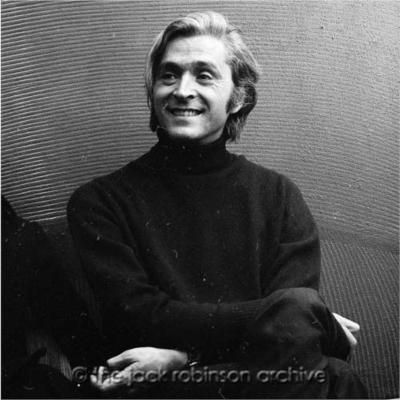
Roman painter known for hyperreal close-ups of everyday objects, whose career was cut short by cancer in 1970[1] at age thirty-seven.
Museums6
Countries4
Most worksMuseum Ludwig, Cologne · 2 works
Loading map…
Where to see Domenico Gnoli
Ranked by works you can see in person.
-
2 works
Museum Ludwig
Cologne, Germany
-
2 works
Stedelijk Museum Amsterdam
Amsterdam, Netherlands


-
2 works
Wallraf–Richartz Museum
Cologne, Germany
-
2 works
National Gallery of Art
Washington D.C., United States
-
1 works
Museum Boijmans Van Beuningen
Rotterdam, Netherlands
-
1 works
Thyssen-Bornemisza Museum
Madrid, Spain


Frequently Asked Questions
Where can I see Domenico Gnoli's work?
Domenico Gnoli's works can be found in various collections. His 1966[1] paintings, Dormiente n. 2 (Sleeper No. 2) and Tavole di ristorante (Restaurant Tables), are held in the collection of Jan and Marie-Anne Krugier-Poniatowski, courtesy of Galeae Jan Krugier, Geneva. Other museums that hold works relevant to Gnoli's artistic milieu include: the Israel Museum in Jerusalem; the Museum of the Studium Biblicum Franciscanum, Convent of the Flagellation, in Jerusalem; the Biblioteca Ambrosiana, in Milan; the Museo Correr e Quadreria Correr, in Venice; and the Pinacoteca Provinciale, in Bari. Furthermore, collections such as the Ackland Art Museum, the University of North Carolina at Chapel Hill, the Art Institute of Chicago, the Princeton University Art Museum, the Baltimore Museum of Art, the J. Paul Getty Museum in Malibu, the Metropolitan Museum of Art in New York, and the Yale University Art Gallery in New Haven also feature related works.What should I know about Domenico Gnoli's prints?
Domenico Gnoli (1933[1]-1970[1]) was an Italian[1] artist known for paintings that magnified details of everyday life. His pieces often presented close-up, almost hyperreal, views of objects and people. Gnoli's paintings from 1966[1], such as "Dormiente n. 2 (Sleeper No. 2)" and "Tavole di ristorante (Restaurant Tables)", exemplify his style. He extracted fragments from the flow of images, conferring significance on details such as a shirt collar in "Giro di collo 15 1/2 (Neck Size 15 1/2)". His work has been linked to Pop art because of its focus on the ephemeral. Gnoli transformed the surrounding world by giving aesthetic importance to popular, everyday images. He directed his gaze at the enigma of the world, examining the relationship between objects and bodies, and the conversation between being and nonbeing.Why are Domenico Gnoli's works important today?
Domenico Gnoli (1933[1]-1970[1]) created enigmatic paintings that blend the universal with the contingent. His pieces often magnify details of everyday objects and the human form, prompting viewers to see reality as a grand illusion. Rather than focusing on specific events, Gnoli isolated fragments of reality, drawing attention to the subjectivity inherent in our understanding of the world. Gnoli's approach can be seen as connected to Pop art's interest in ephemeral subjects. Like Pop art, Gnoli gave aesthetic significance to popular, everyday imagery. His art invites a gaze directed at the enigmas of the world, with solutions that remain distant as the investigation continues. His paintings prompt a re-evaluation of how we perceive and assign meaning to the ordinary, urging us to consider the deeper layers of significance within the mundane.What techniques or materials did Domenico Gnoli use?
Domenico Gnoli's paintings often depict isolated, magnified details of everyday objects and people. He had an interest in the meeting of the universal and the contingent. He would focus on details, such as a shirt collar in "Giro di collo 15 1/2" (1966[1]), or tables in "Tavoli" (1966). Gnoli extracted fragments from the flow of images. He directed a gaze at the enigma of the world. His approach can be historically traced to Pop art's concern with the ephemeral. This conferred aesthetic importance on popular everyday images from mass media, such as advertisements, comic books, and photographic reproductions. Technical knowledge informs art history. Artists are not always confined by the medium in which they work. Important choices are made that stand outside the constraints of the materials and techniques.Who did Domenico Gnoli influence?
Domenico Gnoli's influence is complex. While not directly inspiring a school of imitators, his approach resonated with later artists. His focus on extracting fragments of reality and conferring meaning on seemingly insignificant details had connections to Pop art's interest in everyday imagery. One can trace a concern with objects as metaphysical impositions on art to Pop art's aestheticisation of popular images from mass media. Giulio Paolini, Luciano Fabro and Jannis Kounellis are artists whose work has some relation to Gnoli's. Paolini's analytical approach to art examines its basic components. Fabro sought incoherence of subjects to sustain the coherence of the procedure. Kounellis acknowledged the importance of Pollock's *Blue Poles: Number 11, 1952[1]* in the conception of his sculptures incorporating wool, while Michelangelo Pistoletto admitted that Pollock's description of being "in" his painting led him to explore the concept literally through works involving mirrors.Who influenced Domenico Gnoli?
Domenico Gnoli's art displays the influence of Pop art. This is evident in his focus on everyday images from mass media. He extracts fragments from the flow of images, conferring meaning on details, such as a shirt collar. Gnoli's approach poeticises the surrounding world by giving aesthetic importance to popular images. He transforms urban contextuality into text, reading the city, its architecture, furniture, and people like a map. Other possible influences include Renato Guttuso, who drew stylistic and moral influence from Picasso. Guttuso championed a descriptive realism, a quality that may have resonated with Gnoli. Modigliani is another possible influence; his paintings display chromatic vibrations, delineated volumes, and a tangible sense of breathing bodies.What is Domenico Gnoli's most famous work?
Domenico Gnoli (1933[1]-1970[1]) was an Italian[1] artist known for his distinctive, large-scale paintings and prints of everyday objects and details of clothing. Although it is difficult to name one single 'most famous work', several pieces are particularly well known. These include depictions of shirt collars, buttons, and other details rendered in a precise, almost hyper-realistic style. Gnoli's work often focused on isolating and magnifying these details, transforming them into monumental, almost abstract compositions. This approach is evident in pieces depicting chairs, beds, and other domestic objects. His art is characterised by a sense of stillness and quiet observation, inviting viewers to reconsider the beauty and significance of the mundane. Gnoli's style bridges Pop Art and Surrealism, and his works have been exhibited in major museums and galleries worldwide.What style or movement did Domenico Gnoli belong to?
Domenico Gnoli's work has links to Pop art, due to its focus on the everyday. His paintings often feature isolated details of objects or people, presented in a manner that transforms the ordinary into something significant. Some observers place Gnoli's art in a dimension that combines the universal and the contingent. His paintings create a magnetism of detail, affecting objects and bodies. This approach treats reality as a total abstraction, a place of grand illusions and hyperreal representations. Rather than dwelling on specific places or times, Gnoli gives reverence to fragments of reality. By extracting these fragments from the flow of images, Gnoli emphasises the relativity of knowledge. This derives from the attempt to fit the self into the world, a subjectivity that protects from objectivity. This concern with objects and events as impositions on art can be traced to Pop art's interest in the ephemeral.
Sources
Where to See guide aggregates verified holdings of Domenico Gnoli's works across the following collections.
- [1] wikipedia Wikipedia: Domenico Gnoli Used for: biography.
- [2] book guggenheim-metph00cela Used for: biography, stylistic analysis.
- [3] book Lilian H. Zirpolo, Historical Dictionary of Baroque Art and Architecture Used for: stylistic analysis.
- [4] book Braun, Emily, 1957-; Asor Rosa, Alberto; Royal Academy of Arts (Great Britain), Italian art in the 20th century : painting and sculpture, 1900-1988 Used for: biography, stylistic analysis.
- [5] book Masterpieces of western art : a history of art in 900 individual studies from the Gothic to the present day Used for: biography.
- [6] book Post-impressionism : cross-currents in European painting Used for: biography.
- [7] book Post-impressionism : cross-currents in European painting Used for: biography.
Editorial overseen by Solis Prints. Sources verified 2026-08-31. Click a source for details, or hover over [N] in the page above to preview.
Editorial standardsMethodologyCorrectionsAI disclosureAbout the editorial team