

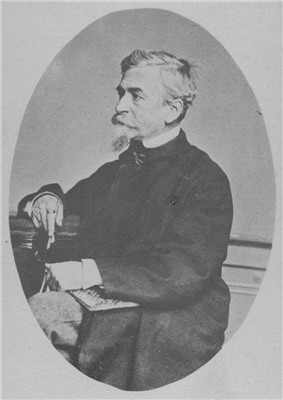
About Benno Adam
German · 1812–1892
Munich animal painter from a dynasty of three generations of artists, best known for precisely observed hunting dogs and game compositions.
Museums5
Countries4
Largest reported holdingKunsthistorisches Museum, Vienna · 2 recorded works
Loading map…
Where to see Benno Adam
Collection holdings are reported here; current display varies. Check with each museum before visiting.
-
2 recorded works
Kunsthistorisches Museum
Vienna, Austria
-
2 recorded works
Belvedere
Vienna, Austria


-
1 recorded work
New York Historical
New York City, United States
-
1 recorded work
Kunstmuseum Basel
Basel, Switzerland
-
1 recorded work
National Museum in Warsaw
Warsaw, Poland


Frequently Asked Questions
Where can I see Benno Adam's work?
Benno Adam's paintings are held in several collections throughout Europe. These include the Neue Pinakothek in Munich, and the Hamburger Kunsthalle. Adam, who was born in 1812[1] and died in 1892[1], came from a family of artists. His father, Albrecht Adam, was a painter, as were his brothers, Franz and Eugen. He is best known for his paintings of animals, particularly horses. He often depicted scenes of hunting or battle. His paintings are realistic, and he paid close attention to detail. He was a skilled draughtsman, and his paintings are characterised by their accuracy and attention to detail. He frequently received commissions from wealthy patrons, who wanted paintings of their favourite horses or hunting dogs. Adam's work was popular during his lifetime, and it continues to be admired today.What should I know about Benno Adam's prints?
Benno Adam (1812[1]-1892[1]) was a German[1] animalier painter, best known for his depictions of horses, dogs, and hunting scenes. As prints are reproductions of original artworks, it is important to consider their production. When assessing a print, determine whether it was produced shortly after the original artwork, ideally by the artist or under their supervision; these are termed 'vintage'. Signatures or stamps can authenticate this. Contemporary artists often limit print runs, numbering them (e.g., 35/100), with a smaller number indicating the print's sequence and the larger number the edition size. Some artists also designate a percentage as artist's proofs (APs). To assess a print's quality, compare it to others, noting paper and printing techniques. The print market includes both fine art and decorative pieces, so consider where Adam's work fits. Researching galleries, shops, and online catalogues can provide context. Provenance from a notable collection can confirm authenticity and increase value. Prints should be evaluated based on artistic content rather than rarity or technical variations.Why are Benno Adam's works important today?
Benno Adam (1812[1]-1892[1]) was a German[1] animal painter, best known for his depictions of horses. His works are important today for several reasons, primarily related to historical documentation and artistic skill. Adam's paintings offer valuable insights into 19th-century equestrian culture, including breeds, riding styles, and hunting practices. His attention to detail provides a visual record of these aspects of the past. Furthermore, Adam was a technically accomplished artist. His ability to capture the anatomy and movement of horses was highly regarded in his time, and his skill remains evident in his surviving works. The accuracy and realism of his paintings make them useful for studying equine anatomy. While Adam's subject matter might seem limited, his paintings are appreciated for their historical value and artistic merit. They provide a window into a specific time and place, and they demonstrate a high level of technical skill.What techniques or materials did Benno Adam use?
Information on Benno Adam's specific techniques or materials is scarce. However, some general observations about artistic techniques can be made. Artists consider technique as a mysterious tool for attaining art. This includes resourcefulness, the ability to utilise certain means, foresee effects, and a feeling for compatibility. When relating to material with spirit, artists develop their senses and reasoning. Man chooses materials that are constant and organically unchanging, so they can be subjected to his will and create forms. Drypoint etching uses a metal needle to create points in a copper plate. Colour is applied thickly to the entire plate and wiped off, so the small point remains. The pressure of the press forces the plate into the paper, fusing the colour with the paper.Who influenced Benno Adam?
Benno Adam (1812[1]-1892[1]) came from a family of artists. His father, Albrecht Adam (1786-1862[1]), was a well-known painter, primarily of battle scenes. He served as Benno's first teacher. Benno also received instruction from his uncle, Andreas Adam (1787-1867[1]), who also painted military subjects. Later, Benno Adam moved away from battle painting. He became better known for his depictions of animals, particularly horses. His work in that area shows the influence of Jacques-Laurent Agasse (1767-1849). Agasse was a Swiss animal and sporting painter who spent much of his career in England. Adam would have seen Agasse's paintings through prints, if not in person. Adam adopted Agasse's close observation of animal anatomy, and his ability to capture individual animal character. Adam's later landscapes also reflect the influence of the Barbizon School.What is Benno Adam's most famous work?
Benno Adam is best known for his paintings of animals, particularly horses. Born in Munich in 1812[1], he came from an artistic family; his father, Albrecht Adam, was a well-regarded painter of battle scenes. Benno followed in his father's footsteps, but he specialised in animal painting, becoming one of the most successful German[1] animaliers of the 19th century. Although it is difficult to name one single "most famous work", his depictions of horses in various situations are particularly celebrated. He produced many studies of horses, and these were often incorporated into larger compositions. Adam's skill lay in his ability to capture the anatomy and movement of animals with accuracy. He also understood how to portray different breeds of horses, from farm animals to thoroughbreds. His paintings were popular with the aristocracy, who commissioned him to paint portraits of their favourite animals. Adam died in 1892[1], leaving behind a substantial body of work that continues to be admired by animal lovers and art enthusiasts.What style or movement did Benno Adam belong to?
Benno Adam (1812[1]-1892[1]) was a German[1] artist best known for his paintings of animals, particularly horses. He is generally associated with the Biedermeier movement, although his work also shows elements of realism. Biedermeier art, which flourished from around 1815[1] to 1848, often featured detailed, realistic depictions of everyday life and nature. It emerged in central Europe as a reaction to the Napoleonic Wars and a desire for domesticity and simplicity. Adam's precise and careful renderings of animals, set within naturalistic settings, align with the Biedermeier aesthetic. However, Adam's work also anticipates later developments in realism. His attention to anatomical detail and his objective portrayal of animals, without idealisation, reflect a growing interest in scientific accuracy and observation, which became central to the realist movement that gained prominence in the mid-19th century. While rooted in Biedermeier traditions, Adam's art bridges the gap between this earlier style and the emerging realist tendencies of his time.What was Benno Adam known for?
Benno Adam (1812[1]-1892[1]) was a German[1] painter best known for his depictions of animals, particularly horses. Born in Munich, he came from an artistic family; his father, Albrecht Adam, and brothers, Franz and Eugen, were also painters. Adam initially trained with his father, who was a well-regarded battle painter. Benno, however, developed a specialism in animal painting, gaining recognition for his ability to capture the movement and anatomy of horses. He produced numerous paintings of horses in various settings, including hunting scenes, equestrian portraits, and genre scenes featuring horse trading and stables. His works were popular among the aristocracy and sporting enthusiasts, who commissioned him to paint portraits of their favourite horses. Adam's attention to detail and realistic style made him one of the leading animal painters of his time. He exhibited his work extensively throughout Europe, and his paintings can be found in many public and private collections.
Sources
Where to See guide aggregates verified holdings of Benno Adam's works across the following collections.
- [1] wikipedia Wikipedia: Benno Adam Used for: biography.
- [2] book Elizabeth Otto & Patrick Rössler, Bauhaus Women Used for: biography.
- [3] book German expressionism : documents from the end of the Wilhelmine Empire to the rise of national socialism Used for: biography, stylistic analysis.
- [4] book Masterpieces of western art : a history of art in 900 individual studies from the Gothic to the present day Used for: biography.
- [5] book Bauhaus-Archiv Berlin Museum für Gestaltung, Stiftung Bauhaus Dessau, and Klassik Stiftung Weimar (editor), Modell Bauhaus_ A Conceptual Model. 1919-2009 Used for: biography.
- [6] book Post-impressionism : cross-currents in European painting Used for: biography.
- [7] book Post-impressionism : cross-currents in European painting Used for: biography.
- [8] book Tortolani, Erica; , ReFocus: the Films of Paul Leni Used for: stylistic analysis.
Editorial overseen by Solis Prints. Sources verified 2026-10-14. Click a source for details, or hover over [N] in the page above to preview.
Editorial standardsMethodologyCorrectionsAI disclosureAbout the editorial team