

About Anna Boch
Belgian · 1848–1936
- Impressionism
- Neo-impressionism
- Pointillism
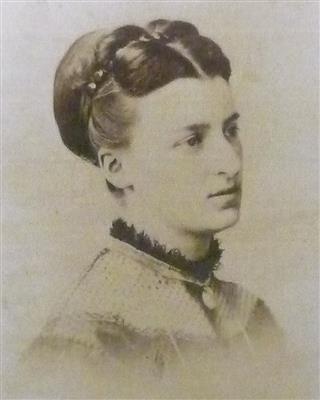
Belgian[1] painter and the only woman in Les XX, who bought the only painting Van Gogh is believed to have sold in his lifetime.
Museums7
Countries4
Largest reported holdingMuseum of Fine Arts Ghent (MSK), Ghent · 2 recorded works
Loading map…
Where to see Anna Boch
Collection holdings are reported here; current display varies. Check with each museum before visiting.
-
2 recorded works
Museum of Fine Arts Ghent (MSK)
Ghent, Belgium
-
1 recorded work
Stedelijk Museum Amsterdam
Amsterdam, Netherlands


-
1 recorded work
Museum of Ixelles
Brussels, Belgium
-
1 recorded work
Indianapolis Museum of Art
Indianapolis, United States
-
1 recorded work
Musée d'Orsay
Paris, France
-
1 recorded work
Royal Museums of Fine Arts of Belgium
Brussels, Belgium
-
1 recorded work
Mu.ZEE - Kunstmuseum aan Zee
Ostend, Belgium


Frequently Asked Questions
Where can I see Anna Boch's work?
Anna Boch's art can be viewed in several museums. Many museums are located in France and Belgium. In Belgium, you can see artworks at the Musées Royaux des Beaux-Arts de Belgique (Brussels) and the Koninklijk Museum voor Schone Kunsten (Antwerp). Other options in Belgium include the Brangwyn Museum (Brugge) and the Clockarium Museum (Brussels). In France, consider the Musée d’Art et d’Industrie (Roubaix), the Musée de l’Ecole de Nancy, or the Musée des Beaux-Arts (Nancy). You can also visit the Musée des Arts Décoratifs in Paris. Other museums that hold paintings by Vincent van Gogh include the Rijksmuseum Vincent van Gogh (Amsterdam), the Rijksmuseum Kröller-Müller (Otterlo), the Boston Museum of Fine Arts, the Chicago Art Institute, the Cleveland Museum of Art, the Fogg Museum (Cambridge, Massachusetts), the Metropolitan Museum of Art (New York), the Museum of Fine Arts (Houston), the Museum of Modern Art (New York), the National Gallery (Washington, D.C.), the Norton Simon Art Foundation (Los Angeles), and the Philadelphia Museum of Art.Why are Anna Boch's works important today?
Anna Boch (1848[1]-1936[1]) was a Belgian[1] painter, born into a family of industrialists who owned the Boch Frères pottery factory. She is significant as an artist and as a patron of the arts. Boch's artistic style aligned with Impressionism[1] and Post-Impressionism, and she produced numerous paintings of landscapes and scenes from her travels. Beyond her own artistic output, Boch is remembered for her support of other artists. She collected works by Vincent van Gogh, Paul Gauguin, and others, at a time when their art was not widely appreciated. Boch purchased Van Gogh's 'The Red Vineyard' which was the only painting known to have been sold during his lifetime. Her financial support helped these artists to continue their work and gain recognition. As a woman artist and collector in a male-dominated art world, Boch's contributions are particularly noteworthy.What techniques or materials did Anna Boch use?
Anna Boch's techniques included varied brushwork, from loose to more controlled applications. Some artists of the period established basic colour areas with undiluted paint. Because canvas is absorbent, the paint can appear dull unless reworked. Brush strokes were often worked wet-in-wet. Paint quality could be buttery where thickly applied, contrasting with a dry quality where thinly applied near contours. Some artists used criss-crossed brush strokes and added outlines into wet paint with long sweeping strokes. Contrasts of red and green, or orange-yellow and violet-blue, were sometimes slurred together. Some artists added details, such as pipes, over dry paint. Some artists used unprimed canvas, leaving it visible as an outline. The basic colour areas were established in undiluted paint. The brush strokes vary and are worked predominantly wet into wet. The paint quality is rich and buttery where most thickly applied; this contrasts with a dry, sunken quality where the paint is thinnest near the contours.Who did Anna Boch influence?
It is difficult to assess Anna Boch's direct influence on later artists using the available sources. However, the broader context of Impressionism[1] and its impact can be examined. Impressionism gained popularity in America, leading a generation of artists to adapt its techniques to American subjects. Artists like Childe Hassam, John Leslie Breck, William Merritt Chase, Willard Metcalf, John Henry Twachtman, William Glackens, and Maurice Prendergast adopted Impressionist approaches. Hassam's paintings, such as *Surf, Isles of Shoals*, overtly reference Monet's seascapes through brushwork, colour use, and subject matter. Later, American Abstract Expressionists rediscovered Monet's waterlily paintings. The Surrealist painter Andre Masson wrote about these works in 1952, and in 1955, the Museum of Modern Art (MOMA) acquired and displayed a waterlily canvas. This acquisition marked the first by a public institution in the United States.What style or movement did Anna Boch belong to?
Anna Boch is associated with Impressionism[1] and Neo-Impressionism. Impressionism emerged around 1874[1]. Artists within this movement employed short brushstrokes and striking colours to capture the effects of light and fleeting moments. Vincent van Gogh encountered Impressionist paintings in 1886 during their final independent exhibition in Paris. He was drawn to the use of colour, loose brushwork, and the depiction of light in works by artists such as Monet and Renoir. Younger artists, including Gauguin, Lucien Pissarro, Paul Signac, and Georges Seurat, also participated in Impressionist exhibitions. The French art critic Félix Fénéon coined the term 'Neo-Impressionism' to describe the scientific approach to colour used by Seurat, Signac, Pissarro, and others. Seurat's technique of applying dots of pure colour, known as pointillism or divisionism, created a shimmering effect when viewed from a distance.What was Anna Boch known for?
Anna Boch (1848[1]-1936[1]) was a Belgian[1] painter, born into a wealthy family of industrialists and art collectors. She is best known for her Impressionist and Post-Impressionist style paintings, with a particular interest in capturing the effects of light and colour. Boch was an important figure in the Belgian art scene, not only as a painter but also as a patron. She used her wealth to support fellow artists, including Vincent van Gogh, whose work she admired and collected. Boch owned Van Gogh's "The Red Vineyard", the only painting he is known to have sold during his lifetime. She was a member of Les XX (Les Vingt), an association of twenty Belgian artists formed in 1883[1] to promote innovation in the arts. Other members included Théo van Rysselberghe, who experimented with Neo-Impressionism[1] after seeing the work of Seurat and Signac. Boch's association with Les XX placed her at the centre of artistic developments, and she exhibited regularly with the group.What is Anna Boch known for?
Anna Boch is known for being a painter and an early supporter of avant-garde art. She famously purchased Vincent van Gogh's *The Red Vineyard* at the Les XX exhibition in Brussels in 1890[1], a painting now considered to be the only one Van Gogh sold during his lifetime.What was Anna Boch's art style?
Anna Boch trained under Isidore Verheyden and was influenced by Théo van Rysselberghe. She moved from Neo-Impressionism[1] towards a looser Impressionist style, which she maintained for most of her career.
Sources
Where to See guide aggregates verified holdings of Anna Boch's works across the following collections.
- [1] wikipedia Wikipedia: Anna Boch Used for: biography.
- [2] book Hodge, Susie;, Artists at Home Used for: biography.
- [3] book guggenheim-amazonsofavantga00exte Used for: biography, stylistic analysis.
- [4] book guggenheim-artofavantgardei00rowe Used for: biography, stylistic analysis.
- [5] book guggenheim-museum00solo Used for: biography.
- [6] book Peter. Leek, Russian Painting Used for: stylistic analysis.
Editorial overseen by Solis Prints. Sources verified 2026-09-30. Click a source for details, or hover over [N] in the page above to preview.
Editorial standardsMethodologyCorrectionsAI disclosureAbout the editorial team