



About Allan Kaprow
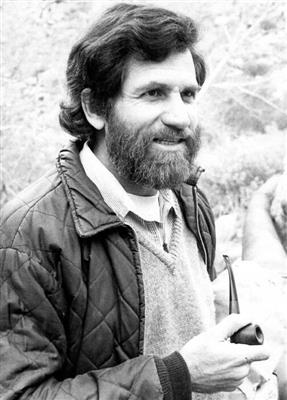
Museums3
Countries3
Largest reported holdingNational Gallery of Art, Washington D.C. · 3 recorded works
Loading map…
Where to see Allan Kaprow
Collection holdings are reported here; current display varies. Check with each museum before visiting.
-
3 recorded works
National Gallery of Art
Washington D.C., United States
-
1 recorded work
Museum Ludwig
Cologne, Germany


-
1 recorded work
Musée National d'Art Moderne
Paris, France

Frequently Asked Questions
Where can I see Allan Kaprow's work?
To view works related to Allan Kaprow, several museums and foundations offer relevant collections. In Germany, the Bauhaus-Archiv, Museum für Gestaltung in Berlin, and the Bauhaus-Museum Weimar are options. Additionally, the Stiftung Bauhaus Dessau and Stiftung Meisterhäuser Dessau, both located in Dessau, Germany, may hold relevant pieces. The Zentrum Paul Klee in Bern, Switzerland, also has collections. In the United States, the Busch-Reisinger Museum in Cambridge, MA, and the Moholy-Nagy Foundation in Ann Arbor, MI, could be useful resources. The Josef and Anni Albers Foundation in Bethany, CT, is another possibility. For those in Japan, the Utsunomiya Museum of Art and the Misawa Bauhaus Collection in Tokio offer further opportunities to view related works. Please check each institution's website or contact them directly for information about current exhibitions and specific holdings.What techniques or materials did Allan Kaprow use?
Allan Kaprow, initially a painter, moved away from Abstract Expressionism, influenced by John Cage and the Dada movement. By the late 1950s, he began incorporating everyday materials into his paintings, a technique inspired by Cubism and Dada. Kaprow's work evolved from collages to three-dimensional assemblages and then to room-sized installations called "environments". He often used ordinary objects such as plastic drop cloths, tinfoil, mirrors, and holiday lights in these environments. His "Happenings" combined elements of painting, assemblage, dance, and theatre, creating unique events. These happenings involved sight, sound, and action, often with audience participation. Around 1965[1], Kaprow shifted his approach, choosing to work with small groups of participants over several days, aiming for intimacy and differentiating his work from traditional theatre.Who did Allan Kaprow influence?
Allan Kaprow, originally a painter, moved towards assemblage and "Happenings" by the late 1950s. His work influenced a loose group of artists, musicians, and theatre people associated with Fluxus[1] in the early 1960s. Key figures included La Monte Young, George Brecht, Dick Higgins, George Maciunas, Yoko Ono, and Nam June Paik. Kaprow's "Happenings" combined elements of painting, assemblage, dance, and theatre. These events, often bewildering or bizarre, involved small audiences, sometimes as participants. Kaprow's ideas, particularly those in his 1958[1] essay "The Legacy of Jackson Pollock", had a wide effect. Jim Dine stated that Kaprow "exerted a strong influence on all of us in New York at that time, particularly me, because I was the youngest and probably the most impressionable... He influenced me as a teacher influences a student." Dine, along with Claes Oldenburg, Robert Whitman, and Red Grooms, all painters, were among the early practitioners of environments and Happenings.Who influenced Allan Kaprow?
Allan Kaprow, initially a painter who studied with Hans Hofmann, felt that Abstract Expressionism had run its course by the end of the 1950s. Several influences directed him away from painting and toward Happenings, environments, and assemblage. John Cage’s lectures at the New School proved important. Cage advocated cross-fertilisation between artistic disciplines and integrating everyday experience into art. His teachings reflected his interest in Zen Buddhism, Dada, Surrealism, and Antonin Artaud’s Theatre of Cruelty. Cage had experimented with interdisciplinary theatre performance at Black Mountain College in 1952[1]. Kaprow’s 1958 essay, "The Legacy of Jackson Pollock", also set the stage for his later work. In it, Kaprow argued that Pollock’s mural-scale paintings moved beyond paintings to become environments. Pollock’s use of everyday materials, such as rocks and glass, further influenced Kaprow. Kaprow also pointed to precedents from outside the visual arts, including Dada, Surrealist, and Futurist theatre, as well as popular performance, such as mime and the circus.What was Allan Kaprow known for?
Allan Kaprow (1927[1]-2006[1]) was an American[1] artist best known for developing "Happenings" during the 1950s and 1960s. These were early forms of performance art; they often involved audience participation and blurred the lines between art and everyday life. Kaprow began his career as a painter, influenced by abstract expressionism. He studied art history with Meyer Schapiro at Columbia University and painting with Hans Hofmann. By the mid-1950s, he began to move away from traditional painting. He created environments and assemblages using everyday materials such as tyres, newspaper, and scrap metal. Happenings evolved from these environments. They were loosely scripted events that took place in various locations, such as galleries, streets, and private homes. Kaprow's Happenings challenged traditional notions of art by incorporating chance, improvisation, and audience involvement. Some of his well-known Happenings include "18 Happenings in 6 Parts" (1959[1]) at the Reuben Gallery in New York, and "Yard" (1961), for which he filled the courtyard of the Martha Jackson Gallery with tyres. Kaprow also wrote extensively on art theory; he promoted the idea of "art as life".What is Allan Kaprow known for?
Allan Kaprow is known for his Happenings, staged events that combined painting, assemblage, dance, and theatre. These performances, often involving audience participation, positioned him at the centre of the New York avant-garde, alongside figures like George Brecht and Yoko Ono.What was Allan Kaprow's art style?
Allan Kaprow started as a painter in the Abstract Expressionist tradition, having studied under Hans Hofmann. He moved away from painting to create Happenings, which integrated elements of painting, assemblage, dance, and theatre.
Sources
Where to See guide aggregates verified holdings of Allan Kaprow's works across the following collections.
- [1] wikipedia Wikipedia: Allan Kaprow Used for: biography.
- [2] book Jed Perl, Art in America 1945-1970 Used for: biography.
Editorial overseen by Solis Prints. Sources verified 2026-09-30. Click a source for details, or hover over [N] in the page above to preview.
Editorial standardsMethodologyCorrectionsAI disclosureAbout the editorial team