



Eugène Atget
For decades Eugène Atget was simply the man who sold photographs to painters. Working from a cramped Paris studio, he catalogued the city on large glass plates using a box camera and tripod long after handheld cameras had made such equipment obsolete. His archive ran to thousands of images: iron grillwork, shop facades, park statuary, fountains, doorways. Painters, designers, and craftsmen bought them at a few francs apiece as working references. He rarely described himself as an artist.
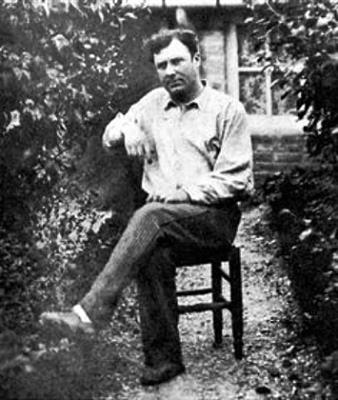
Biography
What Atget actually photographed was a city in the process of disappearing. Haussmann's renovation had already swept through, but pockets of old Paris survived: rag-pickers sorting waste in courtyards, prostitutes standing in doorways, fairground performers, window displays of mannequins posed in stiff rows. He photographed the boulevard de Strasbourg's shop windows repeatedly between 1900[1] and 1926, the headless figures inside acquiring an uncanny intensity that the pictures themselves do not quite explain.
After 1914[1] the work changed register. Where earlier photographs prized clarity above all, the later images carry a different weight: a stillness verging on desolation, shadows falling oddly, the familiar rendered strange. The pond at Saint-Cloud photographed in 1920 becomes something closer to a mirage than a record.
Man Ray discovered Atget in the mid-1920s, living nearby in Montparnasse, and began including his photographs in Surrealist publications. Shortly before Atget died in 1927[1], Man Ray's assistant Berenice Abbott acquired the bulk of his archive. The Surrealists claimed him as a forerunner; critics later called him the father of modern photography. Atget himself had probably never intended either designation.
Timeline
- 1857Born Eugène Atget.
- 1900Began photographing shop windows on the boulevard de Strasbourg; he continued this until 1926.
- 1914Atget's photographic style shifted, with later images displaying stillness and altered shadows.
- 1920Photographed the pond at Saint-Cloud.
- 1920Continued to catalogue Paris on large glass plates using a box camera and tripod.
- 1920Sold photographs to painters from his studio as working references.
- 1925Discovered by Man Ray in Montparnasse.
- 1927Died in 1927. Berenice Abbott acquired the bulk of his archive shortly before his death.
Notable Works
Tap to view larger.
Where to See Eugène Atget
1 museum worldwide.
-
 108 works
National Gallery of Art
Washington D.C., United States
Mon–Sat 10:00–17:00, Sun 11:00–18:00 · Free
Next stop
Browse the movements →
Every movement in the collection, from the Renaissance to Pop art.
Related Artists


Frequently Asked Questions
What is Eugène Atget's most famous work?
It is difficult to name a single, definitive most famous work by Eugène Atget, as his extensive photographic archive is celebrated for its breadth and documentary value. He produced thousands of photographs, mainly of Paris and its surroundings, during a period of significant urban change. Atget's work gained attention after his death, particularly through the efforts of Berenice Abbott, who recognised the artistic and historical importance of his photographs. His images document the architecture, streets, shops, and inhabitants of Paris from the late 19th century into the early 20th century. While he may not have one single piece that overshadows his entire body of work, his photographs, as a collection, are his most celebrated achievement.What should I know about Eugène Atget's prints?
Eugène Atget (1857[1]-1927[1]) was a French photographer known for documenting the architecture and street scenes of Paris, particularly its older quarters. He began this project in his middle age, creating a large collection of visual references useful for painters, designers, and craftspeople. Atget's photographs are characterised by their clarity and documentary style. He used a simple box camera and tripod, even after handheld cameras became available. He printed his images in the sun, rather than using a darkroom. The prints themselves can be categorised as vintage, period, modern, or facsimiles, depending on when they were made relative to the original negative. A vintage print is made around the time the negative was created, while a period print is made within 10 to 15 years of the shooting. Modern prints are recent photographs from the original negative. The art market considers the "originality" of a photographic print in relation to other art forms, such as painting or sculpture. The individual execution of the work is important. Some variations are accepted in photography, so long as the principle is protected.What style or movement did Eugène Atget belong to?
Eugène Atget (1857[1]-1927[1]) began photographing Paris in 1898[1], recording the city's streets, architecture, and parks. He aimed to create a collection of visual references for artists, designers, and craftspeople. His studio sign read simply "Atget, Documents for Artists". He was patronised by modern artists such as Georges Braque, Marcel Duchamp, and Pablo Picasso. Atget's work is associated with a strain of magic realism that predated Surrealism. The Surrealists, including Man Ray and Jean Cocteau, admired Atget's photographs for their elegiac and uncanny qualities. They saw him as a kindred spirit, due to the mysterious atmosphere conveyed in his images. Atget's photographs possess a subtle intensity and technical skill. His ability to compose in both two and three-dimensional space is notable. His scenes are often desolate, suggesting a strange and individual outlook. The viewer may experience the sensation that time has been transfixed. Atget's photographs have a hyperclarity that makes the ordinary seem extraordinary.What techniques or materials did Eugène Atget use?
Eugène Atget, working in the late 19th and early 20th centuries, employed a straightforward photographic method. He favoured a simple, direct approach, recording Paris and its surroundings. Atget used a box camera and tripod, even after handheld cameras became available. His printing process involved sunlight rather than darkroom development. His images were produced as commercial documents, available for purchase at a few francs each. He aimed to create a systematic record of Old Paris, capturing its architecture, street life, and residents. His subject matter included iron grillwork, shop windows, fountains, and ordinary street scenes. He compiled a large collection of visual references useful for painters, designers, and craftsmen. Clarity was a key feature of his photographs. His work captured a Paris that was disappearing due to modernisation.What was Eugène Atget known for?
Eugène Atget (1857[1]-1927[1]) is known for his documentary photographs of Paris. He began this project in middle age, compiling a large collection of visual references that he sold to painters, designers, and craftspeople. His images include street scenes, architecture, and parks. Clarity was a main feature of his style. Around 1914[1], his photographs began to show a different quality. They became imbued with an existential mood that set them apart from his earlier work. This elegiac, uncanny quality appealed to Surrealists such as Man Ray and Jean Cocteau, who championed Atget’s work. Atget photographed a Paris that was disappearing due to modernisation. His archive reads as a systematic topography of old Paris. He captured what he called "Paris pittoresque": marginal sites and people suspended between the historical and the contemporary. These included window displays, ragpickers, prostitutes, architecture, and street fairs. Atget used a simple, direct approach, favouring a box camera and printing his images in the sun, even after handheld cameras became common.When did Eugène Atget live and work?
Eugène Atget was born on 12 February 1857[1] in Libourne, France. He died on 4 August 1927[1] in Paris. He is best known for documenting the architecture and street scenes of Paris in the late 19th and early 20th centuries. Orphaned at a young age, Atget had various jobs, including a stint as a cabin boy and an actor. It was not until the late 1880s that he took up painting, and then photography, in the 1890s. He aimed to create a comprehensive archive of Parisian life, producing thousands of photographs of buildings, shops, streets, gardens, and people. He sold these images primarily to artists, architects, and institutions. Atget's work gained wider recognition in the mid-1920s, when the surrealist artist Man Ray and his assistant Berenice Abbott became interested in his photographs. Abbott acquired a collection of Atget's negatives and prints after his death, promoting his work in the United States. Today, Atget is considered an important figure in the history of photography, influencing generations of photographers with his documentary approach and artistic vision.Where can I see Eugène Atget's work?
Eugène Atget's photographs can be viewed in several museums and collections internationally. Many are in France, including the Musée d’Orsay, Musée des Arts Decoratifs, and Musée du Petit Palais, all in Paris. Others are in the Musée des Beaux-Arts in Besangon, Dijon, Lille, Nantes, Nice, Orleans, Quimper, Reims, and Rouen. Also the Musée d’Art et d’lndustrie in Saint Etienne, Musée du Prieure in Saint Germain-en-Laye, and Musée de 1’Annonciade in Saint Tropez. Outside France, collections include the Metropolitan Museum of Art and the Museum of Modern Art in New York; the Museum of Fine Arts, Boston; the National Gallery of Art in Washington, D.C.; the National Gallery of Canada, Ottawa; the Art Institute of Chicago; the Cleveland Museum of Art; and the Victoria and Albert Museum in London. These are just some of the locations where Atget's work may be seen.Where was Eugène Atget from?
Eugène Atget was born in Libourne, France, in 1857[1]. He is known for his documentary photographs of Paris, particularly its older sections, which he began in his middle age. His work aimed to capture the city's atmosphere and details, providing visual references for artists, designers, and craftspeople. Atget's photographs document the streets, architecture, and parks of Paris with clarity. Around 1914[1], his photography shifted towards a more existential mood, setting it apart from his earlier, purely documentary work. This later work, with its elegiac and uncanny qualities, appealed to Surrealists like Man Ray and Jean Cocteau. They saw a kindred spirit in Atget's ability to transform everyday scenes into something mysterious and evocative. Although he captured the city in a straightforward manner, his images often possess a haunting quality.Who did Eugène Atget influence?
Eugène Atget's photographs appealed to Surrealist artists, including Man Ray and Jean Cocteau. Man Ray, an American photographer and painter, collected Atget's photographs. He was interested in Atget's images of Paris, particularly those depicting marginal figures and locations. Atget's straightforward photographic style stood in contrast to the staged, soft-focus scenes that were common earlier. His clean compositions and attention to detail elevated everyday subjects. He photographed iron grillwork, shop windows, and fountains. His images often possess a haunting quality, and this hyperclarity made ordinary scenes appear extraordinary. Atget's work has been linked to that of Giorgio de Chirico, because of a shared sense of deadpan quirkiness. Later photographers such as Henri Cartier-Bresson also owe a debt to Atget. Cartier-Bresson, who began as a Cubist painter, aimed to capture the "decisive moment" in his photography.Who influenced Eugène Atget?
Eugène Atget's influences are complex, and not entirely agreed upon. Some have drawn parallels between Impressionist painting and early cinema, noting the importance of this connection for artists of the time. The emerging cinematograph of Auguste and Louis Lumière, who conceived the autochrome process, is one example. Others have pointed to the influence of earlier photographers and movements. The Kleeblatt photographers (Frietz Matthies-Masuren, Heinrich Kühn, and Hans Watzek) and pictorialist photography in Europe between 1888[1] and 1918 have been cited as potentially relevant. It is worth noting that Impressionist painters such as Claude Monet were themselves influenced by earlier artists. Monet credited the Normandy painter Jongkind as his "true master", who rounded out the artistic education he received from Boudin.Who was Eugène Atget?
Eugène Atget (1857[1]-1927[1]) was a French photographer who documented Paris, its architecture, street life, and residents. He began this project in middle age, creating a large collection of visual references that he hoped to sell to painters, designers, and craftspeople. Atget's photographs are characterised by their clarity and straightforward style. He photographed iron grillwork, shop windows, fountains, and parks. He aimed to record a Paris that was disappearing due to modernisation. He used a simple box camera and tripod, printing his images in the sun. Although Atget considered himself a chronicler of Paris, his work gained recognition from Surrealist artists such as Man Ray and Jean Cocteau. They saw a kindred spirit in his mysterious images. From about 1914[1], Atget began producing photographs with a metaphorical power that set them apart. These later works had an elegiac quality that appealed to the Surrealists. They rescued Atget from obscurity.Why are Eugène Atget's works important today?
Eugène Atget (1857[1]-1927[1]) began, in middle age, to document Paris. He compiled a large collection of visual references that could be sold to painters, designers, and craftspeople. His images of street scenes, architecture, and parks are characterised by their clarity. From around 1914[1], his photographs took on a different mood. They acquired a metaphorical power. This elegiac, unsettling quality appealed to Surrealists such as Man Ray and Jean Cocteau, who championed Atget’s work. Atget never considered himself an art photographer. He saw himself as a chronicler of Paris, its residents, and street life. He took straightforward photographs of subjects such as iron grillwork, shop windows, and fountains. His style was clean and uncluttered. He had an eye for detail, charging commonplace images with significance. His arresting scenes often have a haunted quality. The reduction to essentials lends a hyperclarity that makes the ordinary seem extraordinary.
Sources
Editorial draws on the following primary and tertiary references for Eugène Atget.
- [1] wikipedia Wikipedia: Eugène Atget Used for: biography, birth dates, death dates, identifiers, movement attribution, nationality.
- [2] book Masterpieces of western art : a history of art in 900 individual studies from the Gothic to the present day Used for: biography.
- [3] book Anfam, David A;Callen, Anthea. Techniques of the impressionists, Techniques of the great masters of art Used for: biography.
- [4] book Brodskai︠a︡, Natalʹi︠a︡ Valentinovna, The Fauves _ Art of Century Used for: biography.
Editorial overseen by Solis Prints. Sources verified 2026-10-15. Click a source for details, or hover over [N] in the page above to preview.
Editorial standardsMethodologyCorrectionsAI disclosureAbout the editorial team