



Edward Hopper
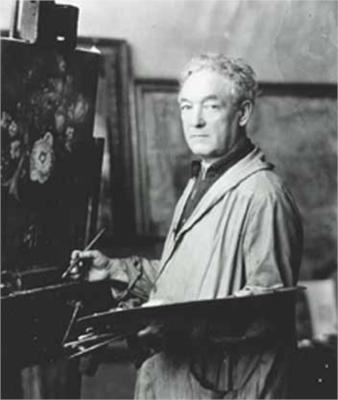
Hopper liked walking around New York at night, looking into lit windows. Room in New York, one of his best paintings, came from doing exactly that: glimpsing a couple in an apartment, not speaking to each other, the woman touching a piano key with one finger. He painted what he saw from the outside.

Biography
He grew up in Nyack, a small town on the Hudson River, studied illustration, then moved to Robert Henri's painting class at the New York School of Art. Henri was the central figure of the Ashcan School, which painted American life without prettifying it. Hopper absorbed the directness but not the social energy. His paintings got quieter, more still, more concerned with what people look like when they think nobody is watching.
He went to Paris three times between 1906 and 1910 and came back with Degas and Manet in his head: cropped compositions, angled light, figures caught mid-thought. Then he spent a decade failing commercially, working as an illustrator to pay the bills, and painting watercolours that nobody bought. Success came late. His first solo show was at forty-one.
In 1924 he married Josephine Nivison, a painter who had also studied under Henri. She modelled for nearly every female figure in his paintings, managed his career, and kept detailed records of every work he produced. The marriage was difficult. Both of them had sharp tempers. She engineered his public image as a recluse, which he was, mostly.
Nighthawks, the diner painting, was made in 1942. Jo named it. Hopper admitted he was probably painting the loneliness of a large city, though he was reluctant to say so directly. The diner has no visible door. People have pointed this out for eighty years and nobody has determined whether it was intentional.
Timeline
- 1882Born on 22 July in Nyack, New York, to a dry-goods merchant. The quiet Hudson River town coloured his lifelong preoccupation with American architecture and light.
- 1900Enrolled at the New York School of Art aged 18, studying under Robert Henri, who urged his students to paint everyday American life.
- 1924Married fellow artist Josephine Verstille Nivison in New York aged 42. Jo became his sole female model and managed his career meticulously.
- 1925Painted House by the Railroad aged 43. It became the first oil painting acquired by the newly founded Museum of Modern Art and later inspired the Bates house in Psycho.
- 1942Completed Nighthawks on 21 January aged 59. The painting of four figures in a late-night diner became the defining image of American urban isolation.
- 1967Died on 15 May in his studio near Washington Square, New York, aged 84. The Hoppers' combined estate of over 3,000 works went to the Whitney Museum.
Notable Works
Tap a work to read about it, or to view it larger.

Where to See Edward Hopper
34 museums worldwide.
-
 224 works
Whitney Museum of American Art
New York City, United States
Mon, Wed, Thu, Sat, Sun 10:30–18:00, Fri 10:30–22:00, closed Tuesdays · $30 adults, $24 seniors and students, free for 25 and under
-
20 works
National Gallery of Art
Washington D.C., United States
Mon–Sat 10:00–17:00, Sun 11:00–18:00 · Free
-
10 works
Metropolitan Museum of Art
New York City, United States
Sun–Tue, Thu 10:00–17:00; Fri–Sat 10:00–21:00; closed Wed · Adults $30, students $17 (pay-what-you-wish for NY residents)
-
5 works
Smithsonian American Art Museum
Washington D.C., United States
Mon–Sun 11:30–19:00 · Free
-
4 works
Museum of Modern Art
New York City, United States
Daily 10:30–17:30 (Sat until 19:00; first Fri of month until 20:00) · Adults $30, students $17
-
4 works
Yale University Art Gallery
New Haven, United States
Tue–Sat 10:00–17:00, Sun 13:00–17:00; closed Mon · Free


Next stop
Realism →
Explore the artists and ideas of Realism.
Edward Hopper prints
Hand-finished archival prints from Edward Hopper's body of work.
![The Lee Shore - Edward Hopper - Poster [HQ 7793503d44ae]](https://cdn.shopify.com/s/files/1/0833/9292/1935/files/Hopper-Poster-none-a0595e81b0f8.jpg?v=1791244751&width=480)


Related Artists


Take Edward Hopper home.
See all Edward Hopper prints →Frequently Asked Questions
How did edward hopper die?
Edward Hopper died in 1967 at the age of 85.How did edward hopper paint?
Edward Hopper is best known for his oil paintings, though they did not bring him critical or financial success until his late forties. He was only able to paint in his leisure time for the first fifteen years of his career.Is edward hopper public domain?
The works by Edward Hopper in the Permanent Collection of the Whitney Museum of American Art cover his entire creative life. This collection represents the most extensive public collection of work by any single American artist.Was edward hopper a good person?
While Edward Hopper presented a serious public image, he was apparently a prankster. As a boy, he reportedly dipped little girls' braids in inkwells, and he taunted new students at the New York School of Art.What is edward hopper best known for?
Edward Hopper is known as a chronicler of 1930s America. Before becoming a full-time artist at forty-two, Hopper worked as an illustrator.Where can i see edward hopper paintings?
Edward Hopper's works can be seen at Whitney Museum of American Art, National Gallery of Art, Metropolitan Museum of Art, and 2 other museums worldwide.Who was edward hopper's wife?
Edward Hopper's wife was Josephine Nivison, a painter who also studied under Robert Henri. She modelled for nearly every female figure in his paintings and managed his career.Why did edward hopper paint nighthawks?
Edward Hopper painted Nighthawks in 1942. He admitted he was probably painting the loneliness of a large city.Is edward hopper still alive?
No, Edward Hopper died in 1967.Where to see edward hopper?
Edward Hopper's works can be seen at Whitney Museum of American Art, National Gallery of Art, Metropolitan Museum of Art, and 2 other museums worldwide.
Sources
Editorial draws on the following primary and tertiary references for Edward Hopper.
- [1] museum Brooklyn Museum Used for: museum holdings.
- [2] museum Toledo Museum of Art Used for: museum holdings.
- [3] museum Currier Museum of Art Used for: museum holdings.
- [4] museum Buffalo AKG Art Museum Used for: museum holdings.
- [5] museum San Francisco Museum of Modern Art Used for: museum holdings.
- [6] museum New Britain Museum of American Art Used for: museum holdings.
- [7] book Hopper, Edward, 1882-1967;Levin, Gail, 1948-;Whitney Museum of American Art;Philip Morris Incorporated;National Endowment for the Arts;Hayward Gallery, Edward Hopper : the art and the artist Used for: biography.
- [8] book Hopper, Edward, 1882-1967, Edward Hopper : the art and the artist Used for: biography.
- [9] book Masterpieces of western art : a history of art in 900 individual studies from the Gothic to the present day Used for: biography.
Editorial overseen by Solis Prints. Sources verified 2026-10-07. Click a source for details, or hover over [N] in the page above to preview.
Editorial standardsMethodologyCorrectionsAI disclosureAbout the editorial team