



David Bowie
- pop rock
- ambient music
- new wave
- psychedelic pop
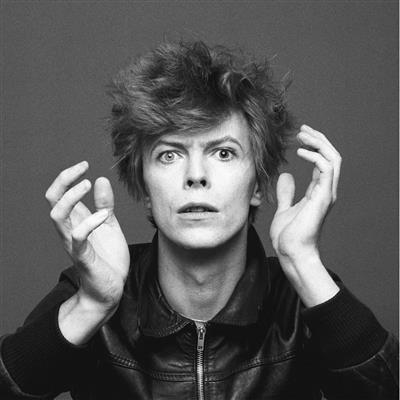
Long before his death in January 2016[1], David Bowie had established a parallel career in the visual arts that his fame as a musician persistently overshadowed. He made his first public appearance as an artist in 1963[1] at the Philomel Gallery in London, exhibiting alongside other young painters more than a decade before Ziggy Stardust. His practice deepened during the Berlin years of the late 1970s, when he immersed himself in German Expressionism and became a close student of Die Brücke.
Biography
His most sustained period of studio work produced the "DHead" portrait series in the mid-to-late 1990s, distorted, heavily impastoed portraits that owe an acknowledged debt to Francis Bacon and Frank Auerbach. In 1995[1] he mounted his first major solo exhibition, "New Afro/Pagan and Work: 1975–1995[1]," at The Gallery in London, presenting two decades of painting on public terms for the first time. From 1994 to 2001 he co-founded and edited Modern Painters, a serious contemporary art magazine, where his interviews with Balthus, Damien Hirst, and Jeff Koons underlined a genuine engagement rather than a collector's vanity project.
The V&A's "David Bowie is" retrospective, which opened in London in 2013[1] and toured to Berlin, Chicago, Paris, and Brooklyn, drew over two million visitors and consolidated his posthumous reputation as an artist in multiple media. Bowie's personal collection, auctioned at Sotheby's in November 2016[1] and realising £32 million, included works by Jean-Michel Basquiat, Tintoretto, Henry Moore, and Damien Hirst, choices that traced a coherent set of intellectual preoccupations rather than simple celebrity spending.
He was born David Robert Jones in Brixton, London on 8 January 1947[1] and died in New York on 10 January 2016[1], two days after his sixty-ninth birthday.
Timeline
- 1947Born David Robert Jones on 8 January in Brixton, London.
- 1963Made his first public appearance as an artist at the Philomel Gallery in London.
- 1975Began a period of studio work, producing paintings for two decades.
- 1990Created the "DHead" portrait series, distorted portraits influenced by Francis Bacon and Frank Auerbach.
- 1994Co-founded and edited Modern Painters magazine until 2001.
- 1995Mounted his first major solo exhibition, "New Afro/Pagan and Work: 1975–1995," at The Gallery in London.
- 2013The "David Bowie is" retrospective opened at the V&A in London.
- 2016Died in New York on 10 January, two days after his sixty-ninth birthday.
- 2016His personal art collection was auctioned at Sotheby's in November, realising £32 million.
Notable Works
Tap to view larger.
Next stop
Browse the movements →
Every movement in the collection, from the Renaissance to Pop art.
Related Artists




Frequently Asked Questions
What is David Bowie known for?
David Bowie is known for his music career; however, he also had a parallel career in the visual arts. He presented two decades of painting publicly for the first time in 1995[1] at The Gallery in London.What is David Bowie's most famous work?
It is difficult to name David Bowie's single most famous work, as his creative output spanned music, film, and performance. He achieved recognition for his innovative approach to music and stagecraft, his chameleon-like persona, and his willingness to experiment with different genres. Some might point to his early glam rock albums such as *The Rise and Fall of Ziggy Stardust and the Spiders from Mars* (1972[1]), which introduced his androgynous alter ego, Ziggy Stardust. Others might cite his collaborations with artists like Iggy Pop and Brian Eno in the late 1970s, which produced influential albums such as *Low* (1977) and *Heroes* (1977). His role in Nicolas Roeg's film *The Man Who Fell to Earth* (1976) also earned him acclaim. Bowie's career constantly evolved, making it difficult to single out one definitive work.What should I know about David Bowie's prints?
Information on David Bowie's prints is limited. As a general matter, prints are often produced in limited editions, a choice made by the artist rather than dictated by the medium. This limitation is declared on the print itself, usually in pencil, following established printmaking conventions. These conventions, while informal, are widely respected. The print number and edition number are written on the bottom left margin of the print; the title appears in the centre; the signature is on the right. Limited editions command higher prices than posters because original prints are made by hand. The number of prints is restricted, either by the wear of the plate or by the publisher to increase value. The Professional Art Dealers Association of Canada defines an original print as an image conceived and executed solely as a print, usually in a numbered edition, and signed by the artist. Each print is an original, individually inked and pulled from the matrix. A reproduction, however, is a copy of a work conceived in another medium.What style or movement did David Bowie belong to?
David Bowie's career resists easy categorisation. His work touched on numerous styles, and he actively defied expectations. Pop Art emerged in London during the mid-1950s, then entered the United States in the early 1960s. With roots in Dada, it explored the image-world of popular culture. Pop Art's techniques, styles and imagery drew inspiration from advertising, magazines, billboards, cinema, television and comics. Artists such as David Hockney made use of popular magazine-style images. Futurism adopted movement as its only principle and goal. Futurists saw art as transitioning from the static to the dynamic. They sought new technical resources that would allow movement to bodies. They believed the artistic era of colours and paralytic forms was coming to an end. Bowie's constant reinvention makes it difficult to place him within a single movement.What techniques or materials did David Bowie use?
Information on David Bowie's art techniques is scarce. Artists often make choices that go beyond the limitations of their materials. Understanding these choices requires knowledge of the techniques and processes they employ. Oil paint is a versatile medium that allows for easy blending, making it suitable for creating smooth transitions of tone and colour. Oil paint can be layered to create effects; for example, in Jan van Eyck's "The Arnolfini Portrait", the green dress is composed of layers of verdigris pigment mixed with lead white and tin-lead yellow, finished with a translucent glaze of verdigris in boiled linseed oil with pine-resin. This layering creates the appearance of expensive cloth. Every medium possesses particular strengths and constraints; a new technique can suggest novel possibilities. Watercolour, for example, requires working from light to dark, as light colours cannot be applied over dark ones. This necessitates careful planning to achieve desired colour effects.What was David Bowie known for?
David Bowie (born David Robert Jones in Brixton, London, in 1947[1]) was a musician, actor, and artist. He is best known as a hugely influential popular-music performer, particularly for his 1970s glam-rock persona, Ziggy Stardust. Bowie's career began in the 1960s. He explored varied musical styles, including art rock, and he collaborated with artists across many disciplines. He also acted in films, including "The Man Who Fell to Earth" (1976[1]) and "Labyrinth" (1986). Pop Art emerged in London in the mid-1950s, then entered the United States in the early 1960s. The style used techniques and imagery derived from mass media and consumer society. Pop Art's inspiration came from advertising, magazines, posters, cinema, television, comics, and shop displays. Peter Blake, Richard Hamilton, David Hockney, Roy Lichtenstein, and Andy Warhol are artists associated with Pop Art.Where can I see David Bowie's work?
To view works associated with David Bowie, consider several museums with collections of modern art and design. In the United States, the Metropolitan Museum of Art (New York), the Los Angeles County Museum of Art (LACMA), the Minneapolis Institute of Arts, the Museum of Modern Art (New York), the Virginia Museum of Fine Arts (Richmond), and the Wolfsonian (Miami Beach, Florida) all hold relevant collections. The Charles Hosmer Morse Museum of American Art (Winter Park, Florida) also has holdings that may be of interest. In Canada, the Royal Ontario Museum (Toronto) may have relevant works on display. In the United Kingdom, possible locations include the Brighton Museum & Art Gallery, the Geffrye Museum (London), the Manchester Art Gallery, the National Museums of Scotland (Edinburgh), and the Victoria & Albert Museum (London). The Bakelite Museum may also be of interest. In continental Europe, museums to consider are the Bauhaus Archive-Museum für Gestaltung (Berlin), the Bauhaus Dessau Foundation, the Bröhan-Museum (Berlin), the Kunstgewerbe Museum of Decorative Arts (Berlin), the MAK Austrian Museum of Applied Art/Contemporary Art (Vienna), the Museum beim Markt (Karlsruhe, Germany), and the Museum für Kunst und Gewerbe Hamburg.Where was David Bowie from?
David Bowie was not an artist but the British[1] Pop artist Peter Blake was born in Dartford, Kent, in 1932. He was the eldest of three children. His family was lower middle class; his father was an electrician, and his mother was a nurse. Blake attended the Gravesend School of Art before going to the Royal College. By 1961[1], he had been wearing denim for about ten years. He had noticed one of his teachers at the Gravesend School of Art wearing jeans after returning from a trip to America. At first, Blake improvised his own denim, as jeans were not yet available for purchase in Britain. He bought a carpenter’s bib and brace, cut off the top, and made a pair of jeans from the cotton material.Who did David Bowie influence?
Identifying influence is a complex matter in art history. Declaring someone an influence can be a way of declaring who was 'first', and therefore 'greatest'. Art dealers and critics may use claims of influence to promote artists, but some historians caution against overstating connections. That said, David Bowie's influence can be seen in many places. Ryan Trecartin, a contemporary video artist, makes films that explore the impact of digital technology. His films include outlandish wigs and make-up, and are reminiscent of Andy Warhol's superstars. Jeremy Deller met Warhol and noted that Warhol's obsessions (celebrity, shopping, socialising, sex) are now the preoccupations of reality online. Warhol's Pop Art has been a fundamental influence on Trecartin.Who influenced David Bowie?
Identifying specific artistic influences on David Bowie is difficult. However, Andy Warhol certainly impacted a generation of artists. Warhol began his move into fine art in 1961[1], after a conversation with art dealer Muriel Latow. From 1962, he created screen prints, which could be reproduced hundreds of times. He used bright colours and made each image look slightly messy; the works defied conventional distinctions between fine and commercial art. From 1964, Warhol employed assistants to produce his silkscreen pictures in the fashion of an assembly line. He expanded into performance art, film-making, photography and sculpture. Like Marcel Duchamp before him, he promoted the concept that an artist’s idea is more important than learnt technical skills. He altered beliefs about art, materials and techniques, and about boundaries between high and low art. Jean-Michel Basquiat was hugely influenced by Warhol; after they met in 1982, they became great friends and collaborators.Who was David Bowie?
David Bowie was a musician who also had a career in the visual arts, though his musical fame overshadowed this aspect of his work. He made his debut as an artist in 1963[1], exhibiting alongside other young painters.Why are David Bowie's works important today?
David Bowie's significance lies in his ability to break down barriers between high and low culture, a concept that remains relevant for artists today. Pop Art, as a movement, taught a lesson about Western society: the traditional divisions between avant-garde and mass culture had become blurred. Bowie's work embodies this blurring, influencing contemporary artists who navigate a world where these distinctions are increasingly meaningless. Furthermore, Bowie’s career coincided with an era of celebrity-making. Like Andy Warhol, he cultivated a persona that was both intellectual and accessible. This approach resonated with a new generation seeking art that defied easy categorisation. His impact extends beyond music into visual culture, fashion, and performance. The globalisation of the art world has reinforced the questioning of traditional hierarchies. While certain countries and artists may still dominate institutional recognition, the overall trend is towards a more decentralised and interconnected art scene. Bowie's work, with its blend of influences and embrace of diverse forms of expression, anticipates this globalised perspective.
Sources
Editorial draws on the following primary and tertiary references for David Bowie.
- [1] wikipedia Wikipedia: David Bowie Used for: biography, birth dates, death dates, identifiers, movement attribution, nationality.
- [2] book Charlotte Mullins, A Little History of Art Used for: biography.
- [3] book David Hockney; Maurice Tuchman; Stephanie Barron; Los Angeles County Museum of Art, David Hockney a retrospective _ [Los Angeles County Museum of Art, 4.2 - 24.4.1988; New York, The Metropolitan Museum of Art, 18.6. - 14.8.1988; London, Tate Ga Used for: biography.
- [4] book guggenheim-popicons00gugg Used for: biography.
- [5] book Alastair Sooke, Pop Art Used for: biography.
- [6] book Carol Strickland and John Boswell, The Annotated Mona Lisa Used for: biography.
- [7] book Carol Strickland and John Boswell, The Annotated Mona Lisa Used for: biography.
Editorial overseen by Solis Prints. Sources verified 2026-10-16. Click a source for details, or hover over [N] in the page above to preview.
Editorial standardsMethodologyCorrectionsAI disclosureAbout the editorial team