



Bruce Nauman
- conceptual art
- postminimalism
Bruce Nauman gave up painting in 1964, the year he began his undergraduate studies in Wisconsin, and never went back. What replaced it, over the following six decades, defied any single description: fiberglass body casts, neon wordplay, video loops showing himself performing repetitive actions, motorised carousels hung with cast-aluminium animal carcasses, and darkened rooms where visitors encountered their own bodies and senses as the subject matter.
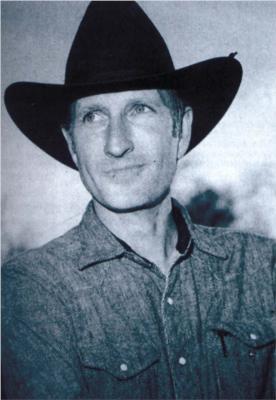
Biography
Born in Fort Wayne, Indiana in 1941[1], Nauman studied mathematics and physics before switching to art, graduating from the University of Wisconsin in 1964 and completing his MFA at UC Davis in 1966 under William T. Wiley and Robert Arneson. He has cited Wittgenstein's 'Philosophical Investigations' as a persistent influence on his approach to language, and it shows: his neon works, including 'Raw War,' 'Run from Fear/Fun from Rear,' and 'None Sing/Neon Sign,' exploit the arbitrary relationship between words, their sounds, and their visual appearance. His first neon piece, 'The True Artist Helps the World by Revealing Mystic Truths' (1967), occupies an ironic position he acknowledged was 'totally silly' but also entirely sincere.
Nauman selected neon partly because it was a medium associated with advertising rather than art, consistent with his broader habit of finding materials in the margins. His first retrospective toured LACMA and the Whitney in 1972, and a major retrospective circulated internationally between 1993 and 1995. He participated in Documenta five times, from 1968 to 1992.
The work resists the idea that art produces objects. For Nauman, the viewer's perceptual experience of body, language, and duration is what the work is about.
Timeline
- 1941Born in Fort Wayne, Indiana.
- 1964Stopped painting at 23, the year he began undergraduate studies in Wisconsin.
- 1964Graduated from the University of Wisconsin at 23.
- 1966Completed his MFA at UC Davis under William T. Wiley and Robert Arneson at 25.
- 1967Created his first neon piece, "The True Artist Helps the World by Revealing Mystic Truths".
- 1968Participated in Documenta for the first time.
- 1972His first retrospective toured LACMA and the Whitney.
- 1992Participated in Documenta for the fifth time.
- 1993A major retrospective circulated internationally between 1993 and 1995.
Notable Works
Tap to view larger.
Next stop
Browse the movements →
Every movement in the collection, from the Renaissance to Pop art.
Related Artists


Frequently Asked Questions
What is Bruce Nauman known for?
Bruce Nauman is known for an open-ended body of work that includes fibreglass sculptures, abstract body casts, performances, films, neon wall reliefs, interactive environments, videos, and motorised carousels.What is Bruce Nauman's most famous work?
It is difficult to identify one single work as Bruce Nauman's most famous, given the diversity of his output. Since the mid-1960s, Nauman has resisted a signature style, producing fibreglass sculptures, body casts, performances, films, neon wall reliefs, and video installations. His neon signage from the 1960s, perhaps a response to Pop art, uses wordplay to explore the relationships between words, sounds, and appearances. An example is *None Sing/Neon Sign*, an anagram typical of his semiotic explorations. Another neon work, a circular sign from 1967, states *the true artist helps the world by REVEALING MYSTIC TRUTHS*. Nauman's installations often explore the viewer's physical and intellectual experience of space. *Green Light Corridor* and *Lighted Performance Box* alter one's perception through light and confinement. *Video Surveillance Piece (Public Room, Private Room)* uses video to create discomfort and insecurity related to spatial awareness.What should I know about Bruce Nauman's prints?
Bruce Nauman, born in 1941[1], is an American[1] artist who works across many media. He is known for sculpture, video, and performance works, and he has also produced a substantial body of prints. Nauman began making prints in the late 1960s. His early works often related to his sculpture and performance pieces. For example, his print *Studies for Hologram* (1970) connects to his explorations of three-dimensional space and perception. Many of his prints feature text, often presented in a stark, graphic style. These works explore language, communication, and the body. Nauman frequently employs screen printing and lithography. These techniques allow for bold lines and flat areas of colour, fitting his conceptual approach. His prints are characterised by their directness and often explore themes of alienation, anxiety, and the human condition. They are not always easy to interpret, but they invite viewers to question assumptions about art and its role. His prints can be found in major museum collections, and they remain an important aspect of his artistic output.What style or movement did Bruce Nauman belong to?
Bruce Nauman's practice resists easy categorisation, as he avoids a single signature style. Active since the mid-1960s, Nauman has worked across sculpture, performance, film, neon, video, and installation. His philosophical explorations align him with Conceptual art. Conceptual artists consider the concept as the defining component of a work; some create works involving invisible materials. Nauman explores language and wordplay, often incorporating humour. His neon sculpture *The True Artist Helps the World by Revealing Mystic Truths* (1967) reflects his interest in connecting objects with words. He chose neon to connect with a non-artistic function. Nauman's work also intersects with Process Art. Documentation of the artist's engagement is of importance. Nauman communicates a superficial boredom in the painstaking documentation of inconsequential acts. Titles are often imperative to an appreciation of the work and offer an ironic commentary. He has eliminated most of the physical properties characteristic of recent sculpture; his materials are generally nondescript.What techniques or materials did Bruce Nauman use?
Bruce Nauman's career began in 1964 after he gave up painting, and he then explored sculpture and performance art. He was born in Fort Wayne, Indiana, in 1941[1] and studied art, mathematics, and physics at the University of Wisconsin. He later studied under William T Wiley and Robert Arneson at the University of California, Davis. Nauman defies the idea that an artist should have one style. Since the mid-1960s, he has worked with diverse media, such as fibreglass sculptures, body casts, films, neon wall reliefs, interactive environments, videos, and motorised carousels. These carousels sometimes display cast-aluminium animal carcasses. His neon signage, adopted in the 1960s, illustrates wordplay, for example, *None Sing/Neon Sign*. In his early career, Nauman used his own body as a medium to communicate ideas. He documented his actions in photography, film, and video. In the mid-1980s, Nauman began experimenting with the possibilities of video, projecting videos directly onto walls and using multiple monitors in the same room.What was Bruce Nauman known for?
Bruce Nauman (born 1941[1]) is an American[1] artist whose work spans a range of media, including sculpture, video, neon, and performance. He studied mathematics and physics at the University of Wisconsin, then art at the University of California, Davis. Nauman's early work often explored the relationship between the body and space. He used his own body in performances and videos, testing its limits and exploring its potential for expression. His interest in language is also evident in his neon sculptures, which often feature words or phrases that are open to multiple interpretations. Throughout his career, Nauman has challenged conventional notions of what art can be. He has embraced experimentation and pushed the boundaries of different media. His work often deals with themes of alienation, anxiety, and the human condition. Major exhibitions of Nauman's output have been staged at the Museum of Modern Art, New York; the Whitechapel Gallery, London; and the Musée d’Art Moderne de la Ville de Paris. He represented the United States at the Venice Biennale in 2009, receiving the Golden Lion award.When did Bruce Nauman live and work?
Bruce Nauman was born in Fort Wayne, Indiana, in 1941[1]. He studied mathematics, physics, and art at the University of Wisconsin, Madison, receiving a Bachelor of Arts degree in 1964. He continued his studies at the University of California, Davis, earning a Master of Arts degree in 1966. Nauman's work has been exhibited extensively since the mid-1960s. His first solo exhibition was at the Nicholas Wilder Gallery, Los Angeles, in 1966. Subsequent solo shows followed at the Leo Castelli Gallery, New York, and Galerie Konrad Fischer, Düsseldorf, in 1968. He has participated in numerous group exhibitions, including Documenta in Kassel, Germany (1968, 1972, 1977, 1982, and 1992); the Tokyo Biennale (1970); and the Venice Biennale (1978 and 1980). In 1972, the Los Angeles County Museum of Art and the Whitney Museum of American[1] Art jointly organised a retrospective exhibition of his work. Nauman received an Honorary Doctor of Fine Arts degree from the San Francisco Art Institute in 1989 and the Max Beckmann Preis from the City of Frankfurt in 1990. As of 1994, he resided in Galisteo, New Mexico.Where can I see Bruce Nauman's work?
Bruce Nauman's work has been featured in many group and solo exhibitions. His first solo exhibition was at the Nicholas Wilder Gallery, Los Angeles, in 1966. He had solo shows at Leo Castelli Gallery, New York, and Galerie Konrad Fischer, Düsseldorf, in 1968; these galleries represented him throughout his career. That same year, he participated in Documenta 4. In 1972, the Los Angeles County Museum of Art and the Whitney Museum of American[1] Art jointly organised a retrospective exhibition of his work, which toured the United States and Europe. Later exhibitions of Nauman's work have been held at the Rijksmuseum Kroller-Muller, Otterlo (1981), the Whitechapel Art Gallery, London (1986), and the Museum of Contemporary Art, Los Angeles (1988). A retrospective was organised by the Walker Art Center, Minneapolis, in 1994, including sculptures, installations, neon works, videos, photographs, and drawings.Where was Bruce Nauman from?
Bruce Nauman was born in Fort Wayne, Indiana, in 1941[1]. He studied at the University of Wisconsin, Madison, from 1960, receiving a Bachelor of Arts degree in 1964. He then studied with William T Wiley and Robert Arneson at the University of California at Davis, graduating with a Master of Arts degree in 1966. Nauman's first solo show was held at the Nicholas Wilder Gallery, Los Angeles, in 1966. In 1968, he had his first New York exhibition at the Leo Castelli Gallery, and another at Galerie Konrad Fischer, Düsseldorf. That same year, he participated in Documenta 4, in Kassel, Germany, and received a grant from the National Endowment for the Arts, which enabled him to work in New York. He taught at the San Francisco Art Institute from 1966 to 1968, and at the University of California, Irvine, in 1970. As of 1994, Nauman resides in Galisteo, New Mexico.Who did Bruce Nauman influence?
Bruce Nauman's artistic language owes much to Jasper Johns. The intellectual rigour of Johns's assemblages provided inspiration for Nauman's drawings, sculptures, and installations. Nauman's work has influenced artists such as Cindy Sherman and Bill Viola. Sherman, like Nauman, uses visual punning in her work. Viola, like Nauman, combines Eastern and Western themes in video projections. Nauman's influence can also be seen in the work of Shirin Neshat, who, like Viola, creates video sequences, but arranges them so viewers must shift position to see them all. This replicates social and gender-based oppositions. Nauman's interest in using objects to represent ideas, and his exploration of the breakdown of language as a tool for communication, also connects him to Marcel Duchamp. His work, like Duchamp's, often includes ironic commentary on art and the nature of art objects.Who influenced Bruce Nauman?
Bruce Nauman, born in 1941[1], began his art studies at the University of Wisconsin, Madison, initially focusing on mathematics and physics before earning a Bachelor of Arts degree in 1964. He then pursued a Master of Arts degree at the University of California, Davis, studying under William T. Wiley and Robert Arneson, completing his studies in 1966. Minimalism was becoming more influential around 1965, when Nauman started his career. Rather than aligning with or opposing this movement, Nauman chose self-confrontation within his studio. Nauman's early artistic language owes a debt to Jasper Johns. The intellectual rigour of Johns's assemblages proved a more congenial source of inspiration than the ironic detachment of Marcel Duchamp's surrealist found objects. This influence is seen in Nauman's wax casts of body parts, words, and furniture fragments, which became predominant themes in his drawings, sculptures, and installations. Nauman experimented with film early in his career. By the mid-1980s, he began experimenting more rigorously with the plastic possibilities of video.Who was Bruce Nauman?
Bruce Nauman (born 1941[1]) is an American[1] artist who works in a range of media. He is known for his conceptual approach, often using sculpture, video, neon, and performance. Nauman studied mathematics and physics at the University of Wisconsin, then art at the University of California, Davis, where he was influenced by William T. Wiley and Robert Arneson. Early in his career, he explored body art and performance, using his own body as a subject. His work frequently engages with language, exploring its potential for communication and miscommunication. Many pieces incorporate text, often in the form of neon signs. These works play with meaning and perception. For example, his neon sculpture *The True Artist Helps the World by Revealing Mystic Truths* (1967) presents a paradoxical statement. Nauman has been recognised with numerous awards. He represented the United States at the Venice Biennale in 2009, receiving the Golden Lion for Lifetime Achievement. His art is included in major museum collections around the world.
Sources
Editorial draws on the following primary and tertiary references for Bruce Nauman.
- [1] wikipedia Wikipedia: Bruce Nauman Used for: biography, birth dates, death dates, identifiers, movement attribution, nationality.
- [2] book guggenheim-guggenheimintern1971solo Used for: biography.
- [3] book guggenheim-mediascape00klot Used for: biography, stylistic analysis.
- [4] book guggenheim-museum00solo Used for: biography, stylistic analysis.
- [5] book guggenheim-nineyoungartists00solo Used for: biography, stylistic analysis.
Editorial overseen by Solis Prints. Sources verified 2026-09-22. Click a source for details, or hover over [N] in the page above to preview.
Editorial standardsMethodologyCorrectionsAI disclosureAbout the editorial team