



Augusta Savage
- Harlem Renaissance
Augusta Savage's father, a Methodist minister in Green Cove Springs, Florida, interpreted the Second Commandment as a direct prohibition on sculpture and beat his daughter four or five times a week to stop her making clay figures. She did not stop. That early confrontation with institutional authority became a pattern: in 1923[1], Savage won a competitive scholarship to study in Fontainebleau, only for the organising committee to withdraw it when they discovered she was Black. She kept working, moved to New York, enrolled at Cooper Union, and within a decade was teaching the next generation of American[1] artists from a studio in Harlem.
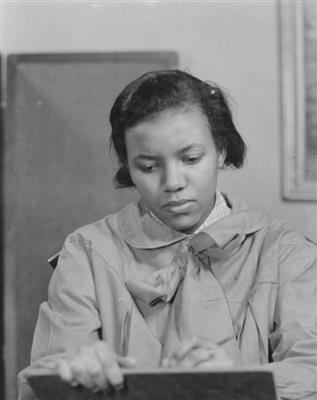
Biography
Her best-known surviving work is *Gamin* (c. 1930[1]), a painted plaster portrait of a Black boy with his cap tilted and his gaze fixed sideways with careful, watchful curiosity. At 22.9 × 14.7 centimetres, it is intimate in scale but commanding in presence. Plaster was a practical choice: Savage lacked the funds to cast in bronze. The work won her a scholarship to Paris, where she studied at the Académie de la Grande Chaumière. A larger version is in the Cleveland Museum of Art; the original is in the Smithsonian American[1] Art Museum in Washington DC.
Her largest commission, *The Harp* (1939[1]), was created for the New York World's Fair. The structure used an outstretched arm and hand as the base of a harp, with a choir of young Black men serving as the instrument's strings. It received rapturous reviews. Savage could not afford to cast it in metal; when the Fair closed, the plaster was destroyed. In 1934 she had become the first African American[1] elected to the National Association of Women Painters and Sculptors, and through the Depression decade she ran the Harlem Community Arts Center under the WPA, training students including Jacob Lawrence. Her own assessment of this work was characteristically direct: "If I can inspire one of these youngsters to develop the talent I know they possess, then my monument will be in their work."
Timeline
- 1892Born in Green Cove Springs, Florida. Her father, a Methodist minister, opposed her early interest in sculpture.
- 1923Won a scholarship to study in Fontainebleau, but it was rescinded when the committee discovered she was Black.
- 1930Created "Gamin", a painted plaster portrait of a Black boy.
- 1930Received a scholarship to Paris after creating "Gamin".
- 1930Studied at the Académie de la Grande Chaumière in Paris.
- 1930Moved to New York and enrolled at Cooper Union.
- 1934Became the first African American elected to the National Association of Women Painters and Sculptors.
- 1939Created "The Harp" for the New York World's Fair.
- 1962Died at 70.
Notable Works
Tap to view larger.
Next stop
Browse the movements →
Every movement in the collection, from the Renaissance to Pop art.
Related Artists
_%E2%80%93_LOC.jpg)
Frequently Asked Questions
What is Augusta Savage known for?
Augusta Savage is known for her sculptures, such as *Gamin* (c. 1930[1]), a painted plaster portrait of a Black boy, and *The Harp* (1939), created for the New York World's Fair. She is also known for being the first African American[1] elected to the National Association of Women Painters and Sculptors in 1934.What is Augusta Savage's most famous work?
Augusta Savage is best known for her sculpture *Lift Every Voice and Sing*, sometimes called *The Harp*. Created for the 1939[1] New York World's Fair, the piece was commissioned as part of a display of black artists. Savage took inspiration from James Weldon Johnson's poem of the same title, also known as the "Negro National Anthem". The sculpture was 16 feet tall and made of painted plaster. It depicted twelve black singers stylised as the strings of a harp. A kneeling figure in the front held music in their hands. According to some accounts, the figure at the front was meant to represent youth offering up its gifts. Unfortunately, like much of the art displayed at the fair, *The Harp* was destroyed after the exhibition closed. Plaster was a cheap material, chosen because of Savage's limited budget. No casts in bronze or other permanent materials were ever made. Today, photographs and small-scale reproductions are the primary means of appreciating this lost work. Despite its destruction, *Lift Every Voice and Sing* remains Savage's most celebrated creation, a symbol of black artistic achievement during the Harlem Renaissance[1].What should I know about Augusta Savage's prints?
Augusta Savage (1892[1]-1962[1]) is remembered as a sculptor and educator associated with the Harlem Renaissance[1]. While she is best known for her three-dimensional work, knowledge about any prints she may have produced is scarce. Savage faced considerable adversity. Her father disapproved of her artistic pursuits, and she encountered racial discrimination when a scholarship to study in France was revoked after the committee discovered she was black. Despite these challenges, she persevered. Her sculpture *Gamin*, a painted plaster bust of a young black boy, won her a scholarship. Examples of her sculptures include *Musician and Dancer* (Art Institute of Chicago), *Portrait Head of John Henry* and *Young Boy* (Boston Museum of Fine Arts), and *Gamin* (Smithsonian American[1] Art Museum and Cleveland Museum of Art). In 1939[1], Savage created *The Harp* for the New York World’s Fair; however, it was destroyed after the event because she lacked funds to have it cast in bronze. During the Great Depression, she directed the Harlem Community Arts Center, where she mentored a generation of black artists, including Jacob Lawrence. In 1934, Savage became the first African-American woman elected to the National Association of Women Painters and Sculptors.What style or movement did Augusta Savage belong to?
Augusta Savage is associated with the Harlem Renaissance[1], an artistic and intellectual movement that occurred in Harlem, New York, during the 1920s. This movement arose from the migration of African Americans from the Southern plantations to the industrial cities of the North, where they fought for civil rights. Savage, a sculptor, is considered the most well-known sculptor of the Harlem Renaissance. The artists of this movement worked in various styles, celebrating their identity as Black Americans and their African heritage. Savage's work often depicted Black subjects, and she became the first African-American[1] artist elected to the National Association of Women Painters and Sculptors in 1934[1]. Despite facing obstacles such as racial discrimination and lack of funding, Savage persevered and created pieces like *The Harp* for the 1939 New York World's Fair. She also ran the Harlem Community Arts Center during the Great Depression, where she taught and inspired a new generation of Black artists, including Jacob Lawrence. Although some of her sculptures were lost or destroyed, works such as *Gamin* remain as important examples of her contribution to the Harlem Renaissance.What techniques or materials did Augusta Savage use?
Sculptors select materials for their capacity to realise a finished work. Augusta Savage primarily used modelling techniques, an additive process where a pliable material is built up and shaped. Materials used in modelling include clay, wax, and plaster. Carving is another sculptural process, a subtractive technique where material is removed from a mass until the form is exposed. Materials for carving include stone and wood; each has unique characteristics that artists must consider. Marble, for example, offers varied colours and vein patterns and can be polished or left textured. Wood offers warmth, colour and grain. The choice of material and technique influences the final appearance and the viewer's experience of the sculpture.What was Augusta Savage known for?
Augusta Savage (1892[1]-1962[1]) is remembered as a sculptor of the Harlem Renaissance[1]. She is also known for her work as an educator, teaching a generation of black artists. Savage overcame many obstacles. Her father disapproved of her art, and she faced racial discrimination when a scholarship to study in France was withdrawn after it was discovered she was black. In 1934[1], Savage became the first African-American[1] artist elected to the National Association of Women Painters and Sculptors. In 1939, she was commissioned to create a sculpture for the New York World’s Fair. This work, titled *The Harp*, depicted a choir of young black choristers as the strings of a harp. Although critically acclaimed, Savage could not afford to have it cast in bronze, and it was destroyed after the fair. Several of Savage’s sculptures survive, including *Musician* and *Dancer* (Art Institute of Chicago), *Portrait Head of John Henry* and *Young Boy* (Boston Museum of Fine Arts), and *Gamin*. *Gamin*, perhaps her best-known work, is a painted plaster bust of a young black boy. During the Great Depression, Savage ran the Harlem Community Arts Center, where she taught and inspired many young artists, including Jacob Lawrence.When did Augusta Savage live and work?
Augusta Savage was born in 1892[1] and died in 1962[1]. She is remembered as a sculptor associated with the Harlem Renaissance[1]. Savage faced many obstacles. Her father disapproved of her art, and she experienced racial discrimination when a scholarship to study in France was revoked after the committee discovered she was black. Despite these challenges, she persevered, becoming the first African-American[1] artist elected to the National Association of Women Painters and Sculptors in 1934[1]. During the Great Depression, Savage ran the Harlem Community Arts Center as part of the WPA (Works Progress Administration). There, she and other teachers, including William H. Johnson, instructed a new generation of black artists. Norman Lewis, later an abstract expressionist, studied with Savage in the 1930s. Jacob Lawrence also cited her as a great teacher who benefited him and many other artists. Although Savage created a sculpture called *The Harp* for the 1939 New York World's Fair, she could not afford to have it cast in bronze, and it was destroyed after the event. Some of her sculptures that have survived include *Musician* and *Dancer* at the Art Institute of Chicago, *Portrait Head of John Henry* and *Young Boy* in Boston’s Museum of Fine Arts, and *Gamin* in the Smithsonian American Art Museum.Where can I see Augusta Savage's work?
Augusta Savage's sculptures can be viewed in several American[1] art museums. These include the Art Institute of Chicago, which holds *Musician* and *Dancer*, and the Museum of Fine Arts in Boston, which has *Portrait Head of John Henry* and *Young Boy*. Her best-known work, *Gamin*, is displayed in two locations: the Smithsonian American Art Museum and the Cleveland Museum of Art; the latter holds the larger version. *Gamin* (c. 1929[1]) depicts a Black boy, roughly twelve years old, gazing inquisitively. Savage painted the plaster bust to resemble bronze. One of Savage's students was Jacob Lawrence; he stated that he and many other artists benefited from her instruction and from the WPA (Works Progress Administration) programmes.Where was Augusta Savage from?
Augusta Savage was born in Green Cove Springs, Florida, in 1892[1]. Her early life was marked by significant obstacles, including her father's disapproval of her artistic pursuits. He misinterpreted the Second Commandment and punished her for creating sculptures. Despite this, Savage persevered. Later, Savage moved north during the Great Migration, part of the Harlem Renaissance[1]. This social, artistic, and intellectual movement saw African Americans moving from the plantations of the South to industrial cities, fighting for civil rights and celebrating their identity. She became a prominent figure in the Harlem art scene, especially as a sculptor. In 1934[1], Savage achieved a milestone, becoming the first African-American[1] artist elected to the National Association of Women Painters and Sculptors. She also established the Harlem Community Arts Center, supported by the WPA, where she and other teachers, such as William H. Johnson, instructed a new generation of Black artists.Who did Augusta Savage influence?
Augusta Savage's influence stemmed from her teaching and her role in the Harlem Renaissance[1]. She ran the Harlem Community Arts Center during the Great Depression, where she educated a generation of Black artists. William H. Johnson was among her teachers at the centre. Savage herself stated that her monument would be in the work of the youngsters she inspired. One of her students was Jacob Lawrence, who stated that he and many other artists benefited from Savage and the WPA (Works Progress Administration). Lawrence found his subjects in modern history, concentrating on the culture and history of African Americans. Savage's election to the National Association of Women Painters and Sculptors in 1934[1] also boosted the civil rights movement and the recognition of Black women in society. Other female artists of the period, such as Selma Burke, Gwendolyn Bennett, and Lois Mailou Jones, struggled for independence and recognition in the face of sexism and racism.Who influenced Augusta Savage?
Augusta Savage received instruction from several sculptors and instructors who affected her artistic development. In 1921[1], she moved to New York City and enrolled at the Cooper Union School of Art. There, she studied under George Brewster, a sculptor known for his work on architectural projects. Savage also won a scholarship to study at the Fontainebleau School of Fine Arts in France in 1923. However, the scholarship was revoked when officials learned she was Black. This incident brought her considerable publicity and support from the Black community. Later, she studied with sculptor Hermon Atkins MacNeil, gaining skills in creating realistic figures. Savage's work also shows the influence of the Harlem Renaissance[1], a cultural movement that promoted Black artistic expression. Her sculptures often depicted Black subjects, reflecting her cultural pride and artistic vision. Through her teachers and involvement in the Harlem Renaissance, Savage developed a unique artistic style that combined academic training with cultural themes.Who was Augusta Savage?
Augusta Savage was an American[1] sculptor and teacher who trained the next generation of artists from a studio in Harlem. She is known for overcoming obstacles, such as having a scholarship withdrawn when the organising committee discovered she was Black. In 1934[1], she became the first African American elected to the National Association of Women Painters and Sculptors.
Sources
Editorial draws on the following primary and tertiary references for Augusta Savage.
- [1] wikipedia Wikipedia: Augusta Savage Used for: biography, birth dates, death dates, identifiers, movement attribution, nationality.
- [2] book Jesse Bryant Wilder, Art History For Dummies Used for: biography, stylistic analysis.
- [3] book Dorling Kindersley, Artists: Inspiring Stories of the World's Most Creative Minds Used for: biography.
- [4] book Norma Broude, The Expanding Discourse Used for: stylistic analysis.
- [5] book Hodge, Susie, 1960- author, The short story of women artists : a pocket guide to movements, works, breakthroughs, & themes Used for: biography, stylistic analysis.
Editorial overseen by Solis Prints. Sources verified 2026-10-16. Click a source for details, or hover over [N] in the page above to preview.
Editorial standardsMethodologyCorrectionsAI disclosureAbout the editorial team