



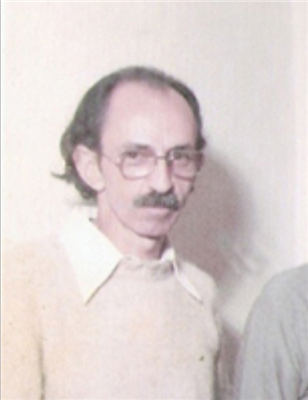
Arthur Nísio
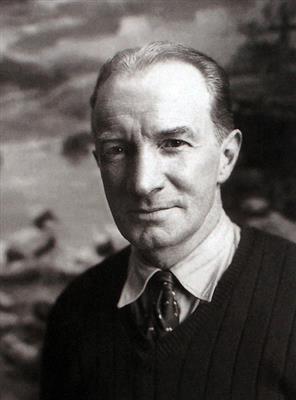
Arthur Nísio left for Munich in 1928[1] and spent the next eighteen years there, building a career as a specialist in animal painting under Angelo Jank and Max Bergmann at the Academy of Fine Arts. When Allied bombing intensified, he was forced to flee the city, abandoning most of his European work. The paintings were lost.
Biography
Born in Curitiba in 1906[1], Nísio came from Italian and German immigrant stock; his family had worked on the Curitiba-Paranaguá railway. His formal training began locally, with stints at the Instituto de Belas Artes in Porto Alegre and with sculptors João Turin and Lange de Morretes before he left Brazil. His first solo exhibition in Curitiba in 1928[1], just before his departure, attracted enough attention that Governor Afonso Camargo purchased two works.
After returning to Brazil in 1946[1], Nísio co-founded the Escola de Música e Belas Artes do Paraná, the institution that would shape the next generation of artists in the state. He taught modelling and figure drawing there for the rest of his career, eventually holding the Chair of Live Model Drawing.
His painted output spanned animals, figures, landscapes, and still lifes. He is counted among the four representative painters of Paraná's modernist phase, alongside Theodoro De Bona, Guido Viaro, and Miguel Bakun. His 1953[1] canvas "Chegada do Conselheiro Zacarias em Curitiba" hangs in the Palácio Iguaçu.
Timeline
- 1906Born in Curitiba to a family of Italian and German immigrants who worked on the Curitiba-Paranaguá railway.
- 1928Had his first solo exhibition in Curitiba; Governor Afonso Camargo purchased two works. At 22, he moved to Munich.
- 1928Began studying animal painting under Angelo Jank and Max Bergmann at the Academy of Fine Arts in Munich.
- 1946Returned to Brazil after being forced to flee Munich due to Allied bombing, losing most of his European work.
- 1946Co-founded the Escola de Música e Belas Artes do Paraná.
- 1953Painted "Chegada do Conselheiro Zacarias em Curitiba", which hangs in the Palácio Iguaçu.
- 1974Died at 68.
Notable Works
Tap to view larger.
Next stop
Browse the movements →
Every movement in the collection, from the Renaissance to Pop art.
Related Artists


Frequently Asked Questions
What is Arthur Nísio known for?
Arthur Nísio is counted among the four representative painters of Paraná's modernist phase. He is also known for his animal paintings, figures, landscapes, and still lifes.What is Arthur Nísio's most famous work?
Arthur Nísio is best known for his paintings and drawings of favelas in Rio de Janeiro. He is particularly noted for his skill in capturing the light and colour of these communities. While it is difficult to single out one definitive "most famous work", several pieces have received considerable attention. His óleo sobre tela (oil on canvas) paintings from the 1960s and 1970s are well regarded. These works often portray everyday life in the favelas, showing scenes of children playing, people working, and community gatherings. They offer a glimpse into a world often unseen by outsiders. Nísio's work has been exhibited in Brazil and internationally, contributing to a greater awareness of favela life. His art provides social commentary, and it documents a specific time and place in Brazilian[1] history. Although not a household name globally, within Brazil, Nísio is recognised as an important figure in twentieth-century art. His pieces are held in several public and private collections.What should I know about Arthur Nísio's prints?
Arthur Nísio is a contemporary Brazilian[1] artist known for his printmaking, painting, and sculpture. He was born in 1974[1] in Rio de Janeiro, where he continues to live and work. Nísio's prints often feature bold colours and geometric shapes. His work explores themes of urban life, nature, and the intersection of the two. He frequently uses screen printing and woodcut techniques to create his images. These processes allow for strong lines and blocks of colour. His prints are often produced in limited editions. This makes them attractive to collectors. Nísio has exhibited his work in Brazil and internationally. He has had solo shows in Rio de Janeiro and São Paulo. His art can also be found in public and private collections. Nísio's work provides a modern view of Brazilian culture and environment.What style or movement did Arthur Nísio belong to?
Arthur Nísio (born 1974[1]) is a contemporary painter. He is known for his work in both oil and watercolour. His style combines elements of realism with abstraction. Nísio's art often features cityscapes and architectural subjects. He simplifies the forms, reducing them to geometric shapes and planes. This approach creates a sense of depth and atmosphere. His colour palette is usually muted, with greys, browns, and blues predominating. However, he sometimes introduces brighter colours to create contrast and emphasis. Although Nísio's work has connections with modern movements, such as Cubism and Constructivism, his style is highly individual. He developed a personal approach to painting that blends observation with imagination. Nísio is not formally associated with any particular school or movement. His art defies easy categorisation, reflecting his unique vision and artistic sensibility.What was Arthur Nísio known for?
Arthur Nísio was a Brazilian[1] artist known for his intertextual approach and exploration of language. His work, particularly the book *Galáxias*, displays a complex style that mixes prose and poetry. This book is not a straightforward narrative; instead, it uses a circular structure with references to places and people, creating a rich, multi-layered experience for the reader. Nísio's work often incorporates elements of travel and personal experience. *Galáxias* includes allusions to his travels in Europe and encounters with figures such as Ezra Pound, Max Bense, and others. Nísio saw travel as a way to engage with and learn from important figures of his time. His style involves wordplay and disruption, challenging traditional forms and embracing hybridity. He aimed to explore the possibilities within the Portuguese language, drawing on both avant-garde and popular culture.Where can I see Arthur Nísio's work?
Arthur Nísio (born 1974[1]) is a contemporary painter from Brazil. His artworks have been exhibited in both solo and group exhibitions, primarily in Brazil and Portugal. To view Nísio's work, one should monitor the exhibition schedules of galleries in Brazil, especially those in São Paulo and Rio de Janeiro. These cities are centres for contemporary art in Brazil and frequently host exhibitions featuring emerging and established artists. Online art platforms and gallery websites that specialise in Brazilian[1] art may also provide information on upcoming shows or virtual exhibitions of Nísio's paintings. Additionally, art fairs held in Brazil and Portugal sometimes include Nísio's pieces. These fairs offer a concentrated view of current artistic production and gallery representation. Direct contact with galleries that represent Brazilian artists may also provide opportunities to view his work in person or online. Keep an eye on the websites of Brazilian art magazines, which often publish exhibition reviews and announcements.Where was Arthur Nísio from?
Arthur Nísio's precise place of origin is not explicitly mentioned in the provided texts. However, the texts do offer some context regarding Brazilian[1] identity and the arts. They refer to Brazil's complex relationship with its black population, particularly after its independence from Portugal in 1822. Brazilian theatre, for example, began to reflect social and political concerns surrounding black individuals, sometimes portraying them as a threat to Brazilian society. Also, there are references to the influence of African culture and identity within Brazil, with performers often connecting to Africa as their origin. The texts suggest a tension between national belonging and a transnational experience of racial subjection, with some artists emphasising their connection to the African continent.Who did Arthur Nísio influence?
It is difficult to identify specific artists who were directly influenced by Arthur Nísio. Research into Nísio tends to concentrate on his own artistic development and output, rather than his impact on other artists. However, one can examine the artistic movements and styles that Nísio engaged with to understand the broader context of his influence. His involvement with social realism, for example, places him within a tradition of artists who used their work to comment on social and political issues. This approach can be seen in the work of many subsequent artists who address similar themes in their own ways. Furthermore, Nísio's exploration of printmaking techniques may have inspired others to experiment with these media. The accessibility and reproducibility of prints allow for wider dissemination of ideas, potentially reaching a larger audience of artists and influencing their creative choices. Further study of the artists working in Brazil during and after Nísio's career may reveal more specific connections and influences.Who influenced Arthur Nísio?
It is difficult to identify specific influences on Arthur Nísio, given the limited information currently available about his life and artistic development. However, we can consider the broader artistic environment in which he worked. Nísio was born in Brazil in 1874 and died in 1974[1]. This places his career within a period of significant artistic change, encompassing the late 19th and much of the 20th centuries. During this time, Brazilian[1] art was absorbing European movements, such as Impressionism and Expressionism, while also developing its own distinct character. Artists in Brazil were grappling with questions of national identity and how to represent Brazilian life and culture. Without more specific biographical details, it is only possible to speculate on potential influences. Further research into the artistic circles Nísio moved in, exhibitions he participated in, and critical responses to his work would be needed to build a clearer picture of his artistic formation and the figures who may have shaped his style and approach.Who was Arthur Nísio?
Arthur Nísio was born in Curitiba in 1906[1] and trained at the Academy of Fine Arts in Munich. After returning to Brazil, he co-founded the Escola de Música e Belas Artes do Paraná, where he taught modelling and figure drawing.Why are Arthur Nísio's works important today?
Arthur Nísio is a contemporary artist whose work often explores themes of identity, memory, and place. His pieces can resonate with viewers interested in the intersection of personal experience and broader social contexts. Nísio's art frequently incorporates mixed media, combining painting, drawing, and collage techniques. This approach allows him to create textured surfaces and layered compositions that reflect the complexity of his subjects. His work often contains symbolic elements, inviting interpretation and contemplation. While Nísio's art is not always widely known, it appeals to those seeking artwork that engages with contemporary issues. His pieces offer a visual language for exploring individual and collective narratives. Collectors and enthusiasts appreciate Nísio's skill in blending different artistic approaches to convey meaning. His art provides a space for reflection on the human condition.
Sources
Editorial draws on the following primary and tertiary references for Arthur Nísio.
- [1] wikipedia Wikipedia: Arthur Nísio Used for: biography, birth dates, death dates, identifiers, movement attribution, nationality.
- [2] book 01-2015-druck.indd Used for: biography, stylistic analysis.
- [3] book Berghaus, Günter(Editor), 2015 Used for: biography, stylistic analysis.
- [4] book guggenheim-guggenheimintern1964allo Used for: biography.
- [5] book guggenheim-twopri00weis Used for: biography.
- [6] book Masterpieces of western art : a history of art in 900 individual studies from the Gothic to the present day Used for: biography.
- [7] book Andrea Andersson; Nora Burnett Abrams; Museum of Contemporary Art_Denver, Postscript _ writing after conceptual art Used for: biography, stylistic analysis.
Editorial overseen by Solis Prints. Sources verified 2026-08-31. Click a source for details, or hover over [N] in the page above to preview.
Editorial standardsMethodologyCorrectionsAI disclosureAbout the editorial team