



Décio Vieira
A commission for a chapel fresco in Brasília in 1966[1] changed the course of Décio Vieira's painting. Brought in alongside Alfredo Volpi to work on the Dom Bosco chapel at the Arcos Palace, the Rio-born painter absorbed Volpi's tempera technique and its exacting, meditative discipline. The experience turned him away from geometric rigour and towards a more tactile abstraction that would occupy the final two decades of his career.
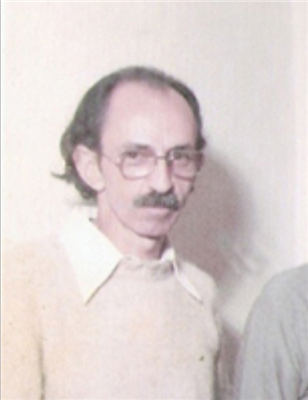
Biography
Vieira (1922[1]–1988[1]) had come to painting late, beginning his formal training in 1948[1] under Axl von Leskoschek at the Fundação Getúlio Vargas in Rio, before studying under printmaker Fayga Ostrower and painter Ivan Serpa at the Museu de Arte Moderna. By the mid-1950s he was a member of Grupo Frente, the collective that included Lygia Clark, Lygia Pape, and Hélio Oiticica in its common refusal of Socialist Realism. When that coalition fractured, Vieira moved with the Rio faction into Grupo Neoconcreto, the breakaway movement that resisted reducing art to pure rational system.
Between 1954[1] and 1962, he worked in parallel on textile design with Ostrower, translating geometric principles into fabric prints. This was creative work of a different register from painting, but it reinforced his understanding of how abstract form operates on a material surface.
In the 1970s, alongside his teaching at MAM-Rio, he founded a children's art school in the Rocinha favela. He died in Rio de Janeiro in 1988[1].
Timeline
- 1922Born in Rio de Janeiro.
- 1948Began formal art training under Axl von Leskoschek at the Fundação Getúlio Vargas in Rio de Janeiro, at 26.
- 1954Began working in textile design with Fayga Ostrower, translating geometric principles into fabric prints.
- 1955Became a member of Grupo Frente, which included Lygia Clark, Lygia Pape, and Hélio Oiticica.
- 1962Stopped working in textile design with Fayga Ostrower.
- 1966Commissioned to create a chapel fresco in Brasília alongside Alfredo Volpi, at the Dom Bosco chapel at the Arcos Palace.
- 1970Founded a children's art school in the Rocinha favela, while teaching at MAM-Rio.
- 1988Died in Rio de Janeiro, aged 66.
Notable Works
Tap to view larger.
Next stop
Browse the movements →
Every movement in the collection, from the Renaissance to Pop art.
Related Artists



Frequently Asked Questions
What is Décio Vieira known for?
Décio Vieira is known for moving away from geometric rigour towards a more tactile abstraction. This shift occurred after a commission for a chapel fresco in Brasília in 1966[1], where he absorbed Alfredo Volpi's tempera technique. He also worked in textile design and founded a children's art school.What is Décio Vieira's most famous work?
Décio Vieira is best known for his abstract paintings from the 1960s and 1970s. These works often feature geometric shapes and bold colour combinations. Although he produced art in several media, his paintings remain the most recognised part of his output. Vieira's work, "Construção em Progressão no Espaço" (Construction in Progression in Space), created in 1976[1], is one example of his mature style. The painting demonstrates his interest in spatial relationships and the interplay of forms. The artist's exploration of colour and composition is further seen in other pieces from this period. While Vieira explored different styles throughout his career, his abstract period is considered his most important. His paintings from this time have been included in major exhibitions of Brazilian[1] art. They are held in both public and private collections. Vieira’s contribution to abstract art in Brazil is significant, and his paintings continue to be admired for their originality and visual impact.What should I know about Décio Vieira's prints?
Décio Vieira (born 1922[1]) is a Brazilian[1] artist known for his printmaking, as well as his painting and drawing. He is associated with the modernist movement in Brazilian art. Vieira studied at the Escola Nacional de Belas Artes (National School of Fine Arts) in Rio de Janeiro. There, he was a pupil of artists such as Oswaldo Goeldi, a major figure in Brazilian printmaking. Goeldi's influence is apparent in Vieira's focus on woodcut and other print techniques. Vieira's prints often feature abstracted forms and geometric compositions. These reflect the wider interest in abstraction that characterised much modernist art. His work explores themes related to Brazilian culture and identity, sometimes incorporating social and political commentary. Vieira has exhibited his work extensively in Brazil and internationally. His prints are held in the collections of various museums, including the Museu Nacional de Belas Artes in Rio de Janeiro. He received several awards and honours during his career, which cemented his position as an important figure in Brazilian art.What style or movement did Décio Vieira belong to?
Décio Vieira (1922[1]-1988[1]) was a Brazilian[1] artist associated with abstraction, although his practice also engaged with other tendencies. He is best known for geometric abstraction. This style uses simple shapes, such as squares and circles, and primary colours. Vieira began his studies in 1947[1] at the Escola Nacional de Belas Artes, where he was a pupil of Oswaldo Teixeira. He later studied with Jean Metzinger in Paris. Metzinger was a French Cubist painter, theorist, and writer who significantly influenced modern art. Vieira's work moved through different phases. He began with figurative art, then moved to geometric abstraction in the 1950s. Later, he explored informal abstraction, which is characterised by a more intuitive and less structured approach. He participated in numerous exhibitions in Brazil and abroad, solidifying his position within the Brazilian art scene. Vieira's diverse artistic journey reflects his engagement with the major artistic movements of his time.When did Décio Vieira live and work?
Décio Vieira was born in Brazil in 1922[1], and he died in Rio de Janeiro in 1988[1]. Vieira began his artistic studies in 1943[1] at the Escola Nacional de Belas Artes (National School of Fine Arts). There, he studied under noted artists such as Oswaldo Teixeira, Edson Motta, and Henrique Cavalleiro. He later became a professor at the same institution. Vieira is known for his contributions to Brazilian[1] modernism. He was part of a generation of artists who sought to create a distinctly Brazilian artistic identity. His work often incorporated elements of Brazilian culture and history. He worked across different media, including painting and printmaking. He explored themes of national identity, social issues, and the natural world. Vieira's art was exhibited in Brazil and internationally. He received several awards and honours during his career, which cemented his place in the history of Brazilian art. His works are held in major public and private collections.Where can I see Décio Vieira's work?
Décio Vieira (born 1922[1]) is a Brazilian[1] artist whose work appears in several public collections. These include the Museu Nacional de Belas Artes (Rio de Janeiro), and the Museu de Arte Moderna (also Rio de Janeiro). Vieira's art is held in other Brazilian institutions as well. Examples include the Museu de Arte Contemporânea da Universidade de São Paulo, and the Pinacoteca do Estado de São Paulo. These collections offer opportunities to view his paintings and prints. Smaller galleries and regional museums within Brazil may also hold examples of Vieira's output. Auction records suggest that his pieces occasionally appear in sales, providing another avenue for viewing, and potentially acquiring, his art. However, major international museums outside Brazil do not appear to hold his works.Where was Décio Vieira from?
Décio Vieira was Portuguese. The artist Jorge Vieira, also Portuguese, created sculpture with basic forms and symbolic meaning. Vieira's work on the Monument to the Unknown Political Prisoner was, in his view, an uncomfortable creation for the Portuguese regime. According to Vieira, the Portuguese curator Diogo de Macedo suggested twenty-four Portuguese sculptors, all of whom were rejected before Vieira was selected. Vieira felt he was the only entrant in the competition from the dictatorial side of Western Europe, as no Spanish artists were chosen by the jury. His presence reminded people that the Monument to the Unknown Political Prisoner commemorated past heroes, but also highlighted an ongoing battle for human rights. His art was associated with a humanist voice of universal relevance, incorporating human aspirations and anxieties about the contemporary world.Who did Décio Vieira influence?
Décio Vieira (1922[1]-1988[1]) was a Brazilian[1] painter and sculptor. Vieira's artistic output included abstract and figurative works. He is associated with the modernist movement in Brazil. Information regarding Vieira's direct influence on specific artists is limited in currently available sources. Research into Brazilian art history often focuses on better-known figures such as Tarsila do Amaral or Candido Portinari. Vieira's impact may be more apparent within local or regional artistic circles in Brazil. Further investigation into Brazilian art publications and exhibition catalogues from the mid-to-late 20th century might reveal more detailed information about his connections to other artists. His work contributed to the development of modern art in Brazil, even if his individual influence is not widely documented outside of his country.Who influenced Décio Vieira?
Décio Vieira, a Brazilian[1] artist, was born in Minas Gerais in 1922[1]. He began his artistic training in Belo Horizonte. Later, he moved to Rio de Janeiro. There, he studied at the Escola Nacional de Belas Artes. Vieira's artistic development occurred during a period of significant change in Brazilian art. The influence of European modernism was strong. Local artists sought to create a distinctly Brazilian form of modern art. Although specific influences are not well documented, Vieira's work shares characteristics with other Brazilian modernists. These artists include Candido Portinari and Emiliano di Cavalcanti. Portinari is known for his social and political themes. Di Cavalcanti often depicted Brazilian life and culture. Vieira's paintings often feature geometric forms and bold colour combinations. These elements suggest an interest in European movements, such as cubism and expressionism. His work also shows an engagement with Brazilian subject matter. This combination of international styles and local themes is typical of Brazilian modernism. Vieira died in 1988[1].Who was Décio Vieira?
Décio Vieira (1922[1]-1988[1]) was a Brazilian[1] artist known for his work as a painter, engraver, and illustrator. Born in Minas Gerais, he began his artistic training in the 1940s. He studied at the Escola de Belas Artes in Belo Horizonte. Vieira's artistic style moved between figuration and abstraction. His paintings often explored themes related to Brazilian culture and identity. He frequently depicted scenes of daily life, as well as portraits and still lifes. As an engraver, Vieira worked with various techniques, including woodcut and linocut. His prints often featured bold lines and strong contrasts. These images reflected his interest in social and political issues. Vieira also worked as an illustrator for books and magazines. His illustrations are characterised by their expressive lines and imaginative compositions. Throughout his career, Vieira participated in numerous exhibitions in Brazil and abroad. His work is held in several public and private collections.Why are Décio Vieira's works important today?
Décio Vieira's importance lies in his contribution to a broader understanding of Portuguese and Brazilian[1] art history, particularly his influence on the Concrete poetry movement and its later developments. Vieira's work, like that of Haroldo de Campos, embraces disruption as a strategy. He structured his sermons with a seemingly random style, similar to de Campos's approach in weaving his galactic cantos. Vieira's metalinguistic vision, particularly evident in his "Sermão da Sexagésima", shaped de Campos's vision of language. De Campos referenced Vieira's "star chess" concept as a model for the ideal text, a theme recurring throughout his works like "Xadres de Estrelas" and "Galáxias". Vieira's influence extends to the challenges for new imagery that could express contemporary concerns. His humanist approach established a dissenting space for new commemorative ideals and creations, offering a voice with universal relevance. Jorge Vieira's sculpture, "Monument to the Unknown Political Prisoner", reflected the totalitarian regimes of the Iberian Peninsula, reminding viewers of the ongoing battle for human rights.What was Décio Vieira's art style?
Before 1966[1], Décio Vieira's art style involved geometric principles, which he also translated into fabric prints. After working on a chapel fresco with Alfredo Volpi, his style shifted towards a more tactile abstraction.
Sources
Editorial draws on the following primary and tertiary references for Décio Vieira.
- [1] wikipedia Wikipedia: Décio Vieira Used for: biography, birth dates, death dates, identifiers, movement attribution, nationality.
- [2] book Anthony Burton, A Performer's Guide to Music of the Baroque Period Used for: biography, stylistic analysis.
- [3] book Beard, Lee, 1973- author, Butler, Adam, author; Van Cleave, Claire, author; Fortenberry, Diane, author; Stirling, Susan, author, Beard, Lee, 1973- author, Butler, Adam, author; Van Cleave, Claire, author; Fortenberry, Diane, author; Stirling, Susan, author - The Art Book_ New Edition, Mini Format Used for: biography.
- [4] book guggenheim-guggenhe02solo Used for: biography.
- [5] book Masterpieces of western art : a history of art in 900 individual studies from the Gothic to the present day Used for: biography.
Editorial overseen by Solis Prints. Sources verified 2026-09-30. Click a source for details, or hover over [N] in the page above to preview.
Editorial standardsMethodologyCorrectionsAI disclosureAbout the editorial team