



Antoni Gaudí
- Catalan modernism
On the evening of 7 June 1926[1], Antoni Gaudí was struck by a tram on the streets of Barcelona. Dressed in the threadbare clothes he had worn for years, he was mistaken for a beggar; cab drivers refused to take him to hospital assuming he could not pay. Friends found him the following day at a charity ward for the poor, and when they urged him to move somewhere better he refused. "I belong with the poor," he said. He died two days later and was buried in the crypt of the Sagrada Familia, the church he had spent four decades building and would never see finished.
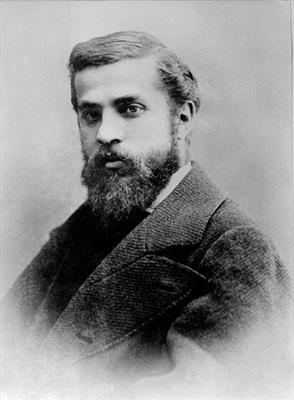
Biography
Gaudí was born in 1852[1] near Tarragona, the son of coppersmiths. A childhood rheumatoid condition kept him out of school; he spent those years exploring the Catalan countryside, developing the close reading of natural form that would define everything he later built. Barcelona's architecture school gave him his diploma in 1878[1]; whether he was a genius or a madman, his tutors reportedly could not agree.
His great patron was the industrialist Eusebio Güell, who funded Casa Batlló, with its fish-scale roof and wave-carved interiors, and Park Güell (begun 1900[1]), originally planned as a garden village for Barcelona's wealthy. Casa Milà, finished around 1907 and immediately nicknamed "La Pedrera" (the Quarry) by sardonic neighbours, went further: an undulating stone facade, rooftop chimneys like armoured warriors, iron balconies like tangled seaweed.
The Sagrada Familia consumed the final twelve years of his life. He built it around parabolic curves, which he called "the keystone of a sacred geometry rooted in the Creation." In 1925[1] he moved into a room in the church's crypt, wore rags, and began begging wealthy donors for alms. When asked about the slow pace of building, he replied: "My client is not in a hurry." His plans were destroyed by anarchists during the Spanish[1] Civil War. Construction continues today.
Timeline
- 1852Born near Tarragona, the son of coppersmiths.
- 1878Received his architecture diploma in Barcelona.
- 1900Began work on Park Güell in Barcelona; it was originally planned as a garden village.
- 1907Casa Milà was finished; neighbours nicknamed it "La Pedrera".
- 1914Devoted the final twelve years of his life to the Sagrada Familia.
- 1925Moved into a room in the crypt of the Sagrada Familia.
- 1926Died in Barcelona at 74, after being struck by a tram.
Notable Works
Tap to view larger.
Next stop
Browse the movements →
Every movement in the collection, from the Renaissance to Pop art.
Related Artists



Frequently Asked Questions
What is Antoni Gaudí known for?
Antoni Gaudí is known for his Art Nouveau creations. His style reflects the Catalan nationalism of the period, drawing heavily upon Mediterranean architectural traditions. One example is Casa Milà, a large apartment house.What is Antoni Gaudí's most famous work?
Antoni Gaudí's most famous work is the Sagrada Família basilica in Barcelona. Gaudí began working on this project in 1883[1], and it remained unfinished at the time of his death in 1926[1]. Construction continues today, funded by private donations, and it is projected to be completed in 2026, a century after Gaudí's death. The Sagrada Família is a large Roman Catholic church, combining Gothic and Art Nouveau styles. Its distinctive silhouette and detailed facades have made it a popular tourist destination. Gaudí dedicated over 40 years of his life to this project, imbuing it with religious symbolism and architectural innovation. The basilica's design features soaring towers, elaborate sculptural details, and a complex structural system inspired by nature. While unfinished, the Sagrada Família attracts millions of visitors annually, and it is recognised as a UNESCO World Heritage Site.What should I know about Antoni Gaudí's prints?
It is unlikely that Antoni Gaudí produced many prints. Printmaking is a craft that uses techniques such as woodcuts, engravings, or lithographs. These are produced by hand, and each one is considered an original. The artist creates the artwork directly on a plate, woodblock, stone, or screen. During the late 19th century, prints gained recognition as a significant artistic medium. The quality of each impression became more important. Artists started signing their prints, distinguishing original graphics from reproductions. A signature confirms the print's authenticity and the artist's approval. Artists also controlled quality by limiting edition sizes and numbering prints. This influenced the price based on the number available and prevented printing after the plate wore down. High-quality, handmade papers further enhanced the aesthetic value. Original prints allowed artists to reach a wider audience because they could be produced and distributed more affordably than other art forms. Dealers such as Julius Meier-Graefe, Ambroise Vollard, and Daniel-Henry Kahnweiler recognised the value of prints as a popular art form. They encouraged late 19th- and early 20th-century painters and sculptors to create them.What style or movement did Antoni Gaudí belong to?
Antoni Gaudí (1852[1]-1926[1]) is generally associated with Art Nouveau. He is noted as having achieved a highly personal expression of the style. Gaudí also originated the Spanish[1] variant of Art Nouveau, known as Modernista. His influences included Moorish-Spanish architecture and the simpler architecture of his native Catalonia. Before becoming an architect, Gaudí trained as an ironworker. He sought to create a style both modern and appropriate to his country. Casa Milá, an apartment house in Barcelona, shows his style. The building has free-form massing, with iron railings and swelling curves. The surfaces suggest worn rock. Some believe the entrance portals resemble eroded sea caves, possibly reflecting interest in the Paleolithic cave paintings discovered at Altamira in 1879[1]. Gaudí saw each of his buildings as symbolically alive. He also became involved with the Spiritual League of the Virgin of Montserrat, a religious organisation that attracted many artists and poets. The organisation played a prominent role in the revival of Catalan culture.What was Antoni Gaudí known for?
Antoni Gaudí (1852[1]-1926[1]) was a Catalan architect known for his distinctive style, which drew inspiration from nature. He is most associated with the city of Barcelona. Gaudí's work broke from architectural conventions of his time. His designs incorporated organic forms, such as curved lines and asymmetrical shapes. Colourful surfaces and textures are also typical of his aesthetic. He often employed ceramics, stained glass, and wrought iron in innovative ways. Among his most famous projects is the Sagrada Família, a large basilica in Barcelona. Gaudí began work on it in 1883[1], and it remained unfinished at the time of his death. Construction continues today. Other important works include the Park Güell (1900-1914[1]), the Casa Batlló (1904-1906), and the Casa Milà (1906-1912), all located in Barcelona. These buildings demonstrate his unique approach to architecture and his integration of art and structure. Gaudí's designs often included structural innovations, exploring new ways to distribute weight and create open spaces.When did Antoni Gaudí live and work?
Antoni Gaudí i Cornet (1852[1]-1926[1]) was a Catalan architect whose distinctive style helped define the Art Nouveau movement in Spain. He was born in Reus, in the Catalonia region. Much of his work can be found in Barcelona. Gaudí's career began in earnest after graduating in architecture in 1878[1]. Early projects included street lamps for Barcelona, plus various commissions for religious and civic buildings. His style developed over time, moving away from historical pastiche towards more organic forms. He is best known for the Sagrada Família, a large Roman Catholic church in Barcelona. Gaudí took over the project in 1883 and worked on it for over 40 years. Construction began in 1882, but it was far from complete at the time of his death in 1926; work continues today. Other important projects include the Park Güell (1900-1914[1]), the Casa Milà (1906-1912), and the Casa Batlló (1904-1906); all demonstrate his unique architectural vision. Gaudí's designs often incorporated elements of nature, and he was known for his attention to detail.Where can I see Antoni Gaudí's work?
Many of Antoni Gaudí's structures are located in Barcelona, Spain. His architecture helped define the city. The Sagrada Família is perhaps his most famous project; construction began in 1882[1], and it remains unfinished. Park Güell, a municipal garden containing buildings and mosaics designed by Gaudí, opened as a public park in 1926[1]. Other notable buildings include Casa Milà (also known as La Pedrera), a residential building completed in 1912, and Casa Batlló, a remodelling of an existing house, finished in 1906. These buildings display Gaudí's distinctive style. Outside Barcelona, the Güell Pavilions are located in Pedralbes. The Crypt of Colonia Güell is in Santa Coloma de Cervelló, near Barcelona. These sites offer further examples of his architectural designs. Visiting these locations provides insight into Gaudí's contribution to modern architecture.Where was Antoni Gaudí from?
Antoni Gaudí i Cornet was born in June 1852[1], in the province of Tarragona, Spain. More specifically, his family home was Mas de la Caldera, in the town of Riudoms, Catalonia. Gaudí came from a family of coppersmiths, a lineage that he believed gave him a talent for visualising spatial forms. Gaudí moved to Barcelona to complete his secondary education. He then enrolled in the newly established Barcelona Provincial School of Architecture. While studying, he visited Gothic churches throughout Catalonia. He was interested in the analytical approach to French Gothic architecture, Goethe's organic philosophy, and some writings by Nietzsche. Gaudí's style reflected Catalan nationalism, drawing from Mediterranean architectural traditions. He was also inspired by Moorish-Spanish[1] architecture and the simple architecture of his native Catalonia. Gaudí conceived a building as a whole and moulded it almost as a sculptor might shape a figure from clay.Who did Antoni Gaudí influence?
Antoni Gaudí's designs have influenced architects and artists, particularly those interested in organic forms and structural innovation. His emphasis on nature, combined with his unique approach to design, has resonated across generations. While it is difficult to measure influence directly, certain architects have been identified as sharing similarities with Gaudí. These include, but are not limited to, the German architect, Hermann Finsterlin, known for his biomorphic architecture; and the Catalan architect, Joan Bergós, who continued some of Gaudí's unfinished projects. Gaudí's impact extends beyond architecture. His use of colour and texture has been noted as a precursor to certain trends in modern art. His sculptural approach to building design has parallels in the work of some contemporary sculptors. Gaudí's emphasis on craft and detail has also found admirers among designers interested in reviving traditional techniques.Who influenced Antoni Gaudí?
Antoni Gaudí (1852[1]-1926[1]) was influenced by a range of sources, from nature to religion. He was born in Catalonia, Spain, and his work is associated with the Art Nouveau movement; in Spain, it was known as Modernista. As a young architect, Gaudí was inspired by the neo-Gothic work of Eugène Viollet-le-Duc. He also became interested in the writings of Nietzsche, Goethe's organic philosophy, and John Ruskin's *The Stones of Venice*. William Morris's ideas about artisanal ornamentation also appealed to him. Gaudí felt a deep allurement to the aesthetic values of Gothic structures. Gaudí was also influenced by Joan Martorell, who he assisted on projects such as the façade of Barcelona Cathedral. Martorell saw architecture as a sacred calling. Gaudí's designs incorporated features of Moorish architecture early in his career. He also took inspiration from the simple architecture of his native Catalonia. Gaudí's later style drew heavily on his observations of the natural world, which he saw as the key to sacred geometry.Who was Antoni Gaudí?
Antoni Gaudí (1852[1]-1926[1]) was a Catalan architect. He is best known for his distinctive style, which drew inspiration from nature and incorporated neo-Gothic, Art Nouveau, and other influences. Born in Reus, Spain, Gaudí studied architecture in Barcelona. Early projects included lampposts for the Plaça Reial (1879[1]) and the Casa Vicens (1883-1888[1]). His work evolved into a more individual style, marked by organic forms and complex geometries. Gaudí often used ceramics, stained glass, and wrought iron in his designs. Gaudí's most famous work is the Sagrada Família basilica in Barcelona. Construction began in 1882 and continues to this day. Other important projects include the Park Güell (1900-1914), the Casa Batlló (1904-1906), and the Casa Milà (1906-1912), all located in Barcelona. These buildings demonstrate his unique approach to design, with their curving lines and sculptural details. Gaudí's designs often blurred the lines between architecture and art. He died in 1926 after being hit by a tram. His work continues to inspire architects and artists.Why are Antoni Gaudí's works important today?
Antoni Gaudí's designs remain important because of his radical approach to architecture, and his integration of natural forms. His work broke with convention, and he drew upon Mediterranean traditions and Catalan nationalism. Gaudí's projects include the Sagrada Familia, a cathedral in Barcelona; Park Güell, originally intended as a hillside garden city; and private commissions such as Casa Milà (1905[1]). His style moved beyond surface decoration, as seen at Casa Batlló, to inform the essence of his structures. He rejected straight lines, favouring undulating façades and irregular interior spaces. Although criticised during his lifetime, Gaudí's work is now protected as a UNESCO World Heritage Site. Park Güell, acquired by Barcelona seven years after completion, has become a popular destination. Gaudí's architecture helped establish Barcelona as a cultural centre, rivalling Paris, London, and Berlin. He died in 1926[1], after being struck by a tram.
Sources
Editorial draws on the following primary and tertiary references for Antoni Gaudí.
- [1] wikipedia Wikipedia: Antoni Gaudí Used for: biography, birth dates, death dates, identifiers, movement attribution, nationality.
- [2] book Jesse Bryant Wilder, MA, MAT, Art History For Dummies Used for: stylistic analysis.
- [3] book Jesse Bryant Wilder, Art History For Dummies Used for: biography.
- [4] book Jean Lahor, Art Nouveau Used for: biography, stylistic analysis.
- [5] book Penelope J.E. Davies, Walter B. Denny, Frima Fox Hofrichter, Joseph Jacobs, Ann S. Roberts, David L. Simon, Janson's History of Art_ The Western Tradition (8th Edition) Used for: biography, stylistic analysis.
- [6] book Charlene Spretnak (auth.), The Spiritual Dynamic in Modern Art _ Art History Reconsidered, 1800 to the Present Used for: biography.
Editorial overseen by Solis Prints. Sources verified 2026-09-22. Click a source for details, or hover over [N] in the page above to preview.
Editorial standardsMethodologyCorrectionsAI disclosureAbout the editorial team