

Collection
Yves Klein
Explore curated art prints selected for distinctive homes and considered interiors.
Suggested filters
-
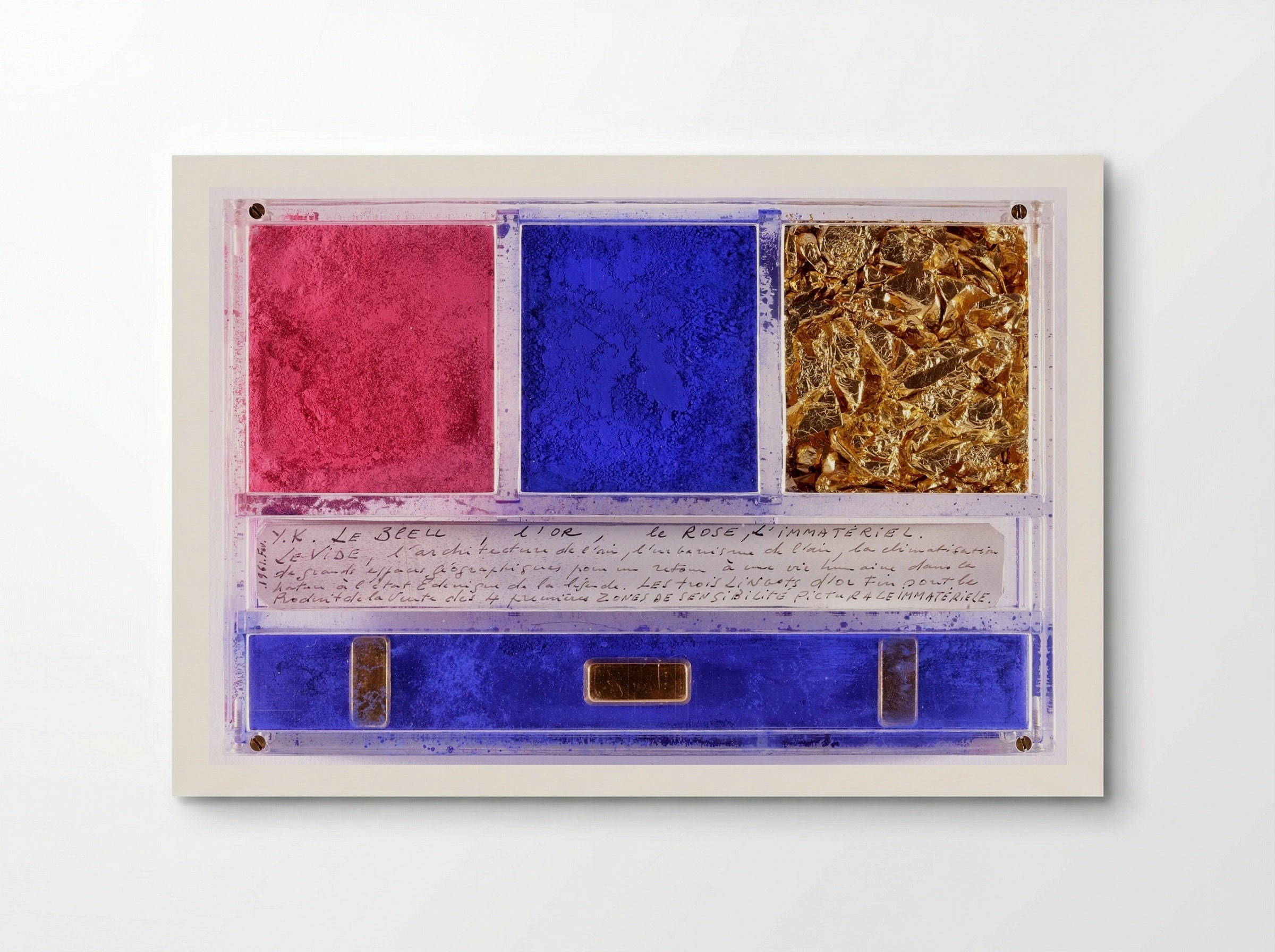 Ex-voto dedicated to Saint Rita of Cascia - Yves Klein
Print
Regular price From £28.00 GBPSale price From £28.00 GBP Regular price -
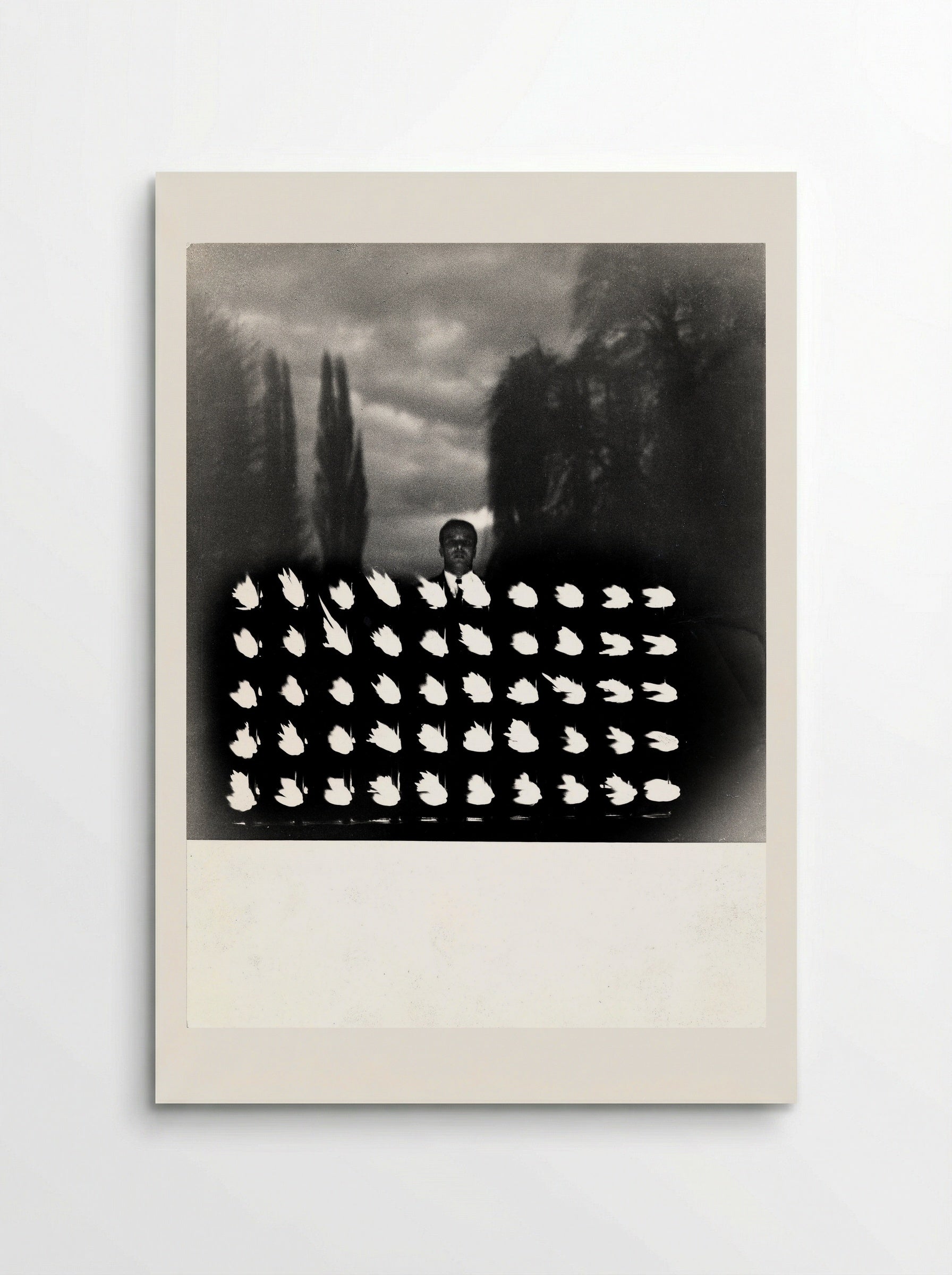 Fire Painting (F 100) - Yves Klein
Print
Regular price From £28.00 GBPSale price From £28.00 GBP Regular price

Artist Biography
Yves Klein
Klein patented a colour. International Klein Blue, or IKB, is an ultramarine pigment suspended in a synthetic resin that keeps the colour saturated and matte. He registered it in 1960. The blue is so intense it appears to absorb light. He covered canvases, sponges, plaster casts, and globe sculptures in it. He covered naked women in it and pressed them against canvas (he called them 'Anthropometries' and performed the process in front of an audience while a chamber orchestra played his Monotone-Silence Symphony: twenty minutes of a single sustained chord followed by twenty minutes of silence).
He was born in Nice to artist parents and grew up between France, England, and Spain. He studied judo seriously, earning a fourth-degree black belt in Tokyo, and considered martial arts and art as related disciplines: both requiring control, precision, and the projection of force.
He exhibited an empty gallery in 1958 and called it Le Vide (The Void). Over three thousand people attended the opening. The gallery walls were painted white. There was nothing else. He served blue cocktails at the door. He sold invisible paintings (Zones of Immaterial Pictorial Sensibility) for gold, then threw half the gold into the Seine and burned the receipt.
He died of a heart attack in 1962, at thirty-four. His career lasted roughly eight years. In that time he made the monochromes, the Anthropometries, the fire paintings, the sponge sculptures, the void exhibitions, and enough theoretical writing to fill several volumes. He remains one of the most influential artists of the post-war period, which he would have considered insufficient recognition.
He was born in Nice to artist parents and grew up between France, England, and Spain. He studied judo seriously, earning a fourth-degree black belt in Tokyo, and considered martial arts and art as related disciplines: both requiring control, precision, and the projection of force.
He exhibited an empty gallery in 1958 and called it Le Vide (The Void). Over three thousand people attended the opening. The gallery walls were painted white. There was nothing else. He served blue cocktails at the door. He sold invisible paintings (Zones of Immaterial Pictorial Sensibility) for gold, then threw half the gold into the Seine and burned the receipt.
He died of a heart attack in 1962, at thirty-four. His career lasted roughly eight years. In that time he made the monochromes, the Anthropometries, the fire paintings, the sponge sculptures, the void exhibitions, and enough theoretical writing to fill several volumes. He remains one of the most influential artists of the post-war period, which he would have considered insufficient recognition.
Related Artists
.jpg)
_%E2%80%93_LOC.jpg?width=800)


Why Choose Us ?