

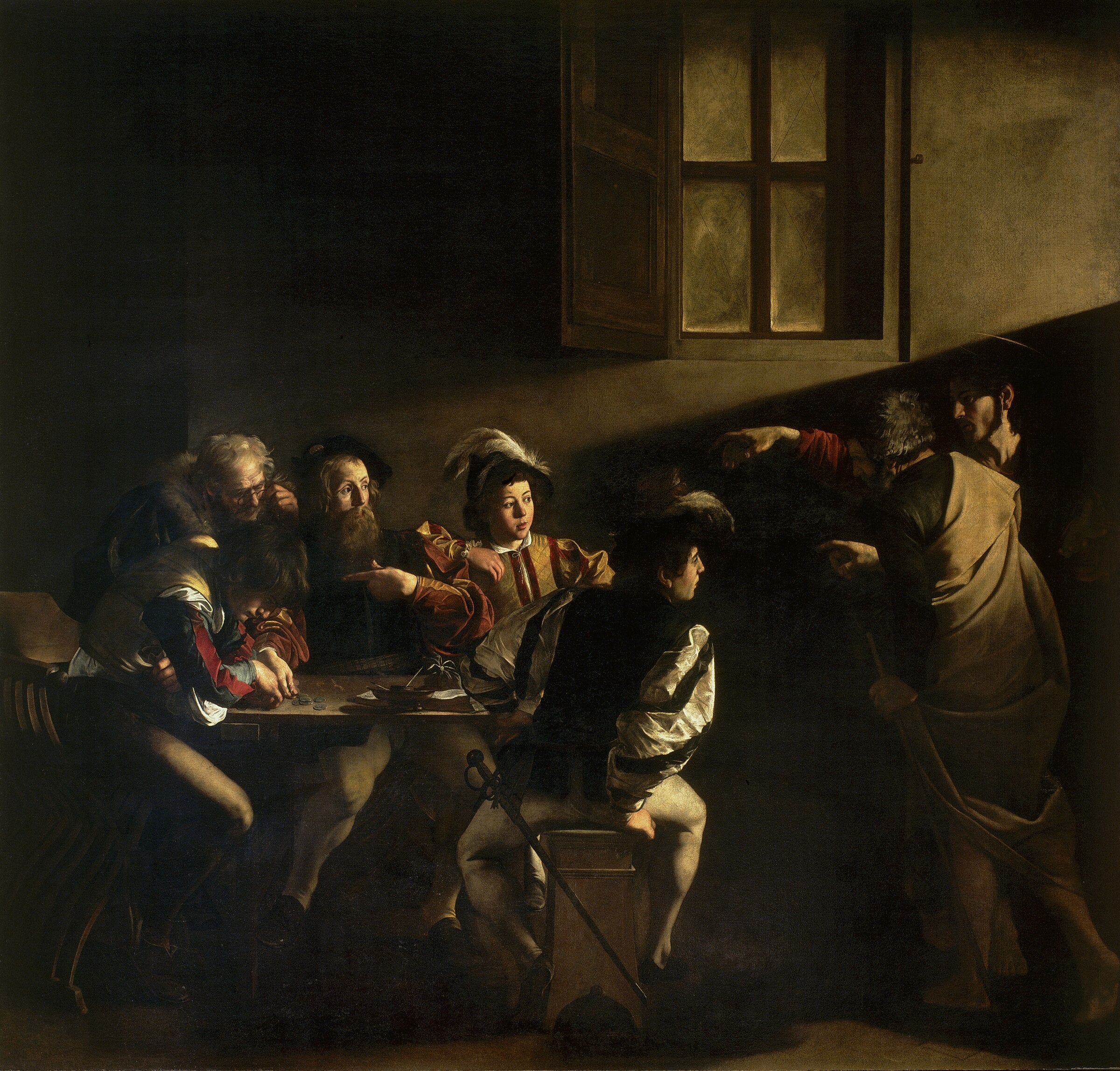
After 150 years, the Renaissance ran out of rebirth. Mannerism came and went. Then, around 1600, a new style took hold across Europe, driven by the Catholic Church's need to win back hearts lost to the Reformation. The Baroque was art as persuasion: dramatic, emotional, and designed to overwhelm.
Caravaggio: The Fugitive Who Changed Painting
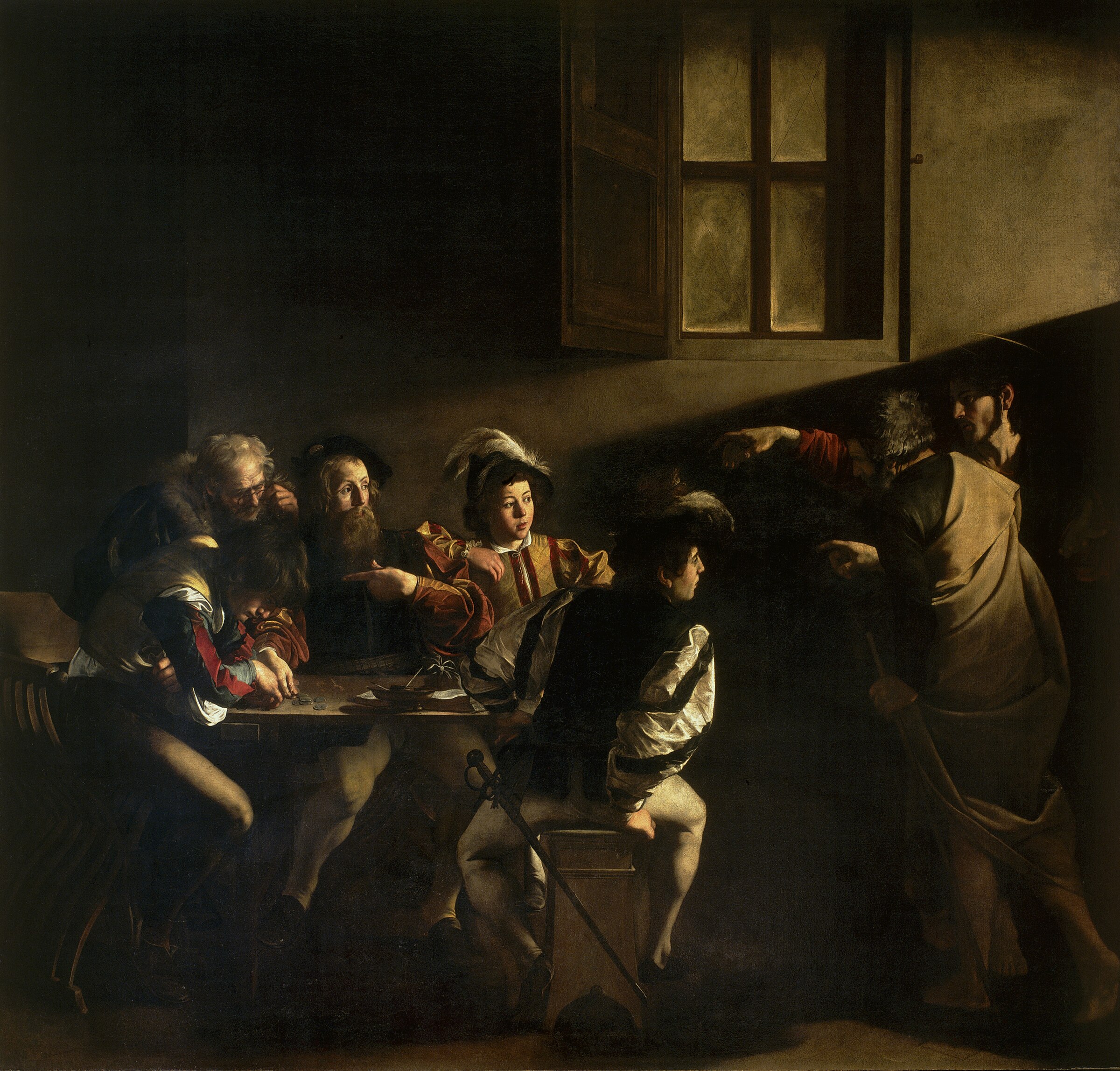
Michelangelo Merisi da Caravaggio (1571 to 1610) was the most influential painter of the Baroque and one of the most volatile people in the history of art. He was jailed repeatedly for brawling. In 1606, he killed a man during an argument over a tennis match and had to flee Rome under a death sentence. He spent his remaining years moving between Naples, Malta, and Sicily, fighting at every stop. He was imprisoned in Malta after quarrelling with a powerful knight, escaped, was stabbed in the face in Naples (probably by the knight's allies), and died at thirty-eight, possibly of fever, possibly of lead poisoning from his own paints.
His restlessness helped spread his style across Europe. Caravaggio did two things that no painter had done before with such conviction. First, he hired ordinary people as models for saints and apostles, giving biblical scenes a gritty realism that scandalised his patrons. Second, he developed a lighting technique called tenebrism (from the Italian tenebroso, meaning gloomy), in which a single diagonal light source picked out certain features while leaving the rest of the composition in deep shadow. The effect was theatrical: each painting recounted a moment of maximum tension, with the darkness suggesting everything that came before and after.
His method was practical. He let natural light stream through a high window or used a raised lamp to throw a beam down onto his models, a technique called cellar lighting. The results were anything but practical. They were paintings that made viewers feel as though they had walked into a scene already in progress.
Bernini and the Theatre of Stone
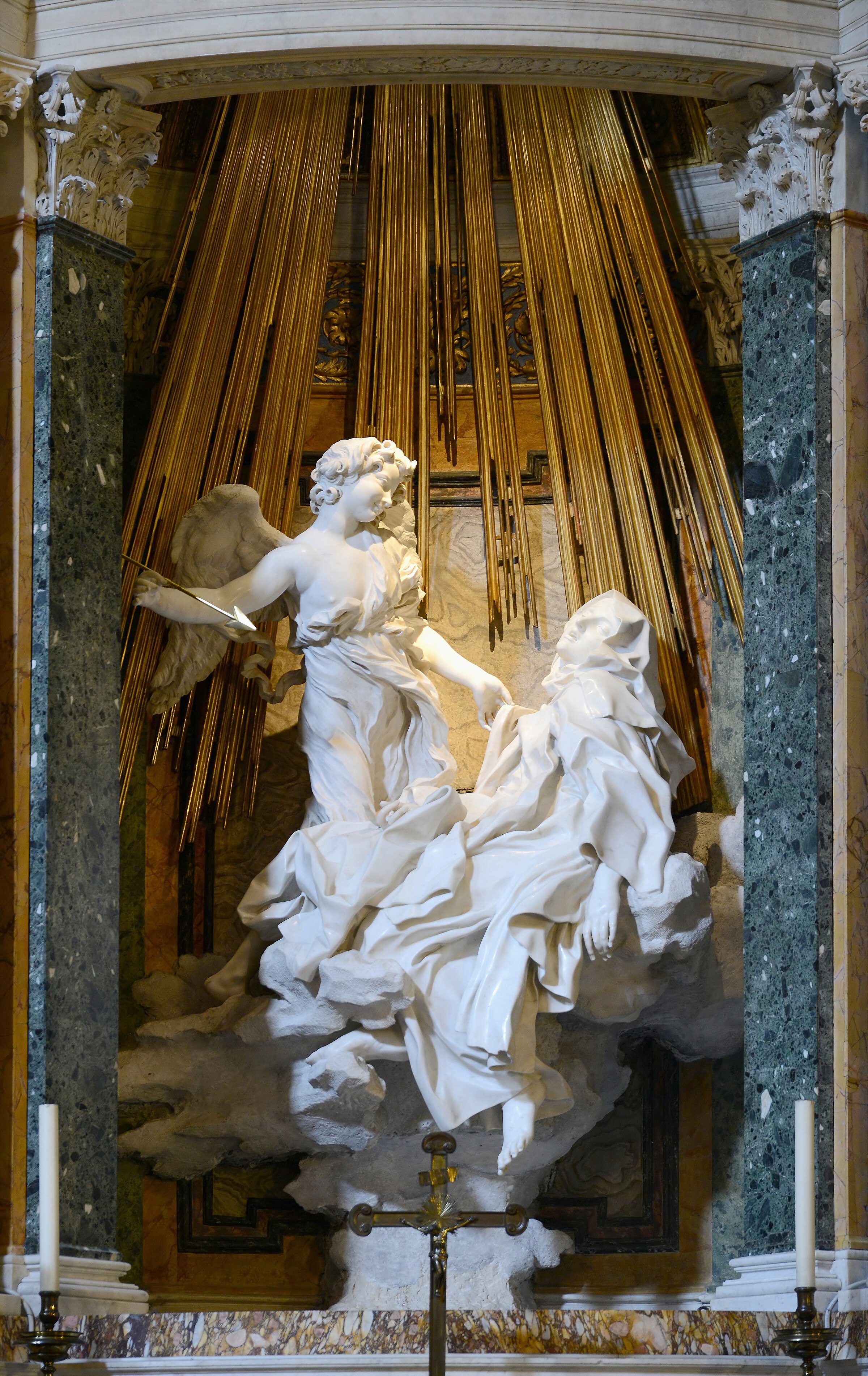
If Caravaggio brought drama to painting, Gian Lorenzo Bernini (1598 to 1680) brought it to sculpture. His Ecstasy of Saint Teresa in Rome's Santa Maria della Vittoria shows the saint at the moment an angel pierces her heart with a golden arrow. The marble is carved to suggest cloth, skin, cloud, and light simultaneously. Teresa's face expresses an ambiguous state between agony and rapture that has been debated by art historians and theologians ever since.
Bernini treated sculpture as theatre. He designed the entire chapel around the piece, adding hidden windows to direct real light onto the marble, and placing sculpted spectators in balconies on either side, as if the ecstasy were a performance and they were watching from opera boxes. The boundary between art and architecture dissolved.
Artemisia and the Baroque Beyond Rome
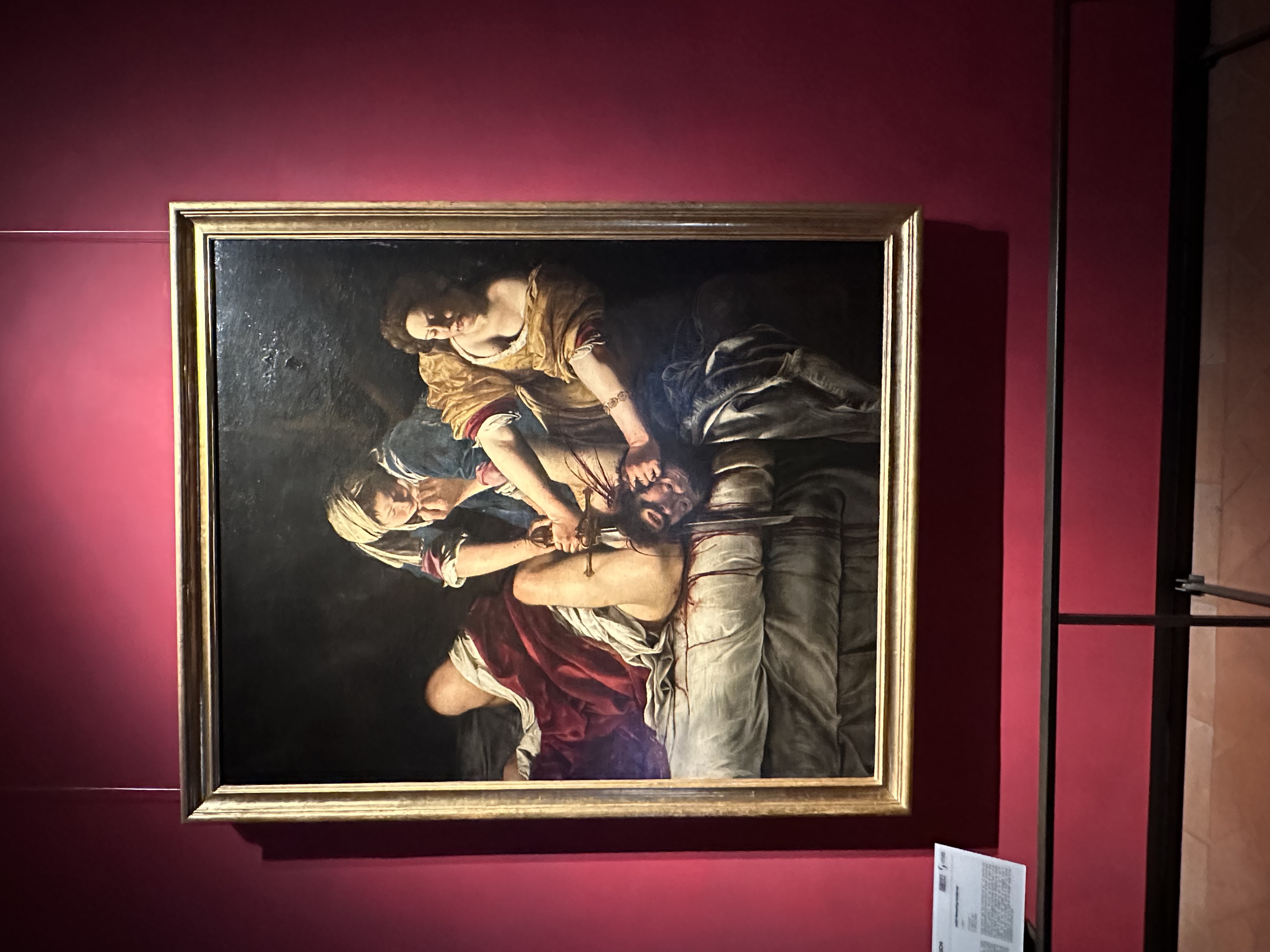
Artemisia Gentileschi (1593 to c. 1656) was one of the first women to achieve recognition as a major painter in the European tradition. She trained in her father's studio, absorbed Caravaggio's techniques, and applied them with a directness that startled her contemporaries. Her Judith Slaying Holofernes depicts the biblical heroine mid-act, gripping the Assyrian general's hair while her servant holds him down. The painting's unflinching treatment of violence and its focus on female agency set it apart from male contemporaries' versions of the same subject, where Judith typically appears hesitant or decorative.
The Baroque was not confined to Catholic Italy. Protestant Holland adopted the style for its own purposes: instead of church commissions and mythological grandeur, Dutch Baroque painters produced realistic landscapes, still lifes, and domestic scenes. The style crossed borders, adapted to local needs, and proved that drama and realism could serve any patron, any faith, and any subject. It was, in that sense, the first truly European art movement.


