

Abstract art is art that does not attempt to represent the visible world. There are no recognisable objects, no landscapes, no human figures. What remains is colour, line, shape, and texture, arranged according to the artist's intention rather than the appearance of things. The question it raises is simple: can a painting that shows nothing still mean something?
Kandinsky: Painting as Music
Wassily Kandinsky (1866 to 1944) is generally credited with painting the first purely abstract work, around 1910 to 1911, though the exact chronology is disputed. He arrived at abstraction through music: if music could express emotion without representing anything visible, why couldn't painting do the same?
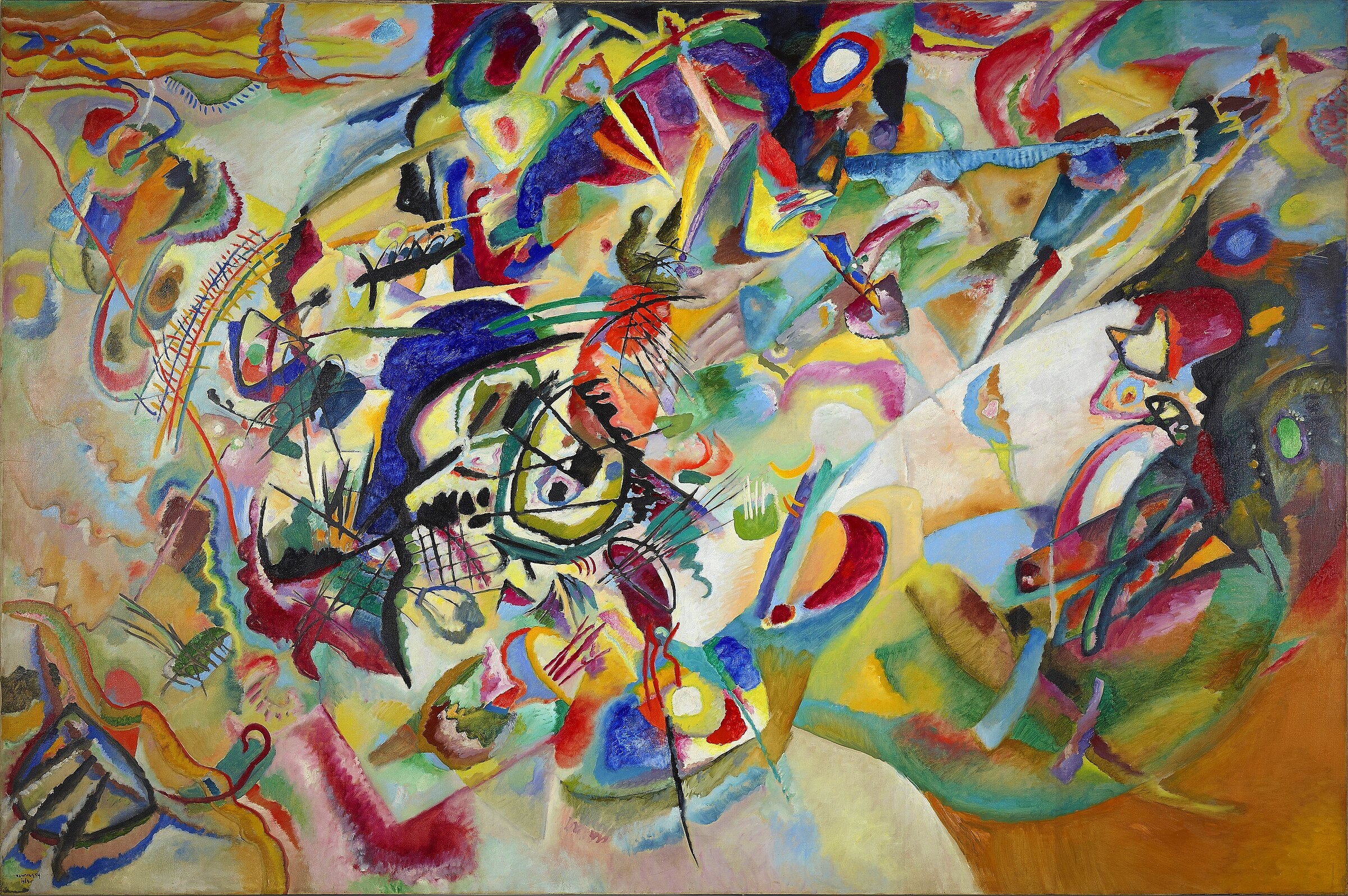
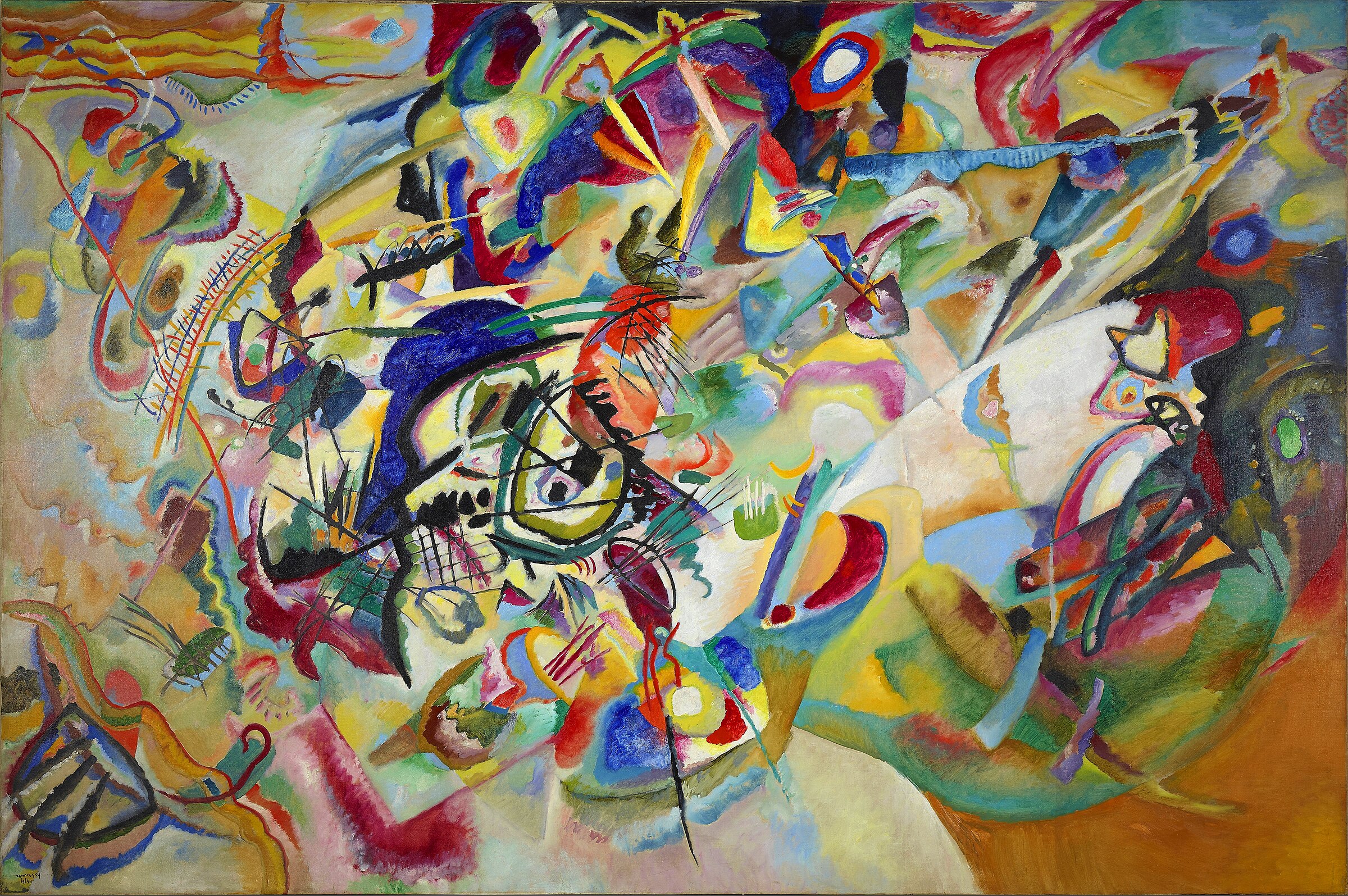
Composition VII (1913) is the most complex of Kandinsky's early abstractions. Swirling forms in dozens of colours collide and separate across a large canvas. There are shapes that suggest boats, figures, and landscapes if you look hard enough, but they dissolve the moment you try to fix them. Kandinsky prepared for this painting with over thirty studies. The final version was completed in four days. It is spontaneous in effect and calculated in execution.
Malevich: The End of the Image
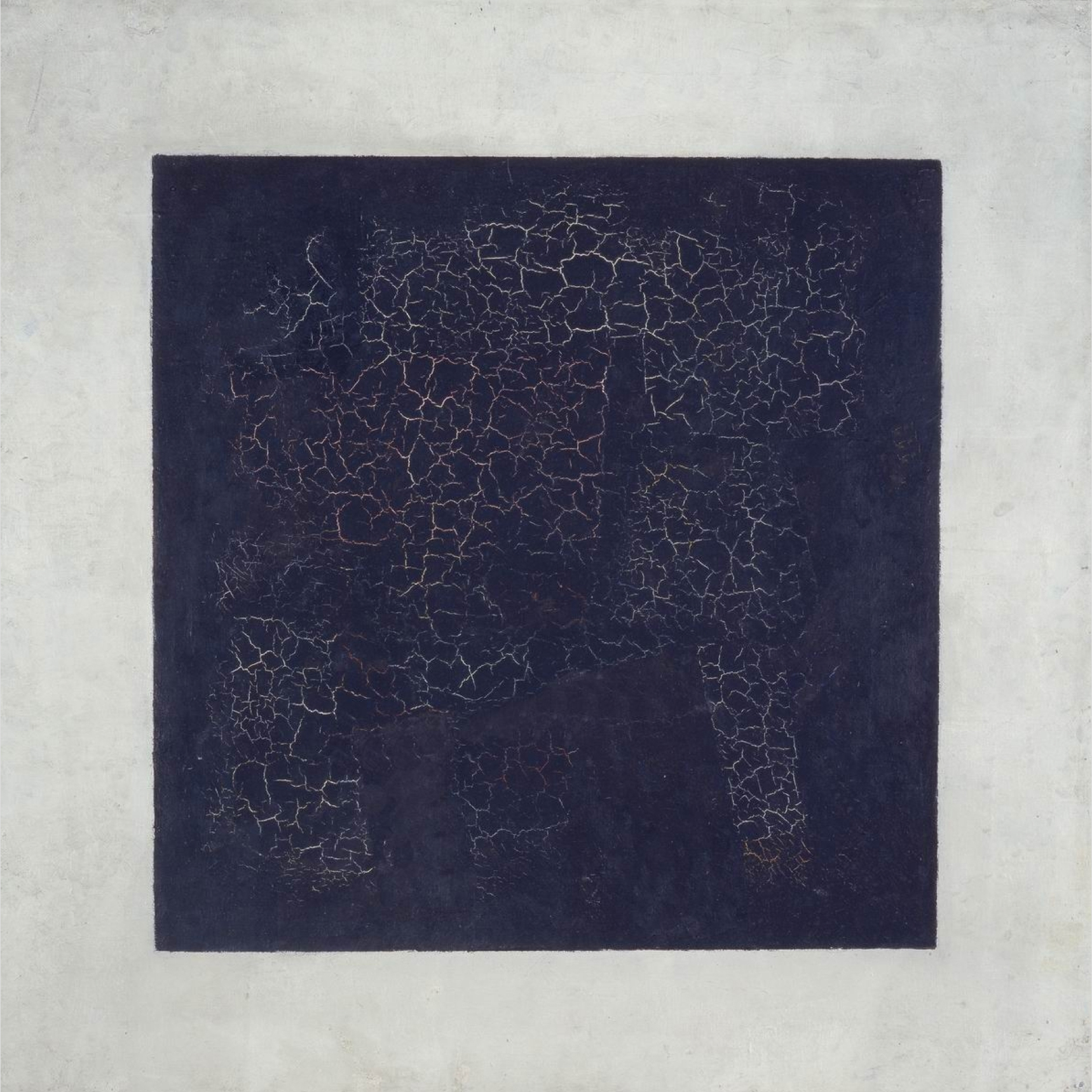
Kazimir Malevich (1878 to 1935) went further than Kandinsky by eliminating not just representation but composition itself. His Black Square (1915) is a black square on a white ground. That is all. Malevich called it "the zero of form" and described his approach as Suprematism: the supremacy of pure artistic feeling over the depiction of objects.
The painting is not as simple as it looks. The black is not truly black (it contains dark greens and blues). The square is not perfectly square (the edges are slightly irregular). And the white border is uneven. Whether these are deliberate or the result of cracking paint is part of the painting's enduring fascination. A hundred years of analysis have been spent on a picture that takes one second to describe.
Abstract art asks viewers to respond to what is actually on the canvas rather than what it represents. This turns out to be harder than it sounds. Centuries of looking at paintings trained people to search for subjects, stories, and symbols. Abstract art removes all three and asks: what is left? The answer, for many viewers, is either everything or nothing. The argument continues.


