

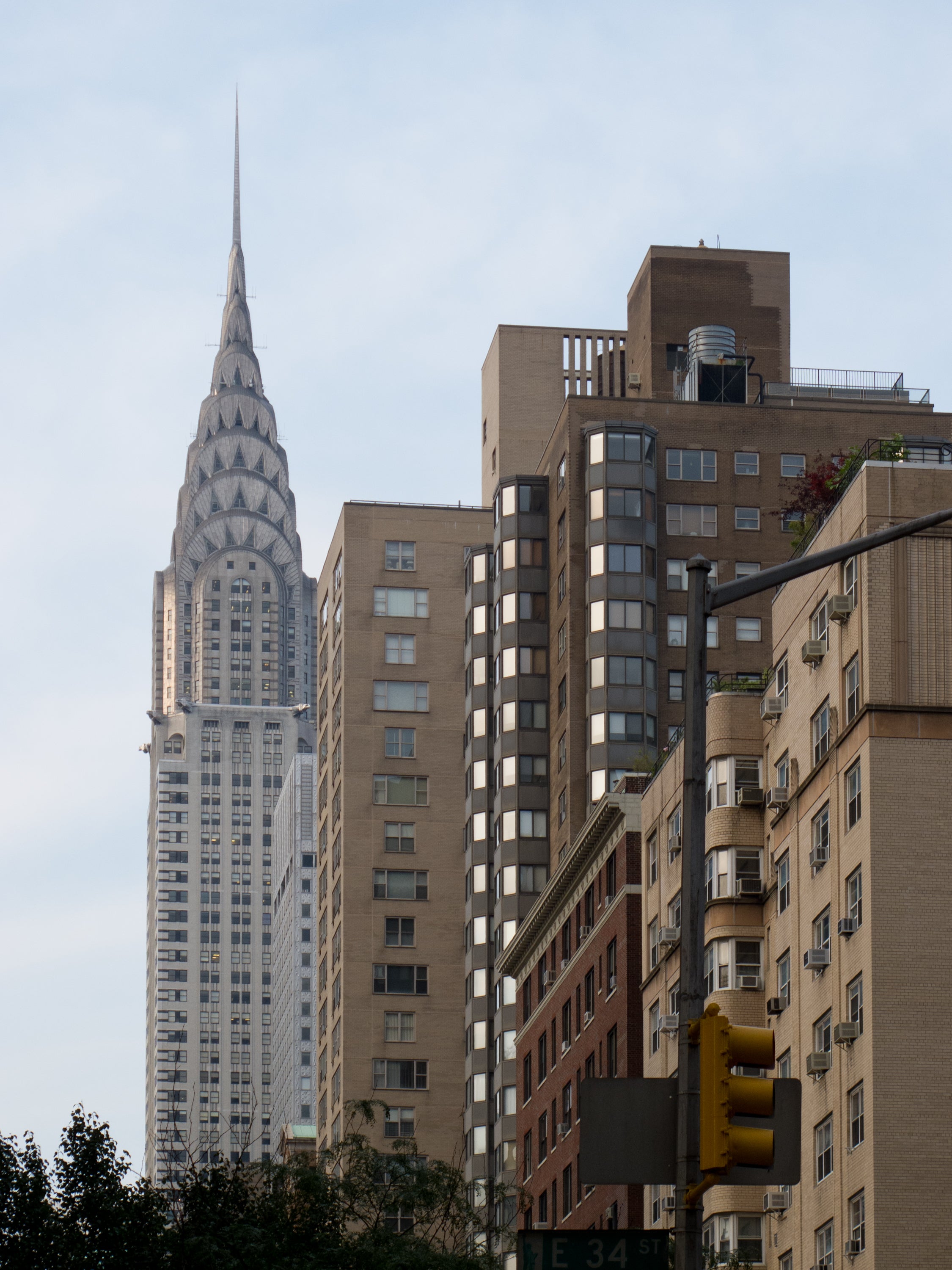
Art Deco arrived in America after the 1925 Exposition Internationale des Arts Décoratifs et Industriels Modernes in Paris, which gave the style its name. It hit New York at the same moment the city was racing to build the world's tallest skyscrapers. The collision of French decorative elegance and American structural ambition produced some of the most recognisable buildings on earth.
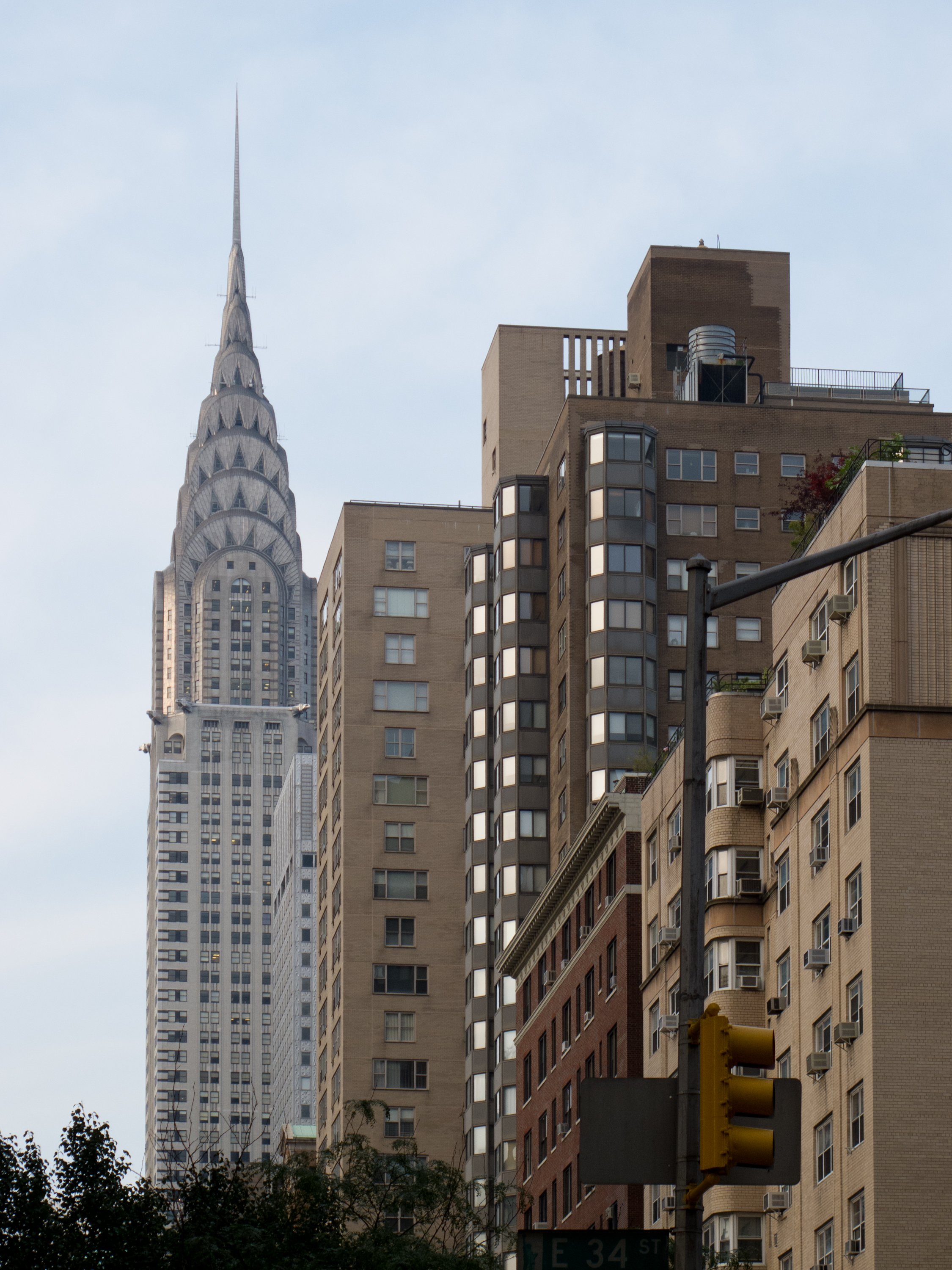
The Chrysler Building
The Chrysler Building (1930) is the purest Art Deco skyscraper ever built. Its crown, seven terraced arches clad in stainless steel with triangular windows, catches sunlight at every angle. The lobby is a fantasy of African marble, chrome, and painted ceiling murals depicting the age of industry. At street level, gargoyles modelled on Chrysler automobile hood ornaments project from the corners of the building.
The building was the tallest in the world for eleven months, until the Empire State Building surpassed it in 1931. That brief reign is part of its mythology. The Chrysler Building was never meant to be practical; it was meant to be beautiful, and on that count it has never been surpassed by any skyscraper built since.
Rockefeller Center
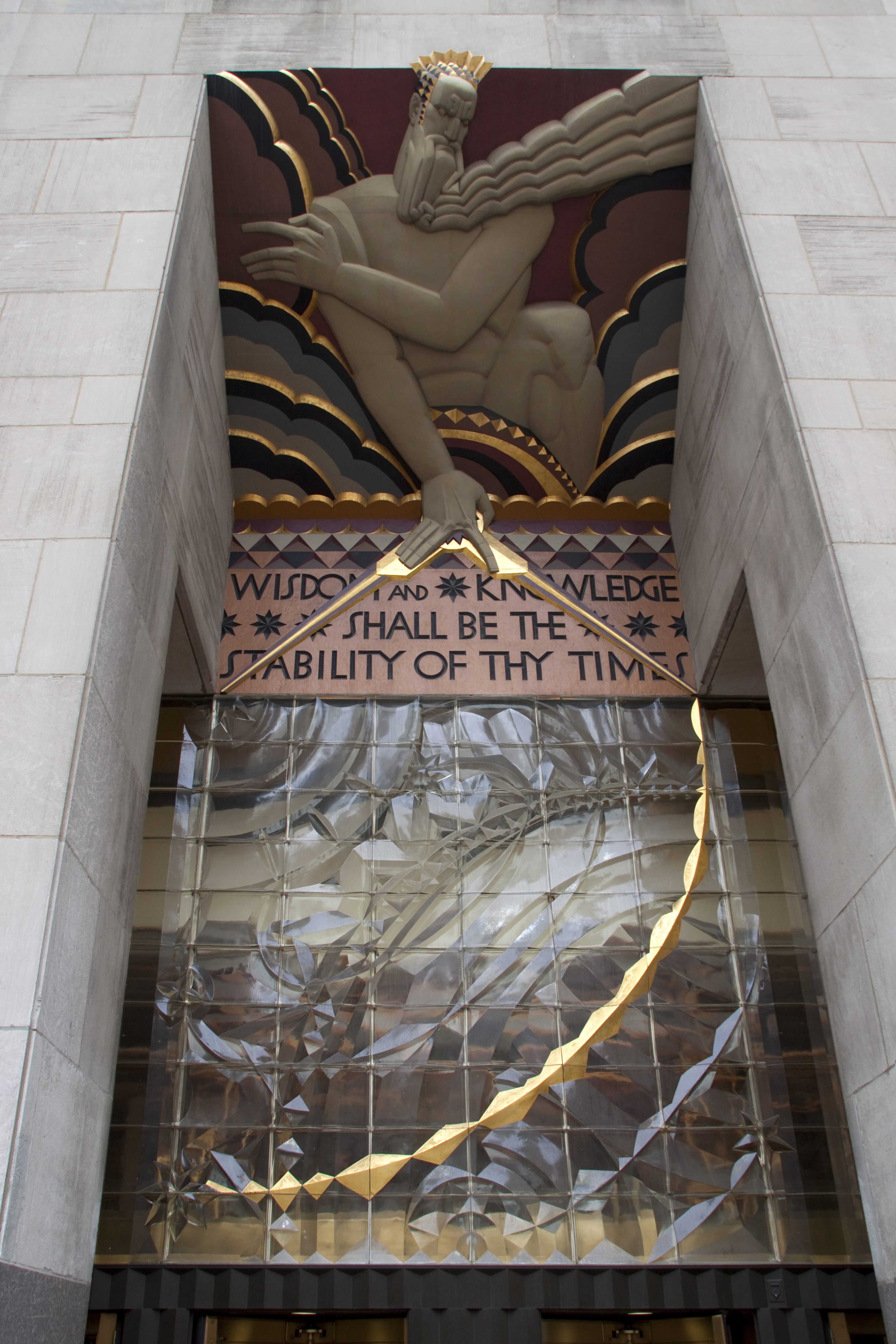
Rockefeller Center (1930 to 1939) is Art Deco at urban scale: fourteen buildings covering twenty-two acres of midtown Manhattan. Lee Lawrie's limestone relief Wisdom above the main entrance shows a robed figure holding a compass over a glass screen inscribed with a quotation from Isaiah. The combination of monumental scale, geometric abstraction, and classical reference is pure Art Deco: modern technology dressed in ancient authority.
Art Deco drew freely from Egyptian, Aztec, Greek, and Machine Age sources, combining them without anxiety about consistency. A single building might feature Pharaonic sunbursts, zigzag patterns from Pueblo pottery, and streamlined forms borrowed from locomotive design. The style's eclecticism was its strength: it could absorb any source and make it look modern.
By the late 1930s, Art Deco was giving way to the International Style, which rejected ornament entirely. The glass-and-steel boxes that followed made the Chrysler Building's stainless-steel crown look like an extravagance from a more confident era. It was. The Jazz Age believed that buildings should be as exciting as the city they stood in. It was not wrong.


