

Vincent van Gogh (1853 to 1890) wrote more than 800 letters, mostly to his brother Theo. They are among the most detailed accounts any artist has left of their own working methods. Where other painters' intentions must be inferred from the canvases, Van Gogh explained exactly what he was trying to do, why he chose each colour, and how often he failed.
He came to painting late, at twenty-seven, after failing as an art dealer, teacher, and preacher. He had ten years. In those ten years he produced roughly 2,100 works, including about 860 oil paintings, most of them in the last two and a half years of his life.
Arles: The Colour Experiment
Van Gogh moved to Arles in the south of France in February 1888, chasing light. The north had been grey; he wanted yellow. In his letters he described the colours he found with the precision of a chemist: the "pale sulphur yellow" of the sky, the "greenish citron" of wheat, the "lilac" and "blue" of the Alpilles mountains.
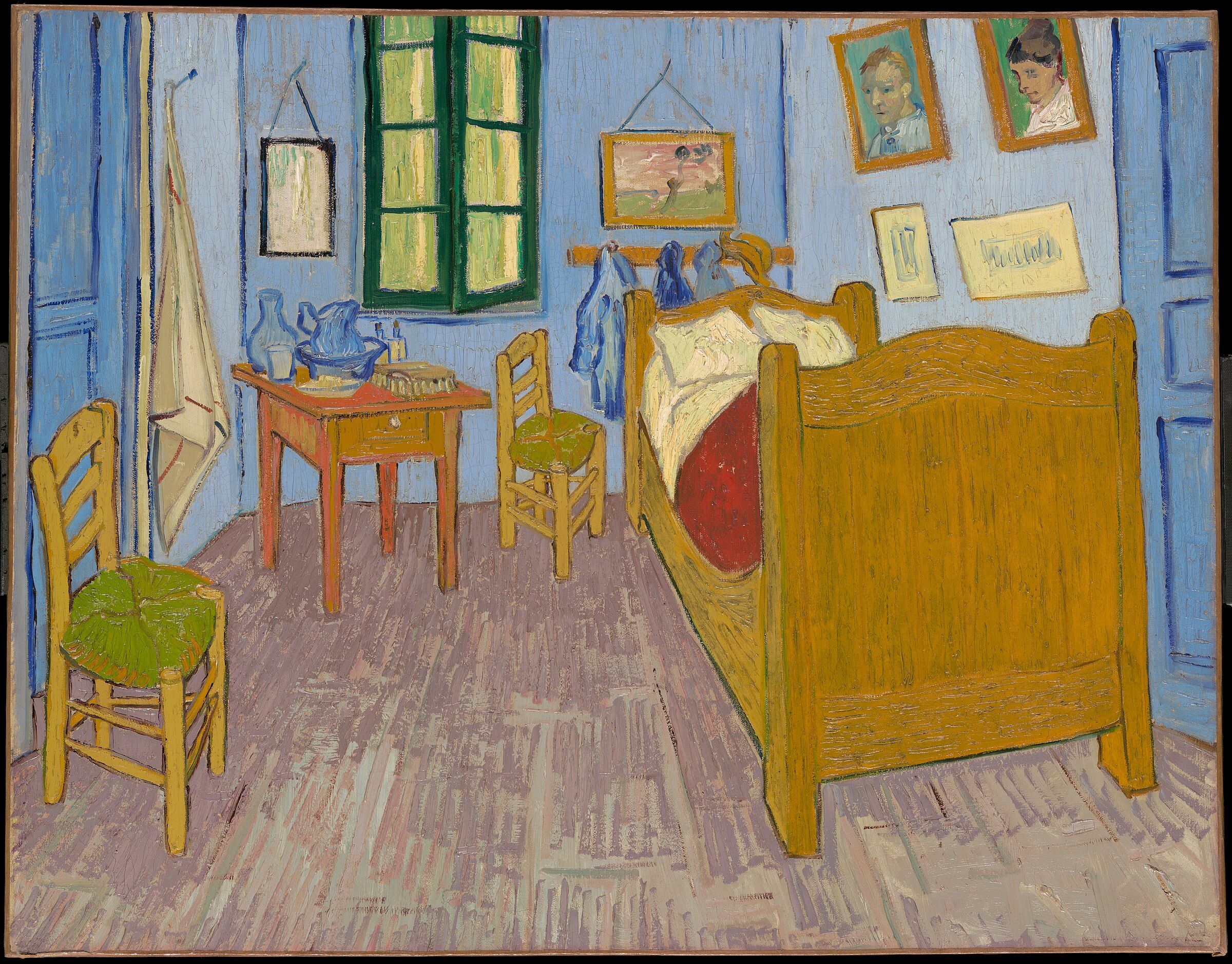
The Bedroom in Arles was painted to express rest through colour. He wrote to Theo: "The walls are pale violet. The floor is of red tiles. The wood of the bed and chairs is the yellow of fresh butter, the sheets and pillows very light greenish citron. The blanket scarlet. The window green." He chose complementary colours (violet and yellow, red and green) not for realism but for emotional effect. The painting is meant to suggest sleep, and the flat areas of colour, the simplified perspective, and the absence of shadows are all deliberate.
Saint-Rémy: The Night Paintings
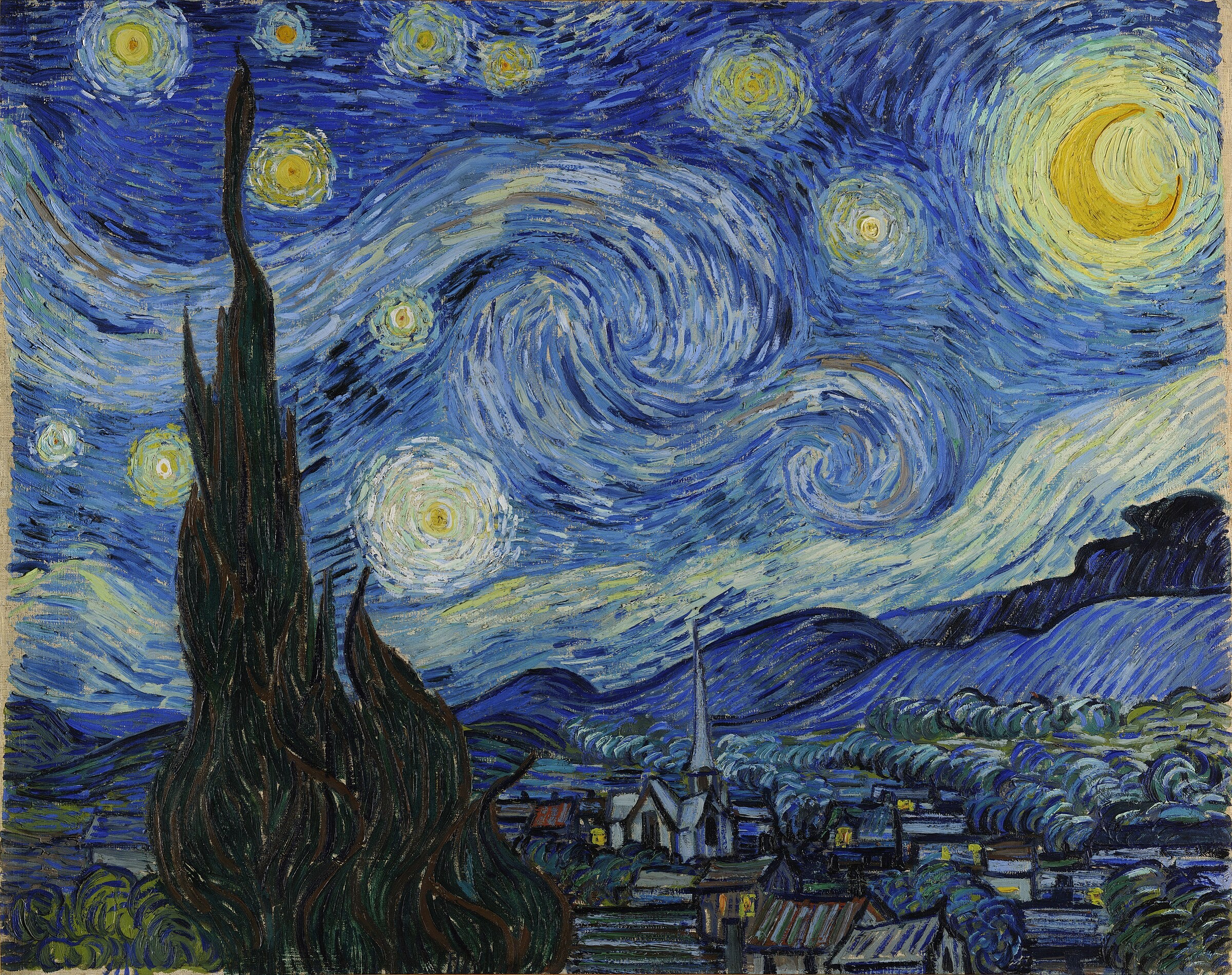
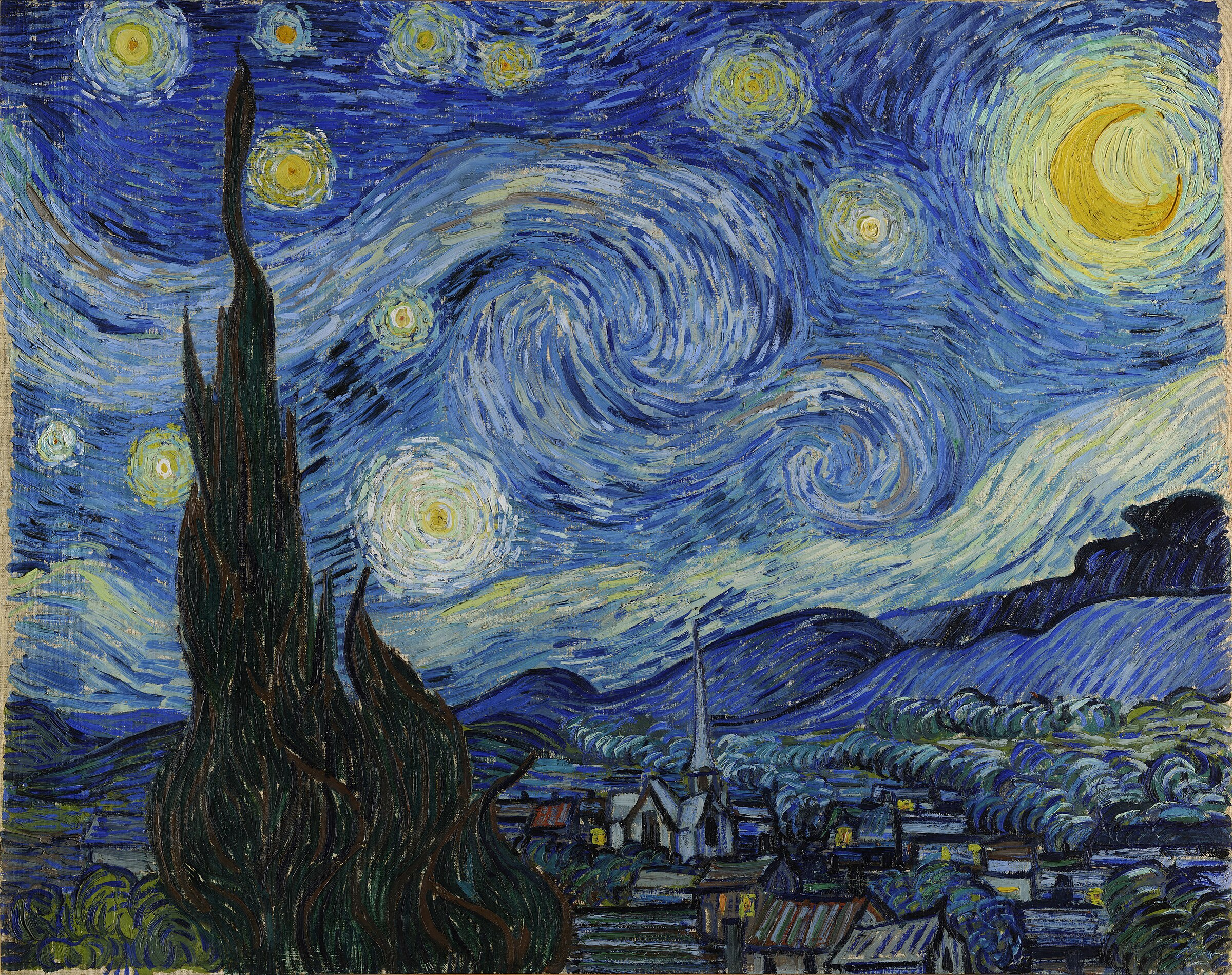
After his breakdown in Arles, Van Gogh admitted himself to the asylum at Saint-Rémy-de-Provence in May 1889. He painted The Starry Night from his window, though he rearranged the view: the village below was invented, and the cypress tree in the foreground was moved from elsewhere. The sky is the point. Eleven stars and a crescent moon are surrounded by swirling haloes of light, painted in thick impasto that gives the surface a physical texture you can read with your fingertips.
Van Gogh was ambivalent about the painting. He wrote to Theo that it was not what he wanted, that he had gone too far. He preferred the companion piece, Starry Night Over the Rhône, painted six months earlier in Arles, which was calmer and closer to observation. The painting he considered a failure became the one the world remembers.
Auvers: The Last Paintings
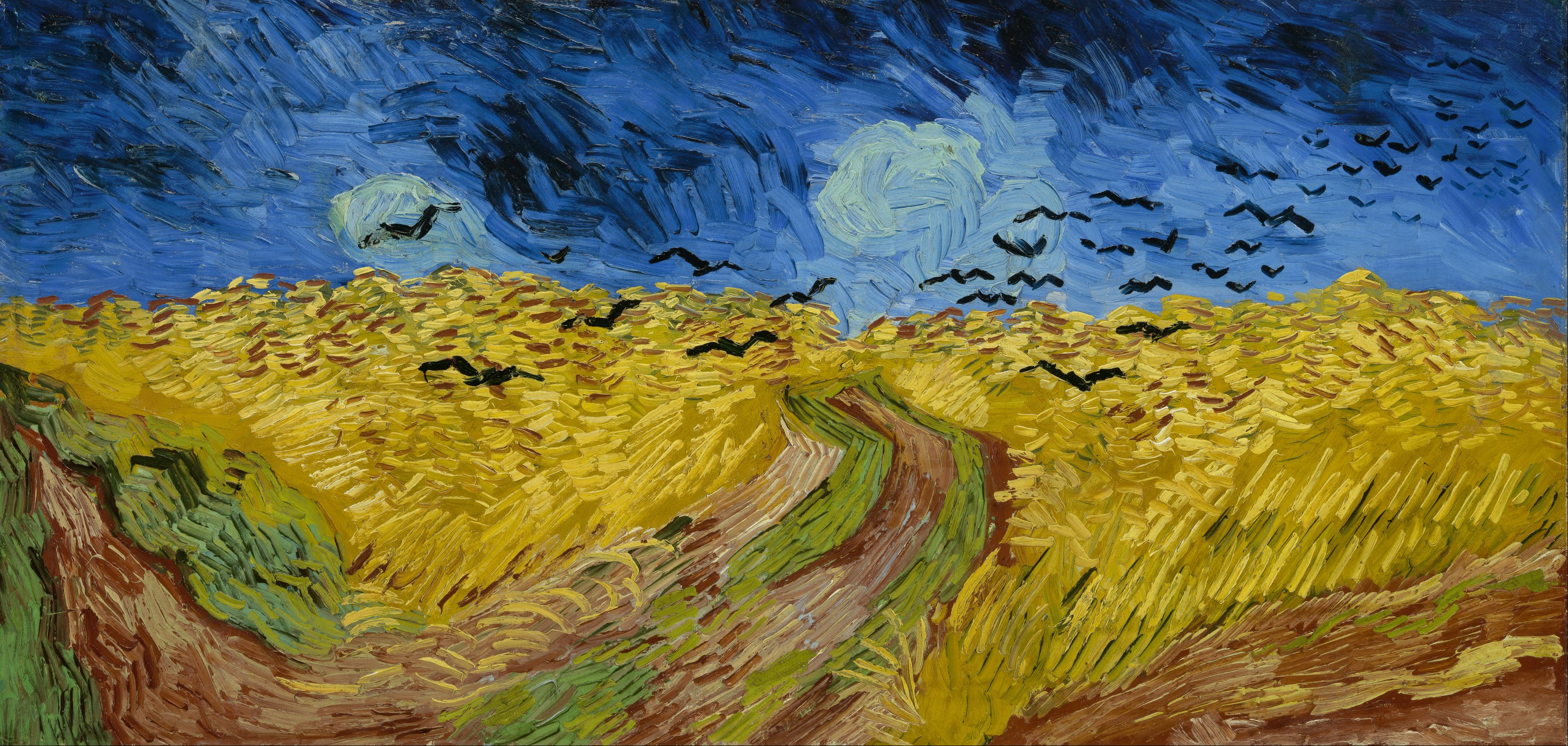
Wheatfield with Crows, painted in July 1890, is often described as Van Gogh's last painting, though the chronology is not certain. The sky is dark and turbulent; crows scatter above the wheat; three paths diverge and lead nowhere. It is easy to read this as a farewell, but Van Gogh's letters from the period do not support that interpretation. He described the painting as expressing "sadness and extreme loneliness" but also said the wheatfields were good for his health.
He shot himself on 27 July 1890 and died two days later. He was thirty-seven. In his lifetime he sold one painting. Within two decades of his death, his work had changed the trajectory of European art. The thick paint, the emotional colour, the willingness to distort form for expressive purposes: all of it became available to the Fauves, the Expressionists, and the Abstract Expressionists who followed.
What Van Gogh left behind, apart from the paintings, were the letters. They prove that his art was not the product of madness, as popular mythology suggests. It was the product of an exceptionally clear mind that happened to be in constant pain.


