

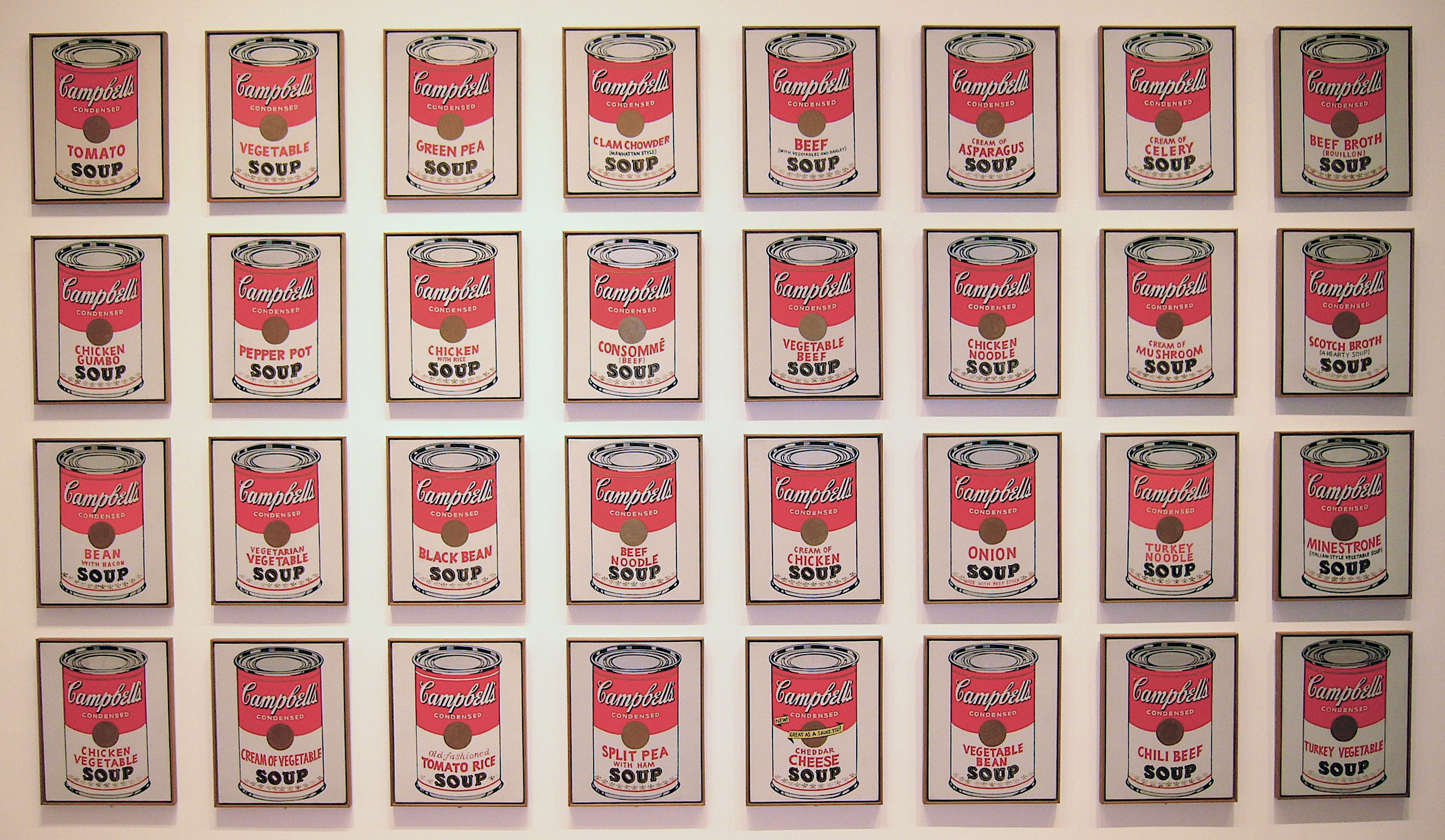
In 1962, Andy Warhol exhibited thirty-two paintings of Campbell's Soup cans at the Ferus Gallery in Los Angeles. Each canvas showed a single can, each can a different flavour. They were displayed on a shelf, like products in a supermarket. The art world was appalled, amused, or both. Pop Art had arrived.
The Question Pop Art Asked
Pop Art asked a question that Abstract Expressionism had made urgent: if art could be anything, could it be a soup can? Warhol's answer was yes. Lichtenstein's answer was a comic-book panel blown up to the size of a history painting, complete with Ben-Day dots and speech bubbles. Oldenburg's answer was a giant hamburger made of painted plaster. The movement took the imagery of mass culture (advertising, packaging, celebrity, television) and presented it as fine art, without irony and without apology.
Warhol: The Machine
Warhol (1928 to 1987) turned art production into something resembling a factory. His studio was called the Factory. He used silk-screen printing to reproduce the same image in different colour combinations, producing Marilyns, Elvises, and electric chairs in editions that blurred the line between original and copy. He claimed he wanted to be a machine. Whether this was serious, satirical, or both has never been resolved, which is exactly how Warhol wanted it.
Lichtenstein: The Dot and the Drama
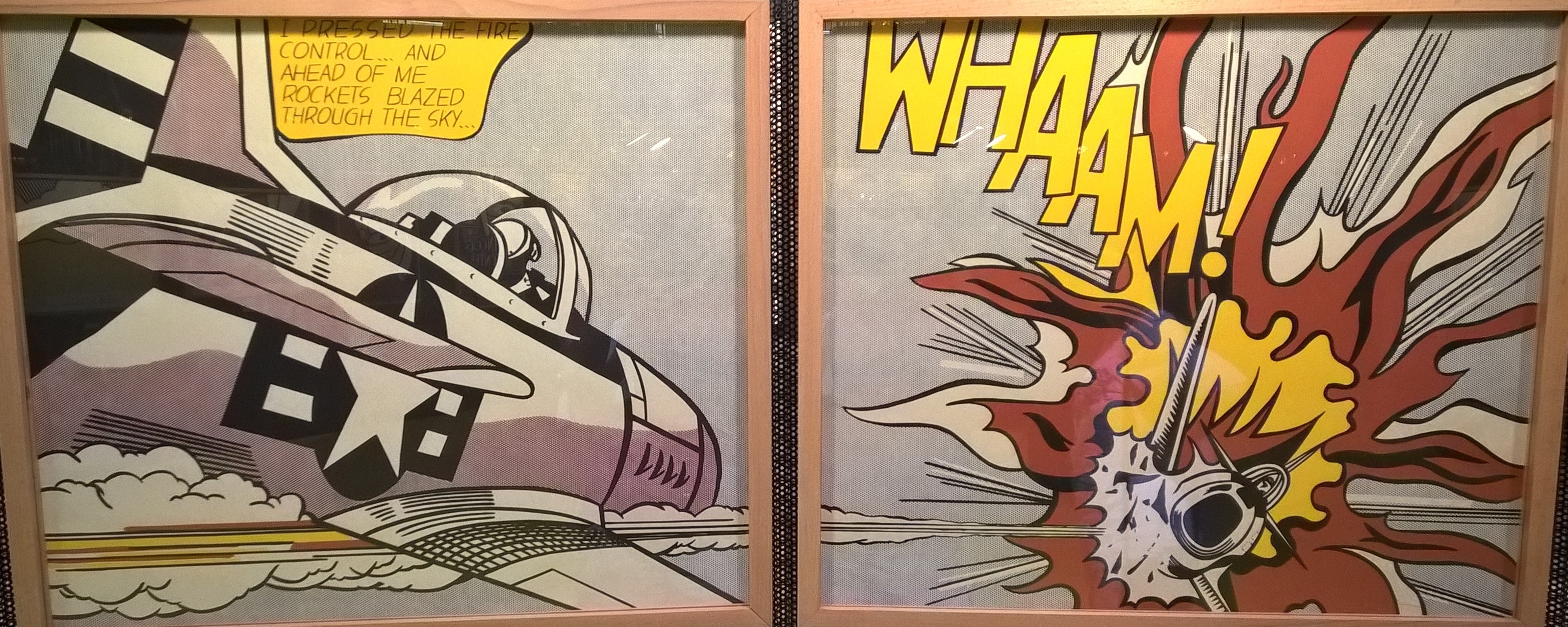
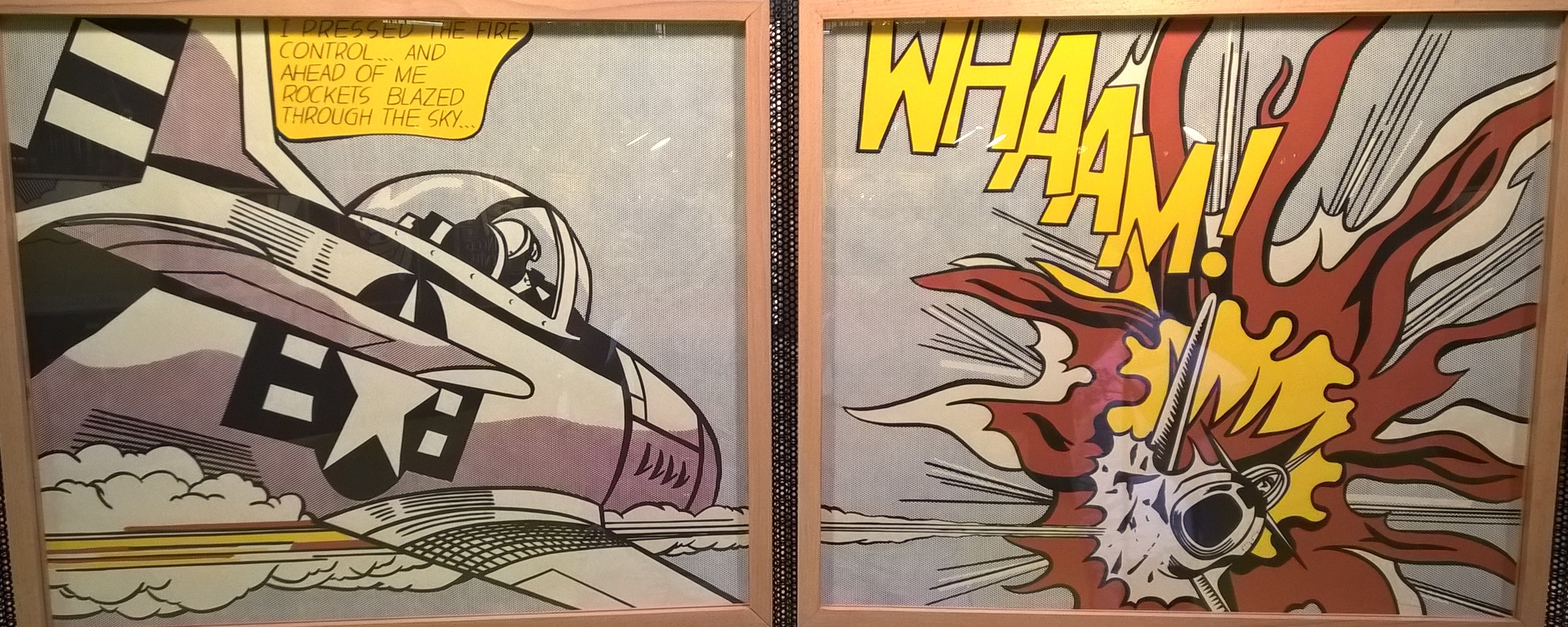
Roy Lichtenstein (1923 to 1997) painted enlarged panels from comic books and romance magazines, reproducing the Ben-Day dot printing pattern by hand. Whaam! (1963) shows a fighter plane firing a rocket at an enemy aircraft, which explodes in a ball of flame. The image is copied from a DC Comics panel, but scaled up to 4 by 2.5 metres, the trivial becomes monumental. The Ben-Day dots, invisible in a comic book, become a visible pattern that reminds you this is a painting, not a page.
Pop Art did not kill Abstract Expressionism; it made it share the room. The soup can and the colour-field painting coexisted in the same galleries, the same collections, and the same arguments about what art was for. Those arguments have not been resolved. Pop Art did not answer them. It just made sure they could never be ignored.


