

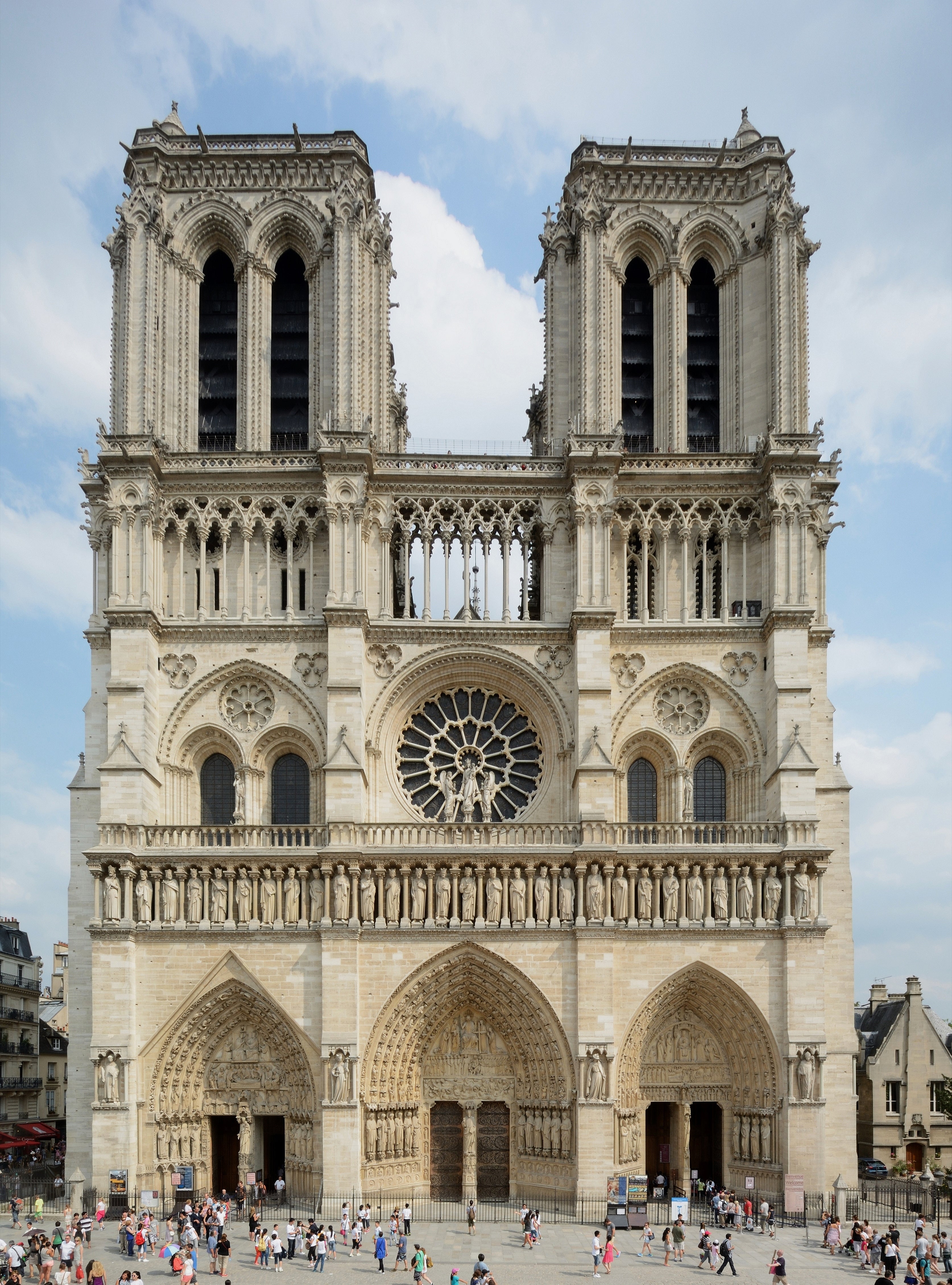
Notre-Dame de Paris is not one building. It is a palimpsest: layers of construction, destruction, restoration, and reconstruction spanning more than eight centuries. The cathedral that burned in April 2019 was not the building that Bishop Maurice de Sully began in 1163. It was not the building that Viollet-le-Duc restored in the 1840s. It was all of them at once, and the restoration that followed the fire is simply the latest chapter in a story of continuous making.
Building and Rebuilding
Construction of Notre-Dame took nearly 200 years. The choir was completed by 1182; the nave by about 1250; the towers by 1345. By then, the earliest parts were already old enough to need repair. Gothic cathedrals were never finished; they were maintained, modified, and extended by successive generations who understood that the building would outlast them.
The medieval stonemasons who built Notre-Dame left their marks on the stones they carved: initials, symbols, and rough sketches that identified their work for payment purposes. These marks are a record of individual labour embedded in a collective project. Each stone was cut by a specific person, carried to a specific position, and set by a specific crew. The cathedral is the sum of thousands of individual decisions made over centuries.
Viollet-le-Duc and Invention
By the French Revolution, Notre-Dame was in poor condition. Revolutionaries had smashed the heads of the kings on the west facade (mistaking the biblical Kings of Judah for French monarchs). Napoleon's coronation in 1804 required hastily hung tapestries to cover the worst damage. In 1844, Eugène Viollet-le-Duc began a restoration that would last twenty years.
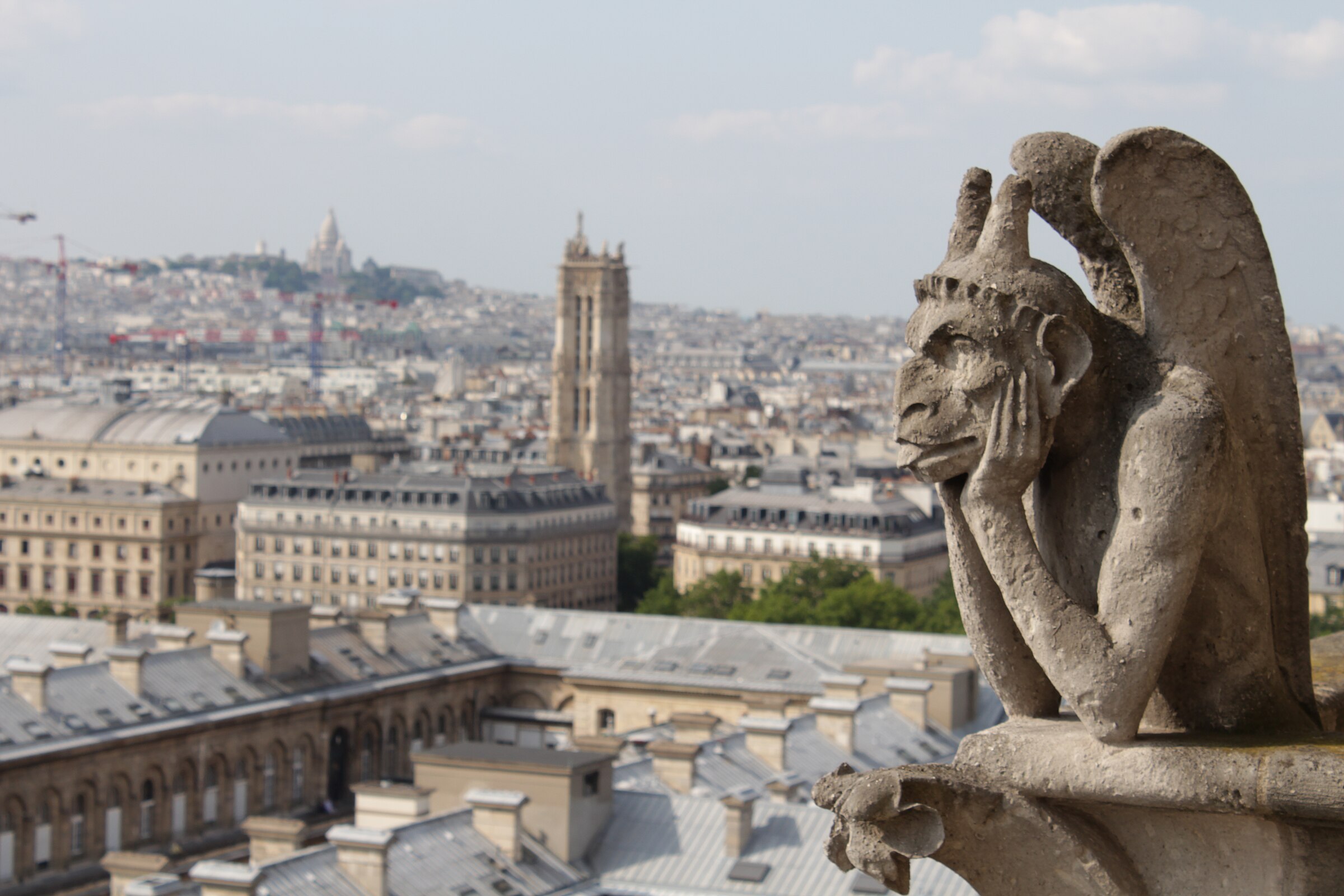
Viollet-le-Duc did not merely repair. He invented. The famous chimeras (often incorrectly called gargoyles) that perch along the balustrade were his addition, not medieval originals. The spire that collapsed in the 2019 fire was his design, replacing an earlier spire removed in 1786. His approach was not to restore the building to its original state but to complete what the medieval builders might have done if they had had more time and money. It was controversial then and remains so now.
Notre-Dame is a reminder that great buildings are never static. They are arguments carried on across centuries by people who inherit them, disagree about them, and keep building.


