

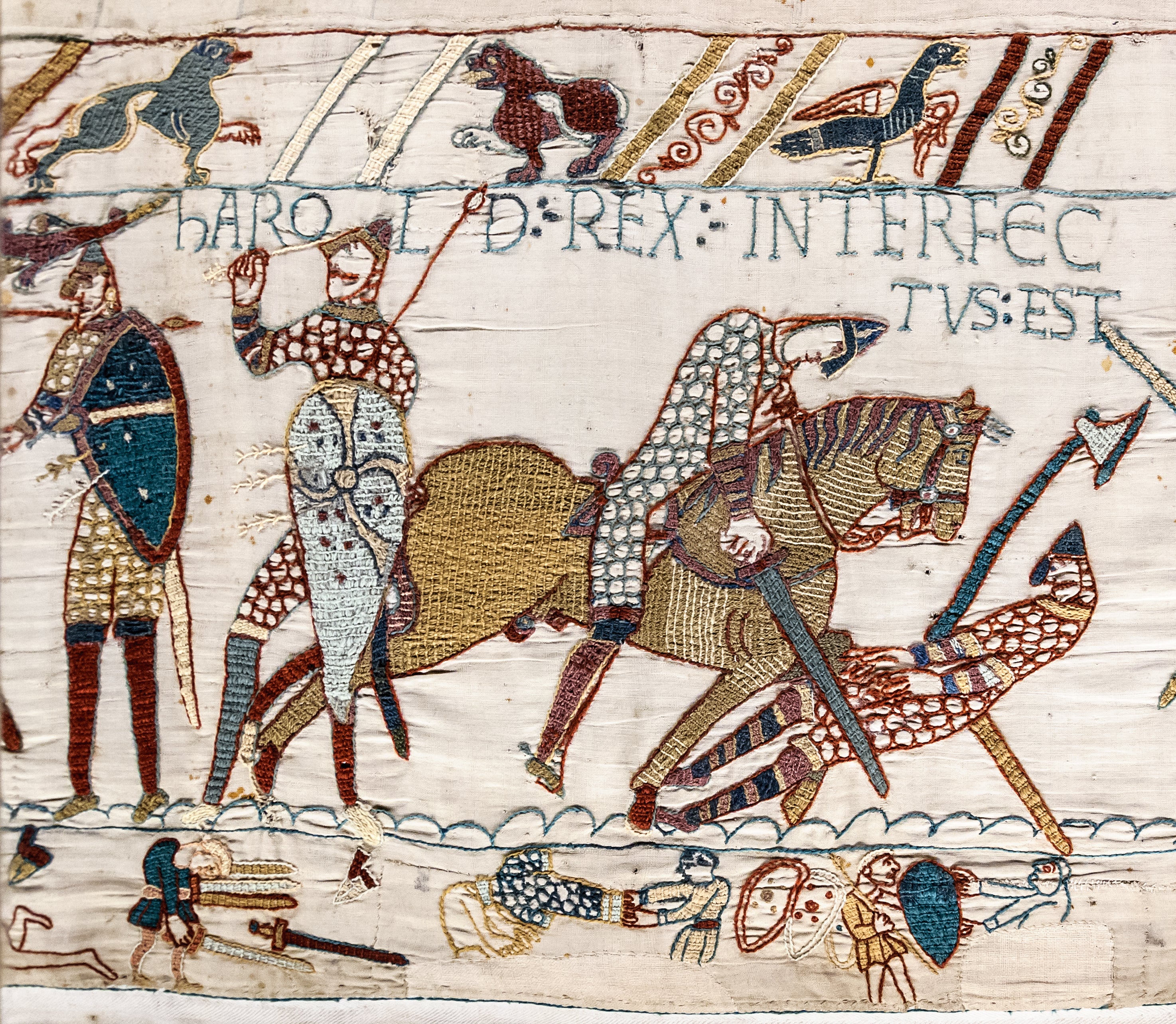
Textiles are the most fragile of art forms. Fabric rots, tears, fades, and burns. The survival of any textile older than a few centuries is remarkable; the survival of one from the eleventh century is nearly miraculous. Yet the Bayeux Tapestry (which is not a tapestry but an embroidery) has endured for nearly a thousand years, and its 70-metre narrative of the Norman Conquest remains one of the most complete visual records of a medieval event.
The Bayeux Embroidery
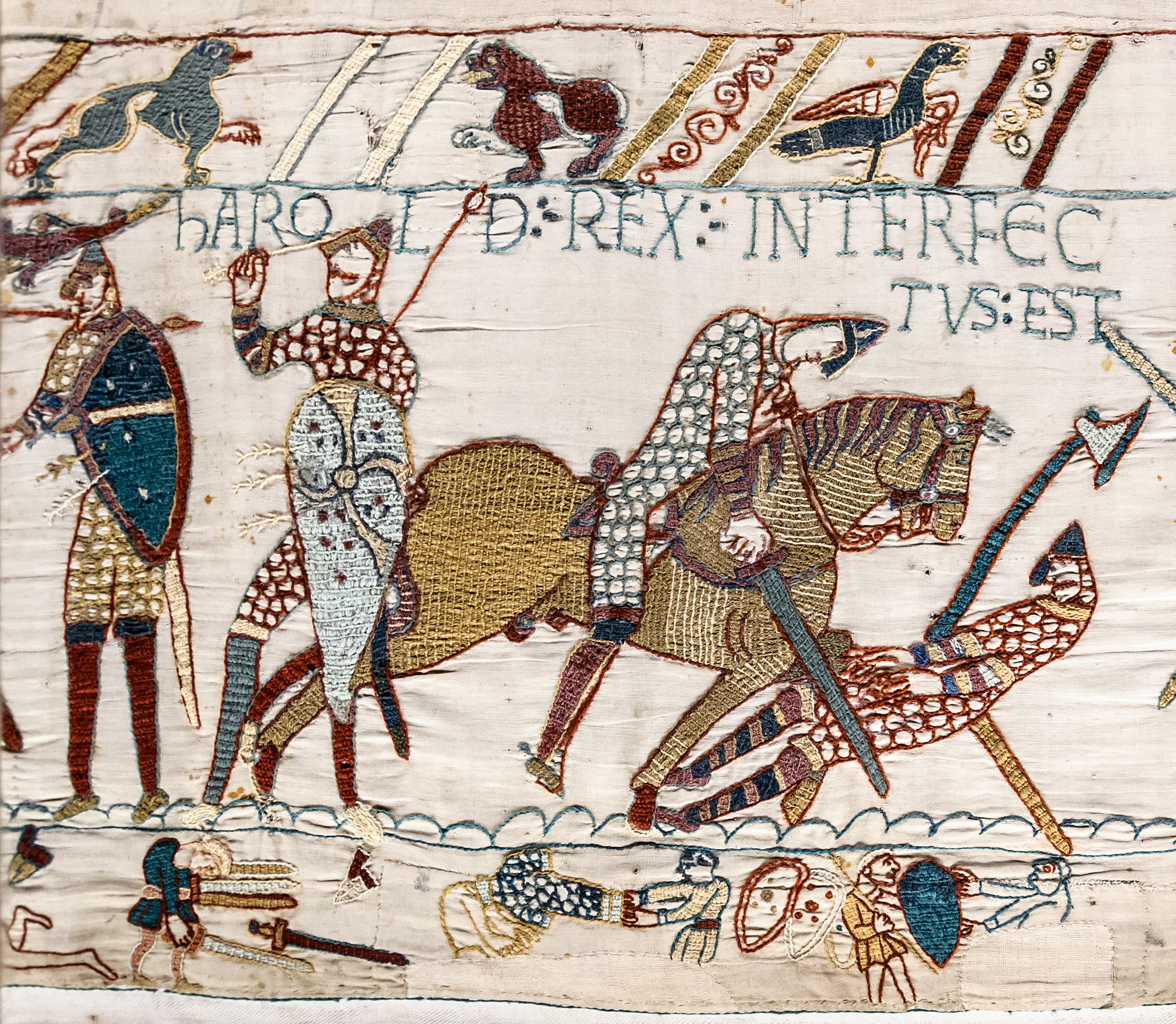
The Bayeux Tapestry is 70 metres long and about 50 centimetres tall: a narrow strip of linen embroidered with wool thread in eight colours. It tells the story of the Norman Conquest of England in 1066, from Harold's oath to William through the Battle of Hastings. The scene of Harold's death, with a figure pulling an arrow from his eye (though scholars debate whether this figure is actually Harold), is one of the most reproduced images in medieval art.
The embroidery was probably made in England, possibly at Canterbury, within a decade of the events it depicts. It was commissioned by Bishop Odo of Bayeux, William's half-brother, and it tells the story firmly from the Norman perspective. It is propaganda stitched in wool, and it is completely compelling.
Fabric as Record
Textiles record what other art forms miss. The patterns woven into a piece of silk tell you where it was made, when, and for whom. A Chinese brocade found in a Central Asian tomb traces a trade route. A Coptic linen fragment preserves a weaving technique that existed nowhere else. The sumptuary laws that restricted who could wear what reveal social hierarchies more precisely than any painting.
Fabric also carries culture. When Chinese silk reached Rome, it carried patterns (cloud scrolls, phoenix motifs, geometric rhombuses) that Roman weavers adapted for their own markets. When Japanese textiles reached Europe in the nineteenth century, their patterns influenced Art Nouveau design. The material moved; the patterns moved with it; and the patterns changed at every stop.
The fragility of textiles is also their power. A painting on a wall stays where it was made. A piece of fabric travels. It is worn, traded, given as a gift, stolen, inherited, and eventually worn out. Each textile that survives represents hundreds that did not. What remains is a fragment of a much larger story, told in thread.


