

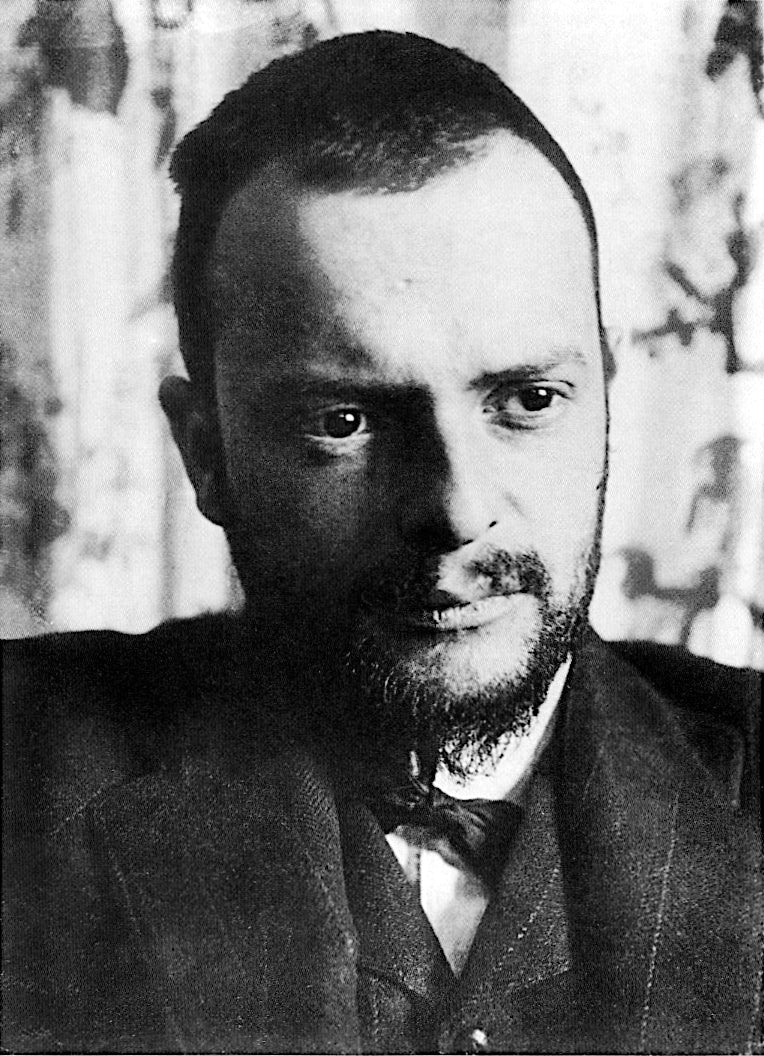
Few artists have navigated the space between reality and abstraction with as much wit, musicality, and technical mastery as Paul Klee. A pivotal figure in early 20th-century art, Klee’s work defies easy categorisation, floating effortlessly between Expressionism, Cubism, and Surrealism. To Klee, art was not merely about reproducing the visible world but making secret visions visible—a philosophy that continues to resonate with art lovers and designers today.
For modern homeowners, Klee’s work offers a perfect bridge between the cerebral and the playful. His intricate geometric patterns and profound understanding of colour theory make his compositions timeless additions to contemporary interiors, particularly those inspired by Mid-Century Modern aesthetics.
The Musician Who Painted
Born in Switzerland in 1879 to a German music teacher and a Swiss singer, Paul Klee was a prodigy on the violin before he ever picked up a paintbrush. This musical foundation is critical to understanding his art; Klee approached the canvas much like a composer approaches a score. He spoke of rhythm, polyphony, and harmony in his visual compositions, creating works that seem to ‘hum’ with internal logic.
Klee’s early years were marked by a search for his own voice. It wasn’t until his legendary trip to Tunisia in 1914, alongside fellow artist August Macke, that he experienced a breakthrough. Overwhelmed by the North African light, he famously declared in his diary: “Colour and I are one. I am a painter.” This realisation marked the beginning of his journey into the abstract, where colour became the primary subject of his work.
The Bauhaus Years
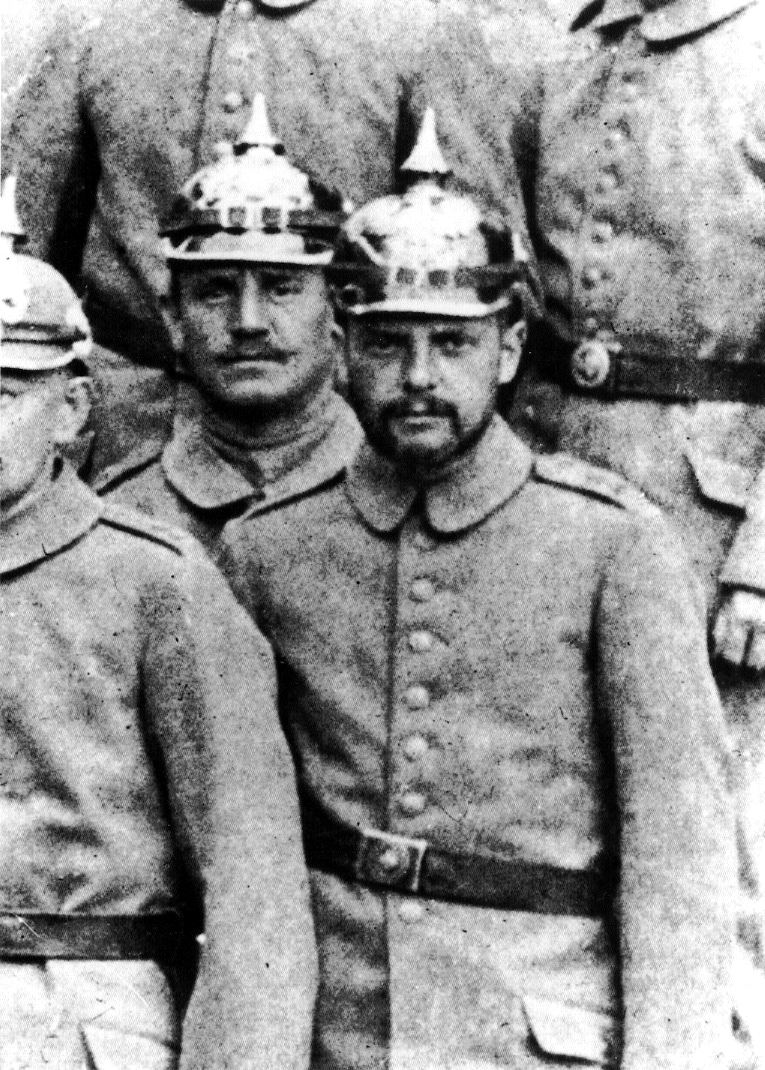
Klee’s most influential period began in 1921 when he joined the faculty of the Bauhaus, the revolutionary German school of art and design. Teaching alongside Wassily Kandinsky, Klee developed his pedagogical sketchbooks, which are still revered today as some of the most important writings on design theory. He famously described drawing as “taking a line for a walk”—an idea that emphasised the process of creation as a dynamic, living journey.
During his time at the Bauhaus, Klee’s work became increasingly geometric and structured, yet it never lost its organic, almost childlike wonder. His ability to merge the rigid discipline of Bauhaus design with his own poetic whimsy resulted in some of the 20th century's most iconic images.
Master of Colour and Form
One of Klee’s defining characteristics was his restless experimentation. He worked with oil, watercolour, ink, and pastel, often combining them in a single work to create unique textures. His painting Castle and Sun (1928) is a prime example of his mature style. Here, Klee constructs a glowing, mosaic-like city from simple geometric blocks. The warm, earthy reds and golds contrast against deep geometric lines, creating a sense of depth and vibration that feels both ancient and futuristic.

This work exemplifies why Klee remains a favourite for Abstract Prints collectors. The balance of warm tones and structured forms allows his pieces to anchor a room without dominating it, providing a sophisticated focal point that reveals new details upon every viewing.
A Legacy of Rhythm
Paul Klee produced over 9,000 works in his lifetime, a testament to his ceaseless creativity. Even as his health declined in the late 1930s, his output remained prolific, his style shifting towards bolder, thicker lines and simpler forms. He died in 1940, leaving behind a body of work that bridged the gap between the intellectual rigour of the Bauhaus and the emotional depth of Expressionism.
Today, Klee’s influence can be seen everywhere from graphic design to textile art. His works are not just paintings; they are visual poems that invite us to look closer, think deeper, and appreciate the rhythm of the lines around us.


