

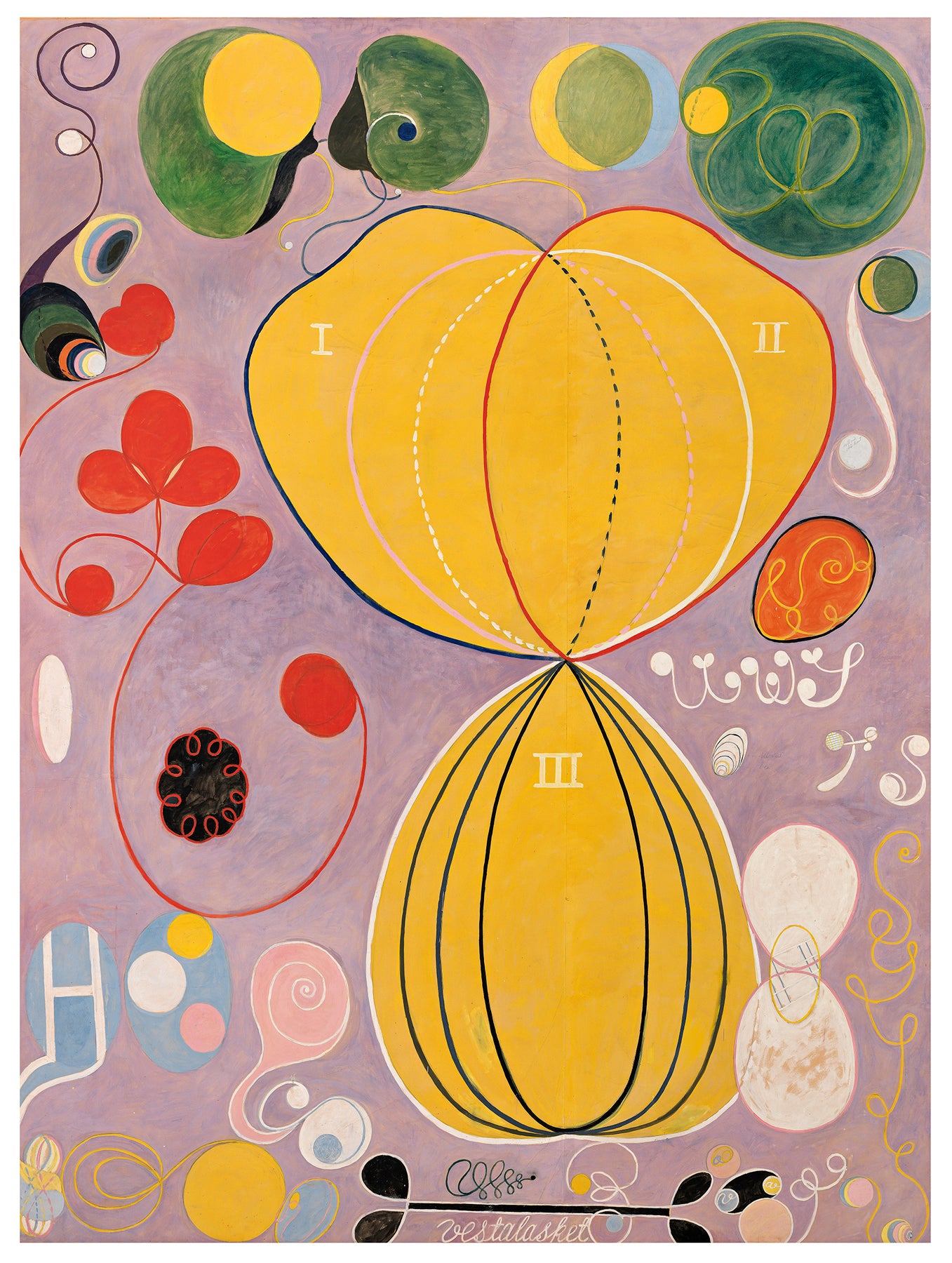
For decades, the history of abstract art was told as a story of male pioneers. Wassily Kandinsky, Kazimir Malevich, and Piet Mondrian were hailed as the architects of non-objective painting in the early 20th century. But in 1986, a crate from a Swedish attic was opened, revealing a secret that would rewrite art history. Inside were the works of Hilma af Klint, a visionary artist who had been creating radical abstract paintings years before her male contemporaries.
Hilma af Klint was not just a painter; she was a mystic, a medium, and a seeker of hidden truths. Her work, characterised by bold spirals, pastel hues, and esoteric symbols, was not intended for the critics of her time. Believing the world was not ready for her vision, she stipulated that her most important works remain hidden for twenty years after her death. Today, she is recognised as one of the first true abstract artists in Western history.
The Medium and The Message
Born in Solna, Sweden, in 1862, af Klint was a classically trained artist who graduated with honours from the Royal Academy of Fine Arts in Stockholm. While she made a living painting conventional landscapes and botanical studies, her private life was consumed by the spiritual.
In the late 19th century, spiritualism was sweeping across Europe. Af Klint became deeply involved in these movements, joining a group of four other women known as De Fem (The Five). Every Friday, they gathered to conduct séances, recording messages from spirits they called the "High Masters". It was during these sessions that af Klint received a commission that would define her life's work: to create the Paintings for the Temple.
Paintings for the Temple
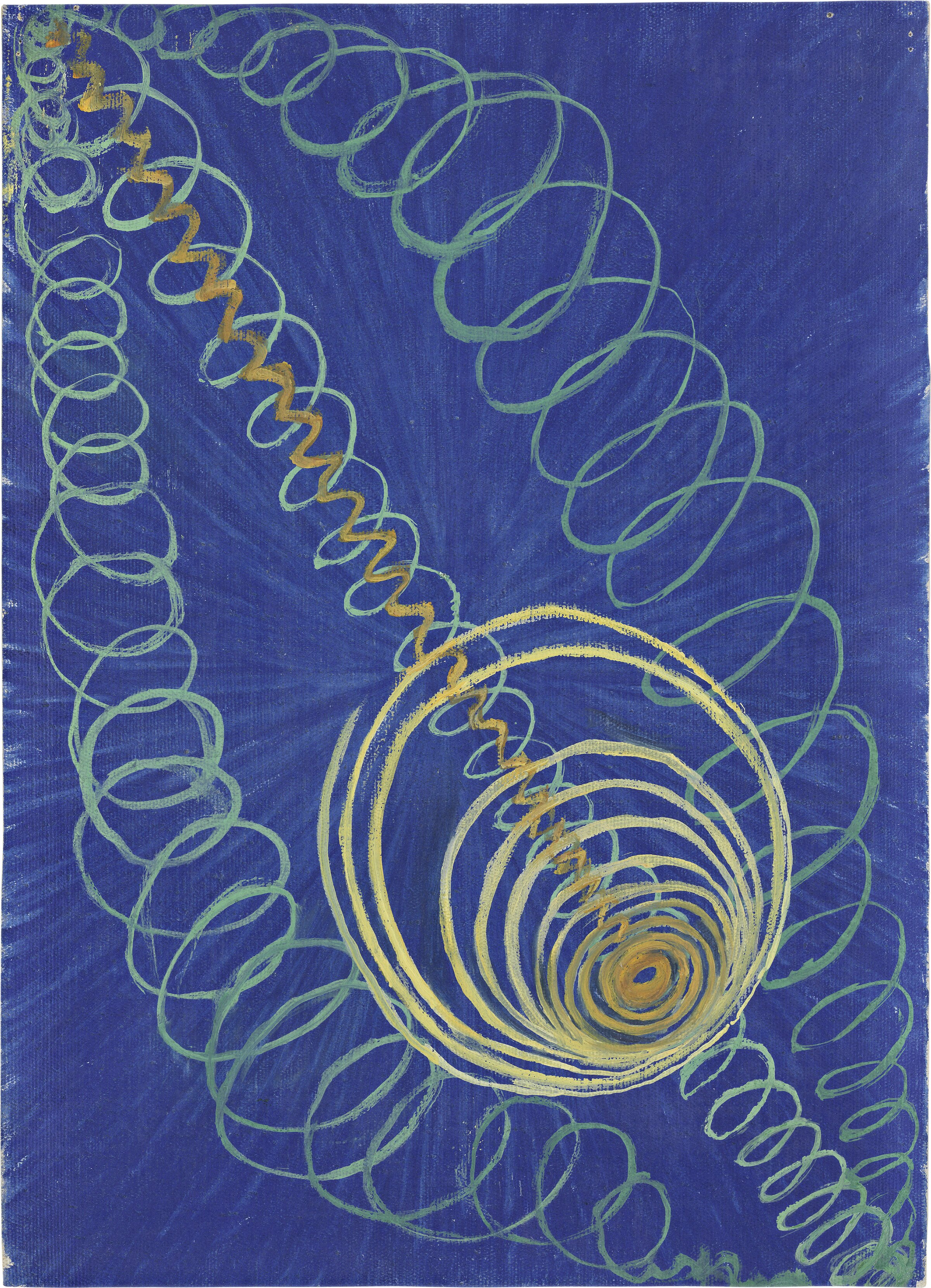
Between 1906 and 1915, af Klint produced 193 monumental paintings for this spiritual project. She worked with a frenetic energy, often claiming that her hand was guided directly by spirits. "The pictures were painted directly through me, without any preliminary drawings, and with great force," she wrote. "I had no idea what the paintings were supposed to depict; I nevertheless worked swiftly, without changing a single brush stroke."
The resulting works were unlike anything seen before. Series like The Ten Largest depict the stages of human life—Childhood, Youth, Adulthood, and Old Age—through gigantic, swirling forms and botanical geometries. These paintings are not mere abstractions; they are diagrams of the invisible world, attempting to map the connections between the physical and the spiritual realms.

The Swan and Sacred Geometry
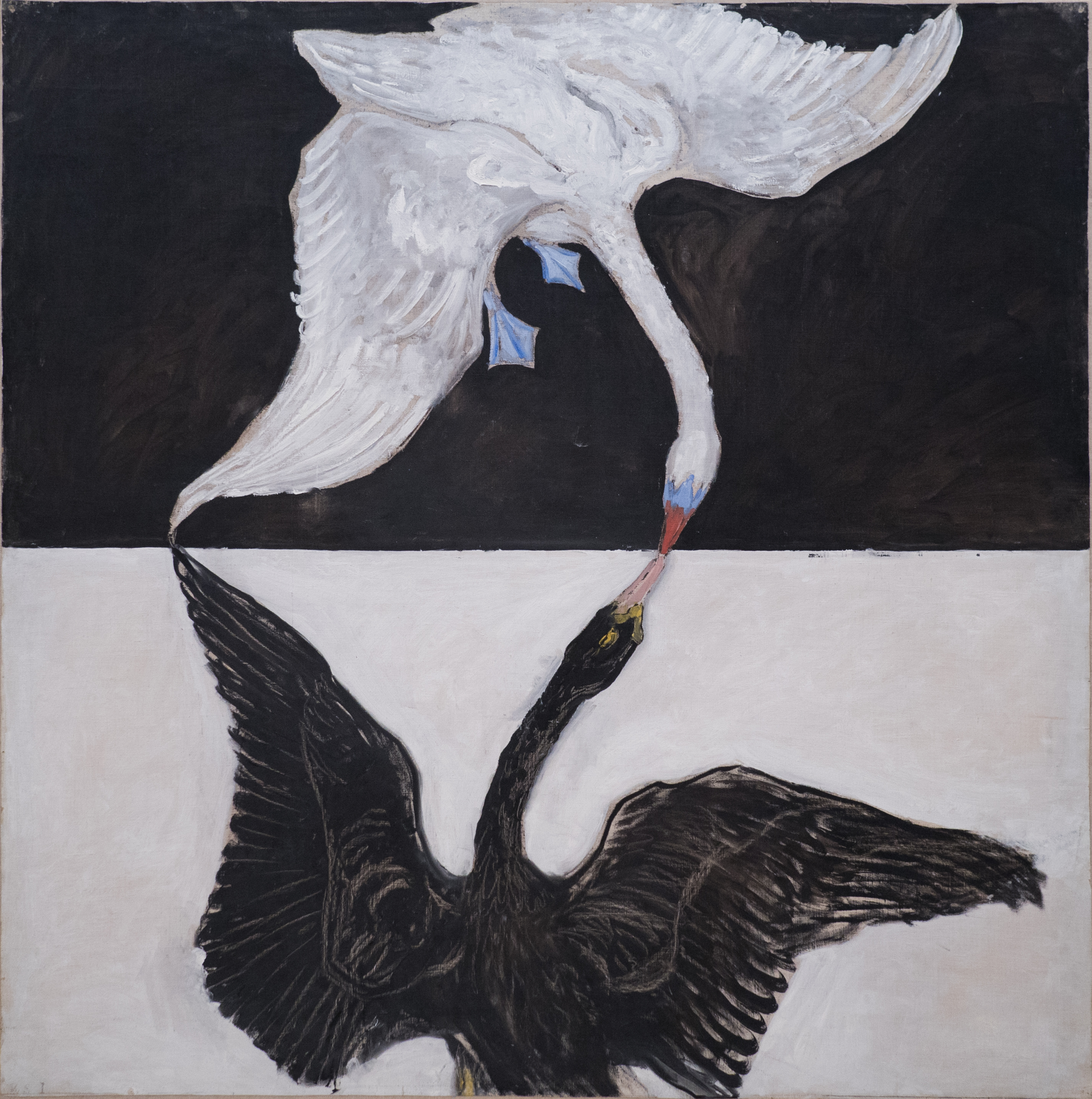
One of her most compelling series, The Swan, explores the tension between opposites: spirit and matter, male and female, light and dark. In these works, the image of a swan becomes increasingly abstract until it dissolves into pure geometry. The black and white bodies of the swans intertwine, creating a visual language of unity and balance.
Her use of colour was equally symbolic. Blue often represented the female spirit, yellow the male, and green the unity of the two. This systematic approach aligns her work with the precision of the Bauhaus movement, yet her inspiration was entirely metaphysical rather than industrial.
A Legacy Rediscovered
When Hilma af Klint died in 1944—the same year as Kandinsky and Mondrian—she left behind over 1,200 paintings and 125 notebooks. She suspected that her contemporaries would not understand her work, a suspicion confirmed when Rudolf Steiner, a theosophist she admired, reacted coolly to her paintings. Consequently, she left instructions that her work should not be shown until twenty years after her passing.
It took even longer for the world to catch up. It wasn't until the Guggenheim's blockbuster exhibition in 2018 that af Klint became a household name, shattering attendance records and shifting the canon of modern art. Her work resonates deeply with today's audiences, who find a kinship in her exploration of nature, spirituality, and the cosmos.
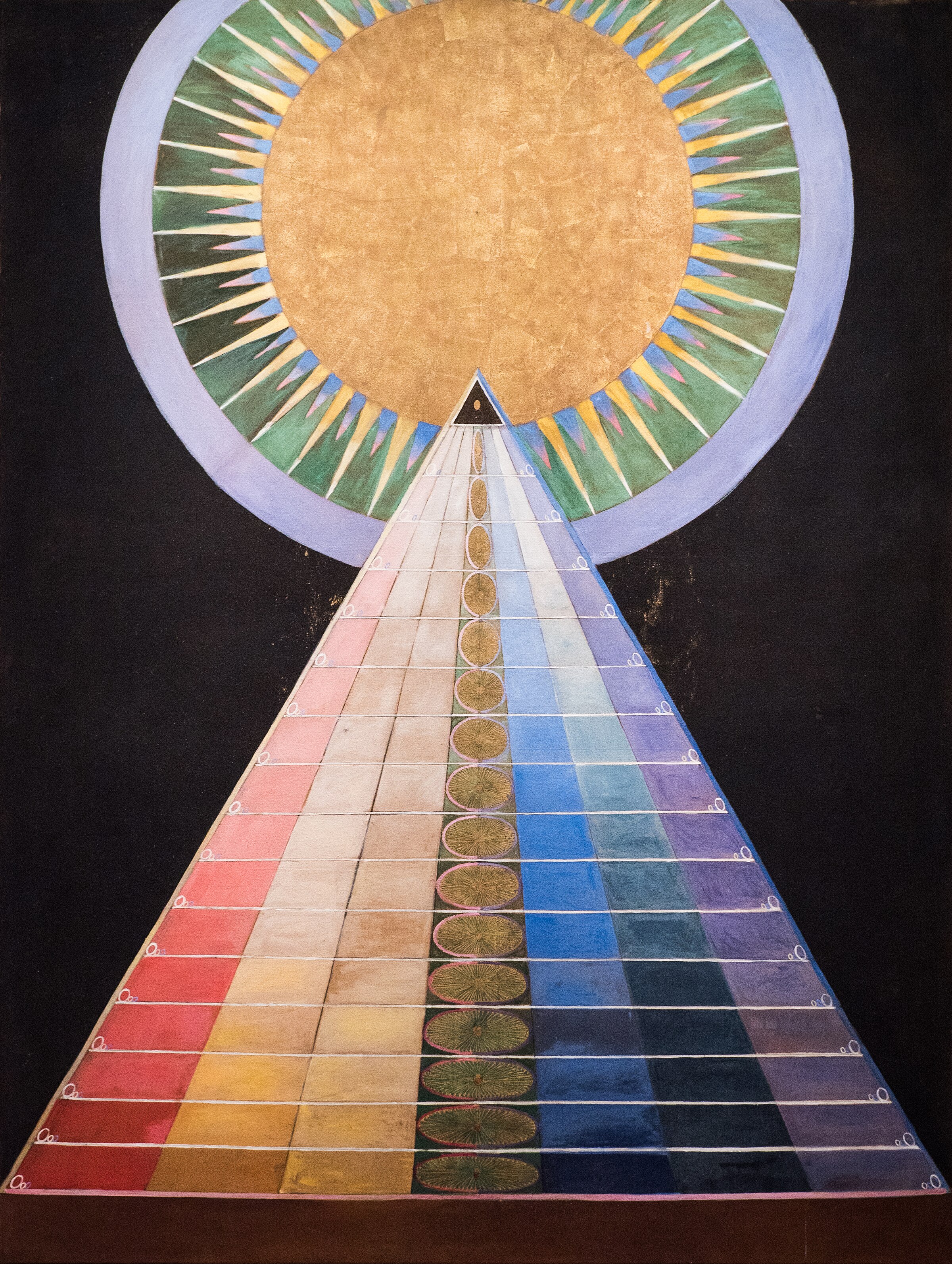
For collectors who appreciate the spiritual depth of Gustav Klimt or the abstract interplay of Paul Klee, Hilma af Klint offers a profound new perspective. She reminds us that the roots of modernism lie not just in formal experimentation, but in a deep, mystical engagement with the unknown.
Explore more groundbreaking styles in our All Prints collection, or discover the organic patterns of William Morris prints, which share a similar reverence for the natural world.


