

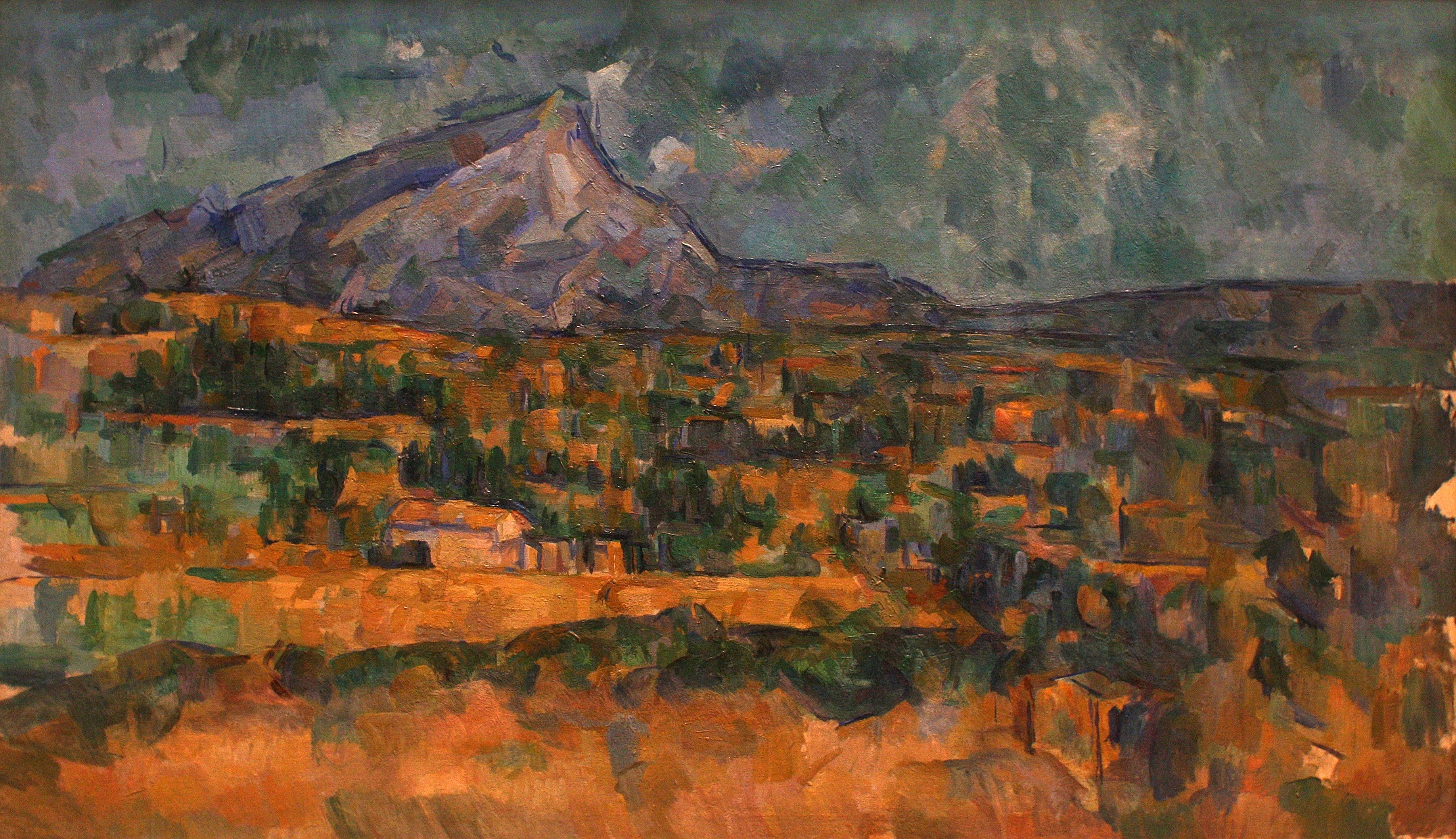
Paul Cézanne (1839 to 1906) wanted to do something that sounded modest and proved almost impossible. He wanted to make Impressionism solid. Where Monet painted light dissolving form, Cézanne wanted form to hold its ground. Where the Impressionists chased the fleeting moment, Cézanne chased permanence. The pursuit took his entire life, and the results changed the course of painting.
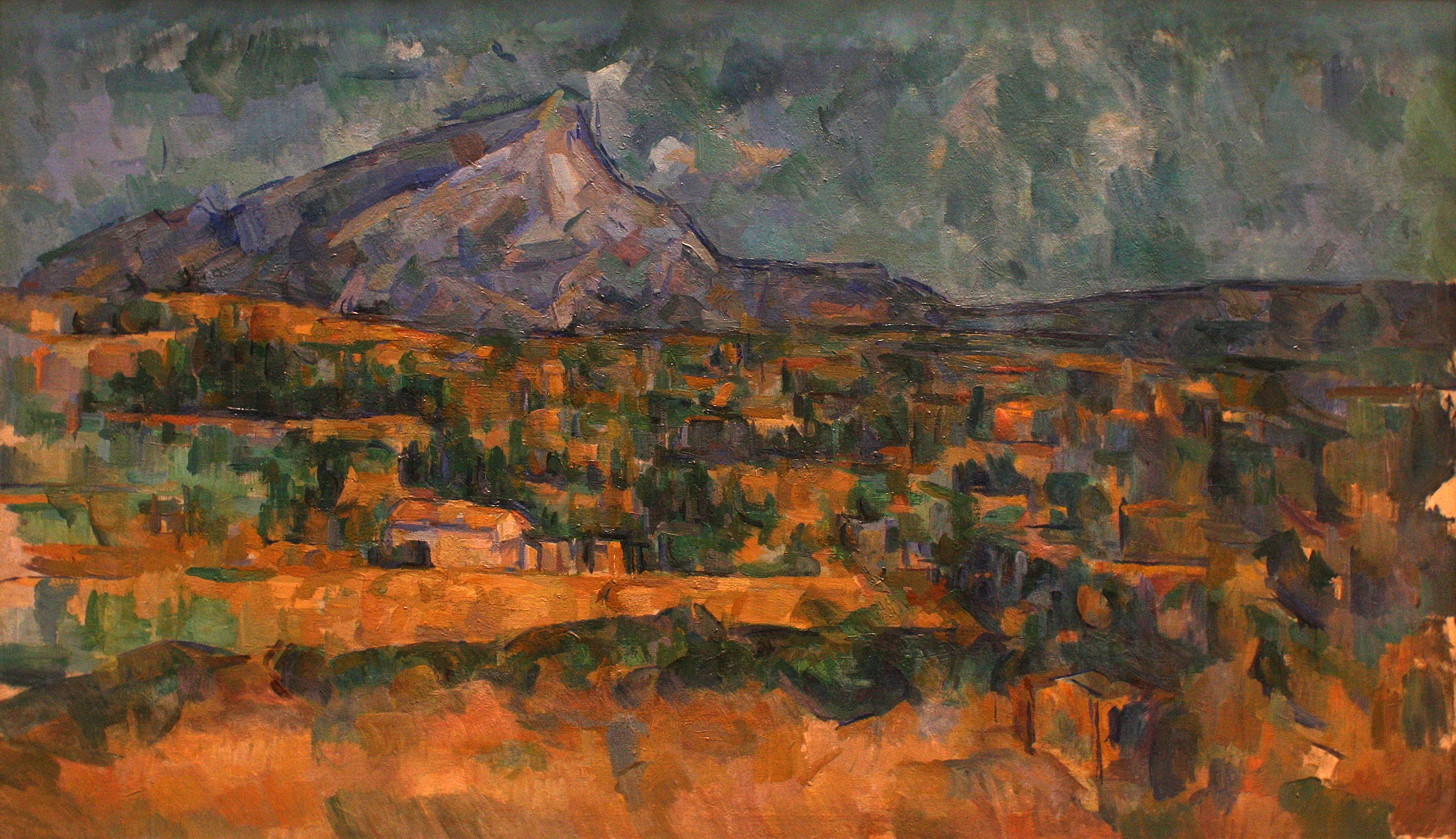
The Mountain, Sixty Times
Cézanne painted Mont Sainte-Victoire more than sixty times between 1870 and his death in 1906. The mountain, visible from his studio in Aix-en-Provence, became his testing ground. Each version stripped the landscape further: houses became squares, trees became circles, the mountain itself became a geometric form built from planes of blue and green that locked into the sky behind it.
The late versions, painted in the last four years of his life, have a watercolour lightness but a structural solidity that seems paradoxical. The colour patches on the ground look like small cubes. The mountain appears to be made of crystal. Cézanne repeated the same palette across earth, rock, and sky, creating colour harmonies that function almost like music: themes stated, varied, and restated across the canvas.
Two years before his death, he told the painter Émile Bernard that the modern school of painting had lost its way. His prescription was to study geometric forms: the cone, the cube, the cylinder, and the sphere. He never painted those abstractions directly. He preferred oranges, apples, and mountains.
Still Life as Laboratory
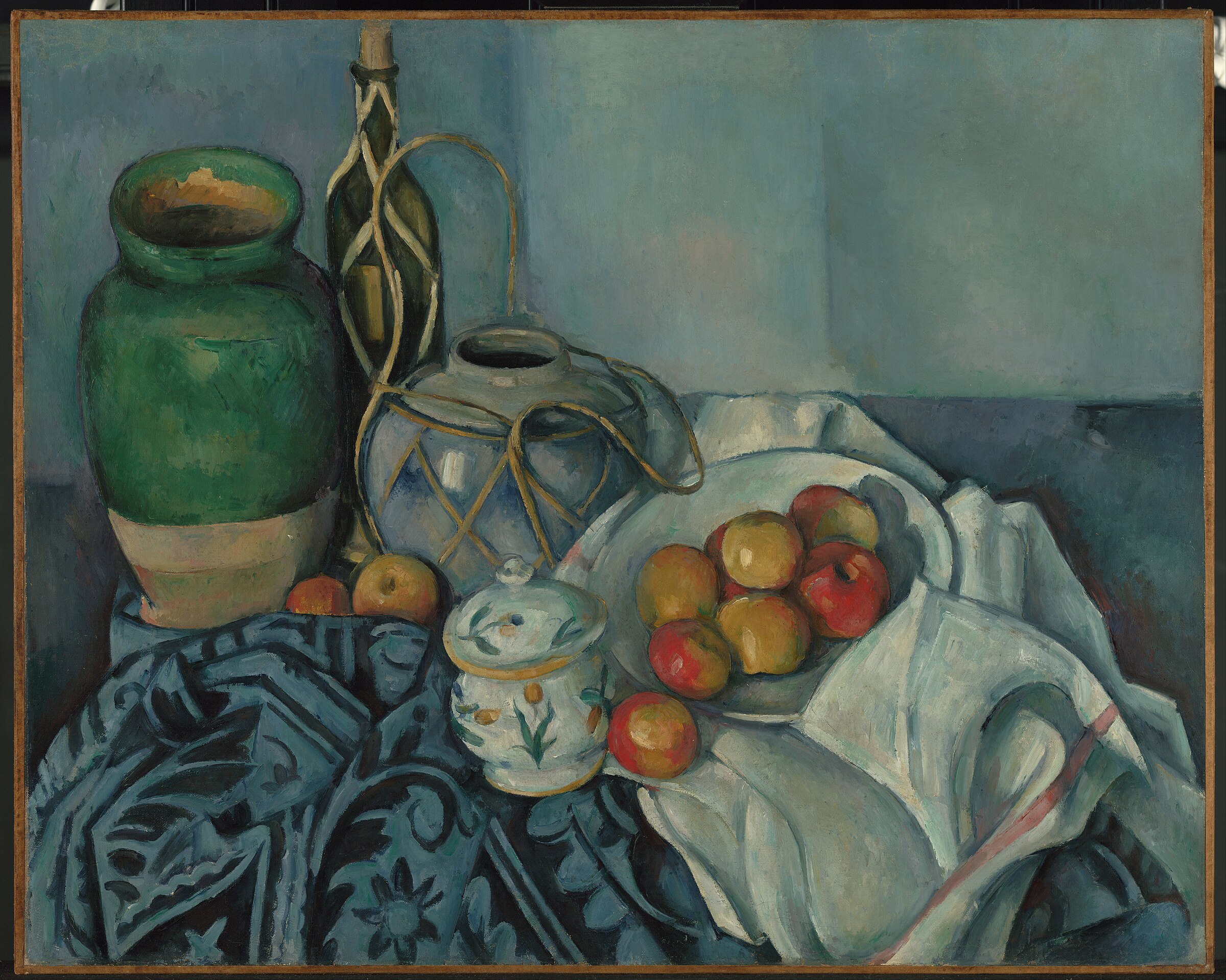
Cézanne treated still life as his ideal genre. Fruit and objects were patient. They did not change. He could paint them for days, weeks, even months, adjusting the relationships between colours and forms until they achieved the solidity he was after.
His still lifes do not look like photographs. The table edges do not always align. The viewpoint shifts between objects, as if Cézanne were looking at each apple from a slightly different angle. This was not carelessness. It was an early, intuitive version of what Picasso and Braque would systematise as Cubism twenty years later: the idea that a single, fixed viewpoint was a convention, not a truth.
Painting People Like Fruit
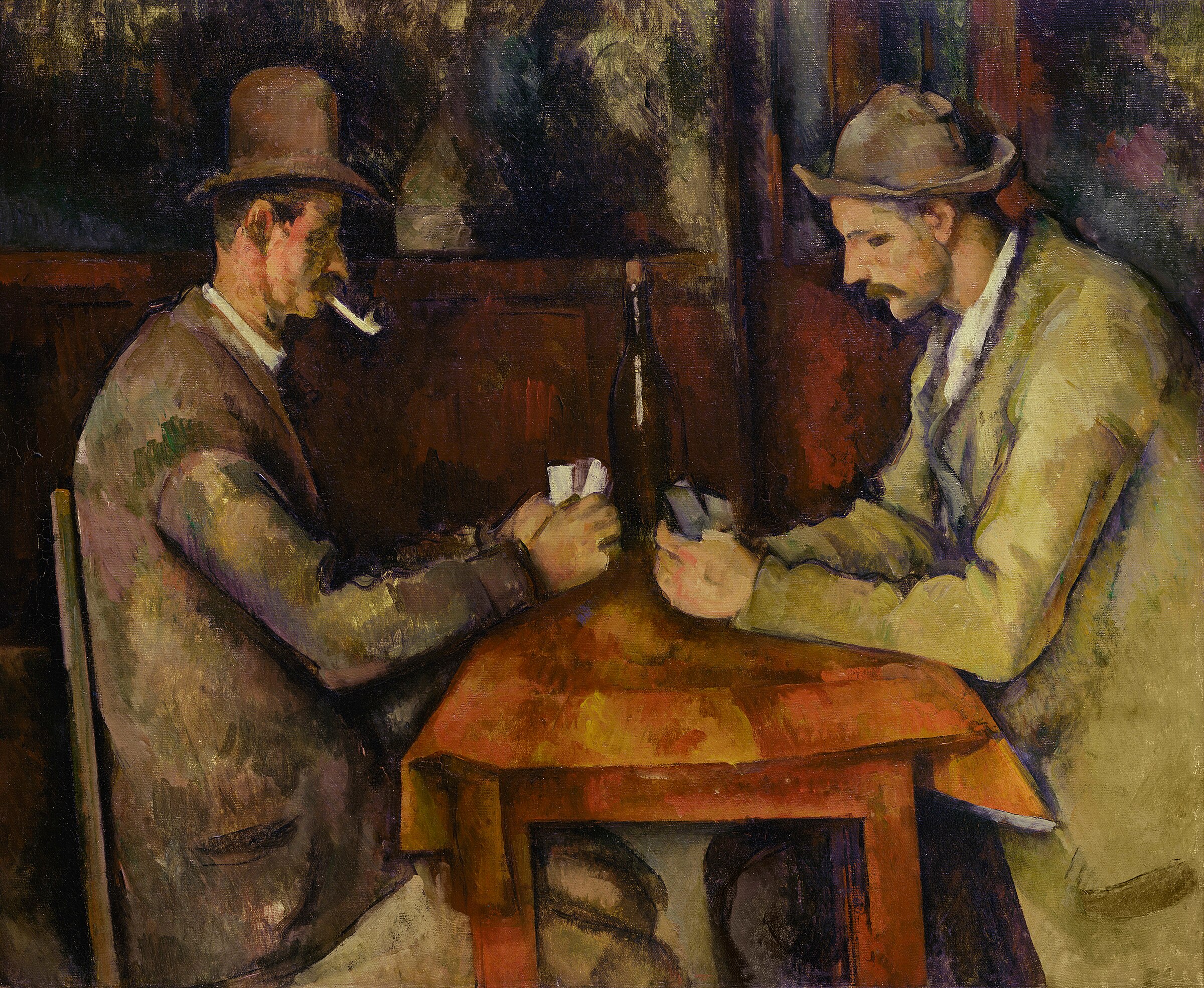
Cézanne's portraits and figure paintings applied the same logic. His wife Hortense, reportedly the most patient sitter in art history, endured countless sessions while Cézanne built the roundness of a face from brushstrokes of pure colour. Expression gave way to form. His late paintings of local farmers and gardeners are barely portraits at all: the human figure becomes a kind of still life, motionless and monumental.
The Card Players reduces two men at a table to a composition of geometric masses. Their bodies are architectural; the table between them is a structural axis. The painting has the stillness of a boulder. Nothing in it will ever move.
Why Cézanne Matters
When Cézanne died in 1906, Picasso was twenty-five and already absorbing everything the older painter had discovered. Cézanne's habit of analysing objects into geometric planes led directly to Cubism. His willingness to distort perspective for compositional purposes gave later artists permission to abandon the single viewpoint entirely. His belief that colour could construct form, rather than merely describe it, became a foundation of abstract painting.
Picasso called Cézanne "the father of us all." It was not flattery. It was an accurate description of a debt that every subsequent movement, from Cubism to Abstract Expressionism, would owe to a painter who spent his life trying to make an apple look as solid as a mountain.


