

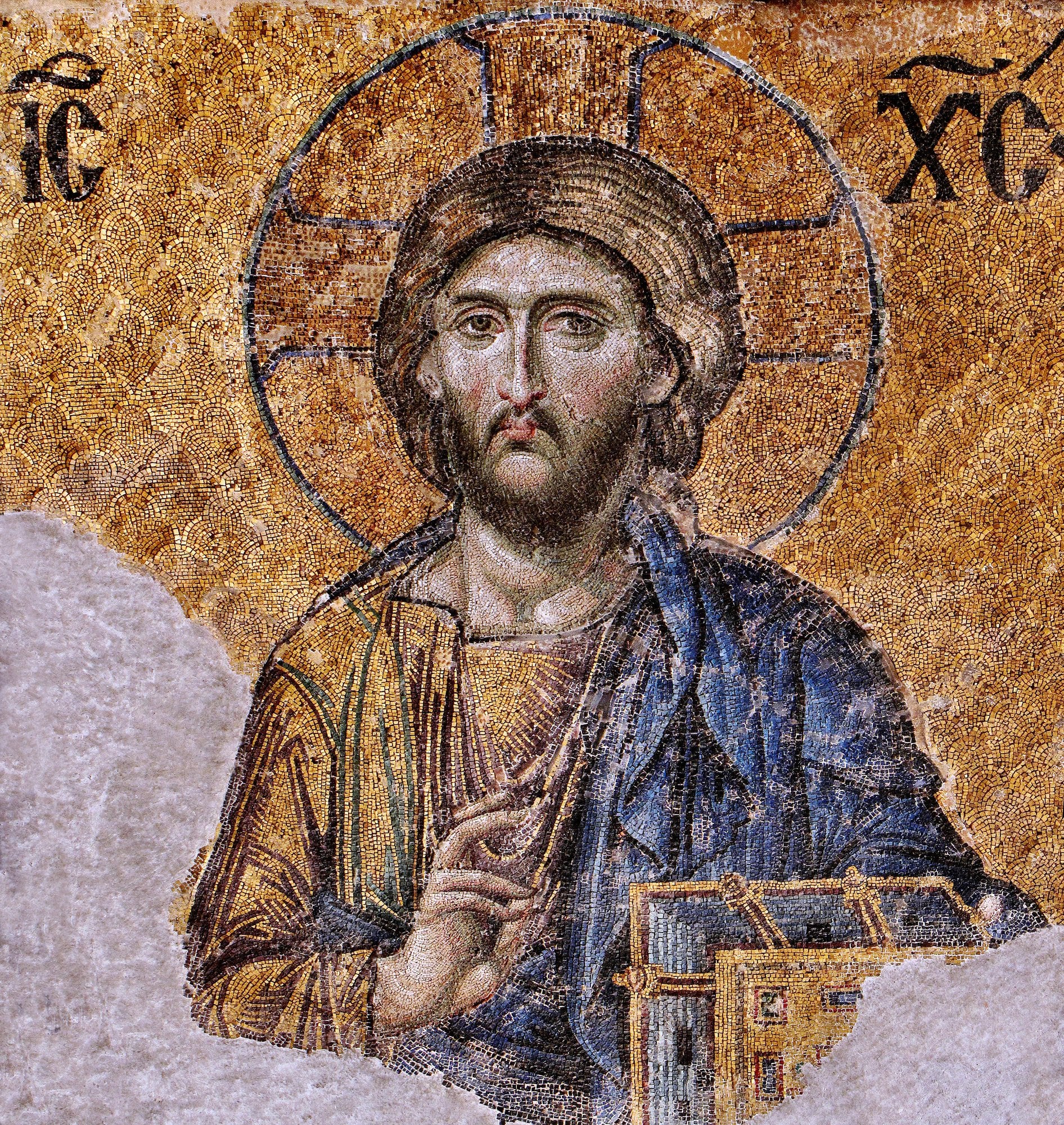
Between roughly 330 and 1453, the Byzantine Empire produced wall mosaics on a scale and with a technical refinement that has never been matched. The technique was essentially the same throughout: cut coloured glass and stone into small cubes, called tesserae, each about a centimetre across or smaller; press them into a layer of wet plaster on a wall or vault; angle them slightly so each individual cube catches the light differently; and let the wall sparkle.
The empire that produced this technique no longer exists. Constantinople fell to the Ottomans in 1453. But the mosaics in Hagia Sophia, in Ravenna, in San Marco in Venice, and in dozens of smaller churches across the former Byzantine territories are still in place. Several have outlasted the buildings that originally contained them.
The Materials
Byzantine mosaicists used three main materials. Stone tesserae were cut from coloured marble: white from Carrara, green from Thessaly, red and yellow from Numidia. These provided the natural skin tones, the earth colours, and the structural patterns. Glass tesserae were manufactured specifically for mosaic use, in workshops near Constantinople and elsewhere. The glass could be coloured in a vast range using metal oxides: cobalt for deep blue, copper for green, manganese for purple, gold chloride for red.
The most important material was gold tessera. A thin sheet of gold leaf was sandwiched between two layers of clear glass, fused, and cut into cubes. The result was a tessera that contained a perfect mirror surface beneath a protective glass coating. Walls covered in gold tesserae appeared to glow when light hit them. In a candlelit church, the effect was overwhelming.
Hagia Sophia
The Hagia Sophia in Constantinople (modern Istanbul) was completed in 537 under Justinian. The original structure was decorated with non-figurative gold mosaic. Figural mosaics were added in the centuries after the iconoclast controversy of the eighth and ninth centuries, when the Byzantine Empire briefly banned religious images and destroyed many existing ones.
The surviving mosaics in Hagia Sophia date from the ninth to the thirteenth centuries. The Deesis mosaic in the south gallery, showing Christ flanked by the Virgin Mary and John the Baptist, is one of the most refined surviving Byzantine works. The faces are modelled with subtle gradations of stone and glass, achieving a level of psychological presence rare in monumental religious art.
When the Ottomans converted Hagia Sophia to a mosque in 1453, the figural mosaics were plastered over rather than destroyed. They remained covered for nearly five centuries. When the building became a museum in 1934, restorers began removing the plaster and revealing the mosaics underneath. The work continued for decades. Most of what is visible today emerged in the twentieth century.
Ravenna
The most complete sequence of early Byzantine mosaics survives at Ravenna in northern Italy, which served as the western capital of the Byzantine Empire in the sixth century. The mosaics in San Vitale (consecrated 547), the Mausoleum of Galla Placidia (mid-fifth century), and Sant'Apollinare in Classe (consecrated 549) constitute the most important Byzantine programme outside Constantinople.
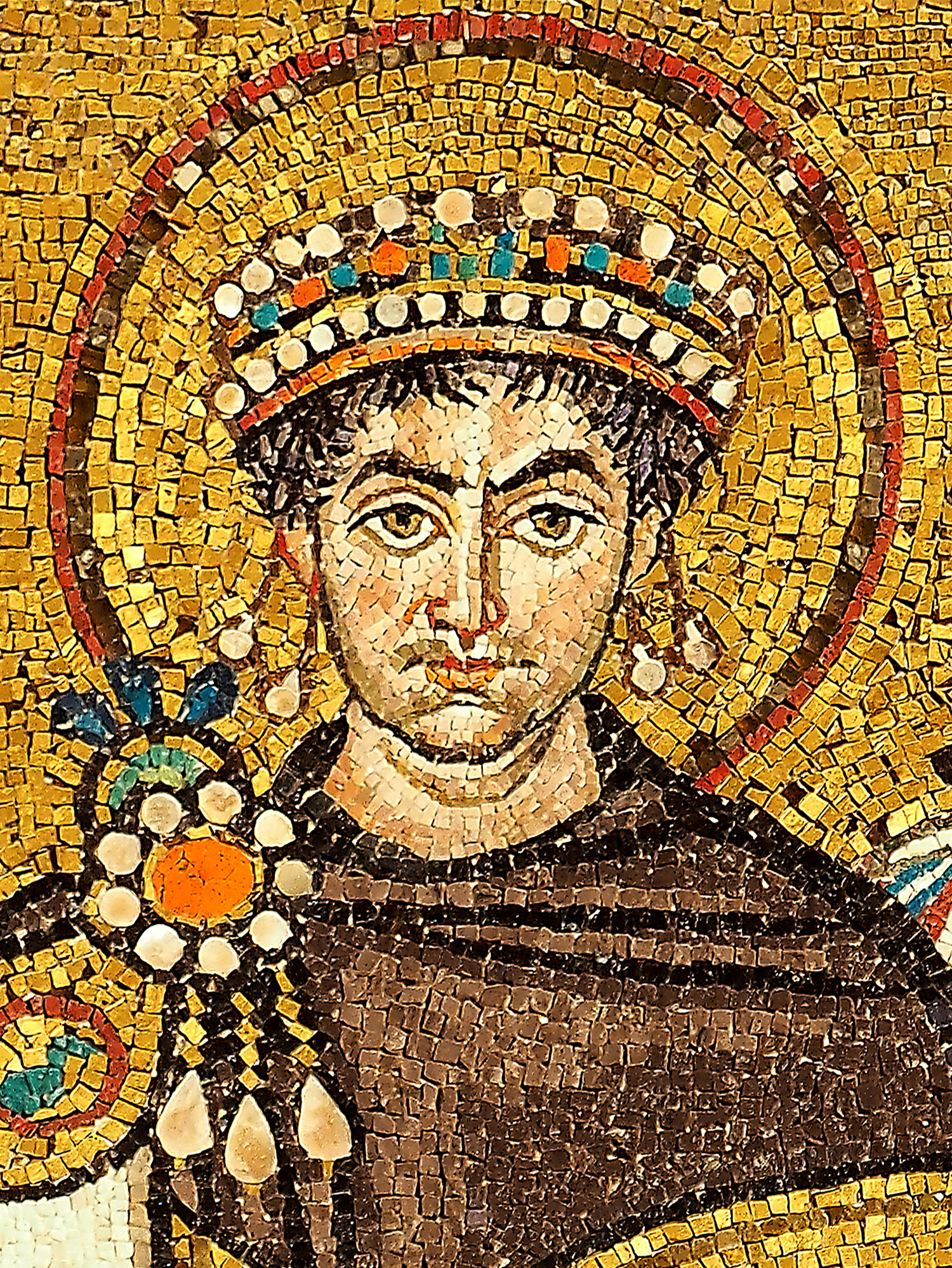
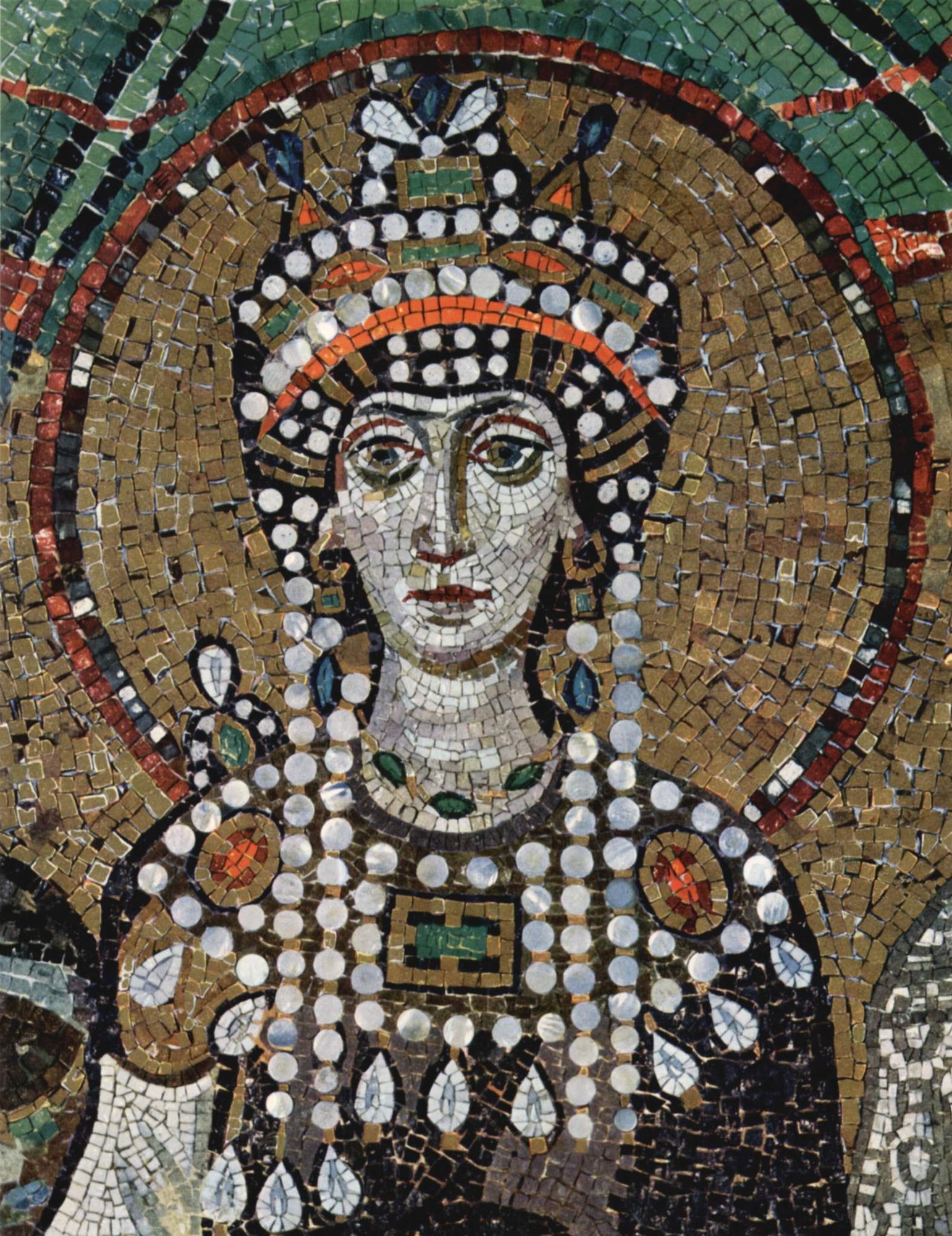
The famous panels at San Vitale show the Emperor Justinian and his court on one wall and the Empress Theodora and her court on the opposite wall, both processing toward the altar. The figures are portraits: Justinian, Theodora, Bishop Maximianus, and several court officials are identifiable. The technique combines stone for skin and clothing with gold for backgrounds, halos, and decorative borders.
How They Were Made
Byzantine mosaic workshops were organised hierarchically. A senior master designed the composition, often working from preparatory drawings. Skilled craftsmen executed the faces and important details. Apprentices laid the background fields of single-colour tesserae.
The wall was prepared with a thick layer of rough plaster (the rinzaffo), a layer of medium plaster, and finally a thin layer of fine lime plaster (the intonaco) into which the tesserae were pressed. The intonaco was applied in sections small enough to remain wet during the day's work. The pattern was sometimes drawn into the wet plaster as a guide.
The angling of the tesserae was crucial. A flat mosaic looks like a painting. A Byzantine mosaic, with each tessera angled slightly toward or away from the natural light source, becomes a low-relief sculpture in glass. The image shifts as the viewer moves through the space.
What the Empire Left
The Byzantine mosaic tradition spread outward to every region the empire touched. Twelfth-century Sicily, ruled by Norman kings who admired Byzantine culture, produced the mosaics at Cefalu, Monreale, and the Palatine Chapel in Palermo. The mosaics of San Marco in Venice, begun in the eleventh century and continued for five hundred years, are essentially Byzantine work executed by Venetian craftsmen.
Russian Orthodox church decoration drew on Byzantine models for centuries after the fall of Constantinople. The icon traditions of Greece, Bulgaria, Serbia, and Romania all stem from Byzantine roots.
The empire that built Hagia Sophia is gone. The technique it perfected continues. Contemporary mosaicists in Ravenna are still trained in the same methods, using the same materials, producing the same effects. The cubes outlasted the empire because the empire taught them how to last.


