

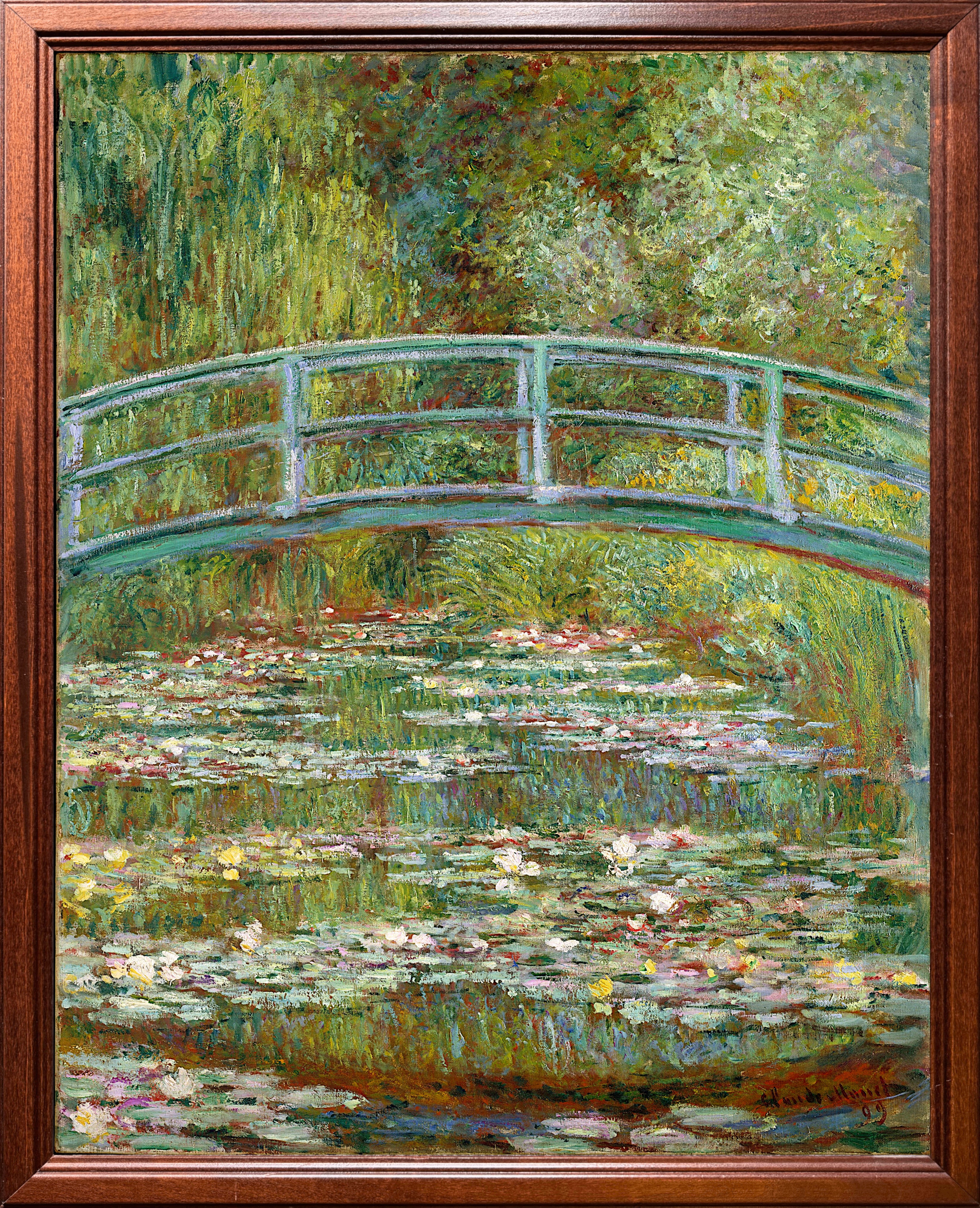
In 1883, Claude Monet (1840 to 1926) rented a house in Giverny, a village on the Seine sixty kilometres northwest of Paris. He bought the house in 1890 and spent the rest of his life there, gradually converting the garden into the subject that would consume his final three decades. He diverted a stream to create a water garden, planted water lilies, built a Japanese-style bridge, and then painted what he had made.
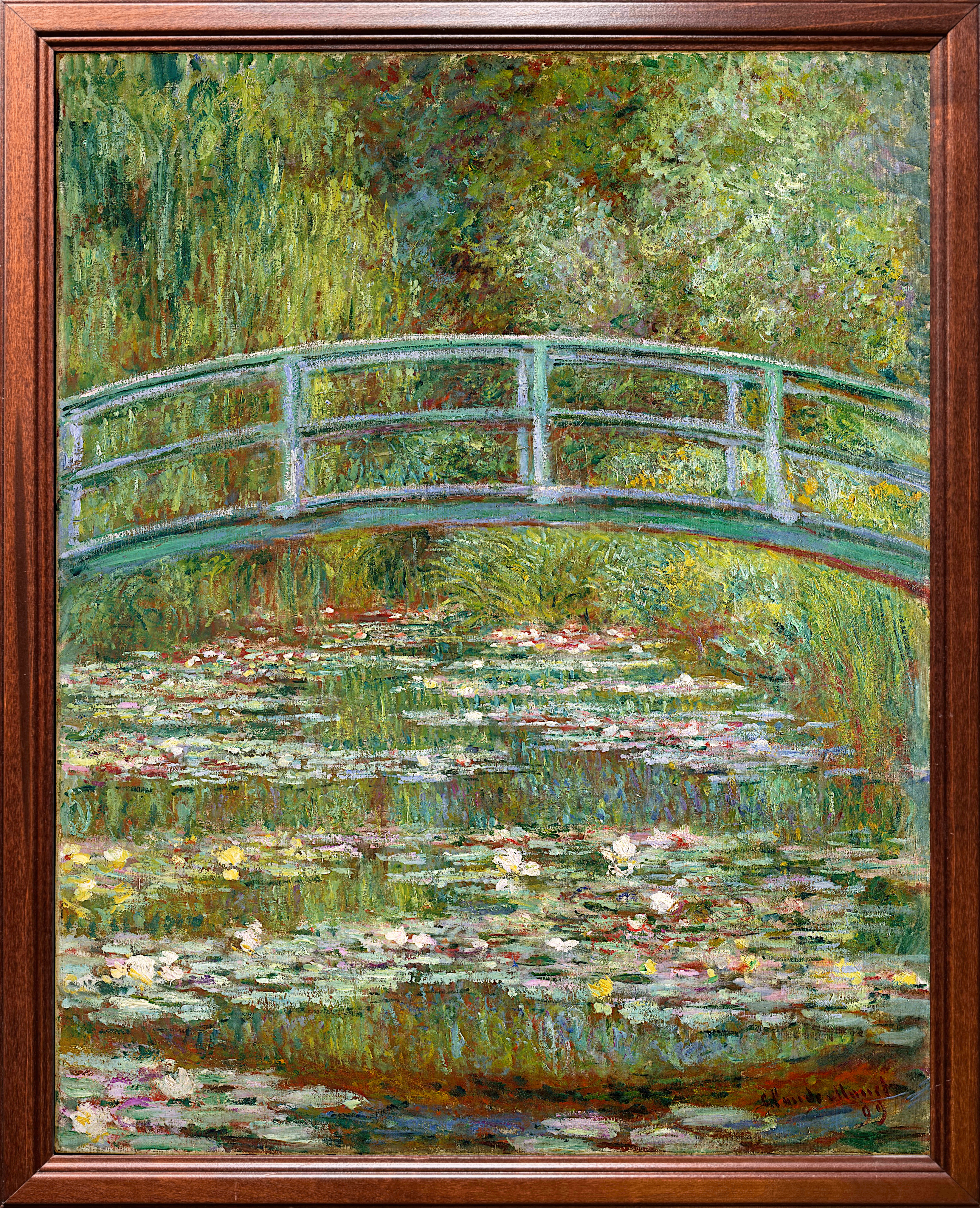
The Japanese Bridge
Monet painted the Japanese bridge at least seventeen times between 1899 and 1900, in different seasons and different lights. The early versions are precise: you can count the planks on the bridge and identify the species of plants along the bank. The late versions, painted in the 1920s when Monet's eyesight was failing, dissolve the bridge into a tangle of colour. The structure is still there, but it has been absorbed into the garden that surrounds it.
Rouen Cathedral: The Rehearsal
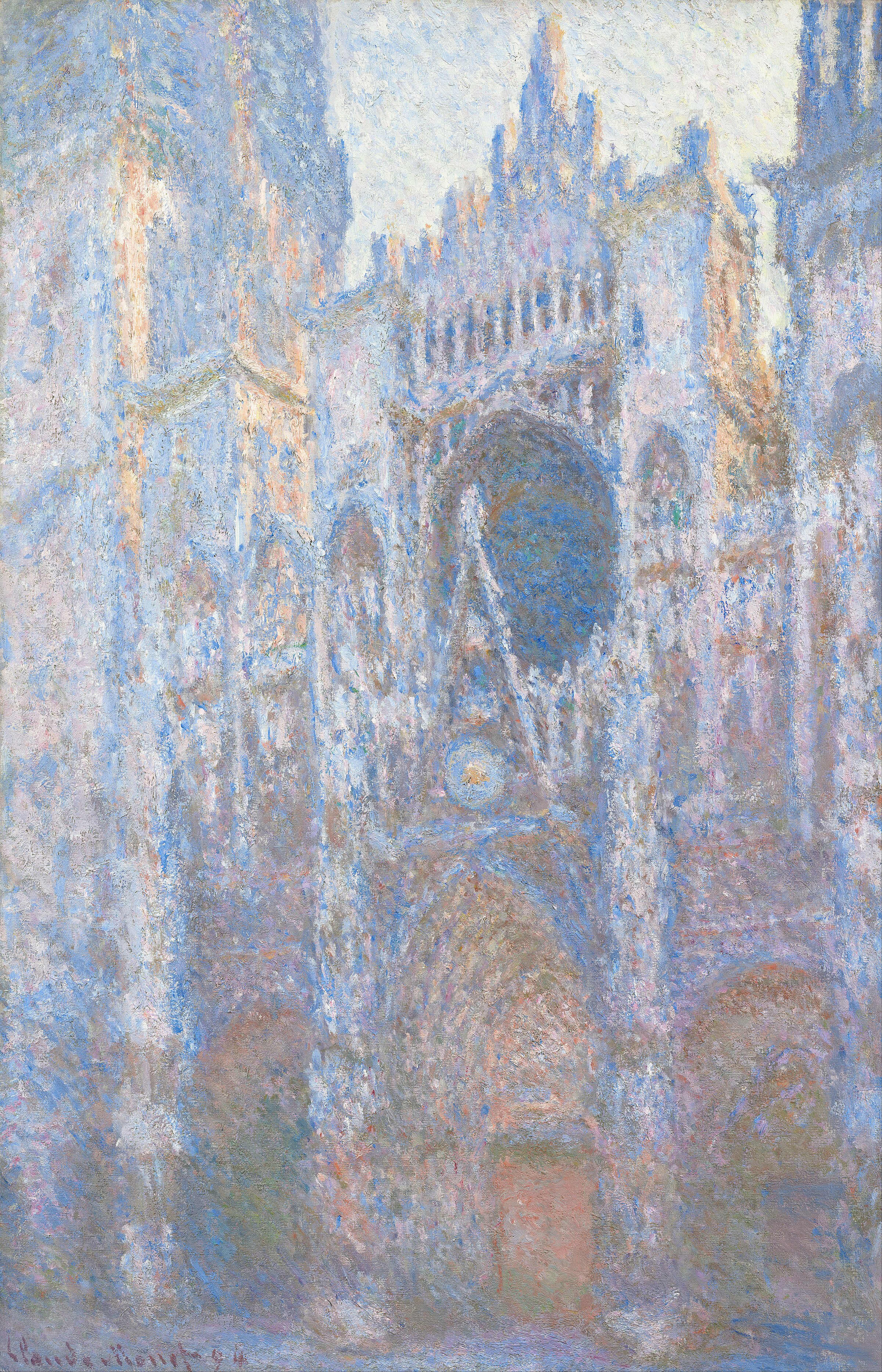
Before committing fully to the garden, Monet had already explored serial painting. In 1892 and 1893, he rented a room opposite Rouen Cathedral and painted the west facade over thirty times. The subject never changes; the light does. Morning versions are blue and cool. Afternoon versions are orange and warm. The stone dissolves and resolves as the hours pass. Monet was painting time itself, and the cathedral was just the clock face.
Water Lilies: The Last Act
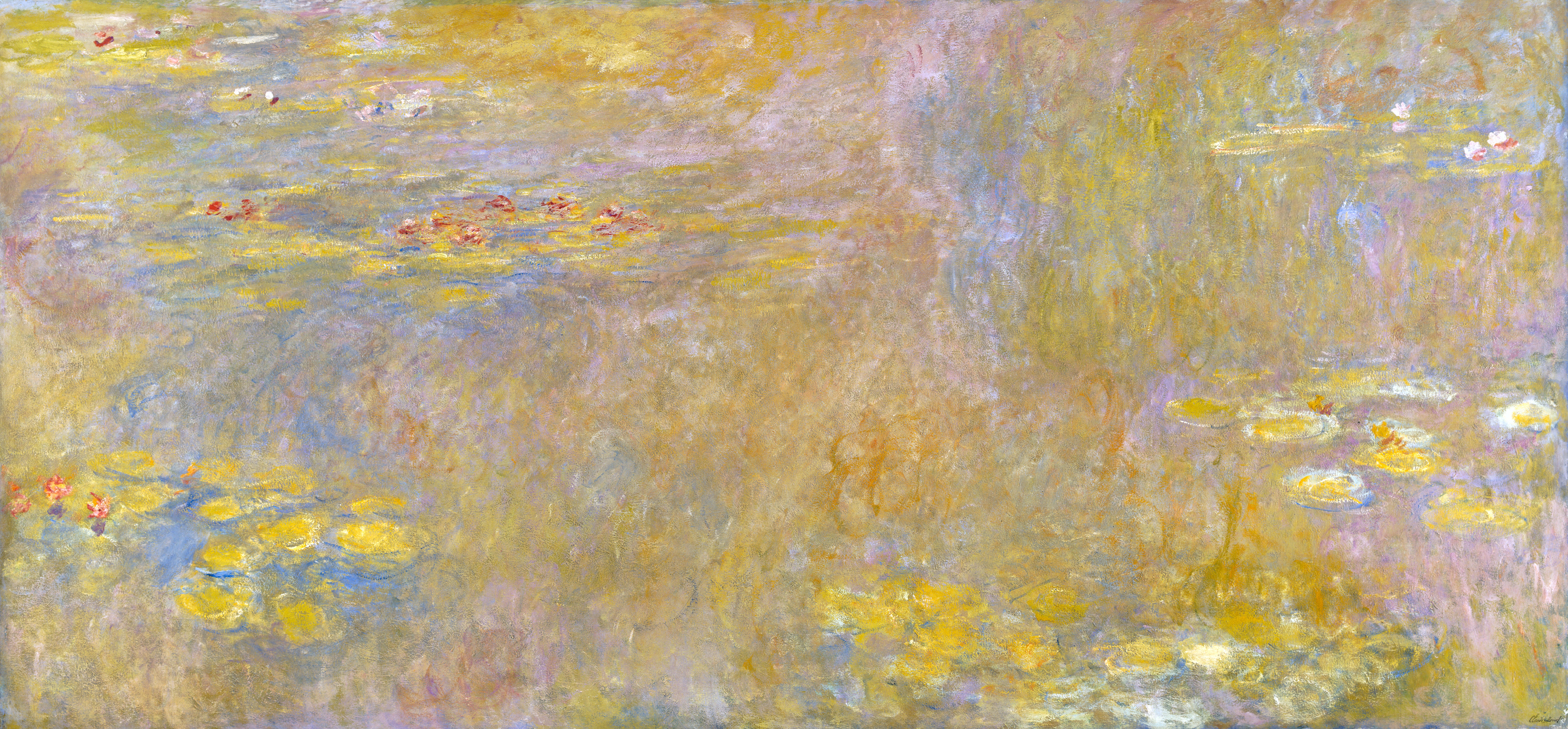
The Water Lilies occupied Monet from 1896 until his death in 1926. He produced approximately 250 oil paintings of the pond, progressively eliminating everything except the water surface, the lily pads, and the reflections of sky and willows. There is no horizon in the late paintings. No bank. No bridge. Only water, extending to every edge of the canvas.
The largest Water Lilies panels, installed in the Orangerie in Paris according to Monet's specifications, form two oval rooms. The paintings curve around the viewer, filling peripheral vision. Standing in the centre, you are surrounded by water and light. Monet described the effect he wanted as "the illusion of an endless whole, of a wave with no horizon and no shore."
He achieved it by painting the same subject so many times that the subject itself became secondary. What remained was the act of seeing: how colour shifts, how reflections move, how the same surface looks different every minute of every day. It was the logical conclusion of Impressionism, taken further than any of its founders imagined.


