

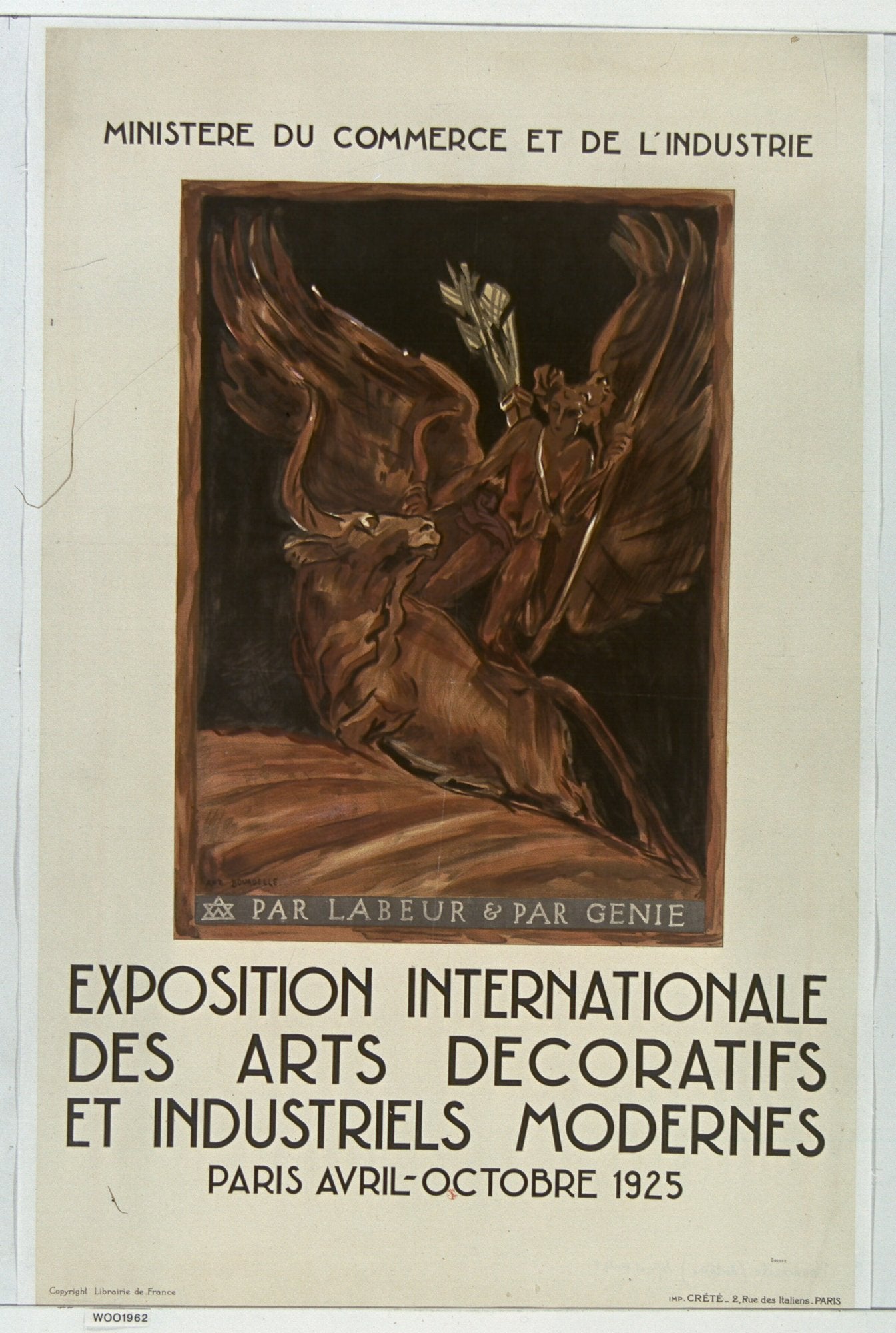
Between April and October 1925, sixteen million people visited an exposition on a sixty-acre site spanning both banks of the Seine in central Paris. The Exposition Internationale des Arts Décoratifs et Industriels Modernes had been planned since 1907, delayed by the First World War, and finally opened in spring of 1925 with pavilions from twenty-one nations. The United States declined to participate on the grounds that it had no modern decorative arts to exhibit. The British contribution was modest. France dominated.
The exposition gave the style that came to be called Art Deco its name (the term Art Deco itself was not used until the 1960s, derived from the exposition's full title). It also gave the style its first major public showcase. By the time the exposition closed in October, designers across Europe and America had absorbed enough of what they had seen to rebuild their entire approach to ornament, materials, and the relationship between craft and industry.
The Pavilions
The 1925 Exposition's pavilions ranged from elegant restraint to outright extravagance. The pavilions of the Russian Soviets, designed by Konstantin Melnikov, were stripped-down Constructivist statements in wood and steel. The Pavillon de l'Esprit Nouveau, designed by Le Corbusier and Pierre Jeanneret, was a model of the modern apartment unit, completely free of ornament, intended as a template for mass housing.

The most influential pavilions were the French ones, which combined modern materials (steel, plate glass, concrete) with traditional craftsmanship (lacquer, marquetry, hand-cast bronze). The Pavillon d'un Collectionneur, designed by Pierre Patout for Émile-Jacques Ruhlmann, presented an imaginary luxury apartment furnished entirely in the new style. Ruhlmann's macassar ebony cabinets inlaid with ivory became the defining objects of high Art Deco.
The Design Vocabulary
The visual language that emerged from the 1925 exposition combined several elements:
Geometric ornament: zigzags, sunbursts, chevrons, stepped pyramids, stylised flowers in tight rosettes. The forms were drawn from many sources: Egyptian (the 1922 discovery of Tutankhamun's tomb was still recent), Aztec and Mayan (Mesoamerican archaeology was in fashion), Cubist (the geometric simplifications of Braque and Picasso, now fifteen years old), Bauhaus (the German design school's emphasis on basic geometric forms).
Streamlined forms: surfaces that emphasised horizontal lines, rounded corners, smooth flowing shapes. The aesthetic was borrowed directly from transport design: ocean liners, aircraft, and the new generation of fast trains. The famous hood ornament on a 1928 Packard or the radiator grille of a Bugatti expressed the same principles as a Lalique vase.
Luxurious materials: shagreen (sharkskin), exotic woods, cast bronze, alabaster, lapis lazuli, lacquer, and leather. The Art Deco palette was wealthy. Where the Bauhaus argued for socialist design accessible to working people, French Art Deco was unapologetically aristocratic in its materials.
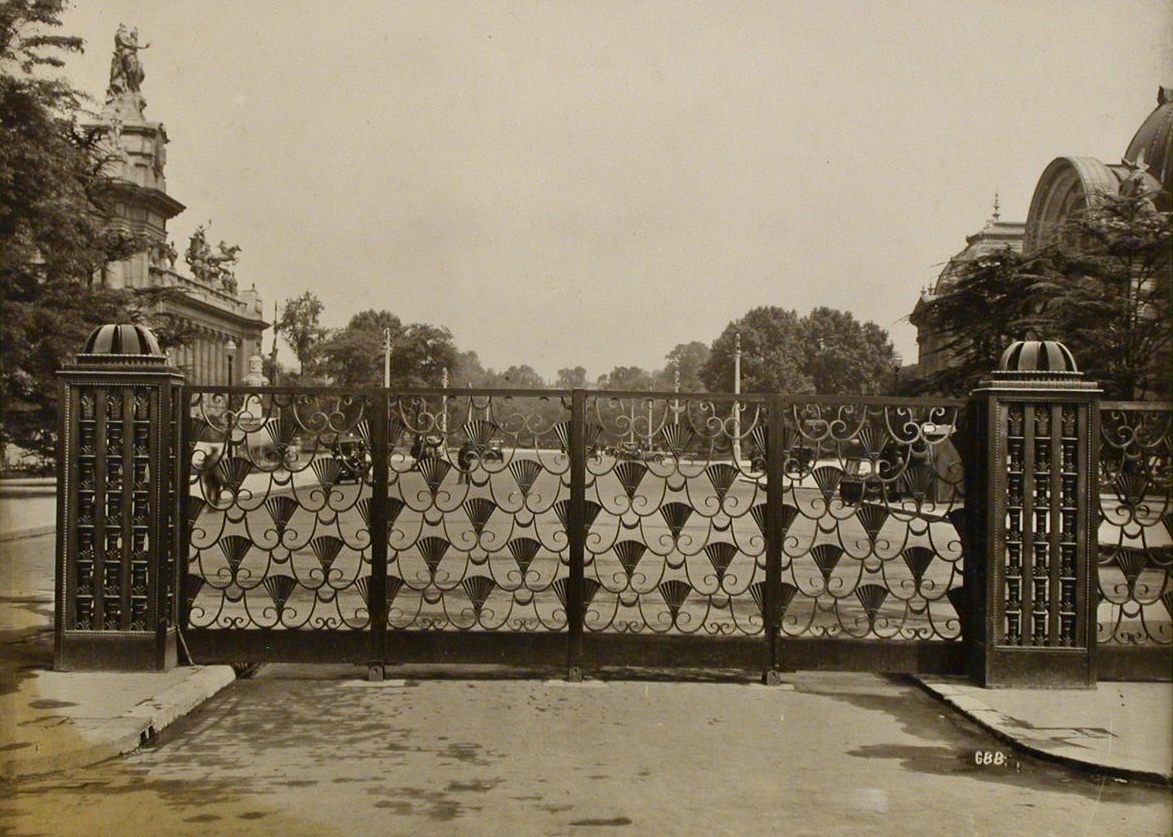
Spread
By 1928, the Art Deco style had reached almost every Western country and most colonial capitals. The 1925 exposition had been visited by designers, architects, and manufacturers from everywhere, and they took the style home and adapted it to local materials and client tastes.
In the United States, Art Deco became the architectural language of the new skyscrapers. The Chrysler Building, the Empire State Building, and Rockefeller Center in New York all drew on the geometric ornament shown at the 1925 exposition. The American adaptation tended toward steel and aluminium rather than the lacquer and ivory of the French originals, but the underlying vocabulary was the same.
In Britain, Art Deco appeared in cinema architecture (the Odeon chain built dozens of streamlined cinemas in the 1930s), in transport infrastructure (London Underground stations designed by Charles Holden), and in the interiors of ocean liners (the Cunard White Star fleet). India, Egypt, Brazil, and Argentina all developed their own Art Deco traditions, often combining the French vocabulary with local decorative motifs.
The Decline
Art Deco's decline began in the late 1930s. The Wall Street Crash of 1929 had already reduced the market for luxury goods. The rise of European modernism in its more ascetic Bauhaus form provided an alternative aesthetic that emphasised function over decoration. The Second World War interrupted decorative design entirely.
After 1945, the style that emerged was the International Style: glass, steel, and reinforced concrete, with no applied ornament. Mies van der Rohe's "less is more" became the dominant slogan of postwar architecture. Art Deco's geometric flowers and sunbursts looked, by 1950, like relics from a lost world.
The revival began in the 1960s with the rediscovery of the 1925 exposition's catalogues. The Bevis Hillier book Art Deco of the 20s and 30s (1968) gave the style its current name and started the collecting boom that continues today. Original Ruhlmann cabinets that sold for very little in the 1950s now exchange hands for millions. Cinema buildings that the Odeon chain demolished in the 1980s as outdated now have preservation orders.
What 1925 Was Really About
The Exposition Internationale was, more than anything, a French statement of cultural recovery after the First World War. France had lost two million dead and most of its industrial north-east. The exposition argued that French luxury craftsmanship had survived and could lead the world in decorative arts as it had led in fashion and cuisine for two centuries.
The argument worked. For fifteen years after 1925, "designed in Paris" carried a premium in the international decorative arts market that no other capital matched. The Second World War broke the tradition. Postwar France produced fewer Ruhlmanns and Brandts. But the style that the 1925 exposition launched is now permanent in design history.
The decade when furniture wanted to be sculpture, and architecture wanted to be jewellery, has its name from the seven months when sixteen million people walked through pavilions on the Seine and saw what France had been making.


