



About Chang Dai-chien
Republic of China · 1899–1983
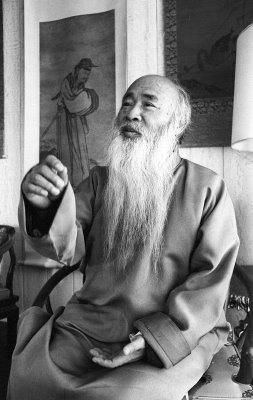
Chinese master Zhang Daqian fused classical guohua tradition with abstract colour-splash technique and created some of the 20th century's most convincing art forgeries.
Museums5
Countries1
Most worksMetropolitan Museum of Art, New York City · 11 works
Loading map…
Where to see Chang Dai-chien
Ranked by works you can see in person.
-
11 works
Metropolitan Museum of Art
New York City, United States
-
2 works
Yale University Art Gallery
New Haven, United States


-
1 works
Art Institute of Chicago
Chicago, United States
-
1 works
Seattle Art Museum
Seattle, United States
-
1 works
Los Angeles County Museum of Art
Los Angeles, United States


Frequently Asked Questions
Who was Chang Dai-chien?
Chang Dai-chien was a Chinese painter born in 1899[1], known for his mastery of traditional styles, his copies of murals, and his later invention of a unique splashed-colour technique. He trained in Shanghai and Kyoto, building a reputation for exceptional skill in guohua tradition.What is Chang Dai-chien known for?
Chang Dai-chien is known for his mastery of Chinese painting styles, particularly those of the Tang and Song dynasties. He is also known for copying hundreds of murals in the Dunhuang cave complex and for his later development of the "pocai" or splashed-colour technique.What was Chang Dai-chien's art style?
Chang Dai-chien's art style evolved over time, beginning with complete command of the guohua tradition, encompassing landscapes, lotus flowers, and figure studies. After studying murals at Dunhuang, he developed his splashed-colour technique, which combined abstract expressionism with classical Chinese ink painting. He brought this idiom back to the classical tradition in his later years.
Sources
Where to See guide aggregates verified holdings of Chang Dai-chien's works across the following collections.
- [1] wikipedia Wikipedia: Chang Dai-chien Used for: biography.
- [2] book Beard, Lee, 1973- author, Butler, Adam, author; Van Cleave, Claire, author; Fortenberry, Diane, author; Stirling, Susan, author, Beard, Lee, 1973- author, Butler, Adam, author; Van Cleave, Claire, author; Fortenberry, Diane, author; Stirling, Susan, author - The Art Book_ New Edition, Mini Format Used for: biography, stylistic analysis.
- [3] book guggenheim-italianartnowame00wald Used for: biography.
- [4] book Palmer, Allison Lee, Historical Dictionary of Neoclassical Art and Architecture Used for: biography, stylistic analysis.
- [5] book Braun, Emily, 1957-; Asor Rosa, Alberto; Royal Academy of Arts (Great Britain), Italian art in the 20th century : painting and sculpture, 1900-1988 Used for: biography.
- [6] book Masterpieces of western art : a history of art in 900 individual studies from the Gothic to the present day Used for: biography, stylistic analysis.
Editorial overseen by Solis Prints. Sources verified 2026-08-31. Click a source for details, or hover over [N] in the page above to preview.
Editorial standardsMethodologyCorrectionsAI disclosureAbout the editorial team