

About Anselmo Bucci
Italian · 1887–1955
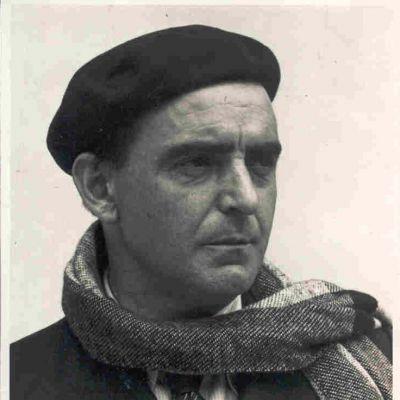
Italian[3] painter and etcher who moved between the Montparnasse circle and Italian Novecento, exhibiting twice at the Venice Biennale.
Museums3
Countries2
Most worksNational Gallery of Art, Washington D.C. · 1 works
Loading map…
Where to see Anselmo Bucci
Ranked by works you can see in person.
-
1 works
National Gallery of Art
Washington D.C., United States
-
 1 works
Harvard Art Museums
Cambridge, United States

-
1 works
Victoria and Albert Museum
London, United Kingdom

Frequently Asked Questions
Where can I see Anselmo Bucci's work?
Anselmo Bucci (1887[3]-1955[3]) was an Italian[3] painter and printmaker associated with the Novecento Italiano movement. To find his work, begin with public collections in Italy. The Galleria Nazionale d’Arte Moderna in Rome holds several examples. The Civico Museo d’Arte Contemporanea in Milan also has pieces. Other museums with his work include the Pinacoteca di Brera (Milan), the Museo Civico di Torino, and the Civico Museo Revoltella (Trieste). Some international museums also hold works by Bucci. The Estorick Collection in London has a few paintings. The Royal Academy of Arts in London organised a survey of 20th-century Italian art in 1988, which included Bucci. Keep in mind that museum holdings can change, so check online catalogues for the most up-to-date information about specific works on display or in storage. Auction records may also provide details on works in private hands.What should I know about Anselmo Bucci's prints?
Anselmo Bucci (1887[3]-1955[3]) was an Italian[3] painter and printmaker associated with the Novecento Italiano movement. Prints, as opposed to reproductions, are original works of art conceived as prints and executed solely as prints. Each one is individually inked and pulled from a plate, stone, screen, or block created for that purpose. The artist usually numbers and signs each print in an edition. The number on the print indicates its place in the total edition size (e.g., 12/25 means it is the twelfth print in an edition of 25). Prints allow artists to reach a wider audience due to their greater production quantities and relatively low cost. The quality of each individual impression gained importance in the late nineteenth century. Artists began signing their prints to distinguish original graphics from reproductions. The signature testifies to the authenticity of the print and the artist's approval.Why are Anselmo Bucci's works important today?
Anselmo Bucci's significance lies in his representation of early twentieth-century Italian[3] life and culture. Born in 1887[3], Bucci was a painter, engraver, and illustrator, whose career spanned both World Wars. Bucci is regarded for his involvement with the Novecento Italiano movement. This artistic group sought to revive traditional Italian art styles, contrasting with the international avant-garde movements such as Futurism. His paintings often depicted scenes of Italian daily life, landscapes, and portraits, executed with a realist approach. His artistic contributions extend beyond painting. Bucci worked as an illustrator for newspapers and books, further disseminating his artistic vision to a broad audience. His illustrations offer insight into the social and political climate of Italy during a turbulent period. Interest in Bucci's work has grown, as scholars re-evaluate the diverse artistic currents that shaped twentieth-century Italian art. His art provides a valuable perspective on the cultural debates between tradition and modernity that characterised the era.What techniques or materials did Anselmo Bucci use?
Anselmo Bucci's artistic practice encompassed a variety of media. From 1959 to 1964, he worked with oil paint, but he found it too restrictive for his artistic ideas. By 1967, he was combining disparate materials in his constructions. Direction (1967-8) used a compass set into a triangular block of granite. Another untitled work from 1969 used an eighty-kilogramme granite slab high on a wall. Other installations from this period wedged organic materials between a slab of stone tied to a support. In 1969, Bucci began using language itself as a medium. In Details of the Infinite, the word "infinite" was enlarged to evoke a limitless expanse. Similarly, in the 1972 book Leggere (To Read) the word ‘leggere’ shrinks to microscopic size, disappears, and re-emerges. During the 1980s, Bucci returned to granite slabs. The Greys Jettison Out to Sea series featured hyper-realist, life-size renderings of an open hand gesturing across a room towards blocks seemingly in flight along the wall.Who did Anselmo Bucci influence?
Anselmo Bucci's artistic influence is not well documented in the available sources. However, the broader artistic context of his time suggests some potential avenues of influence. Bucci was active during a period when artists were re-evaluating the legacy of earlier masters, such as Titian and Caravaggio. Titian, for example, influenced artists like Annibale Carracci, who adopted Titian's atmospheric settings, figures, and dramatic skies. Carracci, along with Caravaggio, helped initiate the Baroque style in Rome. Caravaggio's impact was felt by Dutch, French, and Spanish painters, including Hendrick ter Brugghen, Gerrit van Honthorst, Simon Vouet, and Diego Velázquez. His realistic style, and the ambiguities in his paintings, resonated with later artists and those working in photography and cinema. Therefore, while direct connections between Bucci and specific artists are not detailed in the provided texts, the general artistic climate suggests he may have been part of a broader movement of artists drawing inspiration from earlier figures.Who influenced Anselmo Bucci?
Anselmo Bucci was part of the Futurist movement. Giacomo Balla, who taught Divisionist techniques, influenced Umberto Boccioni, Severini, and Sironi. Balla signed the Manifesto of Futurist Painters in 1910[3]. Boccioni also signed the Manifesto of Futurist Painters in February 1910 with Balla, Russolo, Severini, and Carra. Boccioni studied Cubism during a visit to Paris in November 1911, which confirmed his ideas on simultaneity and dynamism. Ettore Colla worked in the studios of Charles Despiau, Henri Laurens, and Constantin Brancusi in Paris. He befriended Antoine Bourdelle and Aristide Maillol. Colla's early independent works ranged from the refined style of fifteenth-century Florentine sculpture to the more agitated manner of Bourdelle. Pier Paolo Pasolini was an important early influence on Enzo Cucchi, as seen in the artist’s emphasis on the regional and on contact with primitive traditions. Joseph Beuys also influenced Cucchi. Cucchi cited Masaccio, Caravaggio and El Greco as artists of truth and simplicity.What is Anselmo Bucci's most famous work?
Anselmo Bucci (1887[3]-1955[3]) was an Italian[3] painter, printmaker, and writer. Although he produced work in a range of media, he is best known for his prints, particularly those depicting scenes from World War One. Bucci volunteered for military service in 1915[3]. He was assigned to the Italian Expeditionary Force in France. As a member of the propaganda section, he produced drawings and lithographs documenting the Italian war effort. These images, often showing soldiers in trenches or behind the lines, were published in a portfolio titled *Finis Austriae* (The End of Austria) in 1917. The series gained considerable attention, establishing Bucci's reputation. His wartime experiences had a clear effect on his later artistic output, which often explored themes of conflict, displacement, and social change.What style or movement did Anselmo Bucci belong to?
It is difficult to assign Anselmo Bucci to one specific style. He was active during a period of considerable change in the art world, and his work shows the influence of several movements. Bucci was born in 1887[3] and died in 1955[3]. He was associated with the Novecento Italiano movement, which rejected European avant-garde art and aimed to revive the great traditions of Italian[3] art. The group, founded in 1922[3], promoted a return to order and clarity after the First World War. Their aesthetic drew inspiration from classical art and the Italian Renaissance. However, Bucci's style also incorporated elements of realism and impressionism. His subject matter ranged from portraits to cityscapes, reflecting an interest in modern life. He worked in a variety of media, including painting, drawing, and printmaking. His artistic approach was eclectic, blending tradition with modern sensibilities.
Sources
Where to See guide aggregates verified holdings of Anselmo Bucci's works across the following collections.
- [1] museum Harvard Art Museums Used for: museum holdings.
- [2] museum Victoria and Albert Museum Used for: museum holdings.
- [3] wikipedia Wikipedia: Anselmo Bucci Used for: biography.
- [4] book guggenheim-enzocucchi00wald Used for: biography.
- [5] book guggenheim-italianartnowame00wald Used for: biography.
- [6] book guggenheim-transfsi00wald Used for: biography, stylistic analysis.
- [7] book Lilian H. Zirpolo, Historical Dictionary of Baroque Art and Architecture Used for: stylistic analysis.
- [8] book Braun, Emily, 1957-; Asor Rosa, Alberto; Royal Academy of Arts (Great Britain), Italian art in the 20th century : painting and sculpture, 1900-1988 Used for: biography, stylistic analysis.
- [9] book Post-impressionism : cross-currents in European painting Used for: biography.
Editorial overseen by Solis Prints. Sources verified 2026-08-26. Click a source for details, or hover over [N] in the page above to preview.
Editorial standardsMethodologyCorrectionsAI disclosureAbout the editorial team