



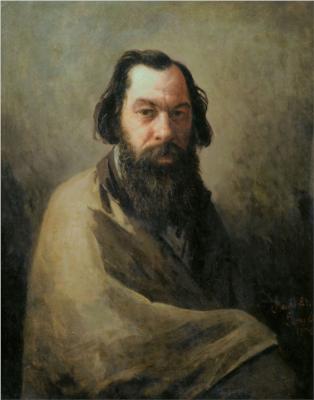
About Aleksey Savrasov
Museums3
Countries2
Most worksTretyakov Gallery, Moscow · 6 works
Loading map…
Where to see Aleksey Savrasov
Ranked by works you can see in person.
-
6 works
Tretyakov Gallery
Moscow, Russia
-
4 works
Russian Museum
Saint Petersburg, Russia


-
1 works
Metropolitan Museum of Art
New York City, United States

Own a piece of it
Aleksey Savrasov prints
Hand-finished archival prints from Aleksey Savrasov's body of work.
 Bivouac in the Desert Convoy - Aleksey Savrasov
From £28.00
Bivouac in the Desert Convoy - Aleksey Savrasov
From £28.00
 Spring - Aleksey Savrasov
From £28.00
Spring - Aleksey Savrasov
From £28.00
 Trees by the River - Aleksey Savrasov
From £28.00
Trees by the River - Aleksey Savrasov
From £28.00
 The Death of the Ship at Sea - Aleksey Savrasov
From £37.00
The Death of the Ship at Sea - Aleksey Savrasov
From £37.00
 Early Spring. Backwoods - Aleksey Savrasov
From £28.00
Early Spring. Backwoods - Aleksey Savrasov
From £28.00
 Landscape with a River and an Angler - Aleksey Savrasov
From £28.00
Landscape with a River and an Angler - Aleksey Savrasov
From £28.00
 Fire in the Woods - Aleksey Savrasov
From £28.00
Fire in the Woods - Aleksey Savrasov
From £28.00
 View of Moscow from Mazilova - Aleksey Savrasov
From £28.00
View of Moscow from Mazilova - Aleksey Savrasov
From £28.00
Can't travel? Bring Aleksey Savrasov home.
See all Aleksey Savrasov prints →Frequently Asked Questions
Where can I see Aleksey Savrasov's work?
Aleksey Savrasov's paintings can be viewed in several museums. His 1871[1] work, *The Rooks Have Returned*, is held by the Tretyakov Gallery in Moscow. Other museums may also hold his work; for example, the Vyatka Art Museum has paintings by artists such as Konchalovsky, Larionov and Chagall. This museum acquired over twenty avant-garde graphic works, some by Chagall, from the Tretyakov Gallery in 1928. The Vyatka museum also possesses works by David Burliuk, Goncharova, Drevin, Kandinsky, Kliun, Kudryashov, Mansurov, Matyushin, Mashkov, Rodchenko, Stepanova, Udaltsova, Chashnik and Chekrygin. The Samara Regional Art Museum also holds collections of avant-garde works. These were almost destroyed in 1953, but were saved by the dedication of museum staff. These collections may include works by Savrasov.What should I know about Aleksey Savrasov's prints?
Aleksey Savrasov (1830[1]-1904) was a Russian[1] painter, best known for his influence on the development of realist painting. Although he primarily created oil paintings, some of his works are available as prints. Savrasov helped establish the Peredvizhniki movement (also known as The Wanderers) in 1870[1]. This group of artists rejected the academic style favoured by the art establishment. Instead, they aimed to depict Russian life and nature authentically. Savrasov's prints often reproduce his paintings of Russian rural scenes. These works capture the subtle beauty of the Russian countryside. One of his most recognised paintings, "The Rooks Have Arrived" (1871), is a good example of his style. It portrays a simple, yet evocative, scene of rooks returning to their nests in early spring. Savrasov's approach influenced many later Russian artists, including Isaac Levitan and Konstantin Korovin. Prints offer an accessible way to appreciate Savrasov's contribution to Russian art history, and his focus on the beauty of the ordinary.Why are Aleksey Savrasov's works important today?
Aleksey Savrasov (1830[1]-1897[1]) was a Russian[1] painter who helped to originate the Russian realist style of painting. He moved away from romanticised views of nature. Instead, he focused on the commonplace aspects of the Russian countryside. Savrasov co-founded the Society for Travelling Art Exhibitions (also known as the Peredvizhniki) in 1870[1]. This group of artists broke away from the academic style promoted by the Saint Petersburg Academy of Arts. They wanted to depict the lives of ordinary people and the realities of Russian life. Savrasov's work influenced many Russian artists. Isaac Levitan was his student. Savrasov's paintings are important because they represent a shift in Russian art towards realism and social commentary. His work influenced later generations of Russian artists who sought to depict the world around them in an honest way. Savrasov's paintings offer insights into the Russian landscape and the lives of its people during the 19th century. His emphasis on the beauty of ordinary scenes helped to promote a sense of national identity and pride.What techniques or materials did Aleksey Savrasov use?
Information about Savrasov's specific techniques and materials is scarce in the provided texts. However, the passages offer insight into the practices of some contemporary British and French artists, which may provide a broader context. Turner, a generation earlier, initially mastered watercolour before transitioning to oils. He favoured absorbent surfaces and developed optical greens using layered washes. Constable employed pencil underdrawings and washes of colour. He built up surfaces with details and used glazes of red lakes and transparent earths for shadows. His brushwork included flecks of off-white to represent reflective light. Monet used a pale grey ground to enhance the illusion of light. He applied dilute opaque colours directly to the ground and built up impasted layers. Monet varied his brushwork to evoke textures; he used rough strokes for foliage and horizontal strokes for reflections. Whistler often used dark grey grounds to create chiaroscuro effects. He also painted on heavy canvas to preserve the texture.Who did Aleksey Savrasov influence?
Aleksey Savrasov was a teacher at the Moscow College of Painting, Sculpture and Architecture from 1857[1] to 1882. He had a considerable influence on Russian[1] landscape painting. Savrasov's pupils included Isaac Levitan, Konstantin Korovin, and Mikhail Nesterov. Levitan also studied with Vassily Polenov, who succeeded Savrasov as head of the landscape studio at the Moscow College. Savrasov's 1871 painting, *The Rooks Have Returned*, was featured at the first exhibition of the Itinerants (also known as the Wanderers). The painting is evocative of the Russian countryside after winter. *The Rooks Have Returned*, along with Fyodor Vassilyev’s *The Thaw* and Vasily Perov's genre paintings, marked a shift away from academic Romanticism and toward a more realistic style of representing nature.Who influenced Aleksey Savrasov?
Aleksey Savrasov (1830[1]-1904) was a Russian[1] artist who specialised in depictions of the Russian countryside. Savrasov's early artistic education at the Moscow School of Painting, Sculpture and Architecture exposed him to various influences. Savrasov's initial artistic direction was shaped by his teachers at the Moscow School. Key figures included Karl Rabus (1800-1857[1]), whose academic approach to art instruction provided Savrasov with a solid foundation in technique. Rabus, a professor of painting, instilled in his students an appreciation for classical artistic principles. Savrasov also studied under the history painter Mikhail Scotti (1814-1861[1]). Scotti's focus on narrative and historical subjects offered a contrasting perspective to Rabus's emphasis on form and composition. Savrasov was also influenced by the Barbizon school of French painting. The Barbizon artists' focus on direct observation and the depiction of everyday scenes resonated with Savrasov's own developing artistic vision. He shared their interest in capturing the subtle nuances of light and atmosphere in the natural world.What is Aleksey Savrasov's most famous work?
Aleksey Savrasov's most famous work is generally considered to be "The Rooks Have Arrived", painted in 1871[1]. This oil-on-canvas painting is a key example of early Russian[1] realist art. It depicts a scene of rooks returning to their nests in early spring, set against a backdrop of bare trees, melting snow, and a distant church. The painting's appeal lies in its simple, unidealised depiction of the Russian countryside. Unlike earlier academic art, which often focused on historical or mythological subjects, Savrasov's work captured the everyday beauty of the natural world. "The Rooks Have Arrived" was immediately popular, and Savrasov created several versions of the composition. The painting is now housed in the Tretyakov Gallery in Moscow. It has been the subject of much analysis, and it is often seen as a symbol of the Russian national identity. Its accessible style and subject matter have contributed to its lasting popularity.What style or movement did Aleksey Savrasov belong to?
Aleksey Savrasov, who lived from 1830[1] to 1897[1], is associated with the Russian[1] landscape painting tradition and was connected to the Itinerants (Peredvizhniki). This artistic society, active from the 1860s to the 1890s, aimed to depict Russian life realistically, often with social commentary. Savrasov's 1871[1] painting, *The Rooks Have Returned*, was a highlight of the Itinerants' first exhibition. This work, along with paintings such as Fyodor Vassilyev’s *The Thaw*, marked a shift from academic Romanticism toward a more realistic representation of nature in Russian art. Savrasov had a considerable influence on Russian landscape painting, partly through his teaching. From 1857 to 1882, he headed the landscape studio at the Moscow College of Painting, Sculpture and Architecture. Isaac Levitan, as well as Korovin and Nesterov, were among his students. Levitan, also associated with the Itinerants, adopted Savrasov's principle of finding the "intimate, troubling and often sad traits that characterise Russian landscapes" in simple, ordinary things. Savrasov's lyricism and love for his native country were appreciated by Levitan.
Sources
Where to See guide aggregates verified holdings of Aleksey Savrasov's works across the following collections.
- [1] wikipedia Wikipedia: Aleksey Savrasov Used for: biography.
- [2] book Peter. Leek, Russian Painting Used for: biography.
- [3] book Hodge, Susie, 1960- author, The short story of women artists : a pocket guide to movements, works, breakthroughs, & themes Used for: biography.
Editorial overseen by Solis Prints. Sources verified 2026-08-25. Click a source for details, or hover over [N] in the page above to preview.
Editorial standardsMethodologyCorrectionsAI disclosureAbout the editorial team