



About Agustin Cardenas
Cuban · 1927–2001
- public art
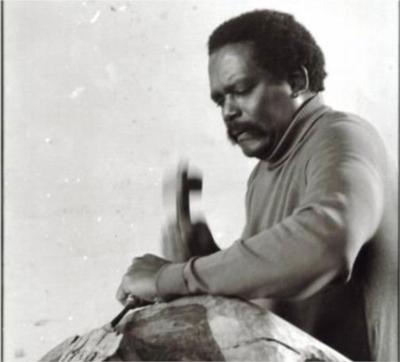
Cuban[1]-born Surrealist sculptor who joined Breton's circle in Paris and fused African totem forms with European modernist abstraction.
Museums3
Countries3
Largest reported holdingIsrael Museum, Jerusalem · 3 recorded works
Loading map…
Where to see Agustin Cardenas
Collection holdings are reported here; current display varies. Check with each museum before visiting.
-
3 recorded works
Israel Museum
Jerusalem, Israel
-
1 recorded work
Middelheim Museum
Antwerp, Belgium


-
1 recorded work
National Gallery of Art
Washington D.C., United States

Frequently Asked Questions
Where can I see Agustin Cardenas's work?
Agustin Cardenas's artwork can be viewed in several galleries and museums. These include the Minneapolis Institute of Arts, at 2400 Third Avenue South, Minneapolis; the Museum of Modern Art, at 11 West 53rd Street, New York; and the Los Angeles County Museum of Art (LACMA), at 5905 Wilshire Boulevard, Los Angeles. Other locations include the Metropolitan Museum of Art, located at 1000 Fifth Avenue in New York; the Royal Ontario Museum, at 100 Queens Park, Toronto; and the Virginia Museum of Fine Arts, at 200 N. Boulevard, Richmond. You can also find his work at the Charles Hosmer Morse Museum of American Art, 445 North Park Avenue, Winter Park, Florida; the Wolfsonian at Florida International University, 1001 Washington Avenue, Miami Beach; the Museo Art Nouveau y Art Deco, Calle Gibraltar 14, Salamanca, Spain; the Museu Calouste Gulbenkian, Av. de Berna 45A, Lisbon, Portugal; and the Museu d’Art Modern (MNAC), Parc de la Ciutadella, Barcelona, Spain.What should I know about Agustin Cardenas's prints?
When considering Agustin Cardenas's prints, bear in mind some basic facts about fine art printmaking. An original print is conceived as a print and executed solely as a print. Each print in the edition is an original, made from a plate, stone, screen, or block created for that purpose. The artist approves the finished print. Each print is individually inked and pulled; it is a multi-original medium. A reproduction is a copy of a work of art initially conceived in another medium, such as painting or watercolour. Reproductions are usually made by a photomechanical process. Numbering and signing a reproduction does not make it an original print. Original prints are often sold in limited editions. The number of prints is decided by the artist. The prints are numbered to provide an accounting of the edition size; for example, 12/25 means it is print number 12 of an edition of 25. The artist usually signs the print in pencil. The edition claim is written as a pair of numbers on the left bottom margin of the print. The title of the print is written in the middle of the bottom margin, and the signature is on the right.Why are Agustin Cardenas's works important today?
Agustin Cardenas (1927[1]-2001[1]) was a Cuban[1] sculptor whose organic abstract works are important for their synthesis of Surrealist and Afro-Cuban influences. His sculptures often suggest natural forms, evoking plants or the human body, and are typically executed in marble or bronze. Cardenas's significance lies in his exploration of identity and cultural heritage, blending European avant-garde movements with his own background. His practice involved a daily ritual of creating small studies, which he regarded as both "laboratory experiments" and "devotions", aimed at summoning spiritual forces. His work provides a perspective on the complex cultural interactions of the mid-20th century. Cardenas's sculptures remain relevant for their formal qualities and their capacity to stimulate reflection on the relationship between nature, culture, and the subconscious.Who was Agustin Cardenas?
Agustin Cardenas was a Cuban[1] sculptor who moved to Paris and joined the Surrealist circle. He is known for his biomorphic forms in wood, marble, and bronze, which combine European modernism with his African heritage.What techniques or materials did Agustin Cardenas use?
Agustin Cardenas was a sculptor known for his distinctive approach to materials. While specific details about his techniques are scarce, some general observations can be made. Cardenas worked primarily with marble and wood, often creating abstract, biomorphic forms. These sculptures frequently feature smooth, flowing lines and a refined finish, suggesting the use of carving and polishing tools. The artist's process likely involved subtractive methods, where material is carefully removed to reveal the final shape. The scale of some of his works indicates the use of specialised equipment for handling and shaping the stone or wood. The surfaces of Cardenas's sculptures display a sensitivity to the inherent qualities of the materials, whether the grain of the wood or the veining of the marble.Who did Agustin Cardenas influence?
Agustin Cardenas's influence is seen in the work of Nicaraguan painter Armando Morales. Morales, considered one of Central America's greatest artists, won the Ernst Wolf Prize at the V Sao Paulo Bienal in Brazil in 1959[1]. His distinctive visual language showed a clear connection to artists such as Robert Motherwell, Antoni Tapies, and Serge Poliakoff. Morales's 1958 abstract painting, Guerrillo muerto I (Dead Guerrilla I), which won an award, led to a series of works on revolutionary martyrdom. This painting bears a resemblance to Motherwell's "Spanish Elegy" series, begun in 1948. Both artists employed morose, megalithic forms in black, marked by organic contours. Morales's use of Motherwell's series as inspiration is due to the assassination of Nicaraguan dictator Anastasio Somoza Garcia in 1956, and the link to Motherwell’s memorial to the Spanish Republic.Who influenced Agustin Cardenas?
Agustin Cardenas was influenced by a number of artists and movements. His mosaic reliefs at the National Autonomous University in Mexico City suggest an interest in the work of David Alfaro Siqueiros. Siqueiros's emphasis on struggle, power, and transformation, his use of exaggerated anatomies, and his multiple perspectives may have resonated with Cardenas. Cardenas may also have been affected by the Arte Povera movement, particularly the work of Alighiero Boetti, whom he met in 1972[1]. Boetti's use of humble materials and his interest in systems of classification could have impacted Cardenas's artistic approach. Boetti's collaborative work, involving local artisans, may have given Cardenas the sense that the artist's hand could be removed from the procedures of art making. It is worth noting that artists such as Philip Guston and Arshile Gorky, who admired Renaissance masters and explored themes of violence and cruelty, offer a comparative context for understanding Cardenas's artistic development.What is Agustin Cardenas's most famous work?
It is difficult to name Agustin Cardenas's single most famous work, as sources on his artistic output are scarce. Cardenas, a Cuban[1] sculptor who later worked in Paris, is best known for his abstract sculptures. These sculptures often incorporate organic forms and explore themes related to nature and the human figure. While specific titles may not be widely recognised, his distinctive style, which blends surrealist and constructivist influences, has earned him international acclaim. His sculptures are often characterised by smooth, curving surfaces and a sense of balance and harmony. Cardenas's work can be found in major museum collections around the world. He is considered a significant figure in Latin American art.
Sources
Where to See guide aggregates verified holdings of Agustin Cardenas's works across the following collections.
- [1] wikipedia Wikipedia: Agustin Cardenas Used for: biography.
- [2] book guggenheim-latinamericanpai00catl Used for: biography.
- [3] book guggenheim-twopri00weis Used for: biography.
- [4] book Landauer, Susan, The not-so-still life : a century of California painting and sculpture Used for: biography.
Editorial overseen by Solis Prints. Sources verified 2026-09-30. Click a source for details, or hover over [N] in the page above to preview.
Editorial standardsMethodologyCorrectionsAI disclosureAbout the editorial team