



William Kentridge
- Contemporary
- Animation
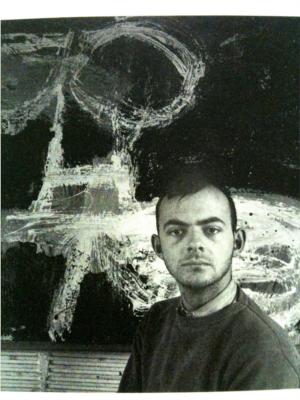
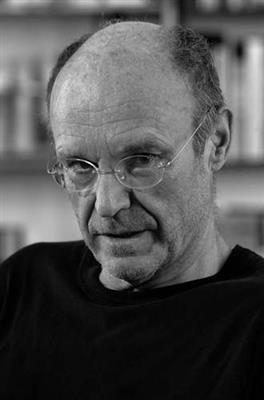
William Kentridge, born in Johannesburg in 1955, developed a unique approach to animation by repeatedly altering and filming charcoal drawings. This method, where traces of previous marks remain, visually represents the shifting nature of memory and history. His work frequently explores the social and political climate of his native South Africa, particularly the complexities of apartheid and its aftermath.
Biography
Kentridge's family background, with his father, Sydney Kentridge, a distinguished anti-apartheid barrister, deeply informed his artistic perspective. He initially pursued studies in politics and African studies at the University of the Witwatersrand before turning to fine art at the Johannesburg Art Foundation. Later, he explored theatre and mime in Paris, experiences that shaped his multidisciplinary practice spanning drawing, film, printmaking, and opera direction.
His most celebrated animations, known as "drawings for projection," often feature recurring characters such as the industrialist Soho Eckstein and the melancholic Felix Teitlebaum. These narratives often reflect on themes of oppression, displacement, and reconciliation. Kentridge's printmaking, like his animations, uses layering and transformation, creating images that feel both immediate and deeply considered.
Kentridge's art does not offer simple answers. Instead, it invites viewers to consider difficult histories through a lens of personal experience and poetic observation. His practice combines the intimate act of drawing with grander historical narratives, presenting a compelling vision of a country grappling with its past and future.
Timeline
- 1955Born in Johannesburg, South Africa
- 1955Father, Sydney Kentridge, was an anti-apartheid barrister
- 1976Studied politics and African studies at Witwatersrand University
- 1978Studied fine art at the Johannesburg Art Foundation
- 1980Began developing his unique animation approach
- 1981Explored theatre and mime in Paris
- 1989Created 'drawings for projection' featuring Soho Eckstein and Felix Teitlebaum
Notable Works
Tap to view larger.
Next stop
Contemporary →
Explore the artists and ideas of Contemporary.
Related Artists
_%E2%80%93_LOC.jpg)


.jpg)
Frequently Asked Questions
What is William Kentridge known for?
William Kentridge is known for addressing the personal and social traumas related to South Africa's apartheid culture. His narratives often explore themes of estrangement between the rich and the poor, the powerful and the oppressed, conveyed through metaphorical imagery.What is William Kentridge's most famous work?
William Kentridge is best known for his animated films, particularly those made between 1989 and 1997. These films address personal and social traumas linked to South Africa's apartheid culture. Political tension often provides a backdrop for narratives exploring estrangement between rich and poor, and powerful and oppressed. His films typically contain very little spoken dialogue. Instead, musical composition supplements the imagery. Kentridge has stated that he never tried to make illustrations of apartheid; rather, the drawings and films were spawned by the brutalised society left in its wake. He is interested in a political art of ambiguity, contradiction, and uncompleted gestures. Two principal characters inhabit these animated films: Soho Eckstein and Felix Teitlebaum. Soho Eckstein, an avaricious white industrialist in a pinstriped suit, develops throughout the films alongside apartheid. Felix Teitlebaum is more of an alter-ego for the artist; a sensitive, melancholic figure vulnerable to apartheid's devastating acts. Kentridge's technique, which he calls "additive animation", involves filming a large charcoal drawing for each scene, reworking the same group of drawings to depict evolving activities.What should I know about William Kentridge's prints?
William Kentridge is a South African artist whose printmaking is connected to his work in animated film, drawing, and theatre. Kentridge's prints are often produced in series, related to his films or other projects. They may include linocuts, etchings, and screenprints, frequently incorporating collage or drawing. The artist often reuses and reworks images across different media, creating visual connections between his prints and other works. Like most printmakers, Kentridge usually creates limited editions of his images. The size of the edition is decided by the artist. Each print in the edition is numbered; for example, 12/25 (the edition is 25, and the particular print is number 12). The edition number is written on the left bottom margin of the print itself. The title of the print is written in the middle of the bottom margin, and the signature is on the right.What style or movement did William Kentridge belong to?
William Kentridge is a South African artist best known for his animated films and drawings. His work resists easy categorisation, but it is often associated with several artistic tendencies. Kentridge's art is deeply informed by his experience growing up in South Africa during the apartheid era. This historical context places him in conversation with post-colonial art, which critically examines the legacies of colonialism and oppression. His work engages with themes of social injustice, memory, and the complexities of power. His style is also linked to aspects of the Pictures Generation, a movement from the 1970s and 1980s that questioned originality and authorship through appropriation and critique of mass media imagery. Kentridge uses found images and references historical art styles, such as German Expressionism, to create layered narratives. Though not fitting neatly into any single movement, Kentridge's art shares affinities with both post-colonial art and the Pictures Generation. His unique approach combines political engagement with formal experimentation.What techniques or materials did William Kentridge use?
William Kentridge is known for his distinctive animation style, achieved through charcoal drawings and film. He often creates animations by repeatedly drawing, erasing, and redrawing on the same sheet of paper, filming each stage of the process. This technique results in a unique visual texture, where traces of previous drawings remain visible. Kentridge's work frequently incorporates other media, such as collage, linocuts, and sculpture. His interest in theatre has led to collaborations on opera and stage productions, where he integrates his drawings and animations into the set design. He also produces prints using techniques like etching, aquatint, and drypoint. These prints often feature imagery related to his animated films, or explore similar themes of memory, history, and social injustice. His prints share the same aesthetic qualities of his animations, with layered imagery and a sense of movement.What was William Kentridge known for?
William Kentridge, born in Johannesburg, South Africa, in 1955, is known for his animated films, drawings, and theatrical productions. His work often grapples with themes of colonialism, apartheid, and social injustice in South Africa. Kentridge's signature animation technique involves creating charcoal drawings, filming them, and then altering the drawings, filming again, and so on. This process leaves traces of previous states of the image, creating a palimpsest effect. The result is a distinctive, melancholic aesthetic. Many of his films feature recurring characters, such as Soho Eckstein, a wealthy industrialist who embodies the exploitative aspects of capitalism. Beyond animation, Kentridge has worked extensively in theatre and opera. He has directed productions of Mozart's *The Magic Flute*, Shostakovich's *The Nose*, and Alban Berg's *Lulu*, among others. These productions often incorporate his drawings and animated sequences, creating a multimedia experience. Kentridge's art has been exhibited in museums and galleries worldwide, securing his place as a major figure in contemporary art. He has received numerous awards and honours for his contributions to the art world.When did William Kentridge live and work?
William Kentridge was born in Johannesburg, South Africa, in 1955. He is still alive and working. Kentridge is best known for his animated films and drawings, often addressing themes of colonialism, apartheid, and social injustice in South Africa. His work combines charcoal drawings, stop-motion animation, and film. He studied politics and African studies at the University of Witwatersrand in Johannesburg, followed by art at the Johannesburg Art Foundation. In the early 1980s, he studied mime and theatre at L'École Internationale de Théâtre Jacques Lecoq in Paris. His practice also includes printmaking, sculpture, and performance art. He has directed operas, including Mozart's *The Magic Flute*, and composed stage productions that blend music, theatre, and visual elements. Kentridge’s work has been exhibited extensively in museums and galleries around the world, including the Museum of Modern Art in New York, the Albertina in Vienna, and the Louvre in Paris.Where can I see William Kentridge's work?
William Kentridge's work has been exhibited extensively around the world. Major museums often hold selections of his prints, drawings, and animated films. In South Africa, you might see his pieces at the Johannesburg Art Gallery or the Zeitz Museum of Contemporary Art Africa (MOCAA) in Cape Town. These institutions sometimes feature his work in either solo exhibitions or group shows. Internationally, Kentridge's art has appeared in many important collections. The Museum of Modern Art (MoMA) in New York, the Musée du Louvre in Paris, and the Albertina in Vienna all hold examples. Major survey exhibitions have travelled to institutions such as the San Francisco Museum of Modern Art and the Louisiana Museum of Modern Art in Denmark. To find current exhibition information, consult museum websites or art-world publications. These resources will provide details on specific dates and locations. Catalogues raisonnés of Kentridge's prints and drawings are also available; these document the scope of his artistic output.Where was William Kentridge from?
William Kentridge is from South Africa. He was born in Johannesburg in 1955. His parents, Sydney Kentridge and Felicia Geffen, were both lawyers who defended people who were victims of the apartheid regime. Johannesburg is central to Kentridge's identity and art. Many of his works explore the city's history, social issues, and physical appearance. He uses its landscapes and buildings as backdrops in his films and drawings. Though internationally recognised, Kentridge has remained based in Johannesburg throughout his career. He has a studio there, and the city continues to be a major source of inspiration for his creative output. His work often engages with the complexities of South Africa's past and present, making his connection to Johannesburg both personal and political.Who did William Kentridge influence?
William Kentridge's practice incorporates varied media: drawing, stop-motion animation, performance, and theatre design. His work engages with themes of colonialism, apartheid, and historical memory, particularly relating to South Africa. Identifying direct artistic influence is complex. Kentridge's interdisciplinary approach, combining fine art with performance, has parallels in the work of other contemporary artists. His sociopolitical concerns connect him to artists exploring similar themes of identity, injustice, and historical trauma. Artists using animation or film in combination with drawing may find inspiration in his techniques. However, tracing specific, demonstrable influence is difficult. Art history rarely involves simple cause-and-effect relationships. Artistic development is a complex process of dialogue, response, and individual innovation. Kentridge is part of a larger conversation about art's role in addressing social and political issues, and his contribution is within that context. He has certainly inspired discussion about animation and political themes.Who influenced William Kentridge?
William Kentridge has cited a diverse range of influences that have shaped his artistic practice. These include filmmakers, writers, and artists. His work frequently engages with themes of colonialism, apartheid, and social injustice in South Africa, a perspective developed through personal experience and political awareness. Among filmmakers, Sergei Eisenstein, known for his montage technique and political films such as *Battleship Potemkin*, has been an important influence. Kentridge also acknowledges the impact of William Hogarth, the 18th-century English painter and printmaker, particularly Hogarth's narrative series that combine social commentary with visual storytelling. The writings of Franz Kafka, Samuel Beckett, and Alfred Jarry have also informed Kentridge’s art. These authors explore themes of absurdity, alienation, and the human condition, ideas that resonate in Kentridge’s films and drawings. His interest in theatre, both as a director and designer, further contributes to his interdisciplinary approach, blending different media to create complex and thought-provoking works.Who was William Kentridge?
William Kentridge (born 1955) is a South African artist known for his animated films, drawings, and theatrical productions. His work often grapples with themes of colonialism, apartheid, and social injustice in South Africa. He is particularly recognised for his charcoal drawings, often created on a large scale. These drawings form the basis of his animated films, which he produces by a stop-motion technique. Kentridge modifies a drawing, photographs it, and then modifies it again. This process results in films that record the history of their own making, with erasures and alterations remaining visible. His practice extends beyond drawing and film to include printmaking, sculpture, and performance. He has directed operas, including Mozart's *The Magic Flute* and Shostakovich's *The Nose*. His work has been exhibited in museums and galleries around the world, and he has received numerous awards and honours for his contributions to the art world. He lives and works in Johannesburg.
Sources
Editorial draws on the following primary and tertiary references for William Kentridge.
- [1] museum Harvard Art Museums Used for: museum holdings.
- [2] museum Victoria and Albert Museum Used for: museum holdings.
- [3] book Sarah Hegenbart;Mara-Johanna Klmel;, Dada Data Used for: biography, stylistic analysis.
- [4] book guggenheim-hugob00gugg Used for: biography, stylistic analysis.
- [5] book Peter Probst, What is African art_ _ a short history Used for: biography, stylistic analysis.
Editorial overseen by Solis Prints. Sources verified 2026-08-31. Click a source for details, or hover over [N] in the page above to preview.
Editorial standardsMethodologyCorrectionsAI disclosureAbout the editorial team