



Timeline
- 1876Born Paula Becker in Dresden, Germany, the third of seven children. The family moved to Bremen when she was twelve.
- 1898At 22, moved to the artists' colony at Worpswede, a village north of Bremen, to study painting under Fritz Mackensen.
- 1900At 24, travelled to Paris for the first time, where she encountered Cezanne, Gauguin and the French avant-garde. These visits would reshape her entire approach to painting.
- 1901At 25, married the landscape painter Otto Modersohn, one of the founding members of the Worpswede colony, in northern Germany.
- 1906At 30, spent a productive year largely in Paris, painting with a bold, monumental style. She created some of her most important self-portraits during this period.
- 1907Returned to her husband in Worpswede. Her daughter Mathilde was born on 2 November. She died of a sudden embolism on 21 November at 31, just 19 days after giving birth.
Notable Works
Tap to view larger.
Next stop
Expressionism →
Explore the artists and ideas of Expressionism.
Paula Modersohn-Becker prints
Hand-finished archival prints from Paula Modersohn-Becker's body of work.
 Self-Portrait with Red Flower Wreath and Chain - Paula Modersohn-Becker
From £28.00
Self-Portrait with Red Flower Wreath and Chain - Paula Modersohn-Becker
From £28.00
 The Good Samaritan - Paula Modersohn-Becker
From £28.00
The Good Samaritan - Paula Modersohn-Becker
From £28.00
 Sand pit at Weyersberg - Paula Modersohn-Becker
From £28.00
Sand pit at Weyersberg - Paula Modersohn-Becker
From £28.00
 Young Girl With Straw Hat And A Flower In Her Hand - Paula Modersohn-Becker
From £30.00
Young Girl With Straw Hat And A Flower In Her Hand - Paula Modersohn-Becker
From £30.00
 Lee and his sister Hoetger - Paula Modersohn-Becker
From £28.00
Lee and his sister Hoetger - Paula Modersohn-Becker
From £28.00
 Mother with baby at her breast, and child in landscape - Paula Modersohn-Becker
From £30.00
Mother with baby at her breast, and child in landscape - Paula Modersohn-Becker
From £30.00
Related Artists


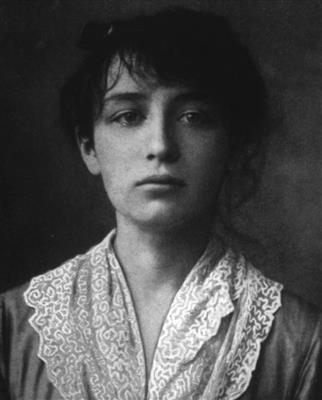

Take Paula Modersohn-Becker home.
See all Paula Modersohn-Becker prints →Frequently Asked Questions
Paula modersohn-becker daughter?
Paula Modersohn-Becker died three weeks after giving birth to her daughter. She reportedly stated, "Now I have what I wanted. Now things will be fine."What is Paula Modersohn-Becker's most famous work?
Paula Modersohn-Becker is best known for her contributions to early expressionism. Although she died young, her paintings gained attention posthumously. She produced many self-portraits, a relatively uncommon subject for female artists at the time. It is difficult to single out one definitive "most famous" work, as popularity can vary. However, several paintings are particularly well recognised. These include her self-portraits, such as "Self-Portrait with Camellia Branch" (c. 1907) and "Self-Portrait on her Sixth Wedding Anniversary" (1906). These paintings are noted for their direct gaze and simplified forms. Other significant works include her depictions of peasant women and children in Worpswede, the artists' colony where she lived. "Old Peasant Woman Praying" (1905) is a good example of this subject matter. These paintings often explore themes of rural life and motherhood. Modersohn-Becker's nudes, especially those depicting mothers and children, are also considered important.What should I know about Paula Modersohn-Becker's prints?
Paula Modersohn-Becker (1876-1907) was born in Dresden and moved to Bremen as a child. She trained at the Berlin School of Art for Women from 1896 to 1898. Afterwards, she joined the Worpswede artists' colony near Bremen, studying with Fritz Mackensen. Her initial public exhibition was with the Worpswede group at the Bremen Kunsthalle in 1899. Her early pieces included dark moor scenes and detailed charcoal drawings depicting local peasants. A trip to Paris in 1900 prompted a shift towards simplification and a more two-dimensional style. She married Otto Modersohn, a landscape painter from Worpswede, in 1901. Growing dissatisfied with the colony, she went back to Paris in 1903 and enrolled at the Academie Cola Rossi. She also attended the Academie Julian in 1905, and the Ecole des Beaux-Arts in 1906-7. Modersohn-Becker's work includes still lifes, such as Still Life with Jug, Candlestick, and Fruit, and figure studies such as Female Nude with Crossed Legs and Hat. She also produced a number of child portraits in charcoal and crayon.What style or movement did Paula Modersohn-Becker belong to?
Paula Modersohn-Becker (1876-1907) is often associated with early Expressionism, although her career predates the formal establishment of many Expressionist groups. Her work also shows affinities with Post-Impressionism and the artists of the Pont-Aven School. She developed a personal style during a time of significant artistic change. After initial training in Berlin, Modersohn-Becker joined the artists' colony at Worpswede in 1898. Worpswede offered an alternative to academic art; however, she found its emphasis on rural naturalism limited. Several trips to Paris between 1900 and 1907 exposed her to the work of Paul Cézanne, as well as that of Henri Rousseau and Paul Gauguin. These artists encouraged her move towards simplified forms, flattened perspective, and an interest in portraying the human figure with a new directness. Her portraits and self-portraits, particularly those created in her final years, demonstrate a move away from naturalistic representation and towards a more subjective, emotionally charged mode of expression. This places her work as a precursor to German Expressionism.What techniques or materials did Paula Modersohn-Becker use?
Paula Modersohn-Becker employed a range of materials and techniques throughout her short career. Early on, after training at the Berlin School of Art for Women, she settled in Worpswede, near Bremen. There, instructed by Fritz Mackensen, she created dark-toned moor scenes and detailed charcoal drawings, often depicting local peasants. After her initial trip to Paris in 1900, her style began to shift. By 1903, she was developing a more simplified, two-dimensional approach, influenced by French Post-Impressionists such as Gauguin, the Nabis, Van Gogh, Maillol, and Cezanne. She aimed for what she termed a "great simplicity of form." Her paintings often feature solid, massive shapes. Modersohn-Becker's sensitivity to colour is evident in works such as "Old Poorhouse Woman with a Glass Bottle" (1907), where the sky has a luminous yellow-green light. She also explored the theme of maternity in paintings and drawings, particularly between 1906 and 1907. These later works often feature monumental, naked figures with minimal facial details, reducing the subjects to anonymous matriarchal symbols.What was Paula Modersohn-Becker known for?
Paula Modersohn-Becker (1876-1907) was a German painter, and one of the early expressionists. She is best known for her portraits, especially those of women and children. Modersohn-Becker's early work was influenced by the artists of the Worpswede artists' colony, where she moved in 1898. These paintings often depicted rural life and the surrounding countryside. However, after several trips to Paris, beginning in 1900, her style evolved. She became more interested in the work of Paul Cézanne, as well as other Post-Impressionist and early Modern painters. Her mature paintings are characterised by simplified forms, strong colours, and a focus on the human figure. She often painted herself, creating a series of self-portraits that are considered among the earliest nude self-portraits by a woman artist. Modersohn-Becker produced a substantial body of work in a short period, as she died at the age of 31, shortly after giving birth. Her work gained wider recognition in the decades after her death, and she is now recognised as an important figure in early 20th-century modernism.When did Paula Modersohn-Becker live and work?
Paula Modersohn-Becker was born in 1876 in Dresden, Germany, and died in 1907. In 1888, her family relocated to Bremen. She began art studies as a teenager and later studied in Berlin and Paris. From 1896 to 1898, she attended the Berlin School of Art for Women. Afterwards, she moved to Worpswede, near Bremen, joining the artists' colony there and studying with Fritz Mackensen. Modersohn-Becker had her first public exhibition with the Worpswede group at the Bremen Kunsthalle in the winter of 1899. Initially, her works featured dark moor scenes and charcoal drawings of local peasants. A trip to Paris in 1900 prompted a shift towards a more simplified, two-dimensional approach. In 1901, she married Otto Modersohn, a painter of landscapes from Worpswede. Dissatisfied with the colony's artistic limitations, she went back to Paris in 1903 and enrolled at the Academie Cola Rossi. She also visited the Academie Julian in 1905 and took classes at the Ecole des Beaux-Arts in 1906 and 1907.Where can I see Paula Modersohn-Becker's work?
Paula Modersohn-Becker's paintings are held in numerous collections, mostly in Germany. The Paula Modersohn-Becker Museum in Bremen holds a large collection of her paintings, drawings, and prints. This museum is dedicated solely to her work. Other German museums with significant holdings include the Kunsthalle Bremen[1], the Sprengel Museum in Hanover, and the Ludwig Roselius Collection in Bremen. These institutions offer opportunities to view her art in the context of broader collections of modern art. Outside Germany, her work is less common. However, some international museums occasionally display her pieces as part of special exhibitions or within their permanent collections of early twentieth-century art. Check the online catalogues of major museums such as the Musée d'Orsay in Paris, the Museum of Modern Art in New York, and the Tate in London to see if they hold any works by Modersohn-Becker. These holdings may vary, so it is always best to confirm before visiting.Where was Paula Modersohn-Becker from?
Paula Modersohn-Becker was born in Dresden, Germany, on 8 February 1876. Her given name was Paula Becker. She came from a large family; her parents Carl Woldemar Becker and Mathilde von Bültzingslöwen had seven children. In 1888, the family relocated to Bremen, where her father took a position as a construction engineer. Bremen became a central place in her life, although she travelled extensively for her art. She received early artistic training in Bremen. Later, she studied at the Berlin School for Artists, but she found the instruction too traditional. In 1901, she married the painter Otto Modersohn, who lived in the artists' colony of Worpswede, near Bremen. Worpswede became another important location for her work, a rural community that attracted artists seeking an alternative to academic art. She added his name to hers, becoming Paula Modersohn-Becker. However, she often felt restricted by the conventions of Worpswede society. She made several trips to Paris to study and work, distancing herself from her marriage and the artistic constraints she felt in Germany.Who did Paula Modersohn-Becker influence?
Paula Modersohn-Becker's work anticipates German Expressionism through its simplification of colour and form, and emphasis on line. However, as an artist, she had little in common with the Expressionism of Die Brücke, even indirectly. She knew pictures by Edvard Munch and Vincent van Gogh, who gave the young artists from Dresden important suggestions; however, they had no influence on the development of her art. Her exposure to Post-Impressionists such as Paul Cézanne and Paul Gauguin during trips to Paris informed her mature style. After her first trip to Paris in 1900, she began to develop a more simplified, two-dimensional style. She saw Cézanne as a great influence, like a big brother, and an unexpected confirmation of her own artistic quest. The sculptor Clara Westhoff testified to this influence. Modersohn-Becker also absorbed the lessons of early antique and Egyptian art at the Louvre. Some have linked her chiselled facial features to the influence of African sculpture.Who influenced Paula Modersohn-Becker?
Paula Modersohn-Becker absorbed a wide range of influences during her short but productive career. Early instruction came from Fritz Mackensen, who taught her painting at Worpswede in 1898. She also studied briefly at the Damenakademie of the Berlin Verein der Künstlerinnen (Berlin Women Artists’ Association). Exposure to modern art in Paris was particularly formative. During visits beginning in 1900, she encountered the work of artists such as Paul Cézanne, whose simplified forms and interest in structure made a particular impression. The directness and emotional intensity of Vincent van Gogh also resonated with her. In addition, Modersohn-Becker engaged with the art of Paul Gauguin. His simplified style, non-Western subject matter, and symbolic use of colour all provided inspiration as she searched for a new artistic language. These Post-Impressionist figures encouraged her to move away from naturalism and towards a more personal and expressive mode of representation. She synthesised these diverse elements into a unique style characterised by simplified forms, flattened space, and an interest in capturing the essence of her subjects.Who was Paula Modersohn-Becker?
Paula Modersohn-Becker (1876-1907) was a German painter and one of the early expressionist artists. She is best known for her portraits, still lifes, and self-portraits. Born in Dresden, she received artistic training in Berlin and later joined the artists' colony of Worpswede, near Bremen. This community attracted artists seeking an alternative to academic art. There, she befriended the sculptor Clara Westhoff (later the wife of Rainer Maria Rilke) and the painter Otto Modersohn, whom she married in 1901. Modersohn-Becker travelled to Paris several times, where she encountered the work of Paul Cézanne, Paul Gauguin, and other modern artists. These encounters influenced her artistic development, leading her to simplify forms and use colour expressively. Her work moved away from the naturalism of the Worpswede school. Although her career was short, cut short by her death from an embolism shortly after childbirth, Modersohn-Becker produced a substantial body of work. Her art anticipated many of the developments of twentieth-century modernism. She is regarded as an important figure in the development of early expressionism.
Sources
Editorial draws on the following primary and tertiary references for Paula Modersohn-Becker.
- [1] museum Kunsthalle Bremen Used for: museum holdings.
- [2] wikidata Wikidata: Q234370 Used for: identifiers.
- [3] book guggenheim-expger00neug Used for: biography.
- [4] book Post-impressionism : cross-currents in European painting Used for: biography.
- [5] book Post-impressionism : cross-currents in European painting Used for: biography.
Editorial overseen by Solis Prints. Sources verified 2026-09-13. Click a source for details, or hover over [N] in the page above to preview.
Editorial standardsMethodologyCorrectionsAI disclosureAbout the editorial team