



Edgar Negret
There is a certain symmetry to a life that began and ended on the same date: Édgar Negret was born in Popayán, Colombia on 11 October 1920[1], and died in Bogotá on 11 October 2012[1], his 92nd birthday. Between those bookends he became the most internationally recognised Colombian[1] sculptor of his century, turning folded and bolted aluminium into forms that felt simultaneously industrial and ancient.
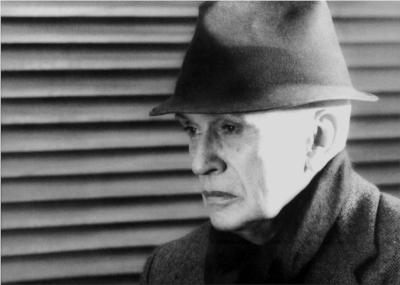
Biography
Negret studied at the School of Fine Arts in Cali from 1938[1], absorbing early lessons from the stone-carving traditions of European modernism, particularly the biomorphic work of Jean Arp and Constantin Brancusi. A shift came in the early 1950s when he turned to metal, adopting a constructivist vocabulary that he made distinctly his own. Works such as Aparato Mágico (1959) and Sign for an Aquarium (1954) show the transformation: painted aluminium plates, mechanically joined, assembled into structures that suggest both machine parts and ritual objects.
The international art world took notice quickly. The Museum of Modern Art in New York acquired his work in 1955[1]. He won the David E. Bright Sculpture Prize at the Venice Biennale in 1968 and received a Guggenheim Fellowship in 1975. A museum dedicated to his work, the Museo Negret, opened in Popayán in 1985. Back home, the Congress of Colombia awarded him the Grado de Oficial in 2010.
Negret spent periods working in New York, Madrid, and Paris, returning always to Colombia. His aluminium sculptures, painted in bold single colours, remain among the most distinctive objects produced in Latin American art of the twentieth century.
Timeline
- 1920Born in Popayán, Colombia, on 11 October.
- 1938Began studies at the School of Fine Arts in Cali.
- 1950Began working with metal, adopting a constructivist vocabulary.
- 1954Created "Sign for an Aquarium", showcasing his transformation to metal sculpture.
- 1955His work was acquired by the Museum of Modern Art in New York.
- 1959Created "Aparato Mágico", an example of his style using painted aluminium plates.
- 1968Won the David E. Bright Sculpture Prize at the Venice Biennale.
- 1975Received a Guggenheim Fellowship.
- 1985The Museo Negret opened in Popayán.
- 2012Died in Bogotá on 11 October, his 92nd birthday.
Notable Works
Tap to view larger.
Next stop
Browse the movements →
Every movement in the collection, from the Renaissance to Pop art.
Related Artists


Frequently Asked Questions
What is Edgar Negret known for?
Édgar Negret is known for his aluminium sculptures, painted in bold single colours. These sculptures are considered among the most distinctive objects produced in Latin American art of the twentieth century. His work transformed mechanically joined, painted aluminium plates into structures suggesting both machine parts and ritual objects.What was Edgar Negret's art style?
Initially, Édgar Negret's art style absorbed lessons from the stone-carving traditions of European modernism, particularly the biomorphic work of Jean Arp and Constantin Brancusi. Later, he adopted a constructivist vocabulary, which he made distinctly his own, using painted aluminium plates mechanically joined.How did Edgar Negret die?
Edgar Negret died in 2012[1] at the age of 92.
Sources
Editorial draws on the following primary and tertiary references for Edgar Negret.
- [1] wikipedia Wikipedia: Edgar Negret Used for: biography, birth dates, death dates, identifiers, movement attribution, nationality.
- [2] book guggenheim-guggenheimintern1964allo Used for: biography.
- [3] book guggenheim-masterp00solo Used for: biography.
- [4] book guggenheim-twopri00weis Used for: biography.
Editorial overseen by Solis Prints. Sources verified 2026-10-07. Click a source for details, or hover over [N] in the page above to preview.
Editorial standardsMethodologyCorrectionsAI disclosureAbout the editorial team