

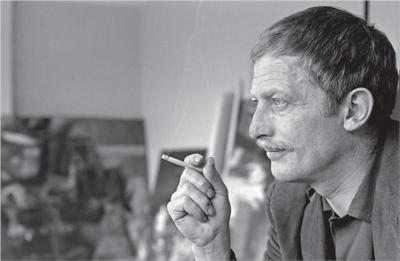
Alejandro Obregon
Born in Barcelona in 1920[1] to a Colombian[1] father and Catalan mother, Alejandro Obregón spent his formative years between Barranquilla and Liverpool before studying at the Boston Museum School in 1939[1]. His was an art of contradiction: European training, Caribbean soul. He returned to Colombia and held his first solo exhibition in 1945, winning a national prize that same year. By the time MoMA acquired his *Souvenir of Venice* in 1954, he had established himself as the most internationally credible painter Colombia had produced.
Biography
The 1956[1] *Estudiante Muerto* and the 1962 *Violencia* secured his place as Colombia's moral witness. These large canvases confronted the political violence tearing the country apart with a directness that critics like Marta Traba praised for their "personal poetic values" and formal self-sufficiency. His compositions typically divided along a strong horizontal axis, with impasto paint laid thick and bold. The Andean condor, geometric bulls, guitars, and the particular turquoise of the Caribbean Sea became recurring motifs that were never merely decorative, each carried specific weight in his visual language.
Obregón won the Francisco Matarazzo Sobrinho Grand Prize at the São Paulo Bienal and represented Colombia in Venice, but he resisted the gravitational pull of Europe that drew most Latin American painters of his generation. From 1970[1] until his death in 1992[1] he lived and worked in Cartagena, painting in a studio that opened onto the sea. He died there in April 1992 from a brain tumour. His mural *Tierra, Mar y Aire*, a thirty-foot ceramic mosaic on the Mezrahi building in Barranquilla, remains one of the most ambitious public works in Colombia.
Timeline
- 1920Born in Barcelona to a Colombian father and Catalan mother.
- 1939Studied at the Boston Museum School.
- 1945First solo exhibition and won a national prize in Colombia.
- 1954MoMA acquired his *Souvenir of Venice*.
- 1956*Estudiante Muerto* secured his place as Colombia's moral witness.
- 1962*Violencia* secured his place as Colombia's moral witness.
- 1970Lived and worked in Cartagena.
- 1992Died in Cartagena from a brain tumor.
Notable Works
Tap to view larger.
Next stop
Browse the movements →
Every movement in the collection, from the Renaissance to Pop art.
Related Artists


Frequently Asked Questions
What is Alejandro Obregon known for?
Alejandro Obregón is known as the most internationally credible painter Colombia has produced. His 1956[1] *Estudiante Muerto* and the 1962 *Violencia* paintings secured his place as Colombia's moral witness, confronting the political violence tearing the country apart.Who was Alejandro Obregon?
Alejandro Obregón was born in Barcelona in 1920[1], but he spent his formative years between Barranquilla and Liverpool. He later studied at the Boston Museum School in 1939[1], and he also directed Escuela de Bellas Artes, Bogota, from 1948-49 and Escuela de Pinturas de la Universidad del Atlantico, Barranquilla, in 1963.What was Alejandro Obregon's art style?
Alejandro Obregón's compositions typically divided along a strong horizontal axis, with impasto paint laid thick and bold. The Andean condor, geometric bulls, guitars, and the particular turquoise of the Caribbean Sea became recurring motifs in his work; each carried specific weight in his visual language.How did Alejandro Obregon die?
Alejandro Obregon died in 1992[1] at the age of 72.
Sources
Editorial draws on the following primary and tertiary references for Alejandro Obregon.
- [1] wikipedia Wikipedia: Alejandro Obregon Used for: biography, birth dates, death dates, identifiers, movement attribution, nationality.
- [2] book guggenheim-handboo00pegg Used for: biography.
- [3] book guggenheim-latinamericanpai00catl Used for: biography.
- [4] book guggenheim-twopri00weis Used for: biography.
Editorial overseen by Solis Prints. Sources verified 2026-10-07. Click a source for details, or hover over [N] in the page above to preview.
Editorial standardsMethodologyCorrectionsAI disclosureAbout the editorial team