



Corneille
- portrait
The painting Spell of the Island (1965[1]), an oil canvas measuring 161.3 by 130.2 centimetres, captures the spirit of what made Corneille one of the most singular voices in post-war European art. Born Guillaume Cornelis van Beverloo on 3 July 1922[1] in Liege to Dutch parents, he trained at the Rijksakademie in Amsterdam between 1940 and 1943, then held his first solo show at Het Beerenhuis in Groningen in 1946 while barely in his mid-twenties.
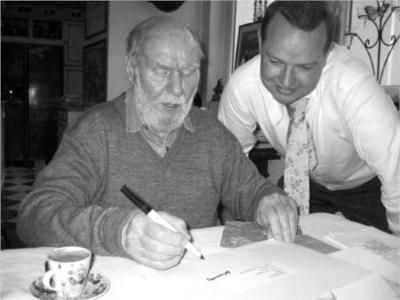
Biography
Two years later, back from travels through Hungary, he co-founded both the Nederlandse Experimentele Groep and the COBRA movement, alongside Karel Appel, Asger Jorn, Constant, Christian Dotremont, and Joseph Noiret. COBRA drew its name from the home cities of its founders (Copenhagen, Brussels, Amsterdam) and built its practice on Surrealist automatism: bright, instinctive marks, animal imagery, and forms borrowed from children's drawing, deployed consciously against the shadow of the Second World War. Corneille described himself simply as a painter of joy.
He settled permanently in Paris in 1950[1], studying etching with Stanley William Hayter in 1953 and ceramics with Tullio Mazzotti in Albisola during the summers of 1954 and 1955. The Guggenheim International Award for the Netherlands arrived in 1956, the same year the Stedelijk Museum in Amsterdam gave him his first major solo exhibition. From 1962 he showed regularly in New York at the Lefebre Gallery and spent several summers working in Cadaques on the Spanish coast. A retrospective at the Musee d'Antibes followed in 1963.
His mature paintings replace figurative incident with mosaic-like arrangements of protozoan shapes in saturated reds, pinks, blues, and yellows. Corneille rejected formal rigidity and sought what he called the expression of joyous sensation. He died in 2010[1], leaving a body of work that maps, more directly than most, the leap from wartime trauma to liberated colour.
Timeline
- 1922Born Guillaume Cornelis van Beverloo on 3 July in Liege, Belgium, to Dutch parents.
- 1940Began training at the Rijksakademie in Amsterdam.
- 1946Held his first solo exhibition at Het Beerenhuis in Groningen.
- 1948Co-founded the Nederlandse Experimentele Groep and the COBRA movement with Karel Appel, Asger Jorn, Constant, Christian Dotremont, and Joseph Noiret.
- 1950Settled permanently in Paris.
- 1953Studied etching with Stanley William Hayter.
- 1954Studied ceramics with Tullio Mazzotti in Albisola during the summer.
- 1955Studied ceramics with Tullio Mazzotti in Albisola during the summer.
- 1956Received the Guggenheim International Award for the Netherlands. The Stedelijk Museum in Amsterdam gave him his first major solo exhibition.
- 1962Began showing regularly in New York at the Lefebre Gallery and spent several summers working in Cadaques on the Spanish coast.
- 1963A retrospective was held at the Musee d'Antibes.
- 1965Painted "Spell of the Island".
- 2010Died at the age of 87.
Notable Works
Tap to view larger.
Next stop
Browse the movements →
Every movement in the collection, from the Renaissance to Pop art.
Related Artists

Frequently Asked Questions
What is Corneille's most famous work?
It is difficult to name one single work as Corneille's most famous. He was a prolific artist whose paintings, drawings, and prints are held in museum collections around the world. Corneille is known as one of the founders of the Cobra art movement in 1948[1] (with Karel Appel, Asger Jorn and others). His early works were abstract, but by the 1950s his paintings included more figurative elements: stylised birds, cats, and mask-like faces. These recall the art of Joan Miró and Paul Klee. He lived in Paris from 1950 onwards, and travelled widely. He drew inspiration from North Africa, South America, and the United States. Corneille continued to develop his characteristic style of colourful, childlike imagery until his death in 2010[1].What should I know about Corneille's prints?
As a painter, printmaker, and ceramicist, Corneille explored various media throughout his career. Prints were an important part of the art market in his milieu; many artists built their reputations and incomes through paper art, whether they were creating original prints or reproductions of paintings. Collecting prints was also a common practice; for example, the 17th-century artist Joachim von Sandrart's collection of paper art was extensive enough to bring in 4,555 guilders at auction. Similarly, Rembrandt was a compulsive collector of paper art, frequenting print shops and auctions to acquire new pieces. Some collectors even had books made to catalogue their collections of paintings and drawings, as with Cardinal Federico Borromeo's *Museum Bibliothecae Ambrosianae* (Milan, 1625).What techniques or materials did Corneille use?
Corneille, a member of the COBRA group, employed a range of techniques and materials that reflected his expressive style. He is known for his use of bold, bright colours and simplified forms. While specific details regarding Corneille's precise studio practices are scarce, it is likely he used oil paints on canvas, a common medium for painters of his time. The preparation of the canvas typically involved stretching the material, applying a size (often animal-skin glue), and then applying a ground layer. The ground could be a single or double layer, with the first layer often coloured with raw umber and red brown, and the second with lead white and carbon black to create a grey tone. Painters often used soft, fine brushes for smooth surfaces and detailing. Linseed oil, which dries more quickly than walnut oil, was a common medium. The use of turpentine spirit as a thinner is also possible.What was Corneille known for?
Corneille (born Guillaume Cornelis van Beverloo in Liège, 1922[1]; died Paris, 2010[1]) was a Dutch artist. He is associated with the CoBrA group, which was active between 1948[1] and 1951. The name CoBrA was formed from the initial letters of the cities where the founding artists lived: Copenhagen, Brussels, and Amsterdam. Other members included Karel Appel, Asger Jorn, and Pierre Alechinsky. Corneille's early work was influenced by Miró and Klee. He helped found the group Reflex in 1948, and then joined CoBrA later the same year. His paintings often feature simplified, childlike figures, birds, and sun motifs. After 1950, Corneille travelled extensively, visiting North Africa, North America, and South America. These travels influenced his imagery, and his style became more expressive. He lived in Paris from the 1950s until his death. Corneille worked in various media, including painting, drawing, prints, and ceramics.When did Corneille live and work?
Corneille, born Corneille Guillaume Beverloo, was born on 3 July 1922[1] in Liège, Belgium, to Dutch parents. From 1940[1] to 1942, he studied drawing at the Rijksakademie van Beeldende Kunsten in Amsterdam. His first solo exhibition took place in 1946 at Het Beerenhuis in Groningen, The Netherlands. In 1948, Corneille co-founded the Nederlandse Experimentele Groep (N.E.G.), which published the periodical Reflex. He also co-founded the COBRA movement, which included artists such as Jorn, Appel, Constant, Christian Dotremont, and Joseph Noiret. Corneille participated in the 1949 N.E.G. and COBRA exhibitions at the Galerie Colette Allendy in Paris and the Stedelijk Museum in Amsterdam. In 1950, Corneille settled permanently in Paris. He studied etching with Stanley William Hayter in 1953 and ceramics with Tullio Mazzotti in Albisola, Italy, during the summers of 1954 and 1955. He received the Guggenheim International Award for The Netherlands in 1956, the same year as his first solo exhibition at the Stedelijk Museum in Amsterdam. As of the date of one source's publication, Corneille lived and worked in Paris.Where can I see Corneille's work?
To view works by Corneille, you might start with museums that hold similar artists or movements. For example, the Metropolitan Museum of Art (New York) and the Minneapolis Institute of Arts hold paintings by Nicolas Poussin. The Los Angeles County Museum of Art (LACMA), the Royal Ontario Museum (Toronto), and the Victoria & Albert Museum (London) all hold Art Deco items. Checking their online collections or contacting them directly would be the best way to confirm whether they hold works by Corneille. These museums also have extensive collections of 20th-century art, which may include Corneille's pieces. Other museums to consider include the Museum of Modern Art (New York), the National Museums of Scotland (Edinburgh), and the Brighton Museum & Art Gallery. These institutions have diverse holdings and could potentially feature Corneille's work in their collections.Who did Corneille influence?
Corneille's dramatic works, which explored themes of passion, devotion, and generosity, had an impact on other artists. Nicolas Poussin, a painter, lived during Corneille's time, and critics such as Paul Desjardins, Roger Fry, and Anthony Blunt have drawn comparisons between Poussin's art and the theatre of Corneille and Racine. Corneille and Poussin both frequently presented themes centring on significant historical figures, who were typically unconcerned with everyday issues. They typically offered a prescribed, codified, and rational framework for representing narrative action and human emotion. Both sought a concentration of action; however, both occasionally went beyond reason, such as when Corneille was swayed by excessive fervour in his plots, or when Poussin transcended the rational to create images of emotional power. Poussin may have been influenced by plays such as Théophile de Viau’s tragedy *Les amours tragiques de Pyrame et Thisbé*, Pierre Du Ryer’s *Esther*, and François Hédelin, Abbé d’Aubignac’s *Zenobie*.Who influenced Corneille?
The passages mention Corneille in the context of 17th-century French[1] art and culture, but do not directly address the question of who influenced him as a painter. However, the index entries do allow for some inferences. The passages note the presence of Corneille alongside figures such as Claude Lorrain, Nicolas Poussin, and Jacques Louis David. All were influenced by classicism. Classicism was a dominant movement that drew inspiration from ancient Greek and Roman art and philosophy. It emphasised order, reason, and balance. Poussin, in particular, is closely associated with classicism, and his emphasis on clarity and structure may have resonated with Corneille. Claude Lorrain's approach to idealised forms may also have been relevant. Therefore, while direct evidence is lacking, it is reasonable to suggest that Corneille was influenced by the classical tradition.Who was Corneille?
Corneille, born Corneille Guillaume Beverloo in Liège, Belgium, in 1922[1], was a Dutch artist. He studied drawing at the Rijksakademie van Beeldende Kunsten in Amsterdam from 1940[1] to 1942. His first solo exhibition took place in 1946 at Het Beerenhuis in Groningen. In 1948, he co-founded the Nederlandse Experimentele Groep (N.E.G.), which published the journal Reflex. He also co-founded the COBRA movement with artists such as Jorn, Appel, Constant, Christian Dotremont, and Joseph Noiret. Corneille participated in N.E.G. and COBRA exhibitions in Paris and Amsterdam in 1949. In 1950, Corneille settled in Paris and began exhibiting at the Salon de Mai. He studied etching with Stanley William Hayter in 1953 and ceramics with Tullio Mazzotti in Albisola, Italy, in the mid-1950s. Corneille received the Guggenheim International Award for The Netherlands in 1956, the same year as his first solo exhibition at the Stedelijk Museum in Amsterdam. He travelled extensively, visiting Africa, South America, and the United States. He had his first solo exhibition in New York in 1962. Corneille lived and worked in Paris.Why are Corneille's works important today?
Guillaume Corneille van Beverloo (1922[1]-2010[1]), known as Corneille, was a Dutch artist. He co-founded the CoBrA group in 1948[1]. His importance arises from his contribution to post-war European art. CoBrA, an abbreviation of Copenhagen, Brussels, and Amsterdam, rejected both socialist realism and abstract art. The group sought a spontaneous, experimental approach, drawing inspiration from folk art, children's drawings, and primitive art forms. Corneille's work is characterised by its colourful, childlike imagery. Recurring motifs include birds, cats, and stylised figures, often set against abstracted backgrounds. His style moved from abstract expressionism toward a more figurative mode. His art offers a rejection of established artistic norms, and an embrace of freedom and experimentation. It also reflects the post-war desire for renewal and a reconnection with basic human emotions.What was Corneille's art style?
His mature paintings feature mosaic-like arrangements of protozoan shapes in saturated reds, pinks, blues, and yellows. Corneille rejected formal rigidity and sought what he called the expression of joyous sensation.
Sources
Editorial draws on the following primary and tertiary references for Corneille.
- [1] wikipedia Wikipedia: Corneille Used for: biography, birth dates, death dates, identifiers, movement attribution, nationality.
- [2] book guggenheim-guggenheimintern1964allo Used for: biography.
- [3] book guggenheim-guhe00solo Used for: biography.
- [4] book Masterpieces of western art : a history of art in 900 individual studies from the Gothic to the present day Used for: biography.
- [5] book Anthony Blunt;, Nicolas Poussin Used for: biography.
- [6] museum Corneille | Artist - Peggy Guggenheim Collection Used for: biography.
- [7] museum Corneille (Guillaume van Beverloo) - MoMA Used for: museum holdings.
- [8] museum Guillaume Corneille 1922–2010 | Tate Used for: biography.
Editorial overseen by Solis Prints. Sources verified 2026-09-30. Click a source for details, or hover over [N] in the page above to preview.
Editorial standardsMethodologyCorrectionsAI disclosureAbout the editorial team