



Christo Coetzee
Growing up in Johannesburg, Christo Coetzee reportedly spent afternoons modelling figures in garden mud after the five-o'clock rains, an early habit that would give way to one of the most idiosyncratic careers in twentieth-century South African art. He completed his BA at the University of the Witwatersrand in 1951[1], holding his first solo exhibition the same month he graduated; the director of the South African National Gallery opened the show.
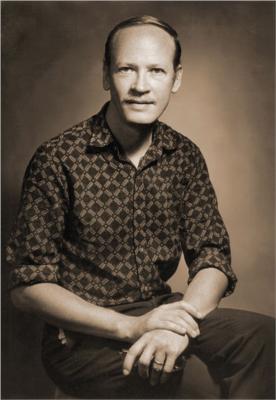
Biography
A Wits scholarship sent him to the Slade School of Art in London, where he studied under William Coldstream. By 1955[1] he was showing at the Hanover Gallery, which at that time also represented Francis Bacon, Lucian Freud, and Giacometti. A British Council grant in 1956 took him to Italy, where he encountered Alberto Burri; Burri's slashed and scorched surfaces left a mark on Coetzee's own material investigations.
The stranger chapter came in 1959[1], when he travelled to Japan and spent eleven months working alongside the Gutai group, introduced to founder Jiro Yoshihara through a Kyoto University contact. Gutai's insistence on unconventional materials and bodily performance pushed Coetzee toward increasingly radical gestures: canvases slashed in the manner of Fontana, and paintings embedded with ping-pong balls that added a physical absurdity to gestural abstraction.
His mature work sits in the current of Art Informel and Tachisme. The South African Academy for Science and Arts awarded him a Medal of Honour in 1983[1], the same year a retrospective opened at the Pretoria Art Museum. A final retrospective at the University of Stellenbosch marked his 70th birthday in 1999. He died in Tulbagh the following year.
Timeline
- 1929Born in Johannesburg.
- 1951Completed his BA at the University of the Witwatersrand and held his first solo exhibition; the director of the South African National Gallery opened the show.
- 1951At 22, received a Wits scholarship to study at the Slade School of Art in London under William Coldstream.
- 1955Began exhibiting at the Hanover Gallery, alongside Francis Bacon, Lucian Freud, and Giacometti.
- 1956At 27, a British Council grant enabled him to travel to Italy, where he met Alberto Burri.
- 1959Travelled to Japan and spent eleven months working with the Gutai group after being introduced to founder Jiro Yoshihara.
- 1983The South African Academy for Science and Arts awarded him a Medal of Honour; a retrospective opened at the Pretoria Art Museum.
- 1999A retrospective at the University of Stellenbosch marked his 70th birthday.
- 2000Died in Tulbagh at the age of 71.
Notable Works
Tap to view larger.
Next stop
Abstract Expressionism →
Explore the artists and ideas of Abstract Expressionism.
Related Artists


Frequently Asked Questions
What is Christo Coetzee known for?
Christo Coetzee is known for his unconventional use of materials and bodily performance in his art. His canvases were slashed in the manner of Fontana, and he embedded ping-pong balls in paintings to add physical absurdity to gestural abstraction.What is Christo Coetzee's most famous work?
Christo Coetzee (1929[1]-2000[1]) was a South African artist associated with the Gutai group in Japan and the informal movement in Europe. He worked in painting, sculpture, and assemblage. Identifying a single "most famous work" is difficult, as his notability rests more on his international connections and theoretical writings. Coetzee's "Space Art" theories, developed in the late 1950s, proposed art as a dynamic field of interacting forces. This concept influenced his later constructions. His involvement with the Gutai group (1959[1]-1965[1]) further shaped his approach to art-making. He exhibited with them extensively. Among his better-known pieces are the so-called "constructions". These are three-dimensional assemblages incorporating found objects, paint, and often incorporating slashed or punctured canvases. Examples include works created during his time in London and Paris in the 1950s and 1960s. These constructions reflect his interest in creating dynamic, multi-dimensional artworks that broke from traditional painting conventions. While no single piece achieved widespread popular recognition, his body of work and theoretical contributions have secured his place in South African and international art history.What style or movement did Christo Coetzee belong to?
Christo Coetzee (1929[1]-2000[1]) was a South African artist whose style defies easy categorisation. He explored various approaches throughout his career, making it difficult to place him neatly within a single movement. Early in his career, Coetzee engaged with abstract expressionism, producing works characterised by bold colours and gestural brushstrokes. Later, he developed what he termed "plastic paintings", three-dimensional constructions using found objects and unconventional materials. These works moved beyond the traditional canvas, creating sculptural forms that challenged conventional notions of painting. Coetzee's practice also intersected with aspects of Pop Art, particularly in his use of everyday imagery and interest in popular culture. However, his work maintained a unique sensibility, blending elements of different styles into a personal aesthetic. He resisted being labelled, preferring to experiment freely and push the boundaries of artistic expression. Because of this, some critics have described him as a maverick figure, operating outside established movements.What techniques or materials did Christo Coetzee use?
Christo Coetzee worked across painting, collage, and sculpture, often combining these techniques. He is best known for his "space frame" constructions. These works involved layering and juxtaposing painted canvases, often cut, folded, or otherwise manipulated. Coetzee's approach was highly experimental. He incorporated diverse materials such as mirrors, perspex, and found objects into his artworks. His interest in texture and dimensionality led him to create surfaces that are both visually stimulating and physically tactile. Throughout his career, Coetzee explored different styles and media. He moved from abstract expressionism to more geometric and constructed forms. His use of colour varied, from muted palettes to bold, contrasting hues. This experimentation reflects his broader interest in pushing the boundaries of artistic expression and challenging traditional notions of painting and sculpture.What was Christo Coetzee known for?
Christo Coetzee (1929[1]-2000[1]) was a South African artist associated with abstract and avant-garde movements. He is recognised for his distinctive style, which blended aspects of Cubism, Abstract Expressionism[1], and a personal form of Neo-Baroque. Coetzee's work often involved the use of unconventional materials and techniques. He created what he termed "space structures", three-dimensional constructions that explored the relationship between painting and sculpture. These works aimed to break down traditional artistic boundaries. His career included periods spent in London, Paris, and Tokyo, where he engaged with international art scenes. Encounters with Gutai artists in Japan influenced his move towards more spatial and performative works. While Coetzee's art did not neatly fit into established categories, his experiments contributed to the development of new approaches to art making in the mid-20th century.Where can I see Christo Coetzee's work?
It is difficult to provide a comprehensive list of places to view Christo Coetzee's work, but several museums hold collections that may include his pieces. In the United States, you might check the collections of the Metropolitan Museum of Art (New York), the Museum of Modern Art (New York), the Los Angeles County Museum of Art, the Minneapolis Institute of Arts, the Charles Hosmer Morse Museum of American Art (Winter Park, Florida), the Virginia Museum of Fine Arts (Richmond), and the Wolfsonian at Florida International University (Miami Beach). In the United Kingdom, possible locations include the Victoria & Albert Museum (London), the Brighton Museum & Art Gallery, the Geffrye Museum (London), the Manchester Art Gallery, and the National Museums of Scotland Royal Museum (Edinburgh). Other European museums include the Musées Royaux des Beaux-Arts de Belgique (Brussels). It is always advisable to check the museum's website or contact them directly to confirm whether they have works by Coetzee on display, as collections and exhibitions can change.Who did Christo Coetzee influence?
It is difficult to name specific artists directly influenced by Christo Coetzee. However, some South African artists of the 20th century were influenced by modernism generally. Gerard Sekoto, for example, was thought of as a father figure by later artists. His success allowed him to relocate to Paris, which was considered the centre of the art world. Although he lived abroad, his early work, as well as paintings he sent from Paris, were regularly shown in commercial galleries in South Africa. Sekoto's style fitted well with the reduction of surface to pattern and the expressive use of colour then in fashion. He gained exposure to the work of white South African artists who followed international trends, and through them to the major styles of European modern art.Who influenced Christo Coetzee?
Christo Coetzee (1929[1]-2000[1]) was a South African artist whose influences are diverse and reflect his international experiences. Coetzee's early work displays the influence of artists such as Jackson Pollock and Willem de Kooning. These artists informed his abstract expressionist style. While studying in London during the 1950s, Coetzee encountered the work of art informel artists like Alberto Burri and Antoni Tàpies; their use of unconventional materials and textures had a significant impact on his artistic development. His time in Japan, where he founded the "New Group" with Japanese Gutai artists, also proved formative. The Gutai group's emphasis on materiality and action in art resonated with Coetzee's own explorations. He admired Lucio Fontana, whose slashed canvases influenced Coetzee’s later "slit paintings". These works involved cutting and layering canvases to create dynamic, three-dimensional surfaces.Who was Christo Coetzee?
Christo Coetzee (1929[1]-2000[1]) was a South African artist, known for his abstract paintings and his involvement in international art movements. He studied at the University of the Witwatersrand in Johannesburg, later travelling to London and Paris in the 1950s. Coetzee's work often incorporated unusual materials and techniques. He developed what he termed "plastic painting", using collage and assemblage to create textured surfaces. His artistic explorations led him to engage with various avant-garde groups, including the Gutai group in Japan during the 1960s. Gutai artists pursued innovative approaches to art-making, often involving performance and unconventional materials. Coetzee's time with Gutai influenced his later work, pushing him toward greater experimentation. He exhibited widely throughout his career, with shows in Europe, Asia, and South Africa. His artistic output includes paintings, sculptures, and mixed-media constructions. Although he spent much of his life abroad, Coetzee eventually returned to South Africa, where he continued to work until his death. His contributions to abstract art have been recognised through retrospectives and exhibitions.Why are Christo Coetzee's works important today?
Christo Coetzee (1929[1]-2000[1]) was a South African artist known for his abstract paintings and sculptural assemblages. He explored new artistic approaches, particularly during his time abroad. Coetzee's international exposure shaped his artistic development. He travelled extensively, engaging with different art scenes and movements. In the 1950s, he lived in London and Paris, where he encountered Art Informel. Later, he spent time in Japan, becoming interested in Gutai art. These experiences influenced his move towards more experimental and three-dimensional works. His "space frame" constructions, created from the mid-1960s, are particularly notable. These works combined painting and sculpture, using found objects and unconventional materials. They reflect his interest in pushing the boundaries of traditional art forms. Coetzee aimed to create dynamic pieces that interacted with their surroundings. His willingness to experiment and incorporate diverse influences contributed to his artistic significance. Coetzee's work provides insight into the transnational art currents of the mid-20th century.What was Christo Coetzee's art style?
Christo Coetzee's mature work is associated with Art Informel and Tachisme. He also worked alongside the Gutai group, whose influence led him to make radical gestures in his art.
Sources
Editorial draws on the following primary and tertiary references for Christo Coetzee.
- [1] wikipedia Wikipedia: Christo Coetzee Used for: biography, birth dates, death dates, identifiers, movement attribution, nationality.
- [2] book Art, the ape of nature : studies in honor of H. W. Janson Used for: biography.
- [3] book Graham-Dixon, Andrew, Caravaggio : a life sacred and profane Used for: biography.
- [4] book Gardner, Helen, 1878-1946, Gardner's art through the ages Used for: biography.
- [5] book guggenheim-invested00blis Used for: biography.
- [6] book Masterpieces of western art : a history of art in 900 individual studies from the Gothic to the present day Used for: biography.
Editorial overseen by Solis Prints. Sources verified 2026-10-15. Click a source for details, or hover over [N] in the page above to preview.
Editorial standardsMethodologyCorrectionsAI disclosureAbout the editorial team