



Camil Ressu
- Tinerimea artistică
- Fine Arts Union
- Arta Society
- Arta română Society
Few Romanian[1] artists of the early twentieth century recorded rural life with the consistency or dedication of Camil Ressu. Born in Galați in 1880[1], he trained first in Bucharest and Iași, winning a silver medal at the latter, then spent several years at the Académie Julian in Paris, where he absorbed Post-Impressionist colour and technique before returning home to paint the people and landscapes of his country.
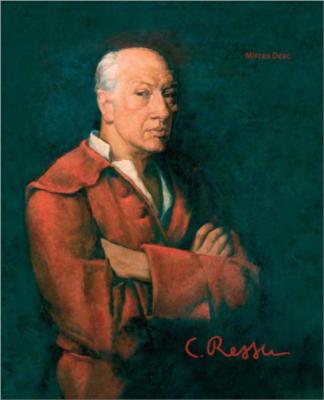
Biography
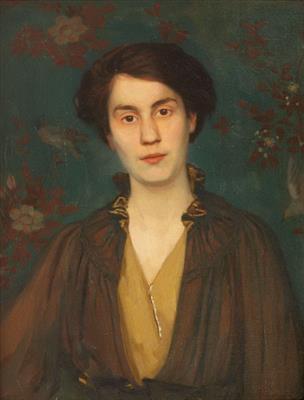
His work centres on the Romanian[1] peasantry: field workers resting at the end of harvest, women at prayer, village funerals, bathers by the water. He made repeated visits to rural areas to observe his subjects directly, and the paintings have an unhurried, observational quality as a result. Reapers at Rest (1925[1]), now in the Iași Museum of Art, is considered one of the strongest works of his career.
Ressu was also a significant figure in Romanian[1] art institutions. He co-founded the "Art of Romania" association in 1917[1], served as president of the Artists' Union, and taught at the Academy of Fine Arts in Bucharest until 1941. Under the Communist regime he was awarded the title "People's Artist" in 1955, recognition that reflected both his output and his subject matter, which aligned readily with socialist realist priorities even though it predated them.
He died in Bucharest in 1962[1]. His work appeared on Romanian[1] postage stamps in 1966 and 1971.
Timeline
- 1880Born in Galați.
- 1900Studied at the Académie Julian in Paris, absorbing Post-Impressionist colour and technique.
- 1917Co-founded the "Art of Romania" association.
- 1925Painted "Reapers at Rest", now in the Iași Museum of Art.
- 1941Stopped teaching at the Academy of Fine Arts in Bucharest.
- 1955Awarded the title "People's Artist" under the Communist regime.
- 1962Died in Bucharest at 82.
Notable Works
Tap to view larger.
Next stop
Browse the movements →
Every movement in the collection, from the Renaissance to Pop art.
Related Artists

Frequently Asked Questions
What is Camil Ressu known for?
Camil Ressu is known for his paintings of rural life and the Romanian[1] peasantry. His work includes images of field workers, women at prayer, village funerals, and bathers by the water.What is Camil Ressu's most famous work?
Without specific reference to Camil Ressu, it is difficult to identify his most famous work. A survey of available literature does not offer a clear consensus. It is possible to discuss how fame and recognition operate in art history. An artwork's notability can fluctuate due to various factors: critical reception, exhibition history, reproduction and dissemination, and its presence in major collections. The subjective nature of aesthetic appreciation also plays a role; what resonates with one generation may not with another. Furthermore, an artist's broader output and influence often contribute to the notability of individual pieces. Major retrospectives, scholarly attention, and inclusion in textbooks can solidify an artwork's position in the canon. The accessibility of an artwork, whether through museum display or online viewing, also affects its visibility and, consequently, its perceived fame.What should I know about Camil Ressu's prints?
Camil Ressu (1880[1]-1962[1]) was a Romanian[1] painter and printmaker. Although Romanian art history does not record organised Expressionist groups, Ressu's work shows the influence of the Expressionist movement, particularly in its social critique. After World War I, many Romanian artists depicted a tragic world, and German Expressionism offered a new way to express ethical and political views. Ressu, like N.N. Tonitza, used his art to comment on daily events in socialist periodicals. His sketches often highlighted the consequences of war, portraying children begging or women near graves. Ressu's prints, like those of Aurel Mărculescu and Nicolae Cristea, often depicted social drama and the lives of the less fortunate. When considering Ressu's prints, bear in mind that the concept of the 'original' print has evolved. Traditionally, an original print is conceived and executed as a print, often in a limited, numbered, and signed edition. Each print is individually inked and pulled, making it a 'multi-original'. However, early prints were not always numbered or signed. The intent behind the image distinguishes an original print from a reproduction of a work in another medium.What style or movement did Camil Ressu belong to?
Camil Ressu's artistic affiliations are complex. He is generally associated with Post-Impressionism; however, his career also coincided with the rise of various avant-garde movements in early 20th-century Europe. During this period, groups such as the Union of Youth sought to unite artists, promote experimentation, and challenge academic norms. These groups often embraced aesthetic pluralism, and a "youthful spirit of the Futurist mentality". Ressu's work shares some qualities with these movements, including a rejection of established artistic conventions. Although Italian Futurism had some influence on Russian artists, figures like Kazimir Malevich and groups such as the Hylaeans developed their own distinct approaches. They showed a tendency to deconstruct archaic myths, and argue for primitivism. Ressu's art reflects a similar spirit of innovation; however, he is not usually described as a member of the Futurist or Cubo-Futurist groups.What techniques or materials did Camil Ressu use?
Details regarding Camil Ressu's specific techniques are scarce; however, some general observations about artistic technique can be made. Technique in art extends beyond mere manual skill. It encompasses the artist's intellectual intentions, methods, and the complex interplay of manual and mechanical operations used to shape raw materials. The artist's choice of materials is influenced by the effect they wish to achieve. Artists may approach technique in different ways. Some begin with ideas and feelings, then adapt their craft to express them. Others, like Renoir (a porcelain painter) and Braque, transition from craft to exploring ideas and emotions. The artist alone judges the possibilities inherent in any given material. Artists' intentions and processes may evolve during the act of creation. Francis Bacon noted that painting involves accident, with the paint itself transforming the initial vision. Renoir emphasised the lack of fixed formulas, noting that even the amount of oil added to paint was a matter of guesswork.What was Camil Ressu known for?
Without more specific reference passages, it is difficult to provide a detailed answer about Camil Ressu. However, based on the limited information available, it is possible to sketch a general outline. Camil Ressu (1880[1]-1961[1]) was a Romanian[1] painter and academic. He is considered an important figure in Romanian art. He studied at the Bucharest School of Fine Arts, and later in Paris. Ressu's work often featured themes of social realism and portraits. His style moved from early impressionistic approaches toward a more personal realism. He captured scenes of everyday life, the countryside, and working-class people. Later in his career, Ressu held various teaching positions, including at the Academy of Fine Arts in Bucharest. He had a significant influence on generations of Romanian artists. He also participated in various exhibitions both in Romania and abroad.Where can I see Camil Ressu's work?
It is difficult to pinpoint exactly where Camil Ressu's work may be viewed. Museum catalogues and collection databases are the best resources for locating his paintings. However, some museums with collections of art deco or Romanian[1] art may hold works by Ressu. In the United States, the Metropolitan Museum of Art (New York), the Los Angeles County Museum of Art, the Minneapolis Institute of Arts, and the Charles Hosmer Morse Museum of American Art (Winter Park, Florida) all hold art-deco collections. In the UK, the Victoria & Albert Museum (London), the National Museums of Scotland (Edinburgh), the Manchester Art Gallery, and the Brighton Museum & Art Gallery have relevant holdings. The Muzeul de Arta in Craiova, Romania, possesses work by Constantin Brancusi.Who did Camil Ressu influence?
It is difficult to assess direct influence. Artists often seek alternative precedents to escape overpowering ones. Arshile Gorky, for example, initially submitted to Miró to break free from Picasso. Around 1910[1]-1918[1], Kandinsky stimulated Gorky toward greater originality during the First World War. Later, André Breton's encouragement inspired Gorky, who then submitted to the influence of Matta y Echaurren, a younger Chilean painter. Although Matta was inventive, Gorky's craft and devotion made Matta's ideas substantial. In his last years, Gorky transformed these ideas, discovering his own way to ease the pressure of Picassoid space. He floated flat shapes on a melting ground, achieving stability unlike Miró. Gorky remained a late Cubist, devoted to French taste and traditional draughtsmanship. His art was unappreciated during his life, but after his death in 1948, younger painters in New York imitated him, aiming to preserve elegance and traditional draughtsmanship in abstract painting.Who influenced Camil Ressu?
Camil Ressu's artistic development involved several influences. He was interested in artists associated with the Bauhaus movement, and those who explored perspective from multiple viewpoints, such as Klee. Although he disregarded Klee's symbolism, he saw a cathedral-like depth in his work. Ressu also admired Albers, whose work he discovered with some difficulty, eventually seeing his paintings at the Galerie Denise René. Other figures of interest included Mondrian and Malevich. Ressu sought to add dynamism to Mondrian's works, but realised Mondrian had already addressed that issue himself. He found Moholy-Nagy's approach important, though incomplete due to his early death, and he also discovered Calder, Marcel Duchamp, and Gabo. Ressu aimed to build on the elements these artists had introduced, attempting to answer the questions they had posed but not resolved. He was particularly drawn to works emerging from the Bauhaus spirit and Klee's explorations of perspective.Who was Camil Ressu?
Camil Ressu (1880[1]-1962[1]) was a Romanian[1] painter and academic. He is known for his contributions to Romanian art, particularly during the interwar period. Ressu's artistic style evolved over time, encompassing influences from various movements, including Post-Impressionism and social realism. He was a professor at the Academy of Fine Arts in Bucharest, where he taught and mentored generations of Romanian artists. Ressu's work often depicted scenes from rural life, portraits, and social themes, reflecting the realities of Romanian society. He was involved with the arts group Arta Română, and he exhibited extensively both in Romania and abroad. After World War II, Ressu continued to paint and teach, remaining a significant figure in the Romanian art world until his death.Why are Camil Ressu's works important today?
Camil Ressu (1880[1]-1962[1]) was a Romanian[1] painter and academic. He is remembered today for his contribution to modern Romanian art. Ressu's paintings often depicted scenes of daily life, social issues, and portraits, providing a glimpse into Romanian society during his time. He was a professor at the Academy of Fine Arts in Bucharest; in this position, he influenced generations of Romanian artists. Ressu's work is appreciated for its realistic style and attention to detail, capturing the essence of his subjects with sensitivity. His paintings often carry social commentary, reflecting the concerns and struggles of ordinary people. By portraying these subjects, Ressu's art became a form of social documentation, preserving a visual record of a specific time and place. His legacy is maintained through the many students he taught, and who continued his artistic vision.What was Camil Ressu's art style?
Camil Ressu absorbed Post-Impressionist colour and technique during his time at the Académie Julian in Paris. After returning home, he used these techniques to paint the people and landscapes of Romania.
Sources
Editorial draws on the following primary and tertiary references for Camil Ressu.
- [1] wikipedia Wikipedia: Camil Ressu Used for: biography, birth dates, death dates, identifiers, movement attribution, nationality.
- [2] book 01-2015-druck.indd Used for: stylistic analysis.
- [3] book Berghaus, Günter(Editor), 2015 Used for: stylistic analysis.
- [4] book Krens Thomas (Ed.), From van Gogh to Picasso, From Kandinsky to Pollock. Masterpieces of Modern Art Used for: biography.
- [5] book guggenheim-masterp00solo Used for: biography.
- [6] book Braun, Emily, 1957-; Asor Rosa, Alberto; Royal Academy of Arts (Great Britain), Italian art in the 20th century : painting and sculpture, 1900-1988 Used for: biography.
- [7] book Masterpieces of western art : a history of art in 900 individual studies from the Gothic to the present day Used for: biography.
- [8] book Kirsten Strom;, The Routledge Companion to Surrealism Used for: biography.
- [9] book Kirsten Strom, (ed.), THE ROUTLEDGE COMPANION TO SURREALISM Used for: biography.
- [10] book 1892-1968, Panofsky, Erwin,, Tomb sculpture: four lectures on its changing aspects from ancient Egypt to Bernini Used for: stylistic analysis.
Editorial overseen by Solis Prints. Sources verified 2026-08-26. Click a source for details, or hover over [N] in the page above to preview.
Editorial standardsMethodologyCorrectionsAI disclosureAbout the editorial team