



Boris Bućan
In 1972[1], Boris Bućan painted fifty canvases in which he took the logos of Coca-Cola, IBM, Swissair, and BMW and replaced each company name with the single word "art." The series was a provocation: a young Zagreb painter staking a claim on the visual language of commercial capitalism and asserting that the distinction between branding and art was thinner than either side wanted to admit.
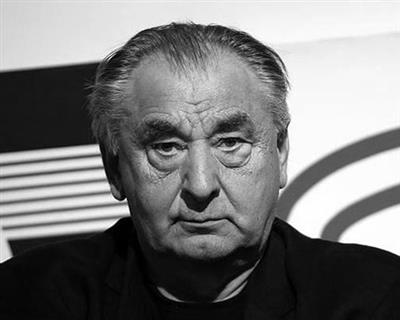
Biography
Bućan studied at the Academy of Visual Arts in Zagreb, graduating in painting in 1972[1] (the same year as the logo paintings), and became associated with the New Art Practice movement, a generation of Yugoslav artists working in conceptual and post-conceptual modes during the 1970s. He developed parallel careers as a painter and graphic designer, producing posters for theatres, galleries, and cultural institutions across Croatia. His 1983 poster for Stravinsky's Firebird, made for the Croatian[1] National Theater in Split, became perhaps his best-known single work.
In 1984[1], he represented Yugoslavia at the Venice Biennale with a series of theatre posters. Over the following decades he accumulated more than 70 solo exhibitions and participated in over 150 group shows internationally. His work entered the collections of the Victoria and Albert Museum, the Cooper-Hewitt Museum, and the German Poster Museum. In 2006, the Croatian[1] Designers Society awarded him a Lifetime Achievement Award.
Timeline
- 1947Born in Croatia.
- 1972Graduated in painting from the Academy of Visual Arts in Zagreb.
- 1972Painted fifty canvases repurposing logos of Coca-Cola, IBM, Swissair, and BMW, replacing the names with the word "art".
- 1972Became associated with the New Art Practice movement.
- 1983Created a poster for Stravinsky's "Firebird" for the Croatian National Theater in Split.
- 1984Represented Yugoslavia at the Venice Biennale with a series of theatre posters.
- 2006Awarded a Lifetime Achievement Award by the Croatian Designers Society.
Notable Works
Tap to view larger.
Next stop
Browse the movements →
Every movement in the collection, from the Renaissance to Pop art.
Related Artists
Frequently Asked Questions
What is Boris Bućan known for?
Boris Bućan is known for his paintings and graphic design, especially his posters. His 1983[1] poster for Stravinsky's Firebird is perhaps his best-known work. In 1984, he represented Yugoslavia at the Venice Biennale with a series of theatre posters.What is Boris Bućan's most famous work?
It is difficult to name one single work as Boris Bućan's 'most famous'. He is best known for his graphic design work, including posters. These achieved international recognition and awards during the 1970s and 1980s. Bućan gained attention for his distinctive approach to poster design, often using bold colours and simplified forms. His style moved away from traditional poster design. He incorporated elements of painting and sculpture. This earned him a reputation as an innovator in the field. His posters frequently promoted theatre productions, exhibitions, and cultural events. They are recognised for their artistic merit as well as their communicative function. Without specific examples cited in the reference passages, it's hard to identify one definitive, famous work.What should I know about Boris Bućan's prints?
Boris Bućan's prints are considered original prints, meaning that the image was conceived as a print and executed solely as a print. Each print in the edition is an original, printed from a plate, stone, screen or other matrix created for that purpose. There is no single original print from which copies are made; instead, each print is individually inked and pulled. The artist decides the number of prints in the edition, and each print is given a number (for example, 12/25, meaning it is the 12th print in an edition of 25). When buying prints, it is important to know the difference between an original print and a reproduction. A reproduction is a copy of an artwork conceived in another medium (for example, painting or watercolour) and made by photochemical means. Numbering and signing a reproduction does not make it an original print. The intent of the artist is what distinguishes an original print from a reproduction. If the intent is to replicate an image best created as a drawing or painting, the result is a reproduction, regardless of the technique used.What style or movement did Boris Bućan belong to?
It is difficult to assign Boris Bućan to one specific style. Styles emerge across time, and a displacement of these styles would not change the artistic value of what was produced during their dominance. There are many styles in art history, and infinitely more styles peculiar to each work outside the general style of the time. Style is the manner by which a work of art has been created. People perceive everything from the point of view of the style of their age; although artistic truths pass through the style of their age, they are independent of it. Any style, the moment it appears, is always as incomprehensible as the style of a remote age. A new style is always first created in art, since all previous styles and life are refracted through it.What techniques or materials did Boris Bućan use?
An artist's technique is a mysterious tool for attaining art. Human-created fakturas stand in opposition to natural ones; they include houses, streets, and pictures. Everything humans make belongs to the worlds of technique and art. These two infinite worlds need one another. Valuable art can arise from poor technologies; rich technical means may struggle to express elements of art. Technique is always a factor in the creation of faktura. When humans relate to material with spirit, senses, and reason develop. This is the technique of thinking. It includes resourcefulness, the ability to utilise means, to foresee effects, a feeling for compatibility, and school. Artists are not always confined by the medium in which they work. Choices stand outside the constraints of materials and techniques. Understanding the processes used by artists is essential. The interface between the qualities of medium and technique and the aesthetic decisions made by the artist must be understood.What was Boris Bućan known for?
Boris Bućan (1947[1]-2023[1]) was a Croatian[1] painter and graphic designer. He is best known for his large-scale public posters and his contributions to the New Art Practice movement in Yugoslavia during the 1970s and 1980s. Bućan studied painting and graphic arts at the Academy of Fine Arts in Zagreb, graduating in 1972[1]. His early work included paintings and drawings, but he soon turned to poster design. He gained international recognition for his innovative approach to the medium, using bold colours, simple imagery, and hand-drawn typography. His posters often promoted cultural events, such as theatre productions, concerts, and exhibitions. He designed posters for the Croatian National Theatre, the Zagreb Youth Theatre, and the Museum of Contemporary Art in Zagreb, among others. Bućan's designs frequently incorporated elements of pop art and surrealism. In addition to his poster work, Bućan also created large-scale murals and public installations. He represented Croatia at the Venice Biennale in 1984. His work is held in the collections of major museums around the world.When did Boris Bućan live and work?
Boris Bućan (1947[1]-2023[1]) was a Croatian[1] painter and graphic designer. He was born in Zagreb, where he also died. Bućan studied painting at the Academy of Fine Arts in Zagreb, graduating in 1972[1]. He gained recognition during the 1980s for his large-scale public posters. These works often used bold colours and simple imagery. His designs were seen on the streets of Zagreb and other cities. Bućan represented Croatia at the 1984 Venice Biennale. During the 1990s, he began to focus more on painting. His paintings often incorporated elements of his earlier poster designs. He had solo exhibitions in Zagreb, as well as internationally. His work is held in various museum collections. Bućan also worked in stage design.Where can I see Boris Bućan's work?
Boris Bućan's art has been exhibited in various locations, primarily in Europe. His work is held in several public collections. In Croatia, his posters and other pieces are in the collection of the Museum of Arts and Crafts (Muzej za umjetnost i obrt) in Zagreb. The museum's holdings include a range of his graphic designs, offering insight into his career. Internationally, Bućan's art has been displayed in group and solo exhibitions. These include shows in France, such as his 1991[1] exhibition at the Musée de la Publicité in Paris. His work has also been part of exhibitions in other European cities, including shows in Brno, Warsaw, and Chaumont. These exhibitions provide opportunities to view selections of his work outside Croatia. While specific pieces may rotate in and out of display, these institutions and exhibition locations offer the most consistent access to Bućan's artistic output. Checking museum websites or exhibition listings for current displays is advisable.Who did Boris Bućan influence?
Boris Bućan's work in graphic design and poster art has had a notable effect on subsequent generations of artists. His bold use of colour, simplified forms, and incorporation of photographic elements have been particularly influential. Bućan's influence is evident in the work of younger Croatian[1] designers who have adopted his approach to visual communication. His distinctive style, which blends aspects of Pop Art with a unique sensibility, has been emulated by those seeking to create impactful and memorable imagery. Furthermore, Bućan's experimentation with large-scale public art, such as his interventions in urban spaces, has inspired artists to explore new ways of engaging with audiences outside traditional gallery settings. His example encouraged a move towards accessible and democratic art forms. Bućan's impact can be seen in the increasing number of artists who create site-specific installations and public murals. He demonstrated the potential for art to transform and animate everyday environments.Who influenced Boris Bućan?
It is difficult to identify specific influences on Boris Bućan from the passages provided. One passage mentions Josef Manes, Mikulas Ales, Rembrandt, and Vincent van Gogh as influences on other artists. Manes, a Czech artist, stressed the validity of Czech culture in his art. His work contains romantic symbolism, melodical lines, and a poetic interpretation of nature. Manes's illustrations, especially those in "Manuscripts", were treasured by some artists, and his photograph was displayed in studios. Ales, a follower of Manes, created monumental frescoes and sought inspiration in folk art. Rembrandt's drawings, with their emotional force and psychological depth, were influential to some. Van Gogh's ink drawings taught artists about expressing three-dimensional quality through lines. One artist stated that they were influenced by Surrealism, Francis Bacon, Hieronymus Bosch, Michelangelo, Baroque artists, and especially Pablo Picasso. They also cited Robert Rauschenberg, Jasper Johns, Cy Twombly, Joseph Beuys, Cubism, Piet Mondrian, and Paul Klee as influences.Who was Boris Bućan?
Boris Bućan (1947[1]-2023[1]) was a Croatian[1] graphic designer and painter. He is best known for his poster designs, which gained international recognition during the 1980s. Bućan studied painting and graphic arts at the Academy of Fine Arts in Zagreb, Croatia. He began his career as a freelance designer, producing posters for cultural events, theatre productions, and exhibitions. His work often incorporated bold colours, simple shapes, and striking typography. Bućan's posters were characterised by their directness and visual impact. His designs challenged conventional poster aesthetics. He moved away from complex imagery, favouring a more minimalist approach. This style proved influential in Croatian graphic design. Bućan's work has been exhibited widely, including at the Museum of Modern Art in New York, and the Victoria and Albert Museum in London. He received numerous awards for his contributions to graphic design and visual communication. Beyond posters, Bućan also worked in painting and set design, exploring similar themes of colour and form. He is considered one of Croatia's most important contemporary artists.Why are Boris Bućan's works important today?
Boris Bućan's works remain important because they engage with artistic and social issues that persist. His practice avoids easy categorisation, incorporating performative elements and environmental structures. Some view Bućan's approach as part of a continuing effort to discover alternatives to Western traditions. Early 20th-century movements like Futurism confronted obstacles in superseding conventional representation. While technical challenges were met, dialogue with artistic heritage proved more difficult. Futurists aimed to communicate powerfully, attacking academic standbys, and testing the interaction of objects with their surroundings. The Hugo Boss Prize, for example, identifies artists who redefine cultural production, looking for innovation and influence. The prize recognises a concern with social space and value systems.
Sources
Editorial draws on the following primary and tertiary references for Boris Bućan.
- [1] wikipedia Wikipedia: Boris Bućan Used for: biography, birth dates, death dates, identifiers, movement attribution, nationality.
- [2] book guggenheim-refigur00kren Used for: biography.
- [3] book Masterpieces of western art : a history of art in 900 individual studies from the Gothic to the present day Used for: biography.
Editorial overseen by Solis Prints. Sources verified 2026-08-26. Click a source for details, or hover over [N] in the page above to preview.
Editorial standardsMethodologyCorrectionsAI disclosureAbout the editorial team