



Ayse Erkmen
For Skulptur Projekte Münster in 2017, Ayşe Erkmen submerged a series of shipping containers in the Aasee canal to create a walkway just centimetres below the water's surface. Visitors crossed from one bank to the other with water lapping over their feet. The work, titled "On Water," reduced a theatrical premise to a matter of physics and nerve.
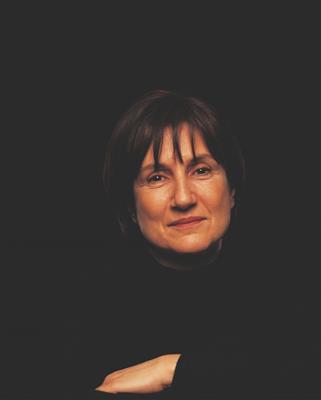
Biography
Born in Istanbul in 1949[1], Erkmen studied sculpture at the Academy of Fine Arts there, graduating in 1977 under Sadi Çalık. A DAAD residency brought her to Berlin in 1993, and she has since divided her practice between the two cities. She held the Arnold Bode Professorship at Kassel Art Academy from 1998 to 1999 and lectured at the Kunstakademie Münster from 2000 to 2015.
Her practice resists easy categorisation: she works with walls, floors, doors, and windows, attending to the spatial logic and social history of buildings rather than inserting objects into them. At the 54th Venice Biennale in 2011 she represented Turkey with "Plan B," a network of coloured pipes configured as a functioning water purification unit. She received the Maria Sibylla Merian Prize in 2002 and has been a member of the Akademie der Künste in Berlin since 2012.
Timeline
- 1949Born in Istanbul.
- 1977Graduated from the Academy of Fine Arts in Istanbul, where she studied sculpture under Sadi Çalık.
- 1993Began a DAAD residency in Berlin.
- 1998Held the Arnold Bode Professorship at Kassel Art Academy until 1999.
- 2000Lectured at the Kunstakademie Münster until 2015.
- 2002Received the Maria Sibylla Merian Prize.
- 2011Represented Turkey at the 54th Venice Biennale with "Plan B", a water purification unit.
- 2012Became a member of the Akademie der Künste in Berlin.
- 2017Created "On Water" for Skulptur Projekte Münster, submerging shipping containers in the Aasee canal.
Notable Works
Tap to view larger.
Next stop
Browse the movements →
Every movement in the collection, from the Renaissance to Pop art.
Related Artists



Frequently Asked Questions
What is Ayse Erkmen known for?
Ayşe Erkmen is known for her sculptural installations that engage with the spatial logic and social history of buildings. Her work often involves transforming everyday objects and spaces, as seen in "On Water," where she submerged shipping containers to create a walkway.What is Ayse Erkmen's most famous work?
It is difficult to name Ayse Erkmen's single most famous work. She has worked across a range of media and formats, including sculpture, installation, and site-specific art. Her work often engages with the architectural or social context of a place, altering the viewer's perception. She represented Turkey at the Venice Biennale in 2011, with a work titled 'Plan B'. This installation involved a water filtration system that drew water from the Arsenale canal, purified it, and then returned it to the canal. This project is characteristic of her interest in making invisible processes visible and commenting on environmental issues. Other notable projects include 'Shipped Ships' (2001) in which she had cargo ships painted in bright colours, and 'Katzbuckel' (2004), a temporary intervention on a bridge in Germany.What should I know about Ayse Erkmen's prints?
Ayse Erkmen is a Turkish[1] artist known for site-specific installations and interventions in public spaces. She represented Turkey at the Venice Biennale in 2011. While Erkmen is best known for sculpture, she has also produced prints that relate to her larger projects. Erkmen's prints often function as extensions of her spatial investigations. They share conceptual links with her installations, exploring themes of space, perception, and the relationship between the viewer and the environment. These prints are not mere reproductions; they are artworks in their own right. Many of Erkmen's prints use simple geometric forms and a limited colour palette. This minimalist aesthetic reflects her interest in clarity and precision. The prints often incorporate elements of chance and randomness, mirroring the unpredictable nature of public space. Her work encourages viewers to reconsider their surroundings and to engage with art in unexpected ways.What style or movement did Ayse Erkmen belong to?
Without further context, it is difficult to assign Ayse Erkmen to a specific art movement. Her practice involves site-specific installations, often engaging with the architectural and social context of a place. This approach aligns with aspects of conceptual art, which prioritises ideas and context over traditional aesthetics. Some of her work also relates to relational aesthetics, which focuses on social interactions and the relationships formed through art. However, Erkmen's diverse body of work resists easy categorisation. Her projects frequently incorporate elements of playfulness and experimentation, making it challenging to confine her to a single movement. Further research into specific projects would be needed to analyse her work in relation to particular movements.What techniques or materials did Ayse Erkmen use?
Ayse Erkmen is known for site-specific installations and sculptural interventions in public spaces. Her practice often involves the use of everyday materials and found objects, transforming their original context and function. Erkmen frequently employs architectural elements, such as walls, windows, and pipes, manipulating them to create new spatial relationships and challenge perceptions of the built environment. She also works with industrial materials like steel, concrete, and glass, often juxtaposing them with natural elements such as water or light. Many of Erkmen's projects incorporate movement and sound, engaging viewers in a sensory experience that goes beyond the visual. She has used flowing water, recorded voices, and mechanical devices to activate her installations and create a dynamic interplay between the artwork and its surroundings. Her methods are often temporary, responding to the specific characteristics of a location, and invite interaction.What was Ayse Erkmen known for?
Ayse Erkmen is a Turkish[1] artist known for site-specific installations and interventions in public spaces. Born in 1949[1] in Istanbul, she studied sculpture before developing a practice that often engages with architecture and the environment. Erkmen's work frequently involves transforming or reinterpreting existing structures. These temporary installations often encourage viewers to reconsider their relationship with the surrounding space. Examples include suspending brightly coloured objects in buildings or altering the flow of water in public fountains. She represented Turkey at the Venice Biennale in 2011 with "Plan B", an installation that repurposed a former Arsenale warehouse. The work involved a water filtration system that cleaned water from the Venice lagoon, making it drinkable. This project typifies Erkmen's interest in blending art with practical functionality and social commentary. Erkmen has taught at art institutions internationally, including the Städelschule in Frankfurt. Her projects are often temporary, existing for the duration of an exhibition. They leave a conceptual mark on the location. Her art explores themes of perception, adaptation, and the interplay between art and everyday life.When did Ayse Erkmen live and work?
Ayşe Erkmen is a Turkish[1] artist who was born in 1949[1] in Istanbul. She continues to live and work there. Erkmen studied sculpture at Marmara University, Istanbul, graduating in 1972. She then pursued postgraduate studies at the same institution, completing them in 1976. Early in her career, she was part of a group of artists who moved away from traditional sculpture. They instead explored more conceptual and installation-based approaches to art making. Erkmen has held teaching positions at various institutions. These include the Hochschule der Künste in Berlin and the Städelschule in Frankfurt. Her work has been exhibited internationally since the 1980s. She represented Turkey at the Venice Biennale in 2011, presenting a site-specific installation that engaged with the architecture of the Arsenale. Erkmen's practice often involves interventions in public spaces, using everyday materials and simple gestures to transform the viewer's experience of the environment. Her art explores themes of perception, space, and the relationship between the individual and their surroundings.Where can I see Ayse Erkmen's work?
Ayse Erkmen's artworks have been displayed in many museums internationally. These include the Beaux-Arts Museum of Arras; the Deutsches Historisches Museum, Berlin; the Kunsthaus Zurich; and the MAK (Österreichisches Museum für Angewandte Kunst), Vienna. In the United States, Erkmen's pieces have been exhibited at the High Museum, Atlanta; the J. Paul Getty Museum, Los Angeles; the Los Angeles County Museum of Art (LACMA); the Museum of Fine Arts, Boston; the Art Institute of Chicago; and the Field Museum, Chicago. Her art has also been seen at the Rijksmuseum, Amsterdam; the National Museum of Scotland, Edinburgh; and the Victoria & Albert Museum, London. Other museums that have displayed her work are the Musée des Arts Décoratifs, Paris; the Musée des Confluences, Lyon; the Museo Egizio, Turin; and the Vikingskipshuset på Bygdøy (Viking Ship Museum), Oslo.Where was Ayse Erkmen from?
Ayse Erkmen is from Turkey. Growing up there, she later studied art in France. This combination of Turkish[1] and European influences is a noted aspect of her approach to artmaking. Erkmen's artistic development led her to mix Turkish and European styles. She created large artworks and abstract paintings. Her father held a job in the Turkish government, but he found time to enjoy the arts and literature and encouraged his children to do the same. She was often found painting as a child and went to art school when she was old enough. She married at the age of nineteen and the couple honeymooned in Venice, where she visited galleries and fell in love with the Baroque and other European art styles. She returned to Europe in 1928 to study painting in Paris, France.Who did Ayse Erkmen influence?
It is difficult to identify specific individuals who were directly influenced by Ayse Erkmen (born 1949[1]). Influence is often subtle and difficult to trace definitively. Erkmen's work, however, has had an impact on contemporary sculpture and installation art since the 1990s. Her site-specific installations often transform everyday spaces through subtle interventions, altering perceptions of familiar environments. This approach has resonated with many artists interested in similar themes of spatial awareness and audience engagement. Her use of industrial materials and found objects, combined with an interest in the social and political contexts of her sites, has parallels in the work of other contemporary artists who explore similar themes. Erkmen's international exhibitions and teaching positions have further exposed her ideas to a wide audience, contributing to broader conversations within the art world about space, perception, and the role of the artist in public life. While direct lines of influence may be hard to establish, her contribution to contemporary art is clear.Who was Ayse Erkmen?
Ayse Erkmen is a Turkish[1] artist known for site-specific installations and sculptural works. Born in 1949[1] in Istanbul, she studied sculpture at Marmara University, also in Istanbul, before beginning her career. Erkmen's practice often involves transforming everyday spaces through subtle interventions. She frequently uses ordinary materials, such as water, light, and textiles, to create new sensory experiences. Her work explores themes of cultural exchange, communication, and the relationship between the individual and their environment. Some of Erkmen's notable projects include "Shipped Stones" (2007), for which she transported stones from Turkey to Germany, and "Plan B" (2005), an installation in a former synagogue in Germany. She represented Turkey at the Venice Biennale in 2011 with "Planetary Motion, den Haag". Erkmen has taught at various institutions, including the Academy of Fine Arts Münster. Her work has been exhibited internationally in museums and galleries.Why are Ayse Erkmen's works important today?
Ayse Erkmen is a Turkish[1] artist known for site-specific installations and sculptural interventions in public spaces. Born in Istanbul, she has exhibited internationally since the 1970s. Erkmen's works often engage with the architectural, social, and historical contexts of their locations. She alters or reconfigures existing structures, prompting viewers to reconsider their relationship to the surrounding environment. These interventions can be temporary or permanent, often using simple materials to create significant perceptual shifts. Her art explores themes of perception, space, and cultural identity. By subtly transforming familiar settings, Erkmen encourages a fresh awareness of overlooked details and ingrained assumptions. This approach invites interaction and reflection, challenging conventional modes of seeing and experiencing the world. Her practice is relevant because of its focus on the intersection of art, architecture, and everyday life.
Sources
Editorial draws on the following primary and tertiary references for Ayse Erkmen.
- [1] wikipedia Wikipedia: Ayse Erkmen Used for: biography, birth dates, death dates, identifiers, movement attribution, nationality.
- [2] book guggenheim-refigur00kren Used for: biography.
- [3] book Erwin Panofsky, The Codex Huygens And Leonardo Da Vinci's Art Theory Used for: biography, stylistic analysis.
Editorial overseen by Solis Prints. Sources verified 2026-10-07. Click a source for details, or hover over [N] in the page above to preview.
Editorial standardsMethodologyCorrectionsAI disclosureAbout the editorial team