



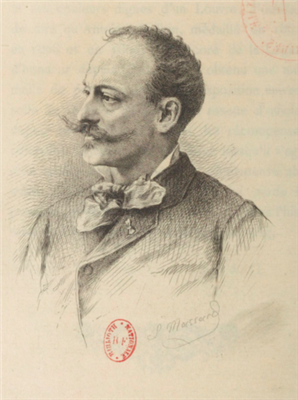
Biography
Solis Prints offers fine art prints of his work, including Alyosha Popovich, A Merchant's Family in the Seventeenth Century, A Young Man Breaking into the Girls Dance, and the Old Women are in Panic, Deacon, and Dobrynya Nikitich.
Timeline
- 1861Born in Tambov province to a family of icon painters.
- 1875Orphaned at 14. His talent was recognised by an Academy instructor.
- 1880His painting "Peasant Wedding" was purchased by Pavel Tretyakov while Ryabushkin was still a student.
- 1890Exhibited with the Itinerants.
- 1892Exhibited with the Itinerants.
- 1894Exhibited with the Itinerants.
- 1895Painted "Seventeenth-Century Moscow Street on a Public Holiday".
- 1897Began working on 24 mosaics for the Church of the Savior on Blood in St Petersburg.
- 1900Completed 24 mosaics for the Church of the Savior on Blood in St Petersburg.
- 1901Painted "Wedding Train in 17th Century Moscow".
- 1904Died of tuberculosis at his studio in Didvino in May, aged 42.
Notable Works
Tap to view larger.
Next stop
Browse the movements →
Every movement in the collection, from the Renaissance to Pop art.
Andrei Ryabushkin prints
Hand-finished archival prints from Andrei Ryabushkin's body of work.
 Waiting for Newlyweds from the Wedding in the Novgorod Province - Andrei Ryabushkin
From £37.00
Waiting for Newlyweds from the Wedding in the Novgorod Province - Andrei Ryabushkin
From £37.00
 A Merchant's Family in the Seventeenth Century - Andrei Ryabushkin
From £28.00
A Merchant's Family in the Seventeenth Century - Andrei Ryabushkin
From £28.00
 Alyosha Popovich - Andrei Ryabushkin
From £28.00
Alyosha Popovich - Andrei Ryabushkin
From £28.00
 A Young Man Breaking into the Girls Dance, and the Old Women are in Panic - Andrei Ryabushkin
From £28.00
A Young Man Breaking into the Girls Dance, and the Old Women are in Panic - Andrei Ryabushkin
From £28.00
 Woman in Novgorod Peasant Dress - Andrei Ryabushkin
From £28.00
Woman in Novgorod Peasant Dress - Andrei Ryabushkin
From £28.00
 Tea Party - Andrei Ryabushkin
From £28.00
Tea Party - Andrei Ryabushkin
From £28.00
Related Artists

Take Andrei Ryabushkin home.
See all Andrei Ryabushkin prints →Frequently Asked Questions
What is Andrei Ryabushkin known for?
Andrei Ryabushkin is known for his paintings of everyday life in 17th-century Muscovite Russia, which he reconstructed with an ethnographer's care. Examples of these paintings include "Seventeenth-Century Moscow Street on a Public Holiday" and "Wedding Train in 17th Century Moscow".What is Andrei Ryabushkin's most famous work?
It is difficult to identify Andrei Ryabushkin's single most famous work, as different sources may emphasise different paintings based on varying criteria. However, a review of available indices suggests several possibilities. Ryabushkin was a Russian[1] painter associated with the Symbolist movement. He is known for historical paintings of 17th-century Russia, often depicting scenes from everyday life. His subject matter included religious processions and peasant weddings. Some of his better-known works include 'Boyarina Morozova', 'The Family of a Merchant in the 17th Century', and 'Awaiting the Bridegroom'. These paintings offer insights into Russian culture and history. Ryabushkin's art provides a view into Russia's past. His dedication to historical accuracy and his skill in portraying human emotions are evident in his work.What style or movement did Andrei Ryabushkin belong to?
Andrei Ryabushkin (1861[1]-1904[1]) worked in the late-Imperial Russian[1] period, when artists explored national identity. He is associated with the Peredvizhniki (also known as the Wanderers or Itinerants), a Realist movement that formed in protest against the academic restrictions of the Saint Petersburg Academy of Arts. The Peredvizhniki sought to depict Russian life and history accurately, often focusing on the peasantry and social issues. They organised travelling exhibitions to reach a wider audience outside the major cities, hence the name "Wanderers". Ryabushkin's paintings often portrayed scenes from 17th-century Russia, with attention to historical detail and everyday life. His style combined Realism with elements of historical genre painting. He aimed to capture the spirit and atmosphere of the past, rather than idealising it. Although his career was cut short by tuberculosis, Ryabushkin left behind a body of work that provides insight into Russian history and the artistic currents of his time.What was Andrei Ryabushkin known for?
Andrei Ryabushkin (1861[1]-1904[1]) was a Russian[1] painter. He is best known for historical paintings of 17th-century Russia. His works often depicted scenes from everyday life, religious festivals, and important historical events. Ryabushkin studied at the Moscow School of Painting, Sculpture and Architecture, and later at the Imperial Academy of Arts in Saint Petersburg. Early in his career, he considered history painting[1] rather dull. Later, under the influence of Viktor Vasnetsov, he became interested in Russian history and folklore. He aimed to capture the spirit and atmosphere of the past in his art. Ryabushkin's paintings are characterised by their attention to detail, realistic figures, and use of colour to create a sense of atmosphere. His notable works include "A Moscow Street in the 17th Century" and "The Wedding Train in Moscow".When did Andrei Ryabushkin live and work?
Andrei Petrovich Ryabushkin was born on 29 October 1861[1] and died on 10 May 1904[1]. He was a Russian[1] painter, best known for his historical paintings of 17th-century Russia. Ryabushkin was born in the Tambov Governorate, in a village near Lebedyan. His father and older brother were icon painters, and Andrei received his first art lessons from them. He enrolled at the Moscow School of Painting, Sculpture and Architecture in 1875[1]. There, he studied under Vasily Perov and Illarion Pryanishnikov. In 1882, he continued his studies at the St Petersburg Academy of Arts, where he was a student of Pavel Chistyakov. Ryabushkin travelled extensively throughout Russia, studying Russian history and culture. He joined the Peredvizhniki group (also known as the Wanderers), who aimed to depict Russian life realistically and critically. Ryabushkin's works often focused on scenes from everyday life, as well as historical events. He is noted for his attention to detail and his ability to capture the atmosphere of the past.Where can I see Andrei Ryabushkin's work?
Andrei Ryabushkin's work can be viewed in several museums. The Vyatka Art Museum holds one of the most complete avant-garde collections of any regional museum. This includes works by Burliuk, Goncharova, Drevin, Kandinsky, and Larionov. The Samara Regional Art Museum also possesses a collection of avant-garde works. These were nearly destroyed in 1953, when a commission from Moscow identified around 400 works as "low-value, non-artistic works" that were deemed fit for liquidation. The State Historical Museum is another place to view art. Nikolai Likhachev assembled one of the largest private collections of Byzantine and Russian[1] icons in Europe in the late 1880s and early 1890s. This collection may now be part of the State Historical Museum. Other museums that may hold work by Ryabushkin include the All-Russian Museum of Decorative and Folk Art in Moscow, the Astrakhan Kustodiev Picture Gallery, and the Irkutsk Regional Art Museum.Who did Andrei Ryabushkin influence?
It is difficult to identify specific artists directly influenced by Andrei Ryabushkin. However, the general climate of the Russian[1] art world at the turn of the century can be described. Scholars such as Dmitrii Ainalov, Egor Redin, Dmitrii Trenev, and Alexander Uspenskii took an interest in Russia's medieval artistic heritage. Their studies indirectly stimulated public and private collections of Byzantine and medieval Russian art. The intersection of old and new art was a striking feature of the time. At a congress, reports on archaeological excavations and restoration initiatives were presented alongside manifestos on contemporary painting practices. Ainalov identified two major trends: society's interest in artistic antiquity and the passionate presentation of novel forms in modern art. Artists such as Liubov Popova, Alexander Rodchenko, and Vladimir Tatlin were influenced by Mikhail Vrubel. Vrubel's art freed painting and sculpture from academic schemata. His influence on visual consciousness was as decisive as Cézanne's. Vrubel's "broken" composition, divided into geometric patterns, and his conscious use of texture produced a "constructive" effect.Who influenced Andrei Ryabushkin?
Andrei Ryabushkin (1861[1]-1904[1]) lived during a time of considerable artistic change in Russia. He would have been exposed to many styles and movements. One potential influence is Valentin Serov (1865[1]-1911[1]). Another is Mikhail Larionov; his Rayism appeared around 1912. Larionov himself pointed to the "rudiments of Rayism" in earlier art. He cited Mikhail Vrubel's late paintings and drawings (such as *Six-Winged Seraph*, 1904, and *Prophets*, 1903-4). Nikolai Tarabukin said that N. A. Prakhov possessed a pencil drawing of a male nude that looked "Rayist". A number of these drawings by Vrubel' are in the collection of the State Russian[1] Museum in St. Petersburg. Pavel Mansurov linked the emergence of Rayism to Vrubel' even more directly. In 1899, Vrubel' invited students from the School of Painting, Sculpture, and Architecture to assist with his ceramic panel for the Hotel Metropol' in Moscow. Larionov was among them, working under Vrubel' for about two weeks. Mansurov noted that the backgrounds in Vrubel's paintings resembled "frost-covered windows".Why are Andrei Ryabushkin's works important today?
Andrei Ryabushkin (1861[1]-1904[1]) is significant because his paintings offer insight into a period when Russian[1] art historians and intellectuals began re-evaluating the Russo-Byzantine tradition. Figures such as Nikolai Kondakov approached medieval Russian art as relics, not as agents of cultural change. Kondakov saw Byzantine art, not as a unique national style, but as a continuation of Hellenistic forms. He considered both Russian icon painting and the Italian Renaissance as branches of the same Byzantine artistic tree. However, a younger generation, including Nikolai Punin and Igor Grabar, viewed the past with an eye towards shaping the future of Russian art. They aimed to integrate the work of researchers with that of theorists. This contrasted with Kondakov, who, despite his influence, disliked the growing fashion for icons and dismissed those who collected them. Ryabushkin’s paintings, therefore, exist within this context of re-evaluation, between scholarly interest in the past and a desire to use that past to inform artistic innovation.How did Andrei Ryabushkin die?
Andrei Ryabushkin died in 1904[1] at the age of 43.
Sources
Editorial draws on the following primary and tertiary references for Andrei Ryabushkin.
- [1] wikipedia Wikipedia: Andrei Ryabushkin Used for: biography, birth dates, death dates, identifiers, movement attribution, nationality.
- [2] book J. E. Bowlt, Russian Art of the Avant Garde - Theory and Criticism 1902-1934 Used for: biography, stylistic analysis.
- [3] book edited and translated by John E. Bowlt, Russian Art of the Avant-Garde_ Theory and Criticism 1902-1934 (The Documents of 20th-Century Art) (English and Russian Edition) Used for: biography, stylistic analysis.
- [4] book Russian art of the avant-garde : theory and criticism, 1902-1934, with 105 illustrations Used for: biography, stylistic analysis.
- [5] book Peter. Leek, Russian Painting Used for: biography.
Editorial overseen by Solis Prints. Sources verified 2026-09-30. Click a source for details, or hover over [N] in the page above to preview.
Editorial standardsMethodologyCorrectionsAI disclosureAbout the editorial team