



Albert Julius Olsson
Albert Julius Olsson was largely self-taught, which makes his long tenure as President of the Royal Institute of Oil Painters, twenty-three years, from 1919[2] until his death in 1942[2], all the more notable. Born in Islington on 1 February 1864[2] to a Swedish father and English mother, he found his subjects on the water: his career was built on coastal seascapes and moonlit shores.
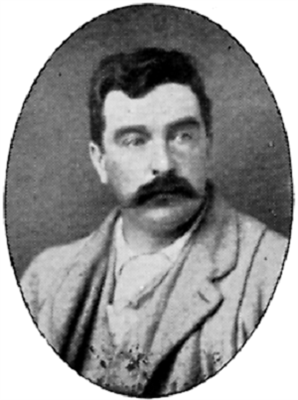
Biography
He arrived in St Ives around 1890[2] and spent two decades there teaching, alongside Louis Grier and Algernon Talmage. His students included Emily Carr and Hayley Lever, both of whom went on to significant careers. Despite having no formal training himself, he had a gift for observation and an understanding of shifting light and sea conditions that came partly from being an accomplished yachtsman.
His first submission to the Royal Academy was accepted in 1890[2], and he exhibited there almost every year until 1940. Moonlit Shore (1911), bought by the Chantry Bequest and now in the Tate collection, is perhaps the clearest statement of what he did best: dark water, reflected light, a sky at the edge of definition. He served as a lieutenant in the Royal Naval Volunteer Reserve during WWI and produced naval subjects during that period.
He married in 1925[2] and spent his later years sailing and painting along the coasts of Ireland and Sweden. He was elected Associate of the Royal Academy in 1914 and full Academician in 1920. He died on 7 September 1942[2] in Dalkey, near Dublin.
Timeline
- 1864Born in Islington, London on February 1st
- 1890Arrived in St Ives around this time
- 1890First submission to the Royal Academy was accepted
- 1911Moonlit Shore bought by the Chantry Bequest
- 1914Elected Associate of the Royal Academy
- 1914Served as a lieutenant in the Royal Naval Volunteer Reserve during WWI
- 1919Became President of the Royal Institute of Oil Painters
- 1920Elected full Academician of the Royal Academy
- 1925Married
- 1940Exhibited at the Royal Academy for the last time
- 1942Died in Dalkey, near Dublin on September 7th
Notable Works
Tap to view larger.
Where to See Albert Julius Olsson
1 museum worldwide.
-
1 works
Canadian War Museum
Ottawa, Canada
Mon–Wed, Fri–Sun 9:00–17:00, Thu 9:00–19:00 · $23 adults, $21 seniors, $18 students, $16 children, $62 family

Next stop
Browse the movements →
Every movement in the collection, from the Renaissance to Pop art.
Related Artists



Frequently Asked Questions
What is Albert Julius Olsson known for?
Albert Julius Olsson is best known for his coastal seascapes and moonlit shores. His painting Moonlit Shore (1911[2]) is perhaps the clearest statement of what he did best: dark water, reflected light, a sky at the edge of definition.What is Albert Julius Olsson's most famous work?
Albert Julius Olsson (1864[2]-1942[2]) was a British[2] marine painter, born in London to a Swedish father and English mother. Although he painted a variety of coastal subjects, he is best known for his depictions of moonlit seascapes. Olsson's paintings often feature dramatic skies and reflections on the water's surface. He had a particular skill for capturing the effects of light and atmosphere. He studied at the St. Martin's School of Art from 1880[2] to 1890. He became a member of the Royal Institute of Oil Painters in 1903. He was elected an associate of the Royal Academy in 1914, and a full member in 1920. While it is difficult to identify one single "most famous" work, several of Olsson's paintings are particularly well regarded. Examples include "Moonlit Shore", "Smugglers", and "The Gleaming Sea". These paintings are appreciated for their atmospheric qualities and technical skill. Olsson's work can be found in numerous public and private collections, including the Tate, in London. He also operated an art school in St Ives, Cornwall.What should I know about Albert Julius Olsson's prints?
Albert Julius Olsson (1864[2]-1942[2]) was a Swedish-British[2] painter known for his marine art. He was born in London to a Swedish father and English mother. Olsson studied at the St. Martin's School of Art, London, and later established a studio in St. Ives, Cornwall, a location that heavily influenced his artistic output. Olsson specialised in depicting moonlight scenes and atmospheric coastal views. His paintings often feature ships, harbours, and the sea under various weather conditions. He became an associate of the Royal Academy in 1914[2] and a full member in 1920. Prints of Olsson's work often reproduce his oil paintings and watercolours. These prints capture his skill in portraying light and atmosphere, particularly his celebrated moonlight effects. Collectors of maritime art may find his prints desirable for their depictions of the sea and coastal life in Cornwall. His works provide a glimpse into the artistic trends and maritime culture of late 19th- and early 20th-century Britain.What style or movement did Albert Julius Olsson belong to?
Albert Julius Olsson (1864[2]-1942[2]) was a British[2] painter known for his marine art. He captured the moods of the sea, often at night, and his work has been associated with Impressionism. Impressionism developed in France in the 1860s and spread internationally. Impressionist artists aimed to depict the fleeting visual impressions of a moment, with attention to light and colour. Olsson shared this interest in light effects, particularly the way moonlight reflects on water. However, Olsson's style also incorporates elements of tonalism, which emphasised atmospheric effects and subtle gradations of tone. He often used a limited colour palette to create a sense of atmosphere and mood. While he was influenced by Impressionism, Olsson's work is not strictly confined to that movement. His paintings show a concern for realism, but also a sensitivity to the emotional and atmospheric qualities of the sea.What techniques or materials did Albert Julius Olsson use?
Information on Albert Julius Olsson's specific techniques is scarce. However, we can discuss painting techniques and materials in general. Artists have employed varied materials throughout history. Natural pigments, and later chemical ones, have been used in fresco, egg tempera, watercolour, and oil painting. More recent materials include acrylics and household emulsions. "Mixed media" describes artworks combining different materials. Techniques describe the methods used in the creative process. For painting, this includes knowledge of how oil can be applied thickly (impasto) or thinly (glazes). Brushwork may be fine, disguised, or applied thickly with a palette knife. The artist's method and materials are connected to the concept of the "craftsman". This raises questions about the artist's social role, which has shifted across time and place. Some societies have assigned a specific place for both artist and artisan, or have considered them the same.What was Albert Julius Olsson known for?
Albert Julius Olsson (1864[2]-1942[2]) was a British[2] painter, mainly of marine subjects. He is particularly noted for his skill in depicting moonlight on water. Olsson was born in London to a Swedish father and English mother. He studied at the St. John's Wood School of Art. His early work included figurative subjects, but he soon turned to the sea, establishing himself as a painter of coastal scenes and shipwrecks. Living in St Ives, Cornwall, he became associated with the St Ives School of artists. He developed a technique of painting en plein air, directly observing and capturing the effects of light and atmosphere. His seascapes often feature dramatic skies and turbulent water, rendered with loose brushwork and a concern for tonal values. Olsson achieved considerable recognition during his lifetime. He was elected a member of the Royal Institute of Oil Painters in 1903[2] and the Royal Academy in 1920. His paintings are held in many public collections, including the Tate and the National Maritime Museum.When did Albert Julius Olsson live and work?
Albert Julius Olsson was born in London on 4 February 1864[2]. He is best known for his paintings of moonlit seas. Olsson lived until 1942[2]. He resided for a time in Meadfoot, Torquay, in Devon. Olsson gained prominence as an artist from about 1900[2]. He was elected to the Royal Institute of Oil Painters in 1903. He became an associate of the Royal Academy in November 1914, and a full Royal Academician in 1920. Olsson also belonged to the St Ives School, which was not a formal art organisation; rather, a group of artists working around St Ives, Cornwall. Other members included Louis Grier (1864-1920[2]), Algernon Talmage (1871-1939), and many more.Where can I see Albert Julius Olsson's work?
Albert Julius Olsson's work can be viewed in several galleries and museums. These include: Brighton Museum & Art Gallery, located in the Royal Pavilion Gardens; Manchester Art Gallery, on Mosley Street; and the Victoria & Albert Museum, situated on Cromwell Road, London. Additionally, his pieces are held in the National Museums of Scotland, specifically the Royal Museum, in Edinburgh. Outside the United Kingdom, Olsson's art is displayed at institutions such as the Los Angeles County Museum of Art (LACMA) in the United States. Other American venues include the Metropolitan Museum of Art in New York, and the Minneapolis Institute of Arts. His work is also available to view at the Royal Ontario Museum in Toronto.Where was Albert Julius Olsson from?
Information about Albert Julius Olsson's birthplace is scarce. One source states that Olafur Eliasson, an artist of Icelandic descent, was born and raised in Denmark, but lives in Berlin. Another source states that Jasper Johns was born in Augusta, Georgia, and grew up in South Carolina. A third source indicates that Asger Jorn was born in Vejrum, Denmark. A fourth source mentions that Alson Clark was born in Chicago, Illinois. Without more specific reference material, it is difficult to determine Olsson's exact place of origin. The available texts discuss the backgrounds of other artists, but do not provide any biographical details about Olsson himself. Further research would be needed to accurately answer the question.Who did Albert Julius Olsson influence?
It is difficult to say precisely who Albert Julius Olsson influenced. However, it is known that A. Y. Jackson of the Group of Seven said that J. E. H. MacDonald and Lawren Harris were inspired by a show of Scandinavian painting. Jackson stated that the Group of Seven had 'frankly abandoned any attempt after literal painting and treated our subjects with the freedom of the decorative designer, just as the Swedes had done, living in a land where the topography and climate are similar to our own'. The show was much discussed when Jackson arrived in Toronto in May 1913[2] to meet MacDonald, Lismer, and Varley, as well as Harris, with whom he began to share a studio in 1914.Who influenced Albert Julius Olsson?
Albert Julius Olsson (1864[2]-1942[2]) was a British[2] maritime painter, influenced by several artists and artistic movements. Although specifics on his direct influences are limited, some contextual information can be gathered. Olsson's atmospheric seascapes and nocturnes align with the late 19th-century interest in naturalism and capturing transient effects of light and weather. This was a common theme among artists of the period. He shared an interest in accurately depicting nature with the French Barbizon School, known for its realistic portrayals of rural scenes. James McNeill Whistler, with his atmospheric and tonal paintings, may have had an impact on Olsson's aesthetic. Whistler's emphasis on mood and suggestion, rather than precise detail, resonates with Olsson's work. The Newlyn School, a group of artists working in Cornwall during the same period, also provides context. While not a formal member, Olsson shared their focus on painting en plein air and depicting the lives of working people in coastal communities. His depictions of the sea and harbours reflect this shared artistic interest.Who was Albert Julius Olsson?
Unfortunately, the provided texts do not contain information about an artist named Albert Julius Olsson. However, they do contain biographical details about several other artists. Alson Clark was born in Chicago, Illinois, in 1876[2], and he died in Pasadena in 1949. He studied at the Art Institute of Chicago and the Art Students League in New York. He travelled to Europe to study with James McNeill Whistler. Clark moved to California in 1919, and he became known for his Impressionist figural works and landscapes. Charles Conder was born in London in 1868, and he died in 1909. At the age of 15, Conder moved to Australia, where he began painting. He later enrolled at the Academie Julian in Paris and became friends with artists such as Anquetin and Lautrec. Conder's work was influenced by Monet, Whistler, and Puvis de Chavannes. George Clausen was born in London in 1852, and he died in 1944. He studied at South Kensington School of Art and later in Paris under Bouguereau. Clausen was influenced by Whistler, Bastien-Lepage, and French Impressionism. Augustus John was born in Wales in 1878, and he died in 1961. He studied at the Slade and taught painting at Liverpool University. John was a member of the Camden Town Group and was influenced by Puvis de Chavannes and Picasso.
Sources
Editorial draws on the following primary and tertiary references for Albert Julius Olsson.
- [1] museum Canadian War Museum Used for: museum holdings.
- [2] wikipedia Wikipedia: Albert Julius Olsson Used for: biography, birth dates, death dates, identifiers, movement attribution, nationality.
- [3] book Beard, Lee, 1973- author, Butler, Adam, author; Van Cleave, Claire, author; Fortenberry, Diane, author; Stirling, Susan, author, Beard, Lee, 1973- author, Butler, Adam, author; Van Cleave, Claire, author; Fortenberry, Diane, author; Stirling, Susan, author - The Art Book_ New Edition, Mini Format Used for: biography.
- [4] book Masterpieces of western art : a history of art in 900 individual studies from the Gothic to the present day Used for: biography.
- [5] book Landauer, Susan, The not-so-still life : a century of California painting and sculpture Used for: biography.
Editorial overseen by Solis Prints. Sources verified 2026-09-22. Click a source for details, or hover over [N] in the page above to preview.
Editorial standardsMethodologyCorrectionsAI disclosureAbout the editorial team