



Allan Ramsay
- Classicism
Horace Walpole's verdict was unambiguous: "Reynolds seldom succeeds in women," whereas Allan Ramsay was "formed to paint them." The comparison is telling. Ramsay and Reynolds dominated British[5] portraiture in the mid-eighteenth century, but where Reynolds projected grandeur and Classical authority, Ramsay brought a more intimate quality to his subjects, particularly in his later work. The scholar Wendy Beckett called him "perhaps the greatest portrait painter in 18th-century Britain" and "the unfairly forgotten Scot."

Biography
Born in Edinburgh in 1713[5], the son of the poet Allan Ramsay, he trained locally before moving to London in 1734[5]. A formative trip to Italy followed: two years in Rome, then a period in Naples studying under Francesco Solimena, whose classical composition and chiaroscuro left a permanent mark. He returned to London in 1739 and established a reputation quickly, his portraits blending Roman classicism with the naturalism of English tradition.
A second Italian visit in 1755[5], spent drawing at the French Academy in Rome, refined his style further. He returned to London in 1758 and began a series of full-length portraits of George III and the royal family. His Queen Charlotte with Her Eldest Children (c. 1765, 249 x 162 cm, Royal Collection, Windsor) is a formal achievement; his portrait of his second wife, Margaret Lindsay (c. 1760, 76.2 x 63.5 cm, National Gallery of Scotland), is something else entirely. His first wife, Anne Bayne, had died in childbirth in 1743, along with all three of their children. Beckett observed that it was after Anne's death that Ramsay passed from being a very good painter into greatness.
From 1765[5] Ramsay largely abandoned painting for archaeological study, spending extended periods in Rome and pursuing abolitionist causes alongside his friend Jean-Jacques Rousseau. He died in Dover in 1784[5].
Timeline
- 1713Born in Edinburgh, Scotland
- 1734Moved to London for training
- 1739Returned to London, established reputation
- 1743First wife, Anne Bayne, died in childbirth
- 1755Second visit to Italy, studied in Rome
- 1758Returned to London, painted royal family portraits
- 1760Painted portrait of second wife, Margaret Lindsay
- 1765Largely abandoned painting for archaeological study
- 1784Died in Dover, England
Notable Works
Tap to view larger.
Where to See Allan Ramsay
4 museums worldwide.
-
 1 works
Art Gallery of South Australia
Adelaide, Australia
10:00–17:00 daily, closed Christmas Day · Free
-
 1 works
McLean Museum and Art Gallery
Greenock, United Kingdom
-
 1 works
Paisley Museum
Paisley, United Kingdom
Next stop
Browse the movements →
Every movement in the collection, from the Renaissance to Pop art.
Allan Ramsay prints
Hand-finished archival prints from Allan Ramsay's body of work.
 Robert Wood - Allan Ramsay
From £28.00
Robert Wood - Allan Ramsay
From £28.00
 Portrait of Jean Abercromby, Mrs Morison - Allan Ramsay
From £28.00
Portrait of Jean Abercromby, Mrs Morison - Allan Ramsay
From £28.00
 Sir Andrew Mitchell - Allan Ramsay
From £28.00
Sir Andrew Mitchell - Allan Ramsay
From £28.00
 Queen Charlotte with her Two Children - Allan Ramsay
From £28.00
Queen Charlotte with her Two Children - Allan Ramsay
From £28.00
 Philip Dormer Stanhope, 4th Earl of Chesterfield - Allan Ramsay
From £28.00
Philip Dormer Stanhope, 4th Earl of Chesterfield - Allan Ramsay
From £28.00
 Jean-Jacques Rousseau - Allan Ramsay
From £28.00
Jean-Jacques Rousseau - Allan Ramsay
From £28.00
Related Artists
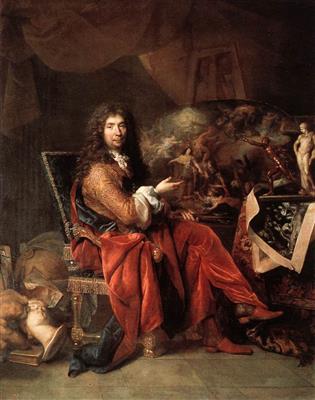


Take Allan Ramsay home.
See all Allan Ramsay prints →Frequently Asked Questions
What is Allan Ramsay known for?
Allan Ramsay was one of the foremost portraitists of his day. Horace Walpole stated that Ramsay was "formed to paint" women.What is Allan Ramsay's most famous work?
Allan Ramsay, a Scot, was a leading portrait painter in 18th-century Britain. Horace Walpole, a writer, thought Ramsay excelled at painting women, unlike Reynolds. Ramsay's portrait of his second wife, Margaret Lindsay, from the early 1760s, is a noted work. It shows Ramsay's delicate style, which combined Baroque Italian classicism with French Rococo charm. The painting conveys a sense of sweetness and freshness, but also a touching anxiety. From 1758[5] to 1765, Ramsay portrayed the royal family on several occasions. These paintings are elegant and natural, with delicate colours and silvery shadows. One example is his portrait of Queen Charlotte with Her Eldest Children, around 1765. Another is his portrait of George III from about 1762. Ramsay trained in Edinburgh and Italy. In Italy, he admired Pompeo Batoni's elegant portraits of English aristocrats and developed his own captivating style. He became court painter to George III in 1760, mainly working in London.What should I know about Allan Ramsay's prints?
Allan Ramsay was a prolific portrait painter, but prints after his work are relatively scarce. Most of the prints associated with Ramsay are engravings or mezzotints made after his portraits. These prints allowed for wider distribution of his images, making his work accessible to a broader audience beyond the elite circles who commissioned the original paintings. One notable example is the engraving by Robert Strange after Ramsay's portrait of Charles Edward Stuart. This print played a significant role in disseminating the image of the "Young Pretender" and promoting the Jacobite cause. Other prints were produced after portraits of prominent individuals, such as Queen Charlotte and members of the Scottish Enlightenment. These prints vary in quality and rarity, depending on the engraver, the size of the edition, and their condition. Collectors may find them in specialist print shops, auction houses, and some museum collections. They offer a fascinating glimpse into the dissemination of portraiture and the artistic networks of the 18th century.What style or movement did Allan Ramsay belong to?
Allan Ramsay (1713[5]-1784[5]) was a Scottish painter, mainly active in London, who worked in a style that combined Roman classicism with English tradition. He is considered one of the foremost portrait painters of his time, a Scottish counterpart to Joshua Reynolds and Thomas Gainsborough. Ramsay's style captured the inner character of his subjects, an approach later adopted by Reynolds. Ramsay trained in Edinburgh before travelling to Italy. There, he studied under Francesco Solimena in Naples, appreciating Solimena's classical style and use of chiaroscuro. Ramsay's work also shows the influence of contemporary French art. After his return to London in 1758[5], his style became more refined. From 1758 to 1765, Ramsay portrayed the royal family on several occasions. His paintings from this period display an elegant, composed naturalness, characterised by delicate colours and silvery shadows. From 1765, Ramsay's interests shifted to archaeological studies, leading him to return to Rome.What techniques or materials did Allan Ramsay use?
Allan Ramsay's painting methods involved careful planning and precise execution. He often began with preparatory drawings to establish the composition. Ramsay favoured a smooth, refined finish in his portraits, avoiding overt brushstrokes. This contrasted with some of his contemporaries, such as Reynolds, who were more experimental. Ramsay's palette included colours such as white, Naples yellow, yellow ochre, vermilion, light red, lake, black, and Prussian blue. He was known for his skill in rendering fabrics and textures, paying close attention to detail. Ramsay sometimes employed assistants to complete less important areas of his paintings, such as drapery. His training included a period spent in Italy, where he studied the Old Masters. This experience influenced his approach to portraiture, particularly in his use of classical poses and compositions. Ramsay's technical skill and attention to detail contributed to his success as a portrait painter.What was Allan Ramsay known for?
Allan Ramsay (1713[5]-1784[5]) was a Scottish portrait painter, considered by some to be the greatest in 18th-century Britain. Horace Walpole observed that Ramsay excelled at painting women, where Joshua Reynolds did not. Ramsay's portraits are often treasured by the families who commissioned them. One example is his portrait of his second wife, Margaret Lindsay, painted in the early 1760s. Ramsay trained in Edinburgh before travelling to Italy. There, he studied with Francesco Solimena in Naples. He appreciated Solimena’s classical style and use of chiaroscuro. Ramsay's style combined Roman classicism with French Rococo charm. His work displays a sensitivity that captured the character of his subjects. His delicate touch and muted colours flatter the sitter. After a second trip to Italy in 1755[5], his style became more refined. In 1760, he became court painter to George III, and he frequently portrayed the royal family.When did Allan Ramsay live and work?
Allan Ramsay (1713[5]-1784[5]) was a prominent Scottish portrait painter. He was born in Edinburgh, the son of Allan Ramsay, a poet and bookseller. Ramsay began his artistic training in Edinburgh and London. He then travelled to Italy, where he studied with Francesco Imperiali and William Aikman from 1736[5] to 1738. This period was formative, exposing him to classical art and the Italian masters. He returned to Britain and established himself as a portrait painter in London during the 1740s. Ramsay's career progressed rapidly. By the 1750s, he had become a major competitor to Thomas Hudson, the leading portraitist of the time. His work was characterised by its elegance, psychological insight, and attention to detail. He painted many notable figures, including members of the aristocracy and the intellectual elite. In 1767, Ramsay was appointed Principal Painter in Ordinary to George III. Although this position brought him considerable prestige, he gradually reduced his artistic output in later life, focusing more on literary pursuits and travel. He died in Dover in 1784, while returning from a trip to Italy.Where can I see Allan Ramsay's work?
Allan Ramsay (1713[5]-1784[5]) was a Scottish portrait painter, a contemporary of Sir Joshua Reynolds and Thomas Gainsborough. After training in Edinburgh, Ramsay travelled to Italy where he studied classical styles; he then established himself in London. In 1760[5], he became court painter to George III. Ramsay's portraits combine Roman classicism with English tradition. You can view Ramsay's paintings in person at several locations. In London, visit the Victoria & Albert Museum, or the Geffrye Museum. Outside London, his work can be seen at the Manchester Art Gallery; the Brighton Museum & Art Gallery; and the Towneley Hall Art Gallery in Burnley, Lancashire. In Scotland, visit the National Museums of Scotland, and the Scottish National Gallery in Edinburgh, which holds his *Lady Robert Manners* (circa 1756).Where was Allan Ramsay from?
Allan Ramsay was a Scottish portrait painter. He was born in Edinburgh, Scotland, in 1713[5]. His father, also named Allan Ramsay, was a poet and bookseller. In 1734[5], Ramsay went to London and studied at the St Martin's Lane Academy. From 1736 to 1738, he lived in Italy, studying with Francesco Imperiali and William Aikman. He returned to Britain and worked as a portrait painter in Edinburgh. By the early 1740s, he had established a successful practice, and he later moved to London. Ramsay is known for his portraits of Scottish Enlightenment figures, as well as members of the British[5] aristocracy. He travelled to Italy several more times during his career. He eventually gave up painting in the 1770s, and he spent his later years in Italy. He died in Dover in 1784[5].Who did Allan Ramsay influence?
Allan Ramsay's influence can be seen in the work of later portrait painters, most notably Sir Joshua Reynolds. Ramsay's style combined elements of Baroque Italian Classicism[5] with French Rococo charm, which was a catalyst for change in British[5] painting. His approach contrasted with the more pragmatic social commentary of William Hogarth. Ramsay spent time in Italy, where he studied under Francesco Solimena. Solimena's classical style and use of chiaroscuro had a marked impact. Ramsay combined Roman classicism with English tradition in his portraits. He arranged figures in modern dress according to the compositional schemes of classical statuary. Reynolds adopted a pictorial style capable of capturing the inner character of his subjects, a quality that Ramsay had developed earlier. Horace Walpole noted that Reynolds was not as skilled at painting women, whereas Ramsay excelled at it. Thomas Gainsborough was also influenced, although to a lesser extent, as he was more of an "independent".Who influenced Allan Ramsay?
Allan Ramsay (born in Edinburgh, 1713[5]; died in Dover, 1784[5]) was one of the foremost portrait artists of his time. Often considered the Scottish counterpart to Sir Joshua Reynolds and Thomas Gainsborough, Ramsay developed his own style, one of captivating charm. Ramsay's artistic journey included training in Edinburgh, followed by studies in Italy. While in Italy, he was particularly struck by the grace of contemporary Italian painters. Pompeo Batoni, who painted portraits of aristocratic English visitors in Rome, was especially important to Ramsay. French art also influenced him. Ramsay's portraits often display a feathery touch and muted, pastel colours. His portrait of Lady Robert Manners (circa 1756[5]) shows his sympathetic grasp of character. Ramsay became court painter to George III in 1760. His portraits include Anne Bayne, Mrs Allan Ramsay, and Margaret Lindsay, Mrs Allan Ramsay.Who was Allan Ramsay?
Allan Ramsay (1713[5]-1784[5]) was a Scottish painter, mainly active in London. The son of a Scottish poet, he trained in Edinburgh before travelling to Italy. There, he studied with Francesco Solimena in Naples, where he admired the classical style and use of chiaroscuro. He was also influenced by Pompeo Batoni, who painted portraits of English visitors to Rome. Ramsay's time in Italy refined his style. Ramsay returned to London in 1739[5] and became a leading portraitist. Horace Walpole observed that Ramsay was especially skilled at painting women. His style combined Roman classicism, English tradition, and French Rococo charm. His portraits presented his subjects in modern dress, arranged according to classical statuary. From 1760, he held the title of Court Painter to George III. Examples of sitters include Jean-Jacques Rousseau (1766) and Queen Charlotte with her Eldest Children (circa 1765). After 1765, Ramsay increasingly dedicated himself to archaeological studies in Rome.
Sources
Editorial draws on the following primary and tertiary references for Allan Ramsay.
- [1] museum Paisley Museum Used for: museum holdings.
- [2] museum Art Gallery of South Australia Used for: museum holdings.
- [3] museum McLean Museum and Art Gallery Used for: museum holdings.
- [4] academic Encyclopaedia Britannica, Allan Ramsay | Portrait, Landscape, Miniature Used for: biography.
- [5] wikipedia Wikipedia: Allan Ramsay Used for: biography, birth dates, death dates, identifiers, movement attribution, nationality.
- [6] book Zuffi, Stefano, 1961-, Baroque painting : two centuries of masterpieces from the era preceding the dawn modern art Used for: biography.
- [7] book Beard, Lee, 1973- author, Butler, Adam, author; Van Cleave, Claire, author; Fortenberry, Diane, author; Stirling, Susan, author, Beard, Lee, 1973- author, Butler, Adam, author; Van Cleave, Claire, author; Fortenberry, Diane, author; Stirling, Susan, author - The Art Book_ New Edition, Mini Format Used for: biography.
- [8] book Allison Lee Palmer, Historical Dictionary of Neoclassical Art and Architecture Used for: biography.
- [9] museum Terry Riggs, Allan Ramsay 1713–1784 Used for: biography.
- [10] museum Allan Ramsay - A Country Girl at Surrentum Used for: museum holdings.
- [11] museum Allan Ramsay | British Museum Used for: biography.
Editorial overseen by Solis Prints. Sources verified 2026-09-26. Click a source for details, or hover over [N] in the page above to preview.
Editorial standardsMethodologyCorrectionsAI disclosureAbout the editorial team