



Afro
- Movimento Arte Concreta
At the 1956[3] Venice Biennale, Afro Basaldella received the prize for Best Italian[3] Artist, a recognition that confirmed what the international art world had suspected since his work appeared at documenta 1 in Kassel: that Italy's post-war abstraction had found one of its most compelling voices. The following year he completed a mural, *The Garden of Hope*, for the UNESCO headquarters in Paris, a commission that placed his work alongside art's most consequential public statements.

Biography
Born in Udine in 1912[3], Afro began exhibiting at sixteen alongside his brothers Dino and Mirko, both artists in their own right. A scholarship from the Marangoni Arts Foundation took him to Rome, and by 1933[3] he was showing at Milan's Galleria del Milione. His early work followed the realist current of the School of Rome, but a post-war encounter with Arshile Gorky's paintings in New York pushed his style decisively toward abstraction. He became a member of the Gruppo degli Otto, the Group of Eight, which positioned Italian[3] painting within a broader European and American conversation about non-representational form.
The Solomon R. Guggenheim Museum acquired his 1957[3] canvas *Night Flight*, and Afro's reputation carried him into teaching posts at Mills College in Oakland and, later, the Accademia di Belle Arti in Florence. He died in Zurich in 1976[3], leaving behind a body of work that moved between the gestural energy of American abstract expressionism and a more lyrical Mediterranean sensibility.
Timeline
- 1912Born in Udine, Italy
- 1928Began exhibiting art at sixteen with brothers Dino and Mirko.
- 1933Showed work at Galleria del Milione in Milan.
- 1956Received prize for Best Italian Artist at Venice Biennale.
- 1957Completed mural *The Garden of Hope* for UNESCO headquarters in Paris.
- 1957Solomon R. Guggenheim Museum acquired his canvas *Night Flight*.
- 1976Died in Zurich, Switzerland.
Notable Works
Tap to view larger.
Next stop
Browse the movements →
Every movement in the collection, from the Renaissance to Pop art.
Related Artists
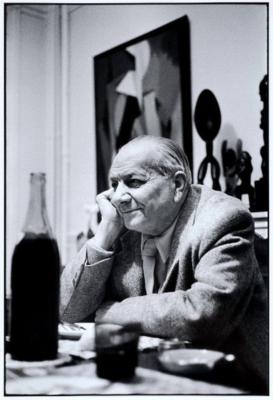


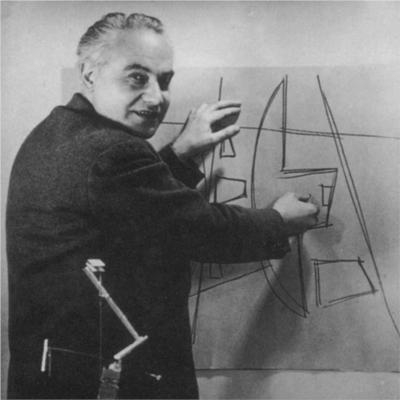
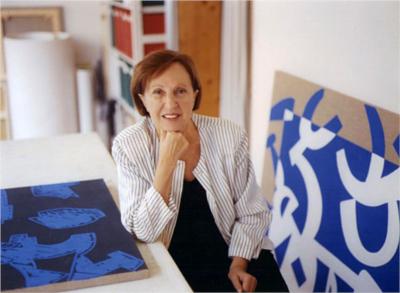
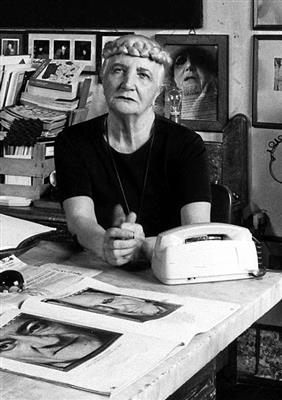
Frequently Asked Questions
What is Afro's most famous work?
Afro (Afro Basaldella, 1912[3]-1976[3]) was an Italian[3] painter associated with abstract expressionism. While it is difficult to name one single "most famous" work, some of his pieces have received particular attention. Afro developed his abstract style in the post-war period, moving away from earlier figurative work. During the 1950s, he gained international recognition for his distinctive approach to abstraction. His paintings from this time often feature complex arrangements of geometric shapes and subtle colours, creating a sense of depth and movement. Paintings such as "Composizione" (1955[3]) and "Giardino d'inverno" (1958) are well-regarded examples of his mature style. These works demonstrate his skill in balancing formal elements with expressive gestures. Afro's art is characterised by a lyrical quality, setting him apart from some of his more gestural abstract expressionist contemporaries. He aimed to evoke emotions and sensations through the interplay of form and colour.What should I know about Afro's prints?
When collecting Afro's prints, remember that edition sizes and numbering affect value. Limited editions have a set number of prints, each marked with a fraction (e.g., 35/100), indicating its sequence within the total edition. Artists often reserve a small percentage as artist's proofs, marked AP. Signatures are usually in pencil. These conventions, though informal, are widely respected among printmakers. The Trade Descriptions Act 1968[3] requires commercial sellers to accurately describe their products. Claims about edition size add value, so buyers expect them to be accurate. A printmaker marks each print with the edition number on the bottom left, the title in the centre, and their signature on the right. Terms like 'vintage print' (made around the time of the negative) and 'period print' (made within 10-15 years) denote when the print was produced. An 'original print' is made by the artist or under their supervision.What style or movement did Afro belong to?
Afro (Afro Basaldella) is usually associated with Italian[3] Informalism, also known as Arte Informale. This movement developed in Europe after the Second World War. It moved away from formal structure and embraced abstraction. Afro's style, while rooted in the figurative tradition, evolved towards abstraction. His work is characterised by a lyrical approach to colour and form. His paintings often feature complex compositions of geometric shapes and gestural marks. These elements create a sense of movement and depth. Although linked to Arte Informale, Afro's work also shows the influence of other modern movements. These include Cubism and Expressionism. His unique style made him a significant figure in postwar Italian art. He exhibited internationally, and his work is held in many important collections.What was Afro known for?
Afro, or Afro Basaldella, was known for his abstract art. His work moved from a Futurist style to abstraction after the Second World War. In 1947[3], he was one of the signatories of the Forma 1 manifesto, along with artists such as Carla Accardi and Pietro Consagra. The Forma 1 group promoted formal experimentation in art, rather than figurative expression. Afro's work was shown at the Galleria d'Arte Moderna in Rome in 1951, in an exhibition of abstract and concrete art. Afro had his first American solo show at the Catherine Viviano Gallery in New York in 1950. He travelled to the United States again in autumn 1957 to be a painter-in-residence at Mills College, Oakland, California. The World House Galleries in New York exhibited his work in December 1957, alongside that of artists such as Capogrossi and Consagra. In 1957, Afro presented the first solo exhibition in Italy of Arshile Gorky at the Galleria dell'Obelisco, Rome.Where can I see Afro's work?
Afro (Afro Basaldella) was an Italian[3] painter associated with abstract expressionism. His works can be viewed in numerous public collections. In Italy, significant holdings of Afro's paintings are at the Galleria Nazionale d'Arte Moderna e Contemporanea in Rome, which holds several paintings and works on paper. The Peggy Guggenheim Collection in Venice also has examples of his work. Civic museums in Turin, Milan, and Bologna sometimes display his pieces as well. Outside Italy, The Museum of Modern Art (MoMA) in New York has several Afro paintings in its collection. The Tate Modern in London also possesses examples of his work. These museums provide opportunities to view his art in an international context. Many other galleries and museums across Europe and North America occasionally feature Afro's paintings in temporary exhibitions or within their permanent collections. Checking museum websites is advisable for current display information.Where was Afro from?
Afro was Italian[3]. He was born in Udine, in the Friuli region of north-eastern Italy. Udine is a city with a rich history, having been under the control of various powers throughout the centuries, including the Roman Empire, the Republic of Venice, and the Austro-Hungarian Empire. It is the historical capital of Friuli. The city's art reflects this varied past. Afro's artistic development occurred in Italy, a country with a long and distinguished artistic tradition. From the Roman sculptures in museums to the Renaissance paintings in Florence, Italy has always been a centre for artistic innovation. Italian art history includes movements such as Futurism and artists such as Leonardo da Vinci.Who did Afro influence?
Afro's influence is complex and multifaceted. During the apartheid era in South Africa, artists such as Gerard Sekoto, Dumile Feni, and George Pemba were emulated by later generations of black modernists. Sekoto, in particular, was regarded as a father figure, having achieved international recognition in Paris. His work, along with that of Louis Maqhubela and Lucas Sithole, was displayed at the Adler Fielding Gallery in Johannesburg, creating a connection between different generations of artists. Black society magazines like *Drum* and *Zonk!* were also popular among black artists, featuring work that ranged from realism to abstraction. These artists adapted Western techniques to suit their thematic and aesthetic persuasions, incorporating elements of "black art" and "feminist art". Hale Woodruff, an artist who explored African themes in his work, felt that some black artists responded to their heritage by working abstractly. He drew inspiration from Akan gold weights and African, Mexican, and Oceanic forms. Woodruff aimed to integrate his abstract practice with his African ancestry, promoting it as part of American values.Who was Afro?
Afro Basaldella (known as Afro) was an Italian[3] artist. Born in Udine in 1912[3], Afro exhibited a modernist sensibility and worked in both abstract and figurative styles. In 1957[3], he presented the first solo exhibition in Italy of Arshile Gorky at the Galleria dell'Obelisco, Rome. By the late 1940s, abstract artists in Rome faced challenges, as the Italian Communist Party opposed aligning the art scene with international trends, preferring figurative expression. Afro travelled to New York in 1950 for his first American solo exhibition at the Catherine Viviano Gallery. The gallery became a point of reference for young Italian artists, and held quasi-annual shows of Afro's work. In 1960, James Johnson Sweeney's monograph on Afro was published in Rome. Afro won the Italian section of the Guggenheim International Award. Afro died in 1976[3].Why are Afro's works important today?
Afro (Afro Basaldella, 1912[3]-1976[3]) was an Italian[3] artist associated with abstraction after the Second World War. His position is interesting today because of the ongoing reassessment of modernism, and the recognition that cross-cultural exchange has always been part of modern art. Scholarship has moved beyond earlier assumptions. Instead of seeking a single, finalised story of modernism, researchers now recognise a "dialogics of give-and-take". This means understanding how artists from different backgrounds have always shared ideas and materials, even if some were only acknowledged later. Afro's work can be viewed within this expanded field. His art contributes to a broader understanding of 20th-century art history, moving beyond a focus on Western European and North American narratives. His practice encourages a more inclusive and nuanced view of modernism's development, acknowledging the contributions of artists from diverse cultural contexts.What was Afro's art style?
Afro's art style shifted from the realist current of the School of Rome to abstraction after encountering Arshile Gorky's paintings. His work moved between the gestural energy of American abstract expressionism and a more lyrical Mediterranean sensibility. He was also a member of the Gruppo degli Otto, which situated Italian[3] painting within a broader European and American conversation about non-representational form.How did Afro die?
Afro died in 1976[3] at the age of 64.
Sources
Editorial draws on the following primary and tertiary references for Afro.
- [1] museum Victoria and Albert Museum Used for: museum holdings.
- [2] museum Smithsonian American Art Museum Used for: museum holdings.
- [3] wikipedia Wikipedia: Afro Used for: biography, birth dates, death dates, identifiers, movement attribution, nationality.
- [4] book guggenheim-capogug00solo Used for: biography.
- [5] book guggenheim-metph00cela Used for: biography.
- [6] book Braun, Emily, 1957-; Asor Rosa, Alberto; Royal Academy of Arts (Great Britain), Italian art in the 20th century : painting and sculpture, 1900-1988 Used for: biography.
Editorial overseen by Solis Prints. Sources verified 2026-09-30. Click a source for details, or hover over [N] in the page above to preview.
Editorial standardsMethodologyCorrectionsAI disclosureAbout the editorial team