


Before the Victorian era, art collecting was an aristocratic pursuit. The great collections belonged to great houses, assembled by men with titles and inherited wealth. By the 1850s, a new class of collector had appeared: manufacturers, merchants, and professionals who had money but not lineage, and who saw art as both a pleasure and a social credential.
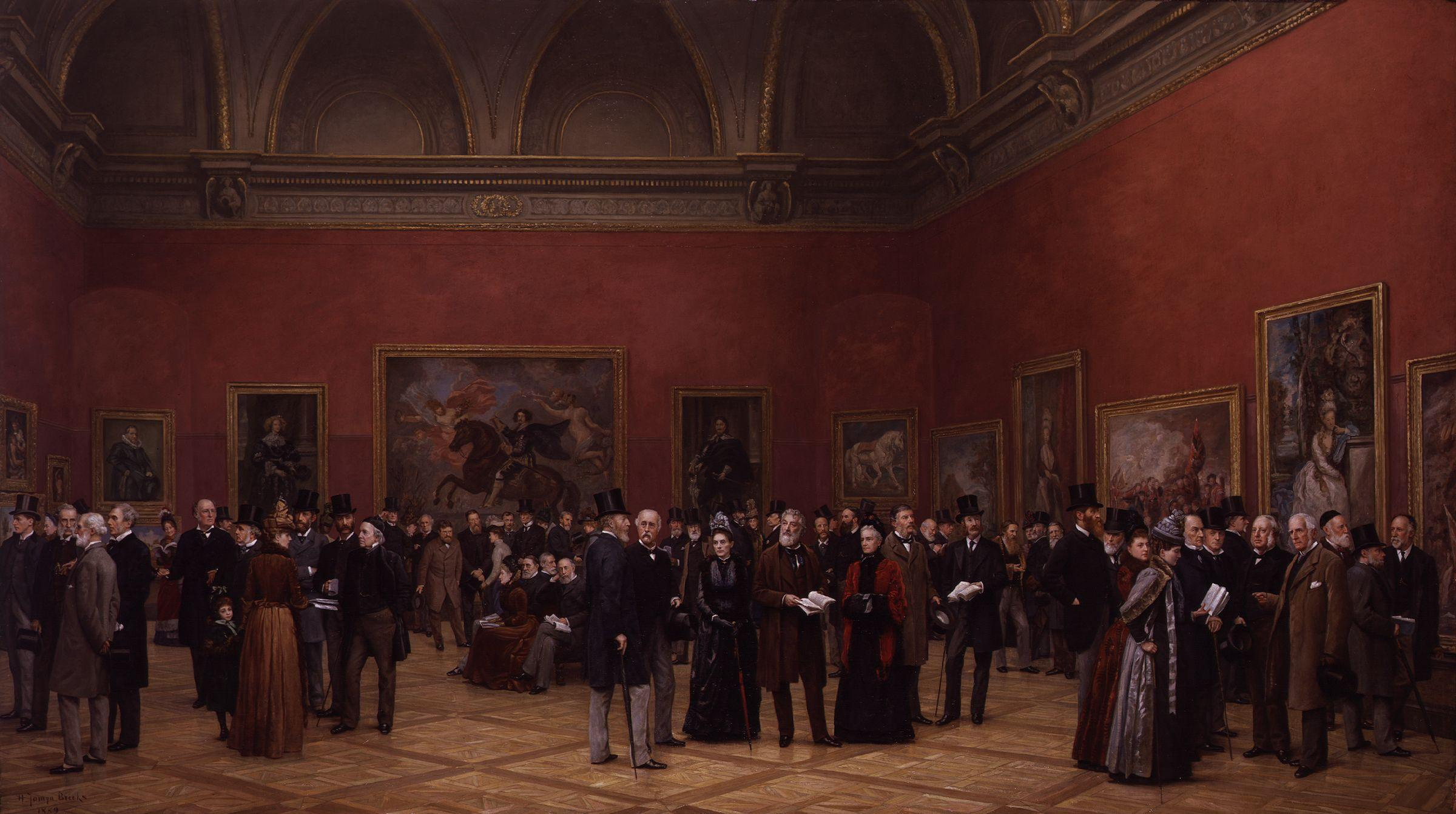
The Royal Academy and the Art Market
The Royal Academy's annual Summer Exhibition was the centre of the Victorian art world. Thousands of paintings were hung from floor to ceiling in the Burlington House galleries. Being "on the line" (hung at eye level) could make an artist's career. Being "skied" (hung near the ceiling where nobody could see it) could end one. Collectors visited the exhibition to see and to be seen. Buying a painting that had been praised in the press was a way of demonstrating both taste and wealth.
The middle-class collector did not buy Old Masters (too expensive, too difficult to authenticate). Instead, they bought contemporary British art: genre scenes, landscapes, narrative paintings, and portraits. The most successful Victorian artists, like Landseer, Millais, and Leighton, earned fortunes. Their paintings were engraved and sold as prints, extending their reach into homes that could not afford the originals.
From Brighton to Suburbia
Art collecting spread beyond London. In Brighton, the growing population of retired professionals and wealthy invalids created a local art market. Dealers and auction houses opened on the seafront. Local artists found patrons among the residents. The pattern repeated in Manchester, Liverpool, Birmingham, and Glasgow, where industrial wealth funded both private collections and public galleries.
The Victorian collector transformed art from a luxury of the few into an aspiration of the many. The prints on suburban parlour walls, the public galleries funded by municipal pride, and the illustrated magazines that brought art criticism into middle-class homes all followed from a simple idea: that owning and understanding art was not a birthright but a choice, available to anyone who could afford a frame.


