

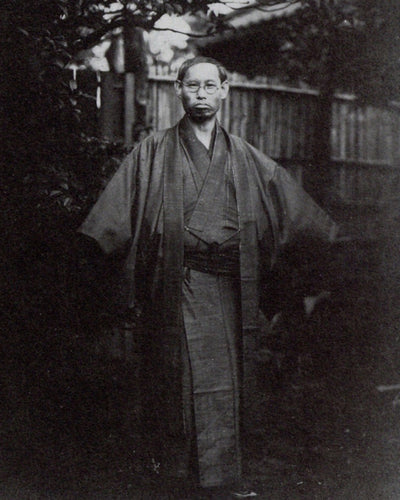
In the quiet, observant world of Japanese woodblock printing, few artists captured the fleeting beauty of nature with the precision and grace of Ohara Koson (1877-1945). A master of kachō-e (bird-and-flower pictures), Koson bridged the gap between traditional Nihonga painting and the modern sensibilities of the Shin-hanga movement. His works, characterised by soft colour gradations and meticulous detail, remain some of the most beloved depictions of flora and fauna in art history.
From Painter to Printmaker
Born Ohara Matao in Kanazawa, Koson began his artistic journey studying strictly traditional Japanese painting (Nihonga) under Suzuki Kason. It was during a period of rapid Westernisation in Japan that Koson found his true calling, transitioning from brush painting to the collaborative art of woodblock prints. His early works, often depicting Russo-Japanese War scenes, eventually gave way to the serene nature studies for which he is best known today.
It was his association with the visionary publisher Watanabe Shōzaburō that catalysed his greatest period of productivity. Under the name Shōson, he produced hundreds of designs that were exported to the West, captivating audiences in Europe and America with their distinctively Japanese aesthetic.
The Art of Kachō-e
Koson’s genius lay in his ability to imbue animals with character without anthropomorphising them. Whether capturing the predatory focus of a crow on a snowy branch or the playful curiosity of a cat watching goldfish, his compositions are balanced and atmospheric. He utilised bokashi (colour gradation) to create depth, allowing mist, water, and moonlight to soften the sharp lines of his subjects.

His dedication to kachō-e revitalised the genre, proving that traditional subjects could feel contemporary and vital. Unlike the landscape-focused works of his contemporaries like Hasui, Koson turned his gaze inward to the intimate dramas of the natural world.
Legacy and Collection
Today, Ohara Koson’s prints are held in major institutions like the Rijksmuseum and the Museum of Fine Arts, Boston. His work serves as a perfect entry point for collectors of Japanese art, offering a timeless connection to the natural world that transcends cultural boundaries.

Explore our curated selection of his finest works in the Ohara Koson collection at Solis Prints.


