

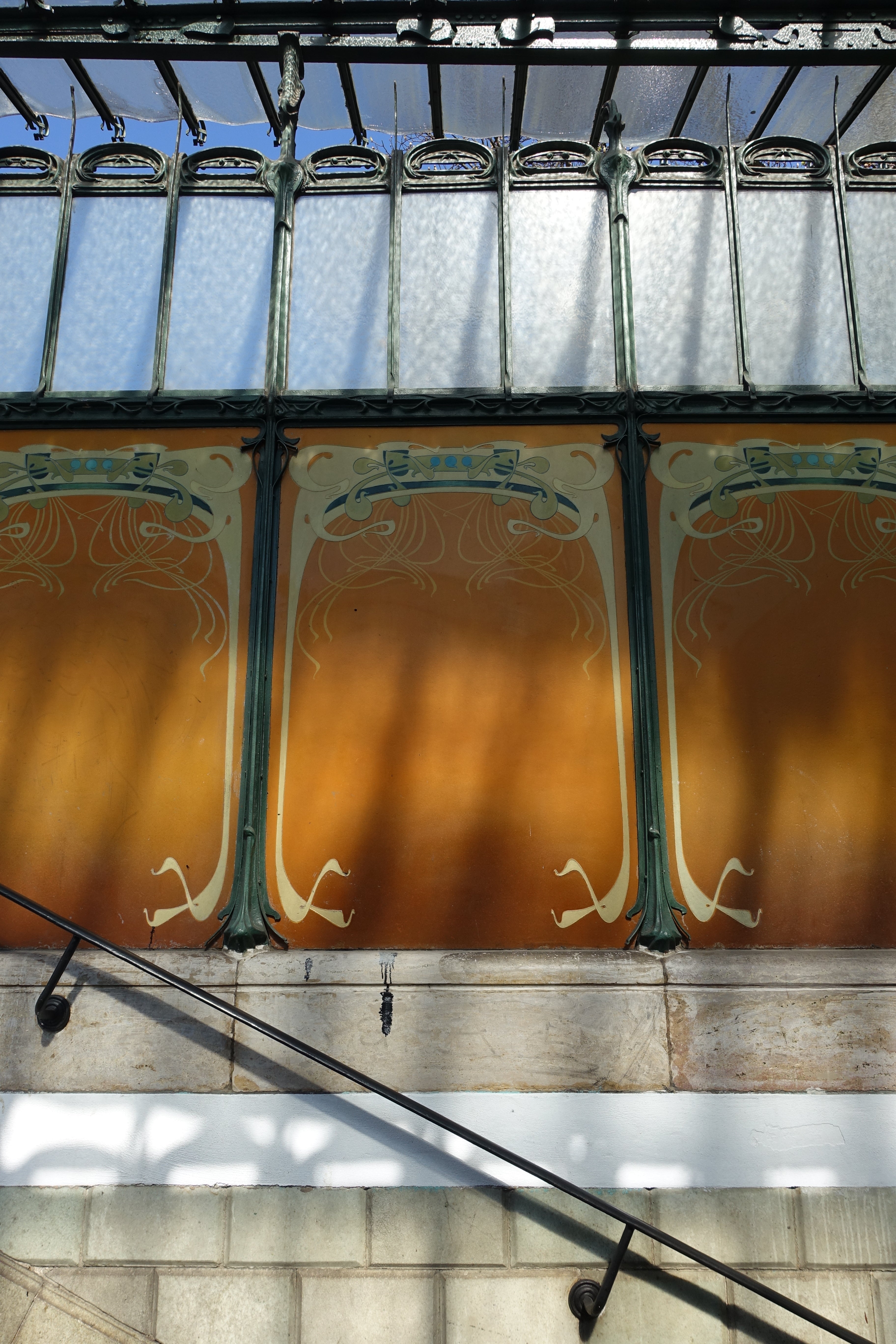
Art Nouveau lasted barely twenty years, from the early 1890s to the outbreak of the First World War, yet it touched everything: architecture, furniture, jewellery, glassware, posters, typefaces, and the entrances to the Paris Métro. The movement had different names in different countries (Jugendstil in Germany, Stile Liberty in Italy, Modernisme in Catalonia) but everywhere its principle was the same: nature was the model for form, and the organic curve was the fundamental unit of design.
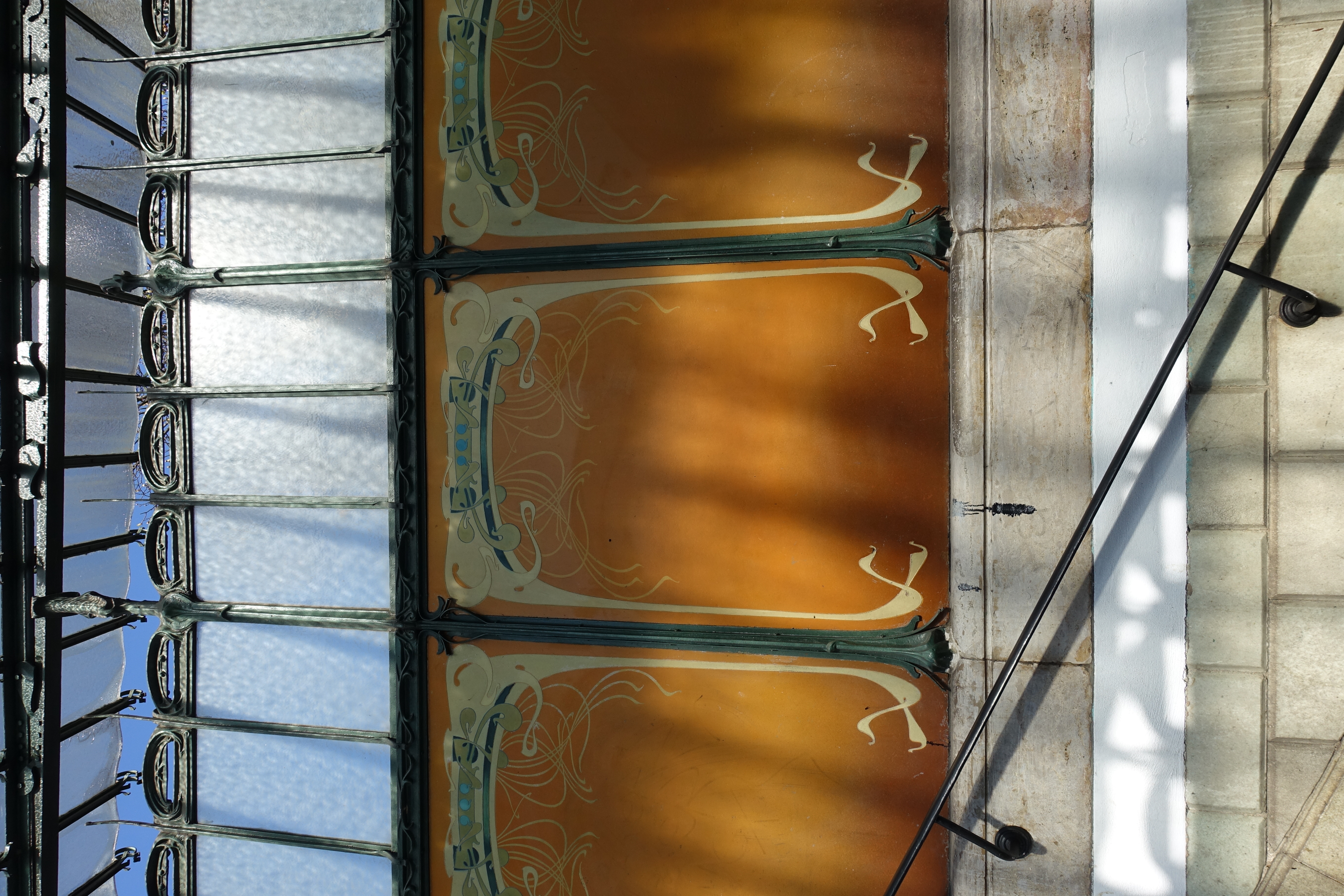
Horta and the Whiplash Line
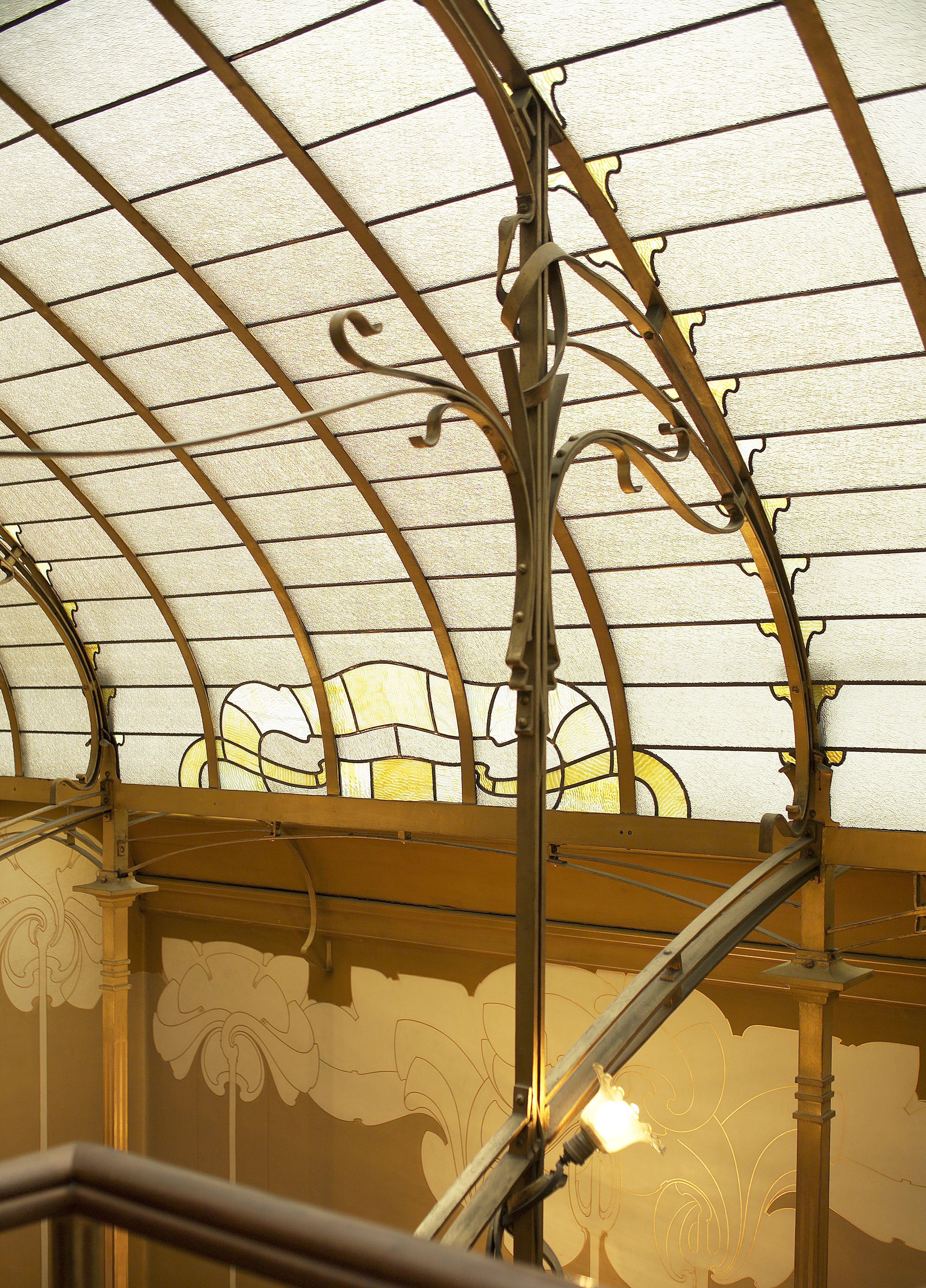
Victor Horta (1861 to 1947) built the first fully Art Nouveau building, the Hôtel Tassel in Brussels, in 1893. The staircase of his own house (now the Horta Museum) shows the style at its most complete: wrought-iron banisters curve like climbing vines, the walls are painted with organic patterns, and the natural light filtering through skylights is managed to give the interior the feel of a forest canopy. There is not a straight line in sight that is not structurally necessary.
The signature Art Nouveau motif, the "whiplash curve," appears throughout Horta's work: a line that accelerates, bends back on itself, and terminates in a flourish, like a tendril reaching for light. It derived from the observation of plant growth, but it was not imitation. Horta and his contemporaries abstracted natural forms into a decorative vocabulary that could be applied to iron, wood, glass, and stone.
Klimt and the Golden Surface
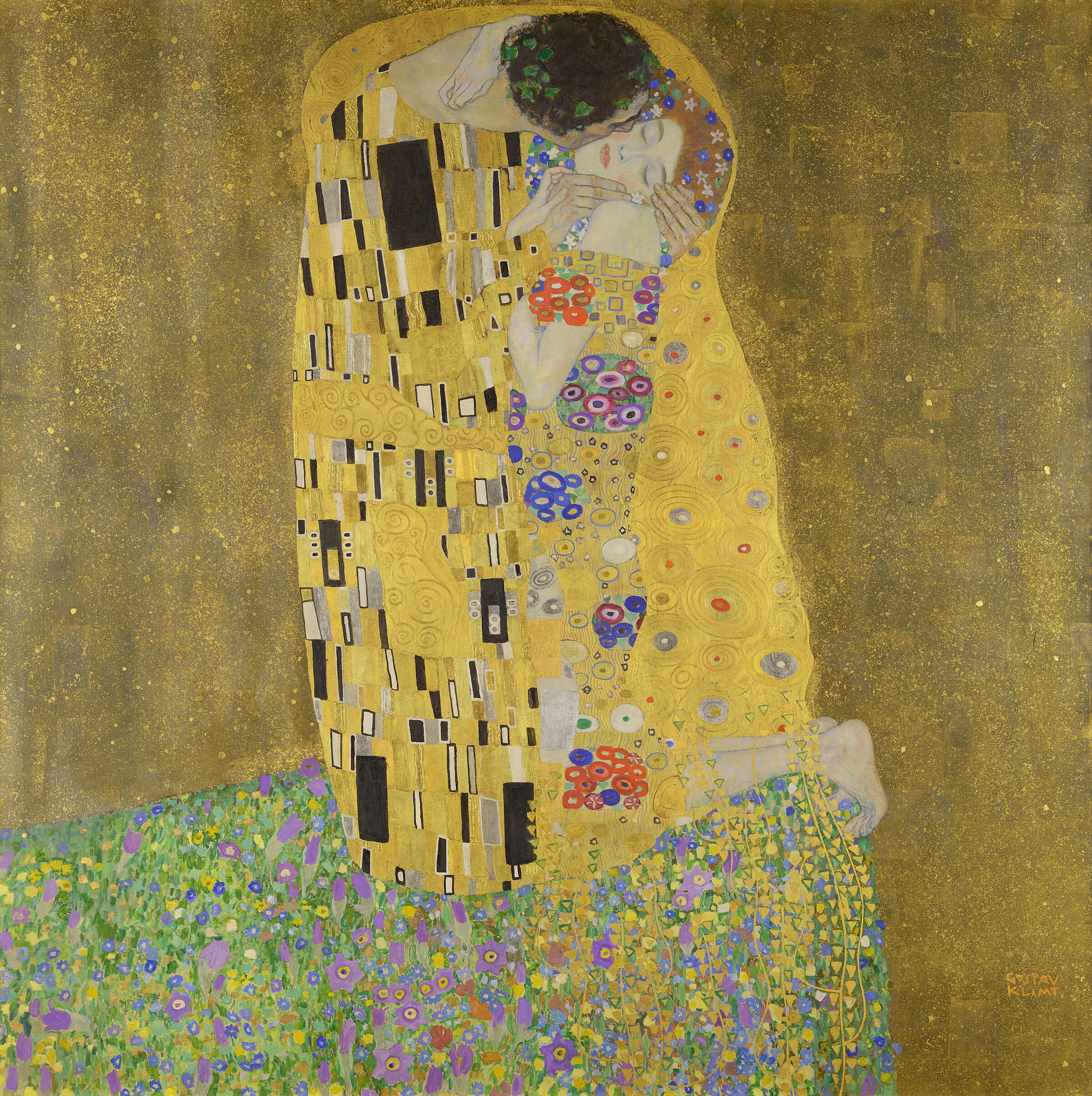
Gustav Klimt (1862 to 1918) took Art Nouveau into painting by treating the canvas as a decorative surface. The Kiss shows two figures kneeling on a flower-strewn cliff, wrapped in golden robes covered with geometric and organic patterns. The man's robe has rectangular motifs; the woman's has circular ones. Their bodies are almost lost beneath the decoration, which is the point: Klimt was interested in the surface as much as what lay beneath it.
The gold leaf connects Klimt to Byzantine mosaics (he had visited Ravenna in 1903) and to the Viennese tradition of decorative craftsmanship. His "golden phase," roughly 1899 to 1910, produced paintings that were simultaneously modern and ancient, flat and sensual, austere and overwhelmingly ornate.
Art Nouveau declined after 1910, overtaken by movements that valued geometry over organic form and simplicity over decoration. But its influence persisted in unexpected places: in the curves of Gaudí's architecture, in the typography of the 1960s psychedelic poster revival, and in any design that takes its shapes from the natural world rather than the ruler and compass.


