

Fine Art Poster
From £28
A giclée print on 200gsm matte fine art paper, using a twelve-colour process for accurate, fade-resistant colour. Supplied unframed, delivered flat or rolled.



Archival giclée
Frames arrive ready to hang
Secure checkout
Made to order
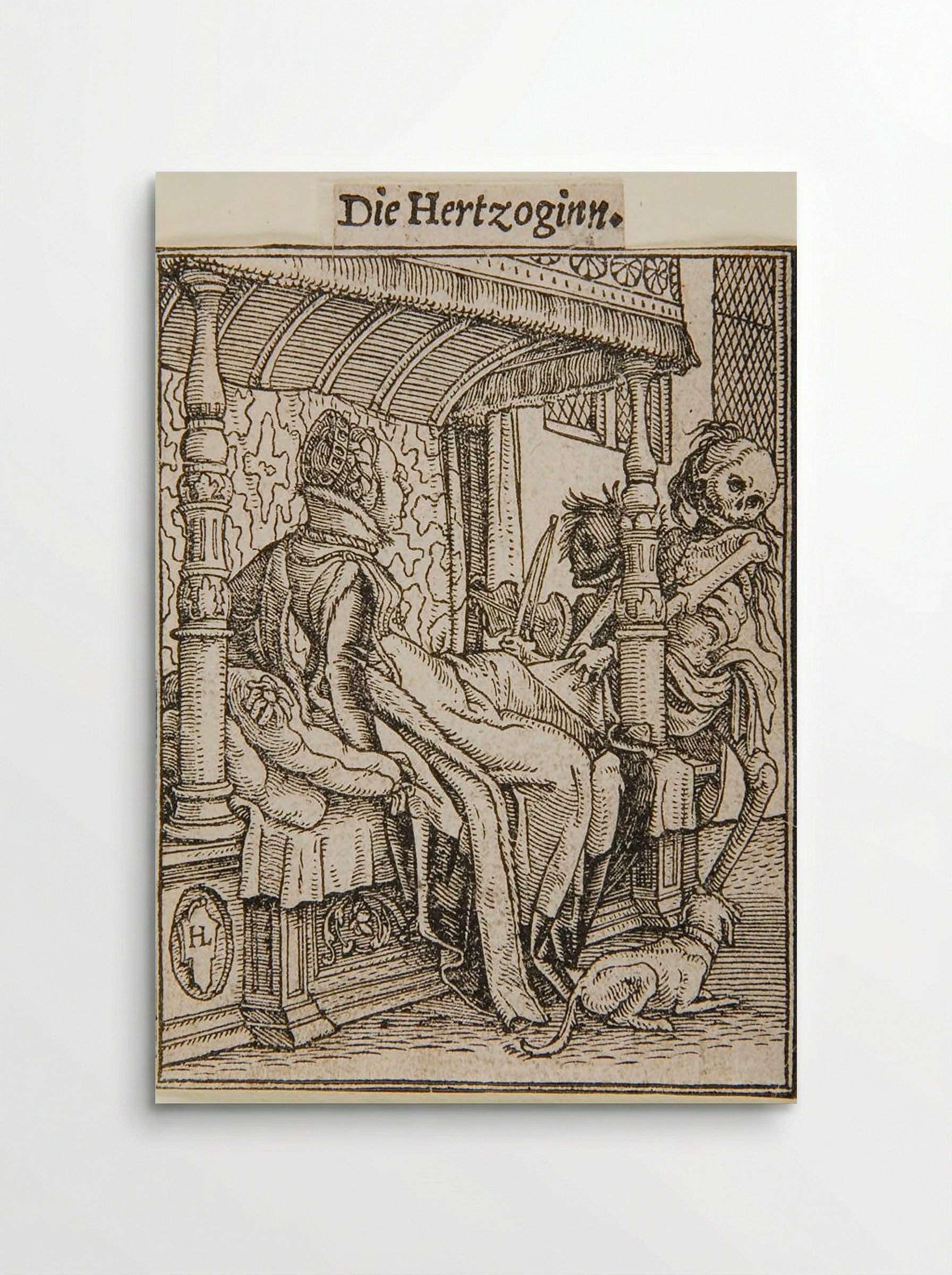
A woodcut from Hans Holbein the Younger's *Dance of Death* series, *The Duchess* depicts a noblewoman visited by Death in her bedchamber. This print exemplifies Holbein's mastery of line and his exploration of mortality.
Hans Holbein the Younger, a German artist and printmaker active during the Northern Renaissance, is celebrated for his portraiture and his woodcut series, *Dance of Death*. This print, titled *The Duchess*, is one of the 41 images from that series. Holbein created the woodcuts in 1526, but they were not published until 1538 in Lyon. The series presents death as an ever-present force, intruding into the lives of individuals from all social strata. In this scene, a richly dressed duchess reclines in her bedchamber, attended by Death, who plays a musical instrument. The setting is rendered with meticulous detail, from the patterned textiles to the architectural elements of the room. A small dog sits at the foot of the bed, seemingly oblivious to the macabre visitor. The composition uses fine lines to create texture and depth, characteristic of Holbein's skill as a draughtsman and printmaker. The print serves as a memento mori, reminding viewers of the transience of life and the inevitability of death.
Because every print is made to order, we don't offer change-of-mind returns, refunds or exchanges. If your order arrives faulty, damaged or incorrect, we'll replace it free of charge — just contact us within 48 hours of delivery. See our refunds page for full details.
We ship worldwide, printing at the production hub nearest to your delivery address. Delivery times and costs vary by destination — you'll see the options available to you at checkout.
Each print is produced to order using 12-colour giclée printing on FSC-certified archival paper. Designed in Britain and printed at your nearest production hub to reduce waste and speed up delivery.

Artist Biography
Our Features
Designed for Lasting Impact
Every Solis piece is made to order with archival, gallery-quality materials built to last.
To keep your artwork looking its best:
Museum-grade giclée on FSC-certified archival matte paper, with framed and canvas options.
Made to order
Every piece is printed to order. These are the five finishes, and what makes each one different.
From £28
A giclée print on 200gsm matte fine art paper, using a twelve-colour process for accurate, fade-resistant colour. Supplied unframed, delivered flat or rolled.

From £45
The same fine art print in a solid wood frame with UV-protective acrylic glaze and rigid backing. Five frame colours. Arrives ready to hang.
Why Choose Us ?
Damage-free delivery guarantee
Fast Shipping
Museum-Quality Materials
Artist Biography
Hans Holbein the Younger
You May Also Like
We use cookies to measure our marketing and see which prints people love.We use cookies to measure our marketing.
By continuing to browse, you agree · Privacy Policy