


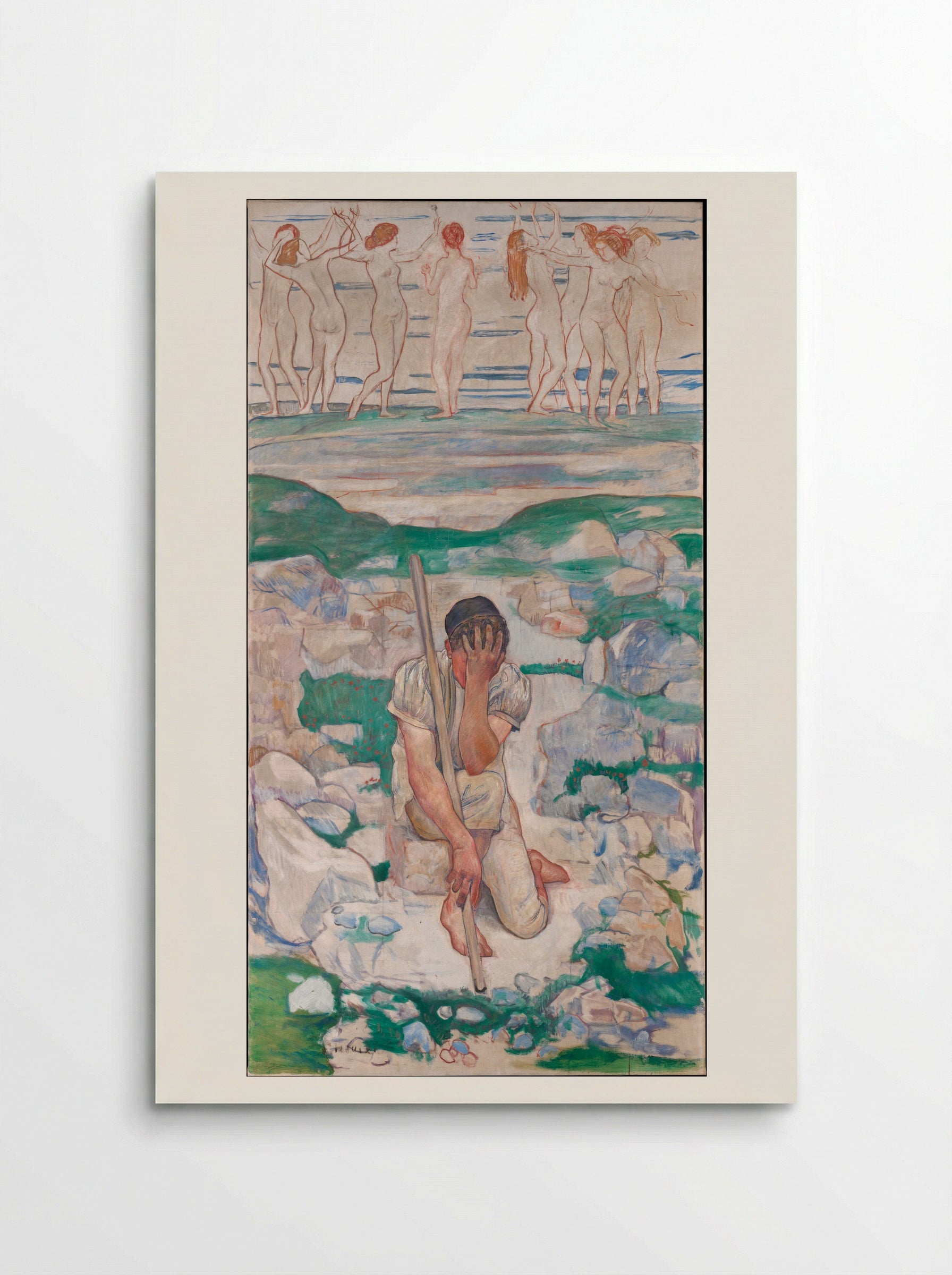
The Dream of the Shepherd - Ferdinand Hodler
- UK delivery calculated at checkout
- Guaranteed High Quality Prints
- Secure payments
- Sustainable materials
- Made in the UK
A symbolic work by Ferdinand Hodler featuring a contemplative shepherd and ethereal figures, rendered in his signature style of rhythmic parallelism.
Ferdinand Hodler, a central figure in Swiss art at the turn of the twentieth century, produced The Dream of the Shepherd in 1896. This work demonstrates his characteristic approach to composition, which he termed parallelism. This method relies on the symmetrical arrangement of figures and forms to create a sense of order and rhythmic repetition. In this painting, the shepherd occupies the lower foreground, his posture conveying a state of deep contemplation or exhaustion. He rests upon a rocky, uneven terrain, his hand shielding his eyes as if to block out the physical world in favour of an internal vision. Above the shepherd, a group of ethereal female figures appears in a horizontal band. These figures are rendered with lighter, more fluid brushwork, contrasting with the solid, grounded presence of the shepherd below. Their rhythmic, dance-like arrangement suggests a dream state or a mythological apparition, bridging the gap between the mundane reality of the shepherd and a higher, symbolic realm. The colour palette is restrained, utilising cool blues, greens, and earthy tones that reflect the mountainous Swiss environment Hodler often depicted. Hodler was known for his interest in universal themes, often exploring human existence through a lens that combined observation of nature with subjective, symbolic meaning. The division of the canvas into two distinct zones—the earthly and the visionary—is a recurring device in his work. By separating the shepherd from the dancing figures, Hodler invites the viewer to consider the relationship between the observer and the observed, or the dreamer and the dream. The work remains a clear example of his transition from realism toward the more decorative and symbolic style that defined his later career.
The Dream of the Shepherd - Ferdinand Hodler
Sale price£28.00
Regular price (/)
Crafted for a Lifetime
-
Premium materials
Solid wood frames, UV-protected acrylic glaze, and archival backing for lasting durability.
-
Museum-grade prints
12-colour giclée printing on FSC-certified 200gsm fine art paper, with lifetime fade resistance.
-
Crafted in the UK
Sustainably sourced materials, precision manufactured locally, reducing carbon footprint.
-
Ready to hang
Each frame is sealed with rigid backing and fixings attached, no extra effort required.

Find the finish that fits your home


What our customers say
Real reviews from real customers

Received the beautiful hummingbird print in black frame. Great service, stunning print, I will post a picture when the room is finished. Thank you

Delighted with this print! The colours are extremely vibrant, the imagine crystal clear and beautifully displayed in an attractive frame. Delivery was prompt and securely packaged. Highly recommended and will be using again!

So pleased with my print and the frame it’s housed in. Fantastic quality and really adds character to the room. Communication was great and it was delivered quicker than estimated. Overall I’m extremely pleased and will recommend to friends. I’m already eying up my next purchase!

Beautiful print, great quality and love it with the white frame. Delivery was really fast. I've had loads of compliments from visitors as I've hung it in my hallway as the first thing you see when you enter the house. Couldn't be happier.

Ferdinand Hodler
losing his father and brothers to tuberculosis by eight, developing Parallelism as a theory of visual order, and designing Swiss banknotes with woodcutters instead of statesmen
This product has no reviews yet.